Beef Short Ribs in the Air Fryer
Editorial desk · 9 min read · Updated 2026-08-23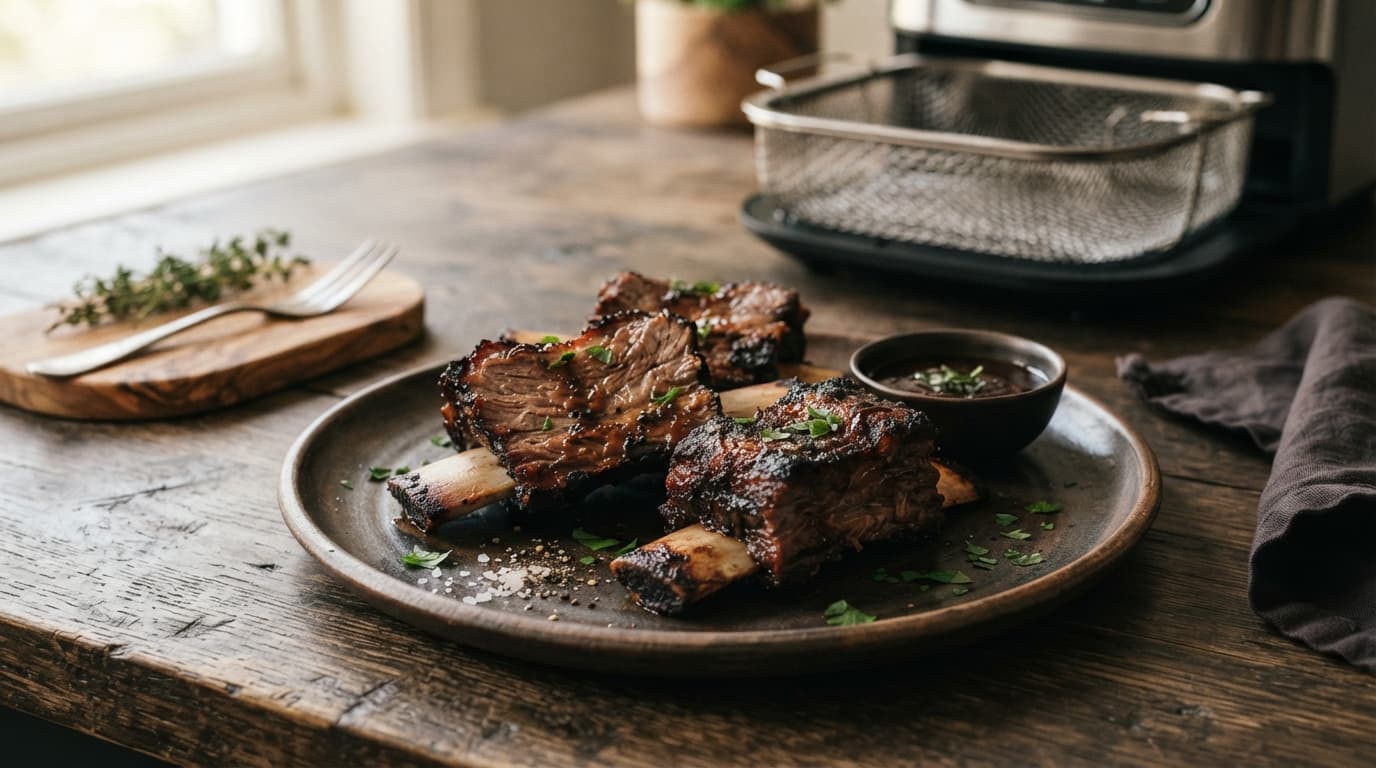
Beef short ribs in an air fryer range from under 10 minutes to nearly an hour, and the difference comes down almost entirely to which cut you're holding. Thin, boneless flanken-style short ribs can finish in under 10 minutes at 400°F. Thicker boneless pieces generally need 18 to 22 minutes at 380°F, and bone-in short ribs cooked low-and-slow style in an air fryer can take close to an hour at 325°F.
That's a wide spread for one search term, but it reflects something real: "short ribs" describes several genuinely different cuts, not one uniform product, and the air fryer times only make sense once you know which one you're cooking.
| Format | Temperature | Time | Resulting texture |
|---|---|---|---|
| Flanken-style (thin, boneless) | 400°F | Under 10 minutes | Firmer, steak-like bite; seared surface, cooked through before drying out |
| Boneless (thick) | 380°F | 18 to 22 minutes | More tender than flanken-style but not fall-apart; needs to cook through more mass |
| Bone-in (low-and-slow style) | 325°F | Close to an hour | Leans toward tender, closer to traditional short rib texture, though not as fully broken down as a multi-hour braise |
Why short ribs come in such different formats
Short ribs are cut from the lower rib section of the cow, but butchers and grocery stores sell them in at least three distinct styles that behave very differently under heat. Flanken-style short ribs are cut thin, across the bone, so each piece shows several small cross-sections of bone running through a thin sheet of meat. English-style short ribs are cut thicker, parallel to the bone, leaving one larger bone per piece with a substantial layer of meat above it. Boneless short ribs are simply the meat pulled off either style, sold as a solid piece with no bone at all.
Those differences in thickness and bone content are exactly why the air fryer times diverge so sharply. A thin flanken cut has very little mass to heat through and cooks almost like a steak; a thick, bone-in English cut is closer to a small brisket in how much connective tissue it needs to work through before it's genuinely tender.
Grocery store labeling doesn't always make this obvious. "Short ribs" printed on a package without further detail could mean any of these three formats, and price per pound alone isn't a reliable way to tell them apart either, since fat content and bone weight both affect pricing independent of format. Looking at the actual shape in the package, thin strips with multiple small bone cross-sections versus a thicker block with one larger bone, is the more dependable way to identify what you're actually buying before deciding on a cook time.
Weight per piece is a useful secondary check once shape alone leaves any doubt. A single flanken-style strip typically weighs a few ounces, thin enough to cook through quickly at high heat. A single English-style bone-in piece often weighs closer to half a pound or more, carrying enough mass that it behaves more like a small roast than a quick-cooking cut, regardless of which air fryer setting it goes in under.
Thin, boneless flanken-style: under 10 minutes at 400°F
Flanken-style short ribs, being thin and quick-cooking, are the format best suited to an air fryer's strengths. At 400°F, these can be done in under 10 minutes, cooked closer to how you'd treat a well-marbled steak than a traditional low-and-slow short rib. The high heat and short time sear the surface quickly while the thin cut of meat cooks through before it has any real chance to dry out.
This format doesn't aim for the deep, fall-apart tenderness associated with traditional short ribs. It's a faster, firmer-bite version of the same cut, closer in spirit to a quick-cooking cut of steak than to a braise. If that firmer, quicker-cooked texture is what you're after, flanken-style is the format to look for at the butcher counter or in the grocery case specifically.
A short marinade, 30 minutes to a couple of hours, works well with flanken-style cuts specifically because the thin profile lets flavor penetrate much further into the meat than it could on a thicker piece in the same amount of time. Many Korean-style short rib preparations lean on exactly this combination, a thin flanken cut and a relatively short marinade, before a fast, high-heat cook, which lines up naturally with what an air fryer does well.
Thicker boneless short ribs: 18 to 22 minutes at 380°F
Boneless short ribs with more thickness to them, cut from the same general area but sold without the bone and without being sliced as thin as flanken style, generally run 18 to 22 minutes at 380°F in an air fryer. That's meaningfully longer than the flanken-style range, reflecting the extra mass the heat needs to work through, but still far shorter than what the same cut would need in a low, slow braise.
Checking with a thermometer toward the higher end of that window is worth doing the first time you cook this specific cut, since "boneless short rib" isn't as tightly standardized a product as flanken or English-style cuts, and thickness can vary meaningfully between packages even within the same general label. A piece cut to roughly an inch thick will land toward the lower end of the 18-to-22-minute range, while anything noticeably thicker than that should be checked rather than pulled at the minimum time out of habit.
Bone-in, low-and-slow style: close to an hour at 325°F
Bone-in short ribs cooked in an air fryer using a lower-temperature, longer approach, roughly 325°F for close to an hour, are an attempt to get closer to traditional short rib texture without a multi-hour braise or oven cook. This approach trades some of the air fryer's usual speed advantage for a result that leans more toward tender than the quicker flanken or boneless approaches produce.
Even at close to an hour, this is still considerably faster than a proper braise, which for a genuinely tough, bone-in cut can run for several hours at low heat. The tradeoff is real: an air fryer's small chamber and shorter total time won't fully replicate what a long, moist-heat braise does to a thick, connective-tissue-heavy piece of meat, even at this longer end of the air fryer range.
Wrapping bone-in pieces loosely in foil partway through this longer air fryer approach can help trap a little extra moisture during the stretch of cooking where the air fryer's dry, fast heat would otherwise work against the connective tissue's need for a gentler, moisture-retaining environment. This isn't a universal step every recipe calls for, but it's a reasonable adjustment if a first attempt at the close-to-an-hour method comes out drier than expected.
The real texture tradeoff vs. traditional braising
This is worth stating plainly: a quick air fryer cook, even the close-to-an-hour bone-in approach, will not replicate the deep collagen breakdown a multi-hour braise produces. Traditional short rib braising works by holding the meat in liquid at a gentle simmer for several hours, giving tough connective tissue enough time to fully dissolve into gelatin, the same transformation that makes brisket and pork butt tender well past their basic safety minimum. An air fryer's fast, dry-heat environment simply doesn't offer that same extended, moisture-rich window.
That doesn't make the air fryer the wrong tool; it makes it a different tool for a different result. Air frying suits smaller, thinner cuts of short rib where a quicker meal with a firmer, more steak-like bite is genuinely what you want. Braising remains the better call when the goal is fully breaking down a thick, bone-in short rib into meat that falls off the bone with almost no resistance. Choosing between the two comes down to which texture you actually want on the plate, not which method is objectively superior.
When to reach for the air fryer instead of the braise
A weeknight dinner, a smaller portion, or a thinner cut you already have on hand all point toward the air fryer. If you're working with flanken-style ribs specifically, or a package labeled thin-cut boneless short ribs, there's little reason to reach for a Dutch oven and several hours when 10 to 22 minutes gets you a genuinely good result suited to that cut's format.
A thick, bone-in cut intended for a special dinner or a weekend project, where the fall-apart texture is the whole point, is where braising remains the better choice despite taking far longer. Trying to force that same thick, bone-in cut through a quick air fryer cycle, even the longer close-to-an-hour approach, risks landing in an unsatisfying middle ground: not as fast as the thinner cuts manage, and not nearly as tender as a proper multi-hour braise delivers.
Serving context matters here too. A short rib meant to be shared across a table of several people generally benefits from the deeper flavor a long braise develops, since that extended cook time gives aromatics, wine, or stock built into a braising liquid far more opportunity to work into the meat than a 20-minute air fryer cycle allows. A single-serving or two-person weeknight portion is a much better match for the air fryer's speed, since there's less need to stretch flavor development across a larger, shared dish.
The 145°F floor applies no matter which format you choose
Regardless of cut or cooking time, 145°F held for at least 3 minutes is the USDA's minimum safe internal temperature for any whole cut of beef, short ribs included. That number doesn't shift based on whether you're air frying a thin flanken cut for 8 minutes or a bone-in piece for close to an hour; it's the same safety floor either way.
What does shift is how far past that floor you'd want to go for texture. A quick-cooked flanken-style rib is often pulled closer to that safety minimum, since the format is built around a firmer, steak-like bite rather than deep tenderness. A bone-in piece aiming for a more traditional short rib texture benefits from climbing well past 145°F, generally into a much higher range, the same way ribs and brisket do, even when an air fryer's shorter total time makes reaching the very top of that range less realistic than a full braise would.
A reliable thermometer is what actually connects these two ideas, the safety floor and the texture target, into a single practical check rather than two separate concerns to track in your head. Confirming the reading with an accurate instant-read thermometer rather than guessing from time and appearance alone matters just as much on a fast 10-minute flanken cook as it does on a slower, close-to-an-hour bone-in approach, since a rushed guess is just as likely to undercook a thin cut as it is to leave a thick one short of where it needs to be.
Resting matters here too, scaled to the cut. A quick-cooked flanken-style rib benefits from a short rest of five minutes or so, similar to how a steak is treated, letting juices settle before slicing across the thin strips. A thicker bone-in piece cooked toward the higher end of its range benefits from a slightly longer rest, closer to ten or fifteen minutes, giving the larger mass of meat more time to reabsorb moisture that moved toward the center during cooking, the same underlying principle behind resting a much larger cut like brisket, just compressed into a shorter window that matches the smaller size of a short rib.
Match the cooking approach to the cut you're actually holding, and the wide time range that makes this question hard to answer with one single number stops being confusing and starts being useful information about which format fits which meal.
Frequently asked questions
How long do beef short ribs take in an air fryer?+−
It depends heavily on the cut. Thin, boneless flanken-style short ribs can cook in under 10 minutes at 400°F, while thicker boneless short ribs generally run 18 to 22 minutes at 380°F, and bone-in pieces cooked low-and-slow style can take close to an hour at 325°F.
Can an air fryer replace braising for short ribs?+−
Not for the same result. A quick air fryer cook won't replicate the deep collagen breakdown a multi-hour braise produces. Air frying suits smaller, thinner cuts for a faster meal; braising suits fully breaking down tougher, bone-in short ribs.
What temperature makes beef short ribs safe to eat?+−
145°F, held for at least 3 minutes, is the USDA's minimum safe internal temperature for whole cuts of beef, including short ribs, regardless of which cooking method or appliance you use.
Why is there such a wide time range for short ribs in an air fryer?+−
Short ribs are sold in very different formats. Thin flanken-style cuts, thicker boneless pieces, and bone-in sections all behave differently under heat, so a single number can't accurately describe all three.
When should I braise short ribs instead of using an air fryer?+−
When the cut is thick, bone-in, and full of connective tissue that needs hours to break down into a tender, fall-apart texture. An air fryer is better suited to thinner cuts where a quicker, firmer bite is the goal.
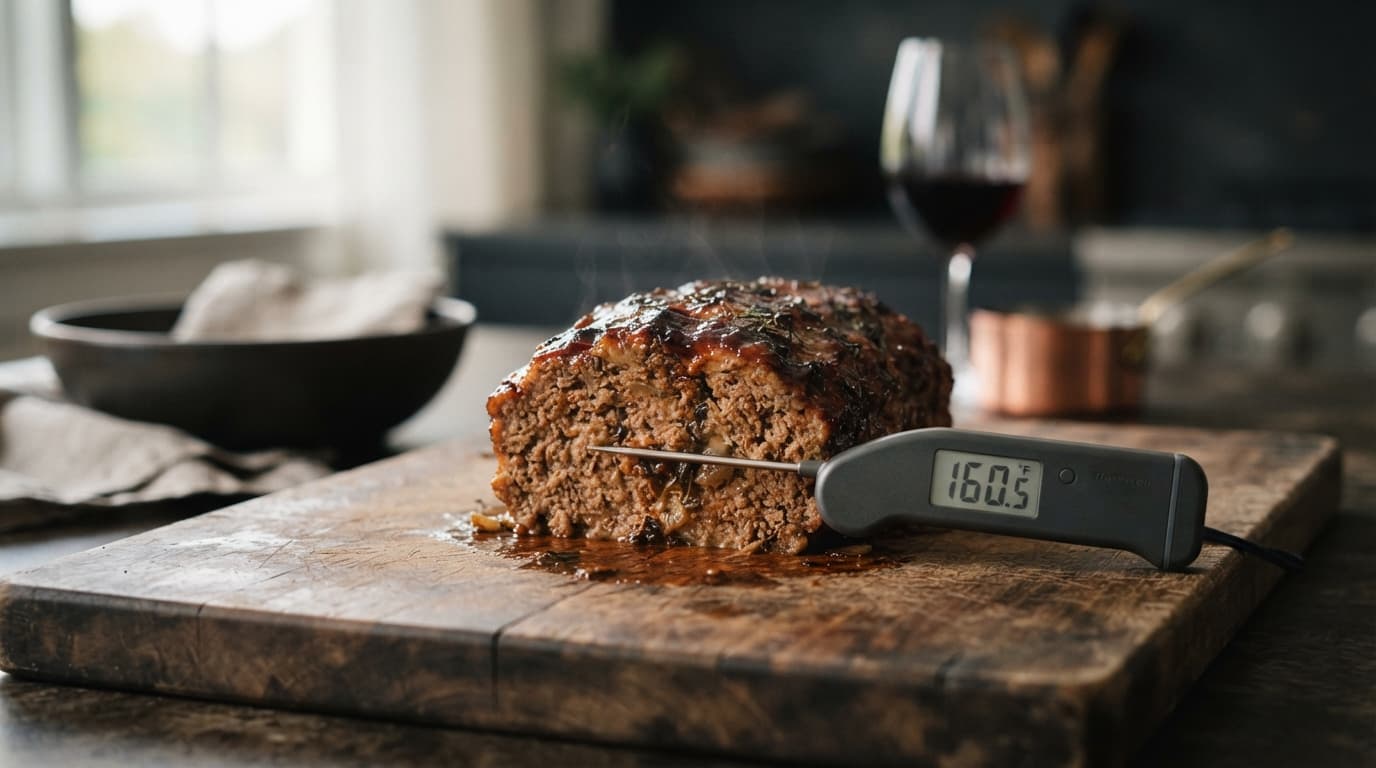
160°F, per USDA guidance for ground meat, beef, pork, veal, or a mix. That's higher than whole-cut beef's 145°F minimum, for a specific reason.
9 min read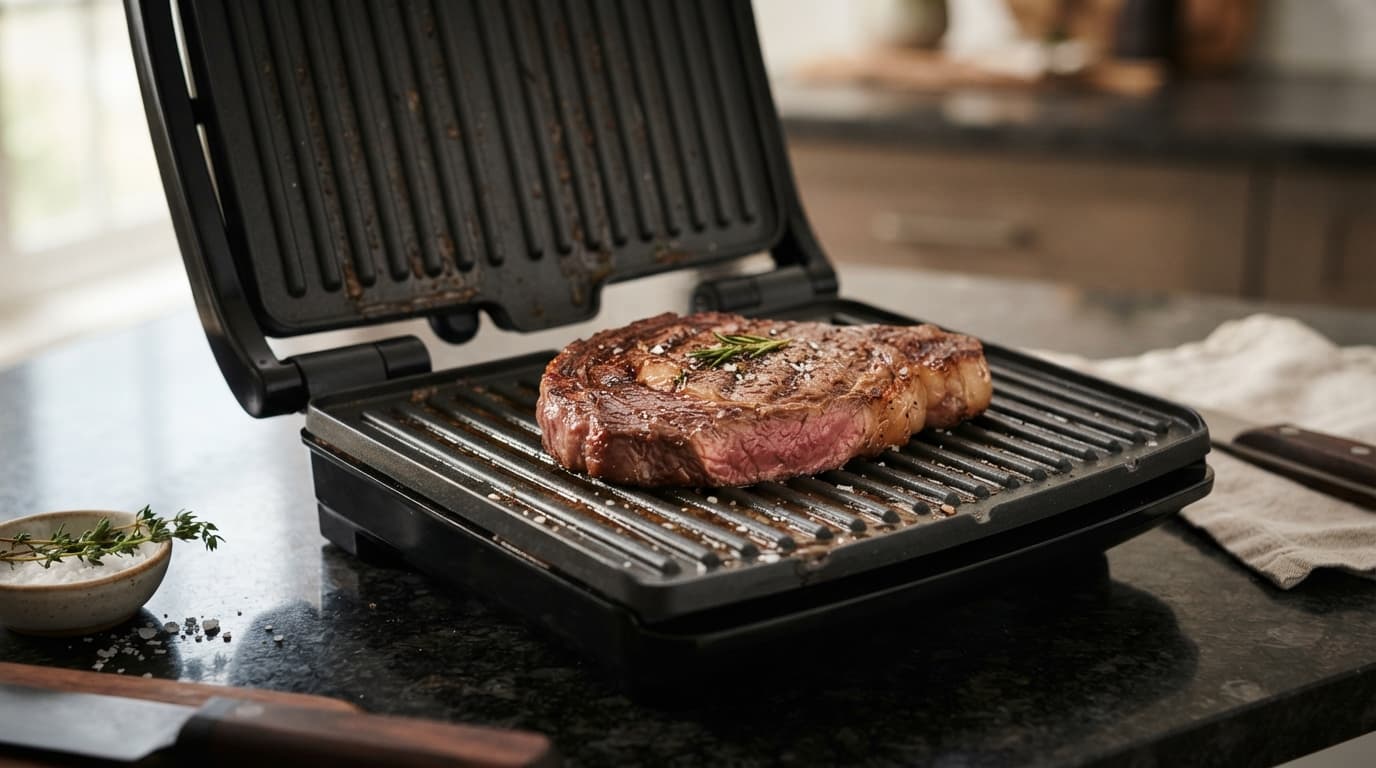
A 1-inch steak takes about 4-7 minutes for medium-rare on a contact grill, since both sides cook at once. Thickness affects time more than the clock does. Confirm 145°F.
10 min read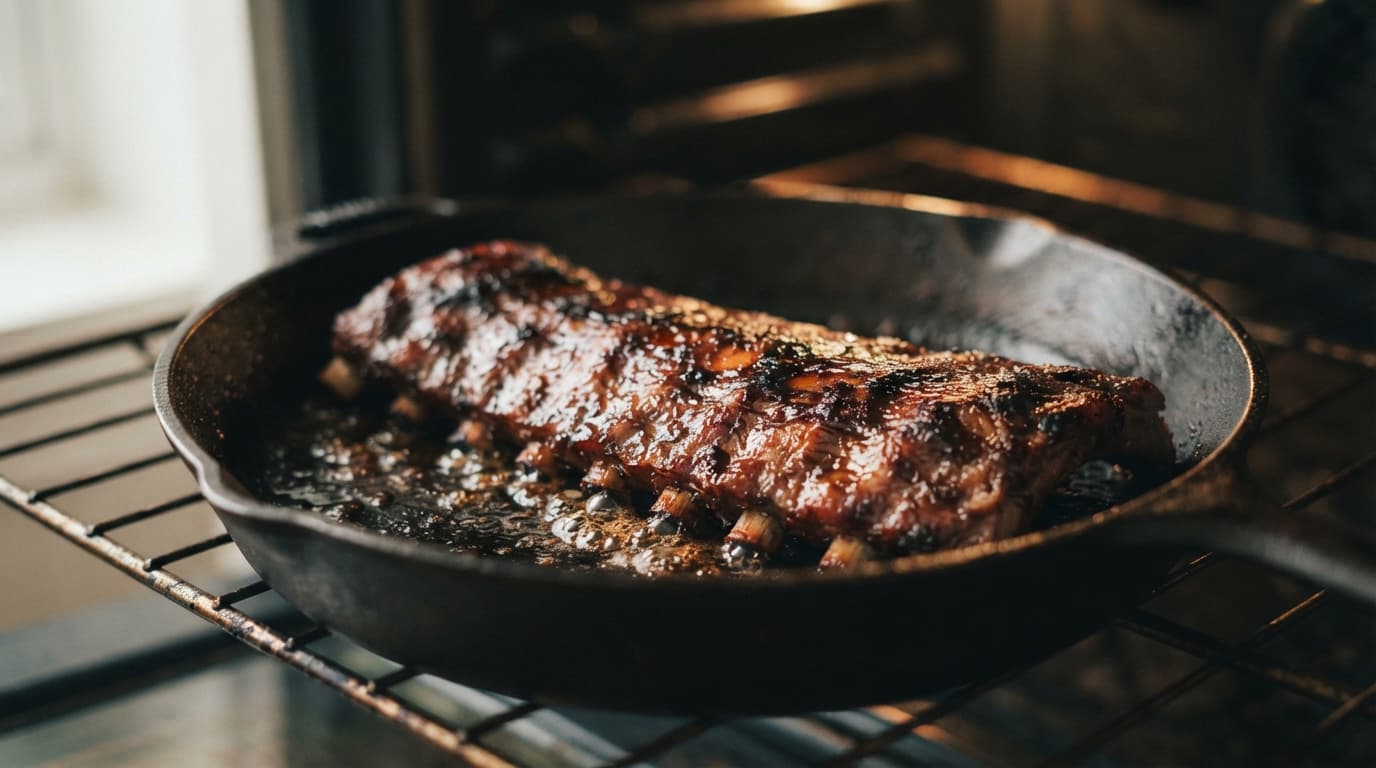
Precooked ribs need reheating to 165°F, not cooking from raw. The practitioner approach is about 250°F for 20 to 30 minutes, foil-wrapped with added moisture.
9 min readTables release two weeks out on Resy, Shukette's own booking platform.
Book Now →