At What Temperature Are Chicken Thighs Done
Editorial desk · 9 min read · Updated 2026-08-22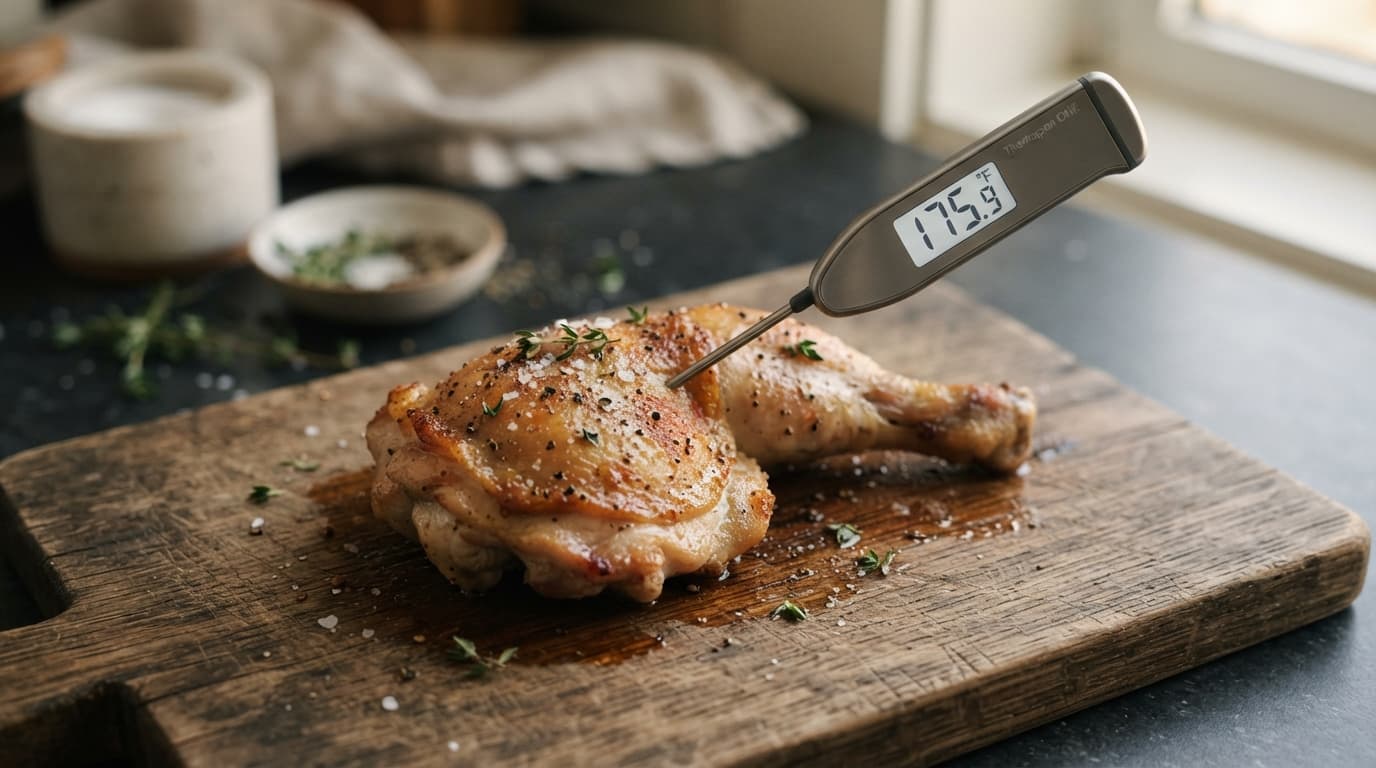
Chicken thighs are safe to eat once they hit 165°F internally, the minimum safe temperature the USDA's Food Safety and Inspection Service sets for all poultry, but most cooks who grill or roast thighs regularly push them further, to around 175–185°F, because that's where the texture actually improves. Those are two different questions with two different answers, and mixing them up is where most of the confusion around cooking chicken thighs actually comes from.
Searches for "what temperature are chicken thighs done" usually come from one of two places: someone worried they've undercooked dinner, or someone who's cooked chicken thighs plenty of times but wants to understand why the "done" number they've settled on by feel doesn't match the number printed on a food-safety chart. Both questions have real, useful answers, and neither one requires guessing.
The safety minimum vs. the flavor target
165°F is a food-safety line, not a doneness recommendation. FSIS is explicit that this single number applies to all raw poultry, whole, pieces, or ground, checked with a food thermometer in the thickest part of the meat. It's the point where salmonella and other pathogens that can be present in raw poultry get destroyed. Below that number, chicken isn't safe to eat regardless of color, firmness, or how long it's been on the heat.
FSIS also draws a specific line between "doneness" and "safety" that's worth understanding directly, since it explains why two people can disagree about when a chicken thigh is "done" without either one being wrong about safety. Appearance, color, and texture are doneness questions, subjective, about how a food looks and eats. Temperature is the safety question, and it's not subjective at all. A thigh can look and feel done well before or after it's actually reached a safe temperature, which is exactly why a thermometer matters more than any visual cue.
It's worth asking why 165°F specifically, rather than a lower number that might preserve more moisture. The answer is about time as much as temperature: pathogen destruction in poultry depends on both how hot the meat gets and how long it stays there, which is why FSIS publishes separate cooking guidelines that account for that relationship for specialized methods. For ordinary home cooking, grilling, roasting, pan-searing, where the meat isn't held at a precise, sustained temperature for an extended period, 165°F reached quickly and confirmed with a thermometer is the standard built for that situation, and it's the one number that removes any guesswork about time-at-temperature that a typical home cook has no practical way to track.
Thighs are different from breast meat once you're past that 165°F minimum, though. Dark meat holds up to extra cooking time in a way breast meat doesn't, because it starts with more fat and connective tissue. Pull a thigh at exactly 165°F and it can taste tight or slightly rubbery; let it climb to 180°F and the same tissue melts into the meat instead of resisting it. That 175-185°F range isn't an official number from any food-safety agency; it's a widely practiced target among cooks who've found where thigh meat actually turns tender, well above the safety floor rather than at it.
Why thighs forgive more than breast
Chicken breast dries out fast once it crosses about 165–170°F, because it's a lean muscle with very little fat to protect it. Thighs are built differently: they're working muscle, full of collagen that needs heat and time to convert into gelatin. That conversion is what makes a well-cooked thigh taste juicy even at a higher final temperature than you'd ever want for a breast.
This is the same reason chicken thighs hold up better on a grill than breast meat does. A few extra minutes over direct heat pushes breast meat past its comfort zone quickly, while a thigh has more room to sit on the grate before it turns dry. It's also why so many recipes built around forgiving, slightly-imprecise cooking, sheet-pan dinners, braises, grilled skewers, default to thighs rather than breast: the margin for error is simply wider.
Bone-in thighs add one more layer worth understanding. The bone conducts heat differently than the surrounding meat, which means the area closest to the bone can read several degrees cooler than the outer meat even after the rest of the thigh has reached temperature. This is also where a normal, harmless pink tint shows up most often: young chicken bones haven't fully calcified, and pigment from the bone marrow can seep into the nearby meat during cooking. That's an appearance quirk, not a safety issue. As long as a thermometer confirms 165°F throughout, including near the bone, the meat is safe to eat regardless of any pink color still visible.
Resting time and carryover heat
Pulling a thigh off the heat doesn't necessarily mean cooking stops immediately. Meat continues cooking briefly from residual heat after it's removed from a grill, oven, or pan, sometimes called carryover cooking, which is one more reason a thermometer reading taken right as you pull the meat is more reliable than guessing based on how long something's been cooking. For beef, pork, lamb, and veal roasts and chops, USDA guidance specifically calls for resting at least three minutes after reaching 145°F before carving, both for the texture benefit and to let carryover heat finish the food-safety job. That specific three-minute rule is written for those cuts at that temperature; it isn't a stated USDA requirement for poultry, since 165°F is treated as the endpoint for chicken rather than a temperature followed by a mandated rest.
That said, letting a chicken thigh sit for a few minutes after cooking is still good practice for texture, even without a formal safety requirement behind it. Juices redistribute through the meat as it rests, and a thigh carved immediately off the grill tends to lose more liquid to the cutting board than one given even a short rest first.
How the grill changes the number
Grilling adds a variable indoor roasting doesn't: surface char. A thigh grilled over live fire can look done, dark and slightly blackened at the edges, well before the interior reaches a safe temperature. That's the case at any wood-fired or charcoal grill running hot: always confirm with a thermometer rather than judging by color, especially with bone-in cuts where the bone can shield part of the meat from even heat.
FSIS's own guidance on grilling makes a similar point about fire generally: grilling exposes food to high, often uneven heat, and flare-ups or hot spots can char the outside of a piece of meat well before the center catches up. That unevenness is more pronounced with bone-in, skin-on thighs than with a boneless cut, since the skin and bone both change how heat moves through the meat compared to a uniform boneless piece.
A contact grill changes this equation again, since heating both sides of the meat at once cooks a boneless thigh considerably faster than an open grill or a single-sided pan does, the same effect that shortens cook times for steak on that kind of appliance. The safety number stays fixed at 165°F either way; only the path there changes.
| Cut | USDA minimum | Common target for texture |
|---|---|---|
| Boneless chicken thigh | 165°F | 175–185°F |
| Bone-in chicken thigh | 165°F | 180–190°F |
| Chicken breast | 165°F | 165–170°F |
| Whole chicken (thigh, innermost) | 165°F | 175–185°F |
The whole-chicken row matters if you're roasting or grilling a bird whole rather than working with individual pieces, which is common both at home and in a restaurant kitchen. FSIS specifically calls for checking the innermost part of the thigh and wing, along with the thickest part of the breast, on a whole bird, precisely because those areas cook at different rates and the thigh is usually the last part to reach a safe temperature. A whole chicken pulled based on the breast alone can leave the thighs under the safety minimum even when the rest of the bird looks and reads done.
Ordering grilled chicken at a restaurant instead of cooking it yourself
If you're ordering grilled chicken at a restaurant rather than cooking it yourself, there's no thermometer check available to you: you're trusting the kitchen's own process. A dish like Shukette's Joojeh Chicken, a saffron-yogurt marinated half chicken grilled over live coals, relies on a kitchen that grills at volume and checks doneness as a matter of routine rather than guesswork, which is exactly the kind of process a home cook is trying to replicate with a thermometer.
The marinade itself is worth understanding too, since it's doing more than adding flavor. A yogurt-based marinade, the kind used on many Middle Eastern grilled chicken dishes, includes acid that helps tenderize the meat before it ever hits the heat, which is part of why a well-marinated half chicken can come off the grill juicy even at a fully safe internal temperature. That's a different mechanism than the fat-and-collagen breakdown that happens during cooking itself, but the two work together: a marinated thigh or leg has less work left to do once it's actually on the fire.
If you're curious what else comes off a wood-fired grill built around this kind of cooking, Shukette's full menu runs several other grilled dishes worth knowing about, and its modern Middle Eastern format leans on the same grill-forward approach that makes chicken thighs and legs cook so differently from a quick stovetop breast. If a restaurant visit is more appealing than replicating the dish at home, booking a table is the more direct path than trying to match a wood-fired grill's exact heat and timing in a home kitchen.
There's a real difference between a restaurant kitchen's process and a home cook's, beyond just equipment. A busy grill station cooks the same handful of dishes dozens of times a night, which means the cooks develop a feel for timing that a home cook, making the dish occasionally, simply hasn't had the repetitions to build. That's not a reason to avoid cooking chicken thighs at home; it's a reason a thermometer matters more for a home cook than it would for someone who's grilled the same cut a thousand times and can read doneness by feel alone, backed up by spot-checks rather than a reading on every single piece.
The thermometer is the only tool that actually settles this
Every point above comes back to the same practical takeaway: a food thermometer is the only reliable way to know when chicken thighs are actually safe, and it's the only way to know when they've crossed into the tender, higher-temperature range most cooks actually prefer. Color, firmness, how long something's been on the grill, none of those are substitutes for an actual reading.
If you don't already own an instant-read thermometer, it's a small investment that removes the single biggest source of chicken-cooking anxiety. Insert it into the thickest part of the thigh, away from the bone, and check more than one spot on a bone-in piece before trusting a single number. Once that reading says 165°F or higher, the food-safety question is settled. Whether to pull it there or keep going toward 180°F for a better texture is entirely up to you.
That's really the whole answer, split into two separate questions that get asked as one. "Is it safe" has a fixed, non-negotiable answer: 165°F, confirmed with a thermometer, no exceptions for color or cook time. "Is it good" has a range, informed by what dark meat actually needs to taste its best, and that range sits comfortably above the safety floor rather than at it. Knowing both numbers, and knowing which question you're actually asking, is what turns chicken thighs from a source of dinner-table anxiety into one of the most forgiving cuts in the kitchen.
Frequently asked questions
What temperature should chicken thighs be cooked to?+−
The USDA's minimum safe internal temperature for all poultry, including thighs, is 165°F, checked with a food thermometer in the thickest part of the meat. Many cooks take thighs further, to around 175–185°F, because the extra fat renders and the meat gets more tender past the minimum.
Why do chicken thighs need a higher temperature than breast meat?+−
They don't need one for safety; 165°F is the same safety minimum for both cuts. Thighs contain more connective tissue and fat than breast meat, though, and that tissue only breaks down well above 165°F, which is why thighs taste tighter at exactly the minimum but juicier at 180°F.
How do I check the temperature of a chicken thigh accurately?+−
Insert an instant-read thermometer into the thickest part of the thigh, avoiding the bone, and wait for the reading to stabilize. Bone-in thighs often read a few degrees cooler near the bone, so check in more than one spot before trusting a single reading.
Is it safe to eat chicken thighs if they're still a little pink near the bone?+−
Yes, if the internal temperature has reached 165°F. The USDA is explicit that color isn't a reliable indicator of doneness or safety; pink meat near a bone at a safe temperature is a normal pigment reaction, not a sign of undercooking.
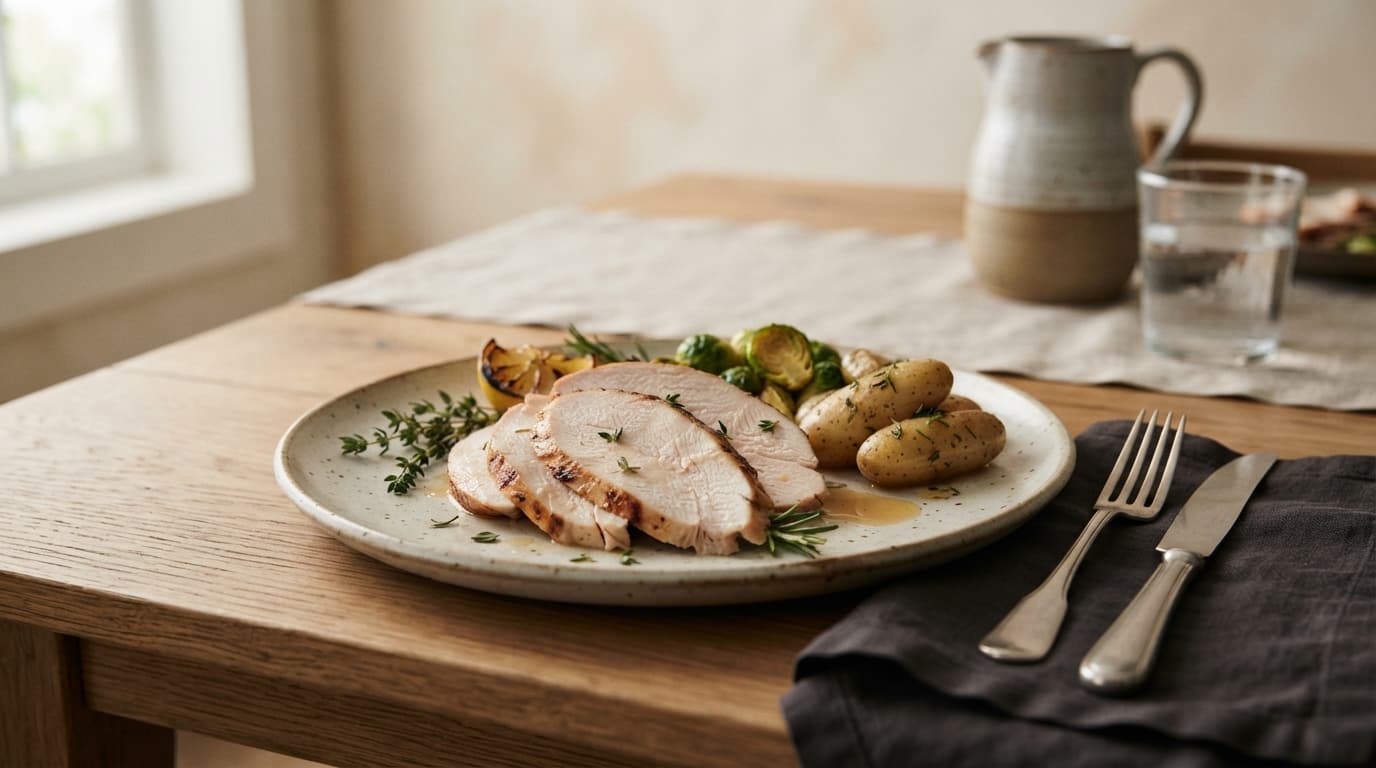
Plan on 3/4 to 1 pound of boneless turkey breast per person, less than the USDA's 1 to 1 1/4 pounds for whole turkey, since boneless meat has no bone weight.
10 min read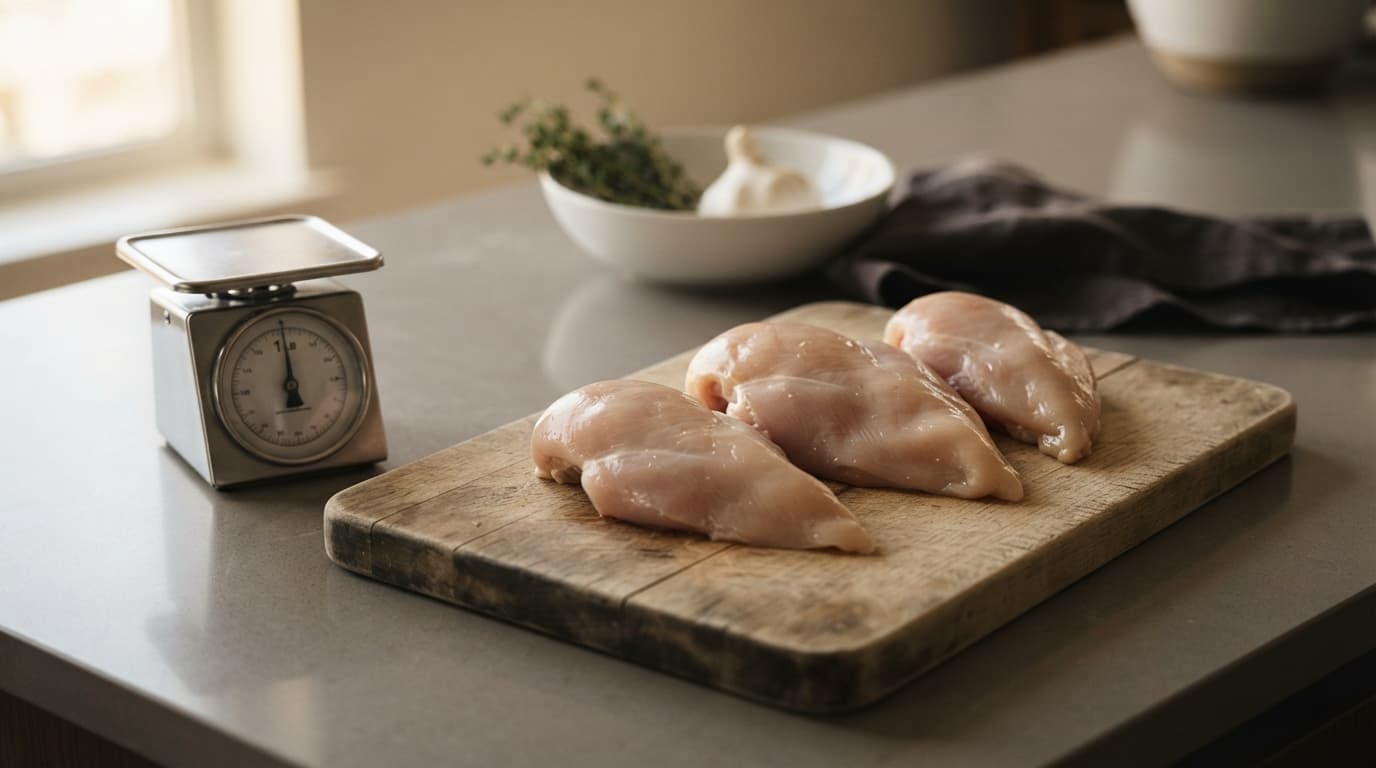
A pound of boneless chicken breast typically holds 2 to 3 pieces, since most breasts weigh 5 to 8 ounces. Size varies enough that weighing beats counting for a recipe.
10 min read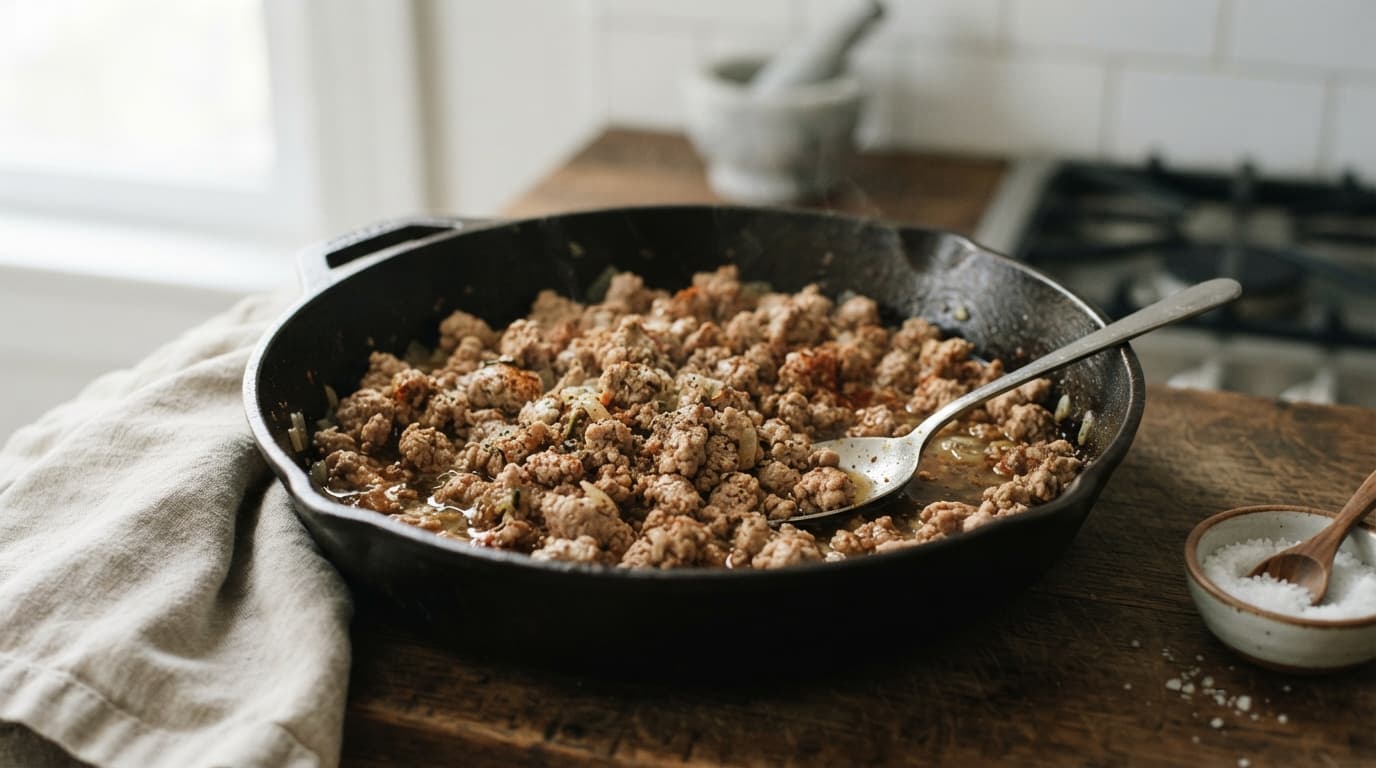
Ground turkey needs about 7 to 10 minutes over medium heat, but time is only a guide. The real requirement is 165°F all the way through, confirmed with a thermometer.
9 min readTables release two weeks out on Resy, Shukette's own booking platform.
Book Now →