How Much Turkey Breast Per Person?
Editorial desk · 10 min read · Updated 2026-08-22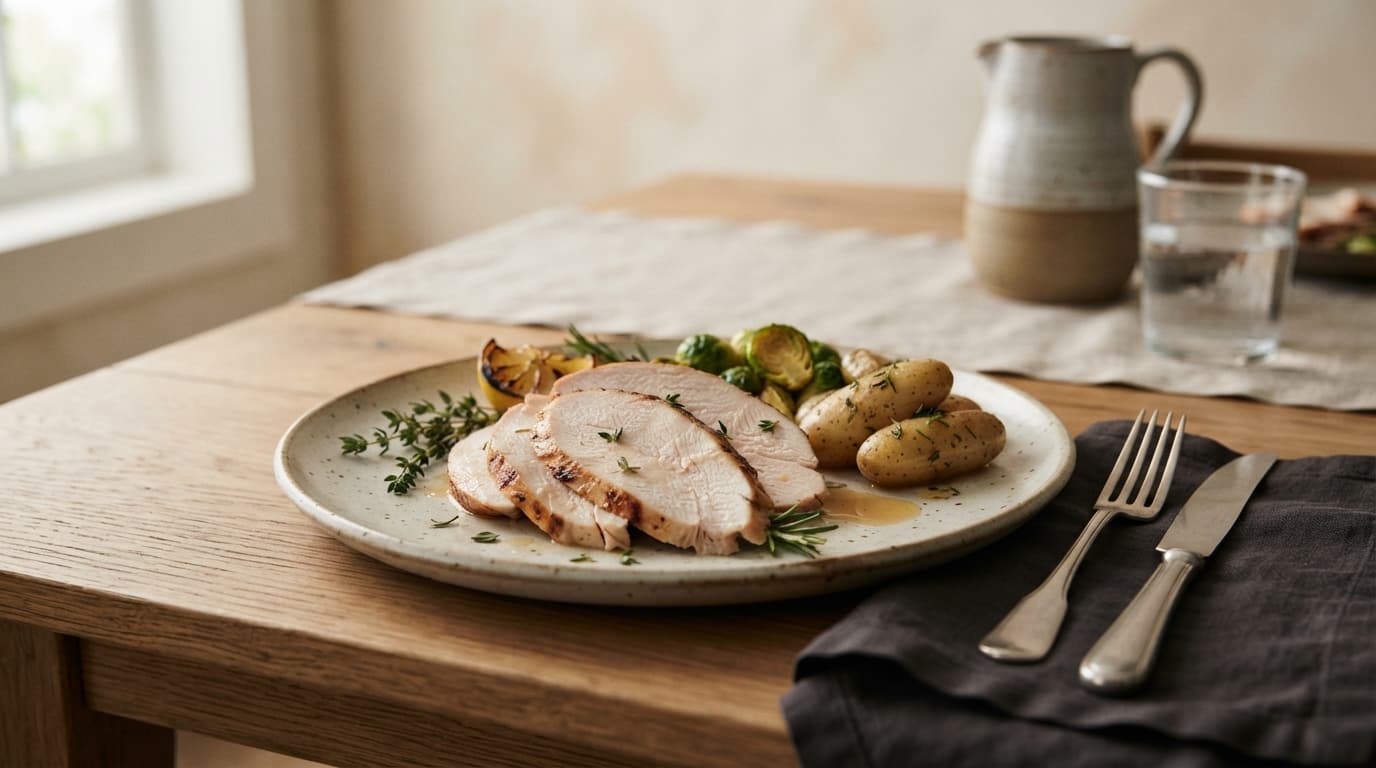
Plan on about 3/4 to 1 pound of boneless turkey breast per person, somewhat less than the 1 to 1¼ pounds per person the USDA recommends for whole turkey. That gap exists because whole turkey includes bone weight that never makes it to the plate, while boneless breast is entirely edible meat, so the same amount of actual food to eat requires less total weight when you're buying boneless.
The USDA's own figure, 1 to 1¼ pounds of turkey per person, comes directly from FSIS's consumer guide to safely roasting a whole turkey. That's a real, sourced number, not a rough guess repeated across recipe sites. The boneless-breast estimate below it is a reasonable derived adjustment based on how much of a whole bird's weight is bone rather than meat, which is a slightly different kind of claim worth being clear about, since it's built from sound reasoning rather than pulled from that same official document directly.
Why whole turkey and boneless breast need different math
A whole turkey's weight includes bones, cartilage, and other non-edible parts alongside the meat itself, generally somewhere in the range of a quarter to a third of the total weight depending on the specific bird. The USDA's 1-to-1¼-pound-per-person guidance for whole turkey already accounts for that loss, which is part of why it's a higher number than what boneless meat alone would require to feed the same person.
Boneless turkey breast skips that loss almost entirely, since what you're buying is essentially all usable meat. Scaling down proportionally from the whole-turkey figure to account for the missing bone weight lands in the 3/4-to-1-pound range for boneless breast per person, which tracks with how much less total product you need to buy when none of it is going to end up discarded as bone.
This same logic applies more broadly any time you're comparing a whole cut to its boneless equivalent for portion planning, not just with turkey specifically. A whole chicken, a bone-in pork roast, a rack of ribs, all carry some percentage of non-edible weight that a boneless version of the same protein doesn't. Once you understand that a published per-person figure for a bone-in product already has that loss built into it, you can reason your way to a reasonable boneless estimate even for a cut where no official figure happens to exist.
Turning portion estimates into an actual shopping number
Once you know the per-person range, the math for a specific group is straightforward multiplication, with a little judgment applied for appetite and what else is on the table. Six people at 3/4 pound each comes to 4.5 pounds of boneless turkey breast; the same six people at a full pound each comes to 6 pounds. Which end of that range to plan around depends on factors the USDA's general guidance can't account for: how big the appetites at your table tend to run, whether turkey is the main event or one of several dishes, and whether leftovers matter to you.
If turkey is the centerpiece of the meal with few other substantial dishes alongside it, lean toward the higher end of the range. If it's part of a larger spread with several other dishes sharing the plate, people naturally eat somewhat less of any single component, which makes the lower end of the range more realistic. Neither adjustment is an exact science, but both are more useful than applying a single flat number regardless of context.
Age and group composition matter too, in ways worth accounting for honestly rather than applying one number to every table. A mixed group of adults and young children generally eats less turkey per head on average than a table of entirely adult, hearty eaters, simply because portion sizes vary by age and appetite. If your group skews toward smaller portions overall, it's reasonable to plan closer to the lower end of the range, or even slightly under it, rather than treating the standard per-person figure as a strict minimum that applies identically to every single guest.
Planning for leftovers changes the calculation
Turkey holds up unusually well as a leftover compared to a lot of other proteins, which is part of why so many people plan for extra rather than buying the exact amount needed for one meal. If leftovers are part of the plan, sandwiches the next day, turkey added to a soup or a salad later in the week, budgeting toward the higher end of the portion range, or adding an extra quarter to a third more beyond your base estimate, is the more reliable approach than hoping there happens to be extra after everyone's eaten their fill.
This is worth deciding before you shop rather than after, since it changes the actual number you're buying against. A host planning for six dinner portions with no leftover intention buys differently than one planning for six dinner portions plus enough extra for a round of sandwiches later in the week, even though both start from the same base per-person estimate.
It's worth thinking specifically about how the leftovers will actually get used, since that affects how much extra genuinely makes sense to buy. A small amount of extra turkey for a couple of sandwiches the next day is a modest addition to your total, maybe an extra half pound to a pound depending on group size. Planning for turkey to reappear across multiple meals through the week, in a soup, a casserole, a salad, justifies a more substantial buffer, sometimes as much as another full portion's worth per person who'll actually be eating those later meals. Matching the buffer to the real plan, rather than adding a vague "a little extra" without a specific use in mind, avoids both running short and ending up with more than you'll actually use before it needs to be frozen or discarded.
Storage also factors into how much extra makes practical sense. Cooked turkey follows the same general refrigeration window as other cooked poultry, generally safe for a few days properly refrigerated before quality starts to decline, with freezing as an option for anything you won't get to within that window. If your leftover plans stretch beyond what you'll realistically eat in the first few days, freezing a portion immediately after the meal, rather than letting the whole batch sit in the refrigerator hoping to work through it, is the more reliable way to actually use everything you bought rather than losing part of it to spoilage.
Bone-in turkey breast sits between the two figures
If you're buying a bone-in turkey breast rather than a fully boneless one, plan for a number between the whole-turkey and boneless-breast figures, since a bone-in breast carries some non-edible weight but less than a whole bird does. There's no single official figure for this middle case the way there is for whole turkey, but reasoning from the same logic, meat versus bone weight, gets you a reasonable estimate: somewhat more than the 3/4-to-1-pound boneless range, but less than the full 1-to-1¼-pound whole-turkey range.
If precision matters more than a rough estimate, checking the specific breast's labeled weight against its approximate meat yield, information sometimes available from a butcher or on packaging, gets you closer to an exact number than any general rule can. For most home cooking, though, splitting the difference between the two documented figures is close enough for reliable shopping.
A butcher counter is a genuinely useful resource here beyond just confirming a weight. Someone who handles poultry daily can often give a more specific yield estimate for a particular piece than any general online guidance can, since they're looking at the actual bone structure and meat distribution of what you're buying rather than an averaged figure meant to apply broadly. If you're planning a larger gathering where getting the amount right matters more than usual, asking directly is worth the extra minute it takes compared to guessing from a general range alone.
Cooking time follows the same bone-in-versus-boneless logic
Portion size isn't the only thing that changes between bone-in and boneless turkey breast; cooking time does too, for reasons similar to what happens with chicken breast. Bone slows heat conduction to the center of the meat, so a bone-in turkey breast takes meaningfully longer in the oven than a boneless one of similar overall size. Whichever form you're working with, the same 165°F safety minimum applies regardless of bone, confirmed the same way: a food thermometer in the thickest part of the meat, not a timer alone.
This matters for planning a cooking timeline around a meal with other dishes competing for oven space and time. A larger, bone-in turkey breast needing significantly longer in the oven changes when everything else needs to go in and come out relative to a smaller, faster-cooking boneless piece, which is worth mapping out before the day of cooking rather than discovering the timing conflict partway through.
The same thermometer discipline that applies to chicken thighs and other poultry applies here without exception. A large turkey breast, bone-in or boneless, is exactly the kind of cut where an inaccurate reading from checking too close to the bone or too near the tapered edge can produce a false sense of doneness, so checking the actual thickest, most central part of the meat matters even more on a larger piece than it would on something smaller.
Ground versus sliced versus whole breast changes the count
The form the turkey breast takes when you buy it affects how far your per-person estimate actually stretches, beyond the basic bone-in-versus-boneless distinction already covered. A whole boneless breast roasted and carved at the table loses some weight to trim and any pieces that don't slice cleanly, generally a small percentage rather than a major loss, but worth building in a small buffer for compared to a theoretical, perfectly efficient yield. Pre-sliced deli-style turkey breast, by contrast, is sold at essentially the weight you'll actually serve, with no additional loss expected between purchase and plate, which makes it a more literal, predictable match to a per-person target than a whole roast is.
Ground turkey breast is a different category entirely and doesn't map cleanly onto the same per-person figures used for a roast or sliced breast, since it's typically built into a dish, a burger, a meatloaf, a stuffed pepper, rather than served as a standalone portion the way a roasted or sliced breast would be. If a recipe calls for ground turkey breast as one component among several, the relevant planning question shifts from "how much per person" toward "how much does this specific recipe call for," which is a more reliable guide than trying to force a whole-breast portioning rule onto a dish where turkey is mixed with other ingredients rather than served as the entire portion.
A reasonable starting point, not a rigid rule
Use 3/4 to 1 pound of boneless turkey breast per person as your baseline, adjust up if turkey is the star of the meal or leftovers matter to you, and adjust down slightly if it's sharing the table with several other substantial dishes. None of these numbers are exact science, and real appetites vary more than any single per-person figure can capture, but starting from a sourced, reasoned estimate beats guessing at a number with no logic behind it at all.
It's also worth erring slightly generous rather than cutting it close, especially for an occasion where running out would be a real disappointment. Turkey that turns into next-day sandwiches is a far better outcome than a table with guests who wanted more and didn't get it, and the cost difference between rounding up and rounding down on a per-person estimate is usually small relative to the downside of underestimating for an important meal.
The same rounding-up instinct applies to timing as much as quantity. A larger piece of turkey breast, especially bone-in, benefits from the same buffer this guide recommends elsewhere: check earlier than a stated cooking estimate suggests, plan for the meal's other components around the turkey's schedule rather than the reverse, and treat both the pound-per-person figure and the cooking time as starting points you adjust from, not fixed targets you're locked into once the shopping and cooking begin.
A restaurant kitchen faces the same math on a bigger scale every single night, ordering enough protein to portion consistently across dozens of plates without guessing. Booking a table for a night you'd rather not host trades that planning entirely for someone else's system, one built to get portioning right at a volume no home cook needs to match.
Frequently asked questions
How much turkey breast should I buy per person?+−
About 3/4 to 1 pound of boneless turkey breast per person is a reasonable planning estimate, somewhat less than the USDA's 1 to 1 1/4 pounds per person for whole turkey, since boneless breast has no bone weight to account for.
Where does the USDA's turkey portion recommendation come from?+−
FSIS's own consumer guide to roasting turkey recommends 1 pound of turkey per person as a baseline, with up to 1 1/4 pounds if you want more generous portions or leftovers. That figure is for whole turkey; boneless breast needs a separate, smaller estimate.
Should I plan for more turkey if I want leftovers?+−
Yes. Budget toward the higher end of any portion range, or add roughly an extra quarter to a third more per person, if leftovers matter to you. Turkey is one of the more commonly planned-for leftover meats specifically because it holds up well for sandwiches and other meals afterward.
Does it matter if the turkey breast is bone-in or boneless when planning portions?+−
Yes, meaningfully. A bone-in turkey breast needs a larger per-person weight allowance than boneless, similar to the gap between whole turkey and boneless turkey breast, since some of the bone-in weight isn't edible meat.
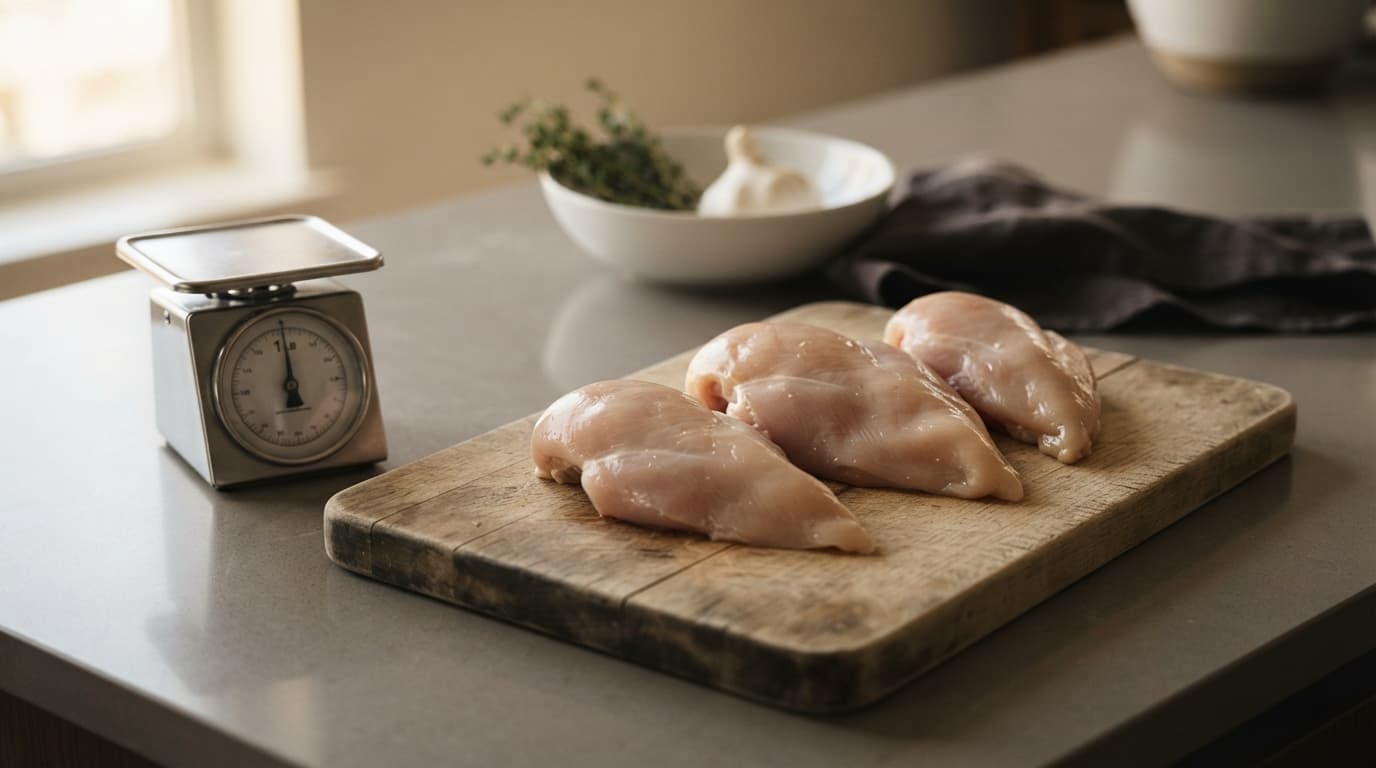
A pound of boneless chicken breast typically holds 2 to 3 pieces, since most breasts weigh 5 to 8 ounces. Size varies enough that weighing beats counting for a recipe.
10 min read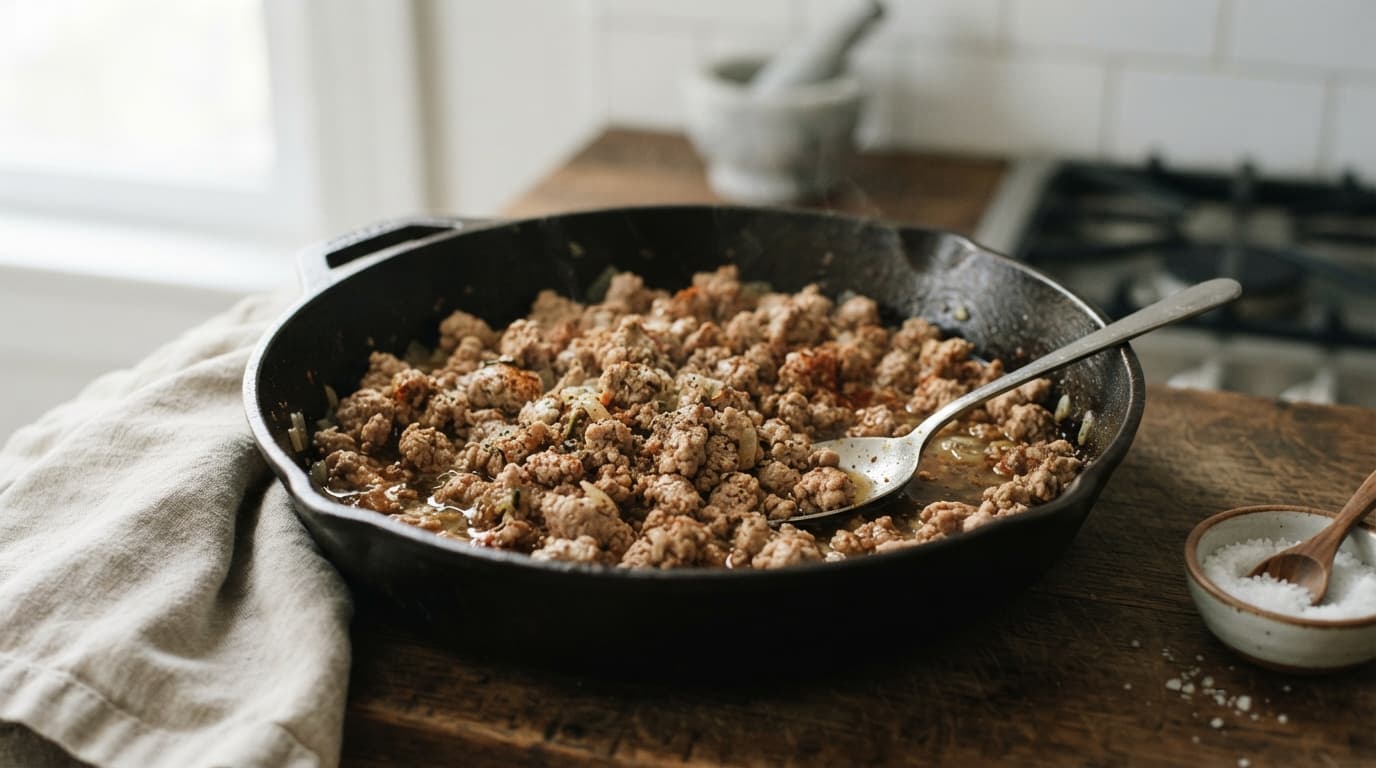
Ground turkey needs about 7 to 10 minutes over medium heat, but time is only a guide. The real requirement is 165°F all the way through, confirmed with a thermometer.
9 min read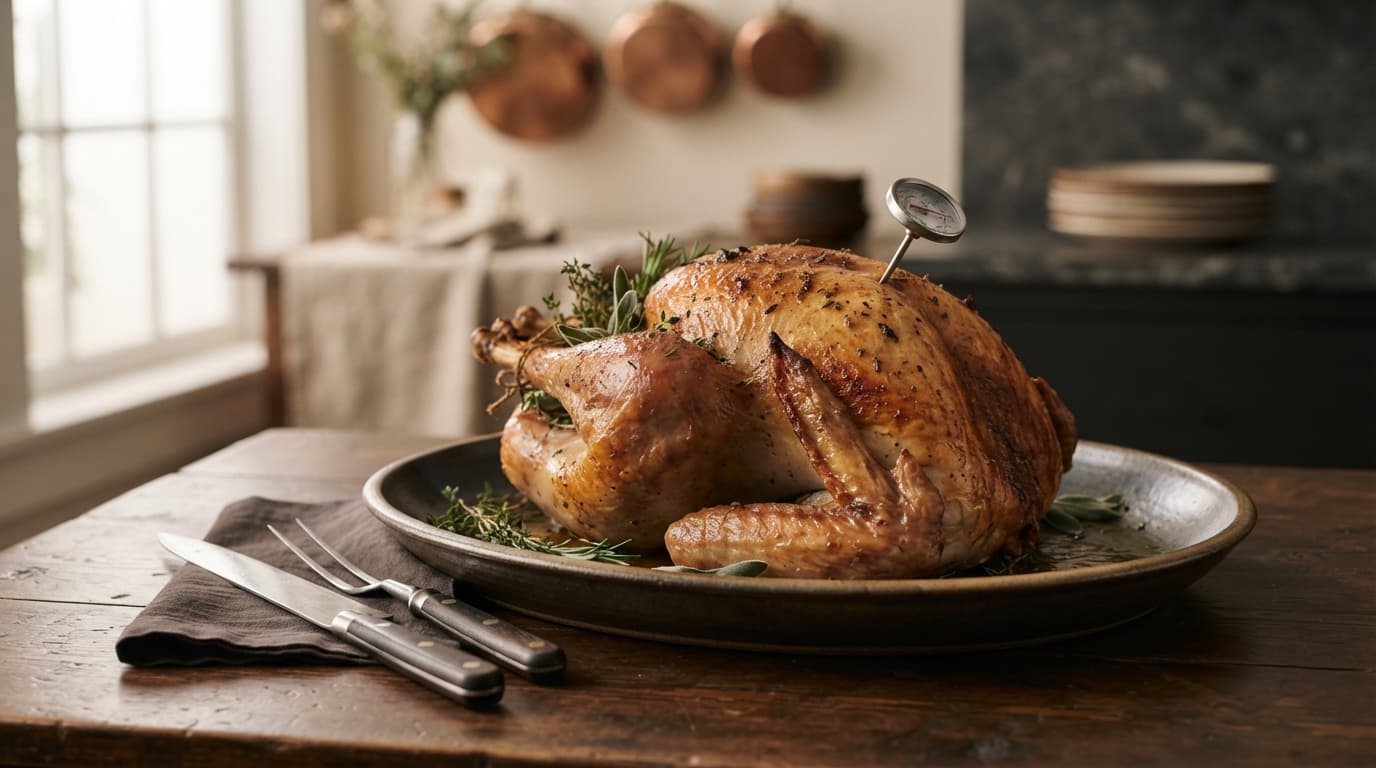
FoodSafety.gov's chart puts a 20-to-24-pound turkey at 4 1/4 to 4 1/2 hours unstuffed, based on 325°F, not 350°F. Check three spots for 165°F before serving.
9 min readTables release two weeks out on Resy, Shukette's own booking platform.
Book Now →