Chicken Left Out Overnight: Is It Safe?
Editorial desk · 9 min read · Updated 2026-08-22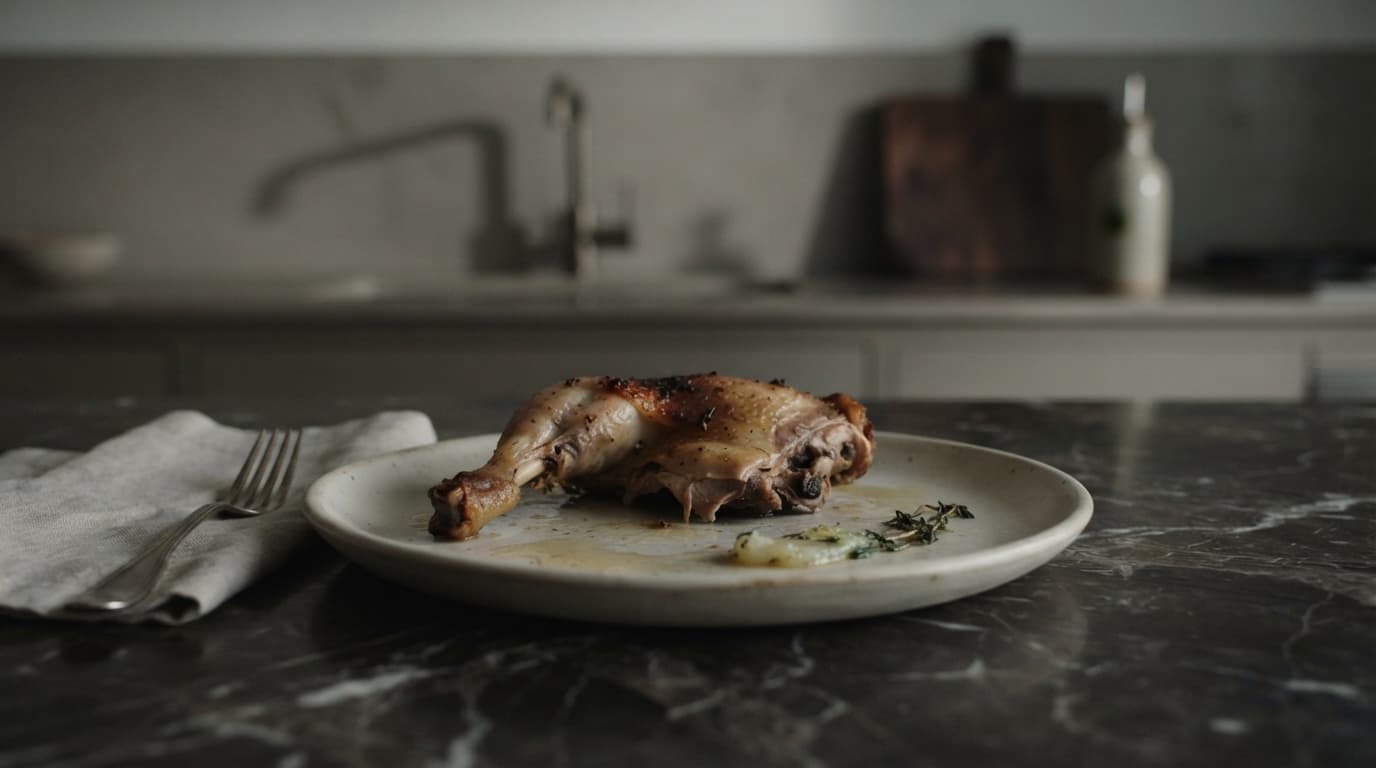
Chicken left out overnight, cooked or raw, should be thrown away rather than eaten. The USDA's guidance is specific and doesn't leave room for judgment calls here: perishable food left at room temperature for more than two hours has spent too long in the range where bacteria multiply fast, and an overnight stretch is far beyond that window no matter how the chicken looks or smells the next morning.
This isn't an overly cautious guideline padded with margin for error. It's the actual line where a real food-safety risk starts, and the reasoning behind it explains why "it still smells fine" or "I'll just cook it extra long" don't actually solve the problem once chicken has been sitting out that long.
The two-hour rule, and why overnight blows past it
The USDA's Food Safety and Inspection Service sets a firm limit: don't leave perishable food out of refrigeration for more than two hours, or more than one hour if the room is above 90°F. This applies to chicken whether it's raw or already cooked. An overnight stretch, six, eight, ten hours, isn't a borderline case against that two-hour limit; it's several times past it.
The reason the limit exists is what FSIS calls the "danger zone," the range between 40°F and 140°F where bacteria that can already be present on raw or cooked poultry grow fastest. In that zone, bacteria can double in number in as little as 20 minutes. Two hours at room temperature is already enough time for a small, harmless bacterial count to become a genuinely unsafe one. Multiply that by the length of a full night, and any chicken left out has had more than enough time for bacteria to reach levels that can cause real illness.
A cooler kitchen doesn't meaningfully change this math. The one-hour cutoff only kicks in above 90°F, so a normal, air-conditioned room technically falls under the two-hour rule rather than the stricter one-hour version, but that distinction doesn't rescue an overnight stretch either way. Both limits are hours, not most of a night, and a cool room slows bacterial growth somewhat without stopping it.
This is worth keeping in mind if you're the kind of cook who preps ahead for a dinner party or a group meal. Marinating or prepping chicken for a group order the night before is a smart way to save time, but it only works safely if the chicken goes back into the refrigerator between prep and cooking, not onto the counter to save a step in the morning.
Why cooking it again doesn't fix the problem
This is the part that surprises people, and it's the single most important thing to understand about chicken left out too long: cooking kills most bacteria, but it doesn't destroy every risk they leave behind. Some of the bacteria capable of growing in the danger zone, including types of Staphylococcus, produce toxins as they multiply. Those toxins can survive normal cooking temperatures even after the bacteria producing them are killed.
That means chicken left out overnight can be unsafe to eat even if you cook it thoroughly the next day, because the food safety problem isn't only "are there live bacteria in this meat right now." It's "has this meat already spent enough time in unsafe conditions for toxins to have formed," and cooking doesn't undo that once it's happened. This is the reasoning behind the USDA's straightforward recommendation to discard rather than attempt to salvage food that's been left out too long: there's no reliable way to cook your way back to safety after the fact.
You can't tell by looking, smelling, or tasting
It's tempting to use your senses as a check, chicken that still looks normal and doesn't smell off seems like it should be fine. The USDA is direct about why this doesn't work: you cannot see, smell, or taste the bacteria or toxins that cause foodborne illness. Food safety risk and food spoilage are related but different things, and chicken can cross from safe to unsafe well before it shows any of the signs people associate with spoiled food.
This distinction trips people up because it runs against a lifetime of using your senses to judge food generally. Bread that's gone stale looks and feels different. Milk that's turned smells sour before it's dangerous to drink. Chicken doesn't reliably work that way. The specific bacteria and toxins involved in improperly held poultry don't necessarily change the color, texture, or smell of the meat in a way you'd notice, which is exactly why a time-based rule, rather than a sensory check, is the standard that actually protects you.
This is also why the USDA specifically advises against tasting food to check if it's safe. A small taste test doesn't provide useful information about bacterial or toxin levels, and it exposes you to whatever risk actually exists in the food. If chicken has been left out overnight, the appropriate response is to throw it away without checking by taste, smell, or appearance first, since none of those checks change the underlying math of how long it sat in unsafe conditions.
Raw versus cooked doesn't change the outcome
Whether the chicken that got left out was raw or already cooked doesn't change the two-hour rule or the conclusion. Raw chicken left out overnight has had the same amount of time for any bacteria present to multiply as cooked chicken would, and the same toxin-formation risk applies either way once enough time has passed in the danger zone. Neither raw nor cooked chicken gets a longer grace period; the clock starts the moment either one leaves refrigeration and stays above 40°F.
This matters because people sometimes treat cooked leftovers as inherently safer than raw meat left on a counter, reasoning that the cooking process already handled any risk. That reasoning holds only up until the food is left out again after cooking. Once cooked chicken sits in the danger zone for hours, it's exposed to the same bacterial growth conditions as raw chicken would be, and the earlier cooking step doesn't provide ongoing protection against what happens next.
A related scenario worth calling out directly: chicken that was properly refrigerated after cooking, then left out again later, say, pulled out for a late-night snack and forgotten on the counter, resets the same two-hour clock a second time. Each separate stretch outside the refrigerator counts toward the same limit, and a piece of chicken that's spent two hours out once already, then another two hours out on a different occasion, has still accumulated real time in the danger zone even if neither individual stretch looked dramatic on its own. There's no credit for having refrigerated it properly in between; the risk accumulates with total time spent unsafe, not just the most recent lapse.
What to actually do the next morning
If you find chicken that was left out overnight, whether it's a pan of leftovers forgotten on the stove or a package of raw chicken left on the counter, the recommendation is simple: throw it away. Don't taste it, don't smell-test it, and don't plan on cooking it thoroughly to make it safe, since none of those steps address the actual risk. This is one of the few food-safety situations where the answer is genuinely binary rather than a matter of judgment: over two hours in the danger zone means the food doesn't get eaten.
Going forward, the fix is prevention rather than damage control after the fact. Get raw or cooked chicken into the refrigerator within two hours of it coming out of the fridge or off the heat, and don't rely on "I'll deal with it in the morning" for anything left on a counter overnight. If you're the type of cook who tends to lose track of leftovers after a late dinner, setting a reminder or refrigerating food immediately after eating, rather than after cleanup, removes the two-hour window as something you have to remember at all.
Large batches of chicken deserve a specific note here too. A whole roasted chicken or a big pan of chicken thighs holds heat longer than a single portion would, which can trick people into thinking it's still too hot to refrigerate right away. That's backwards: the sooner a large batch starts cooling, the less time it spends in the danger zone overall. Splitting a large amount of chicken into smaller, shallower containers before refrigerating helps it cool faster and more evenly than leaving it in one large pot or platter, which matters more for a big batch than it does for a couple of leftover pieces.
Why this matters even more with grilled or marinated chicken
Dishes that involve a marinade or a longer prep process, the kind of saffron-yogurt marinated grilled chicken you'd find on a Middle Eastern-style menu, add an extra point where chicken can sit at room temperature without anyone tracking the clock. Marinating chicken on the counter rather than in the refrigerator, even for what feels like a short prep window, eats into the same two-hour limit as any other stretch of time outside refrigeration.
This is one more reason restaurant kitchens that grill at volume, the kind of kitchen behind a dish like Shukette's Joojeh Chicken, build refrigeration and timing into every step of prep rather than treating it as a single check at the end. A home cook replicating a similar marinated, grilled chicken dish should marinate in the refrigerator, not on the counter, and should treat the two-hour clock as running from the moment chicken leaves the fridge for any reason, not just after it's fully cooked.
If you're ordering a dish like this at a restaurant rather than cooking it yourself, this entire two-hour question becomes the kitchen's responsibility rather than yours, which is one real advantage of eating out over attempting a complicated marinated dish at home without a commercial kitchen's cold-storage setup and staff trained specifically on food-safety timing. If that sounds more appealing than managing your own marinating schedule, booking a table is the simpler path to the same dish.
Restaurants that pass health inspections have documented, repeatable systems for exactly this kind of timing, logged temperatures, scheduled prep windows, staff trained to move perishable ingredients in and out of refrigeration on a strict clock. A home kitchen doesn't need to replicate that level of formality to cook safely, but it's a useful mental model: treat raw or marinating chicken the way a professional kitchen would, as something with a running clock attached from the moment it leaves the refrigerator, rather than something you'll get to eventually.
The core lesson holds regardless of the dish: chicken's relationship with time and temperature doesn't pause for marinating, resting, or forgetting about it after a late dinner. Two hours is two hours, and overnight is always past it.
None of this requires memorizing a complicated chart or tracking exact minutes with a stopwatch. It comes down to one habit: get chicken into the refrigerator promptly, every time it comes out, and treat anything left out overnight as something to throw away rather than something to inspect. That single habit closes off the entire category of risk this article is about, and it's simpler to build into a routine than it is to explain after the fact why a piece of chicken that looked fine actually wasn't.
Frequently asked questions
Is chicken safe to eat if it was left out overnight?+−
No. The USDA's two-hour rule means any chicken left at room temperature overnight, whether raw or cooked, has been in the unsafe range far too long and should be thrown away rather than eaten or re-cooked.
Can I just cook chicken longer if it was left out overnight to kill the bacteria?+−
No. Cooking kills most bacteria, but some produce heat-resistant toxins as they grow, and those toxins survive normal cooking temperatures. Chicken left out too long can be unsafe even after thorough cooking.
Does it matter if the chicken looks and smells fine after being left out?+−
No. The USDA is explicit that appearance, smell, and taste aren't reliable ways to detect the bacteria or toxins that make food unsafe. Chicken that looks and smells normal can still be dangerous after sitting out overnight.
What if the room was cool, like an air-conditioned kitchen overnight?+−
The two-hour limit applies up to 90°F room temperature, and drops to one hour above that. A cooler room slows bacterial growth somewhat but doesn't stop it, and "overnight" is long enough to exceed the safe window even in a well air-conditioned kitchen.
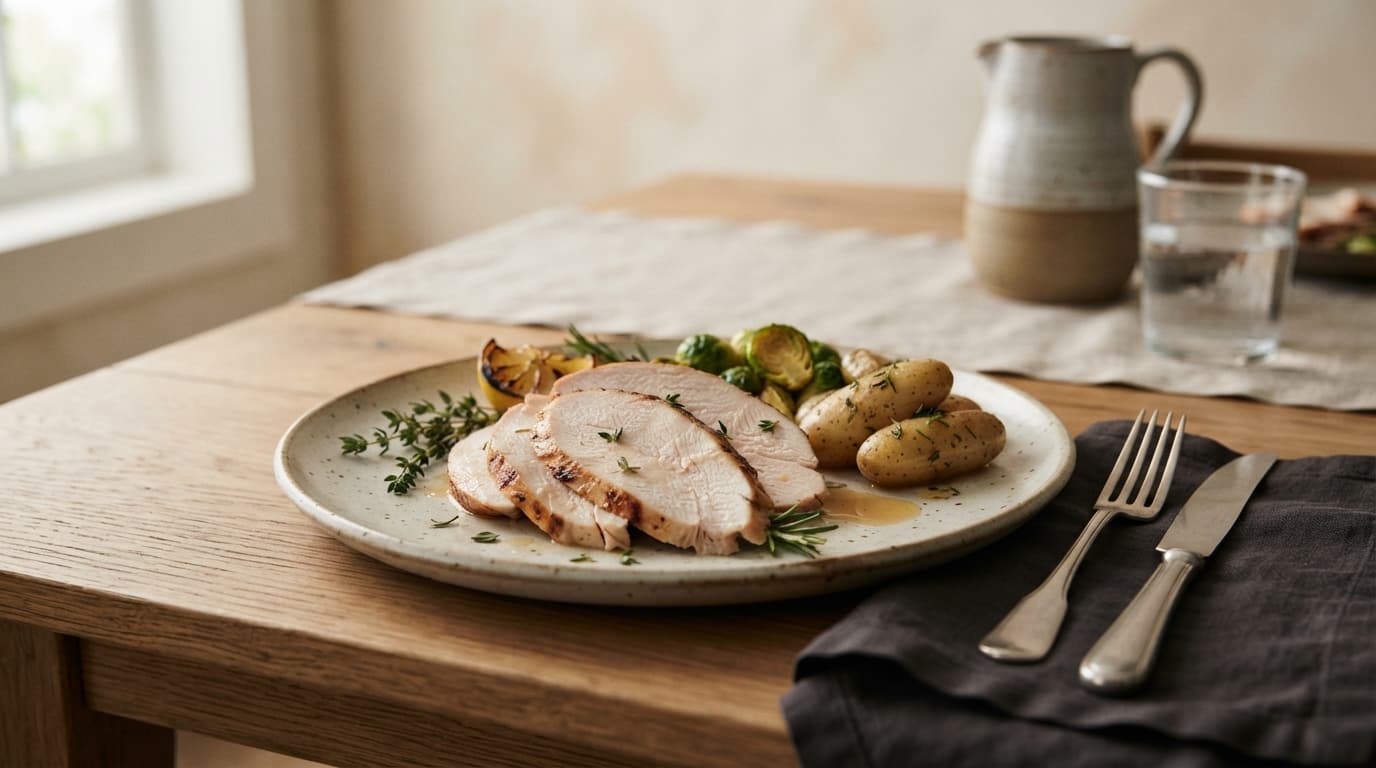
Plan on 3/4 to 1 pound of boneless turkey breast per person, less than the USDA's 1 to 1 1/4 pounds for whole turkey, since boneless meat has no bone weight.
10 min read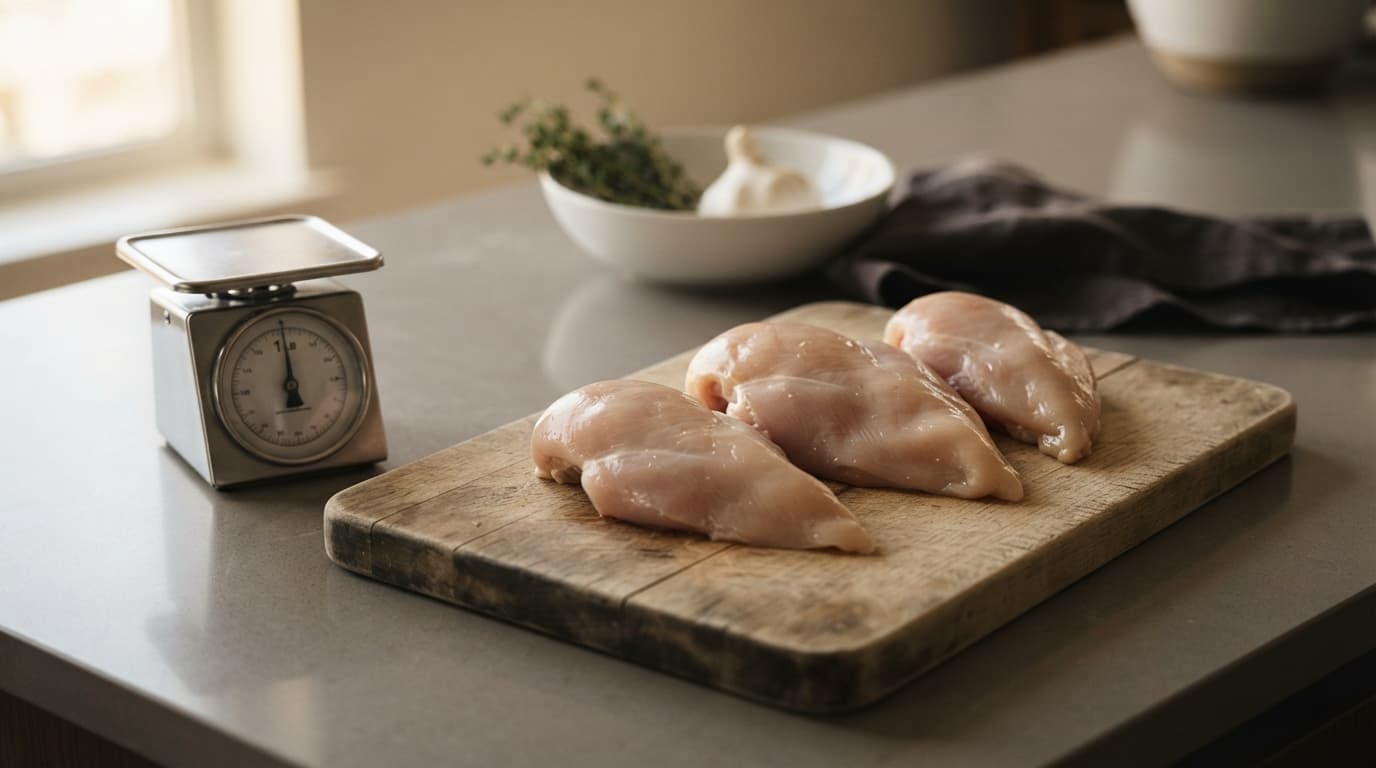
A pound of boneless chicken breast typically holds 2 to 3 pieces, since most breasts weigh 5 to 8 ounces. Size varies enough that weighing beats counting for a recipe.
10 min read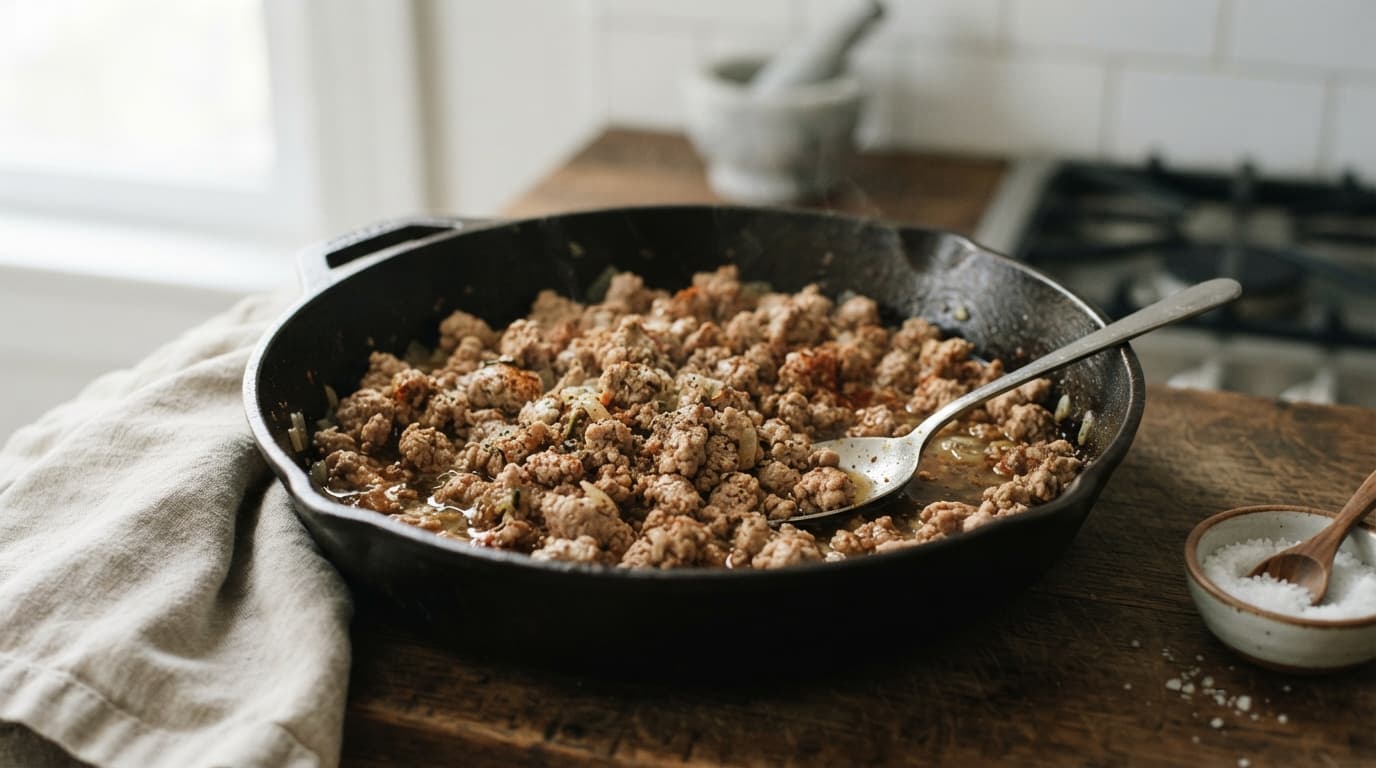
Ground turkey needs about 7 to 10 minutes over medium heat, but time is only a guide. The real requirement is 165°F all the way through, confirmed with a thermometer.
9 min readTables release two weeks out on Resy, Shukette's own booking platform.
Book Now →