How Long to Cook Ground Turkey
Editorial desk · 9 min read · Updated 2026-08-22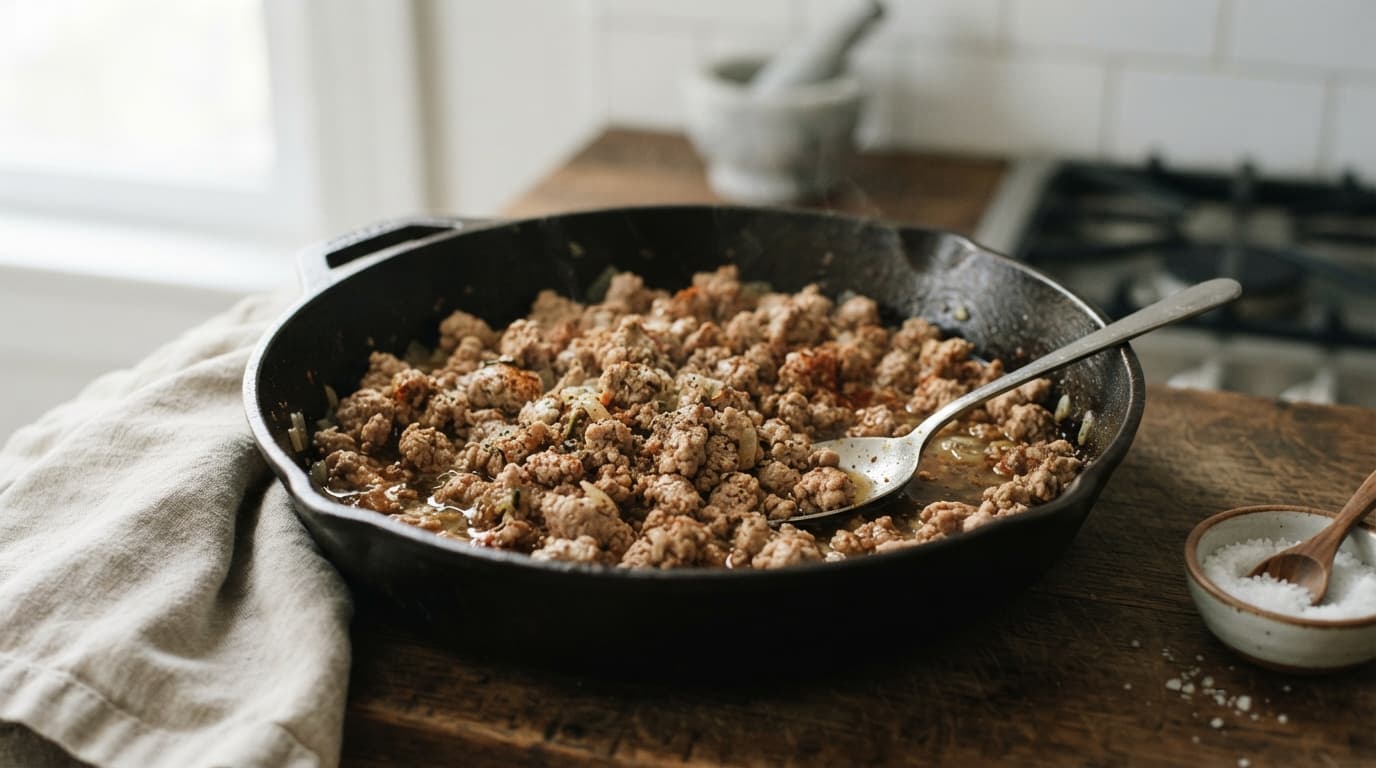
Ground turkey needs about 7 to 10 minutes over medium heat on the stovetop, breaking it into smaller pieces as it browns, though that range is a rough guide rather than a fixed rule. What actually determines when ground turkey is done is a food thermometer reading 165°F throughout the meat, the same USDA minimum that applies to all poultry. Time is useful for planning; temperature is what actually confirms safety, and the two aren't interchangeable the way they might feel for a food you've cooked the same way dozens of times before.
Ground turkey deserves more care on this front than a whole turkey breast or a solid cut of chicken, and that's not an arbitrary caution. The grinding process itself changes the risk profile in a specific, well-documented way, which is worth understanding before getting into cooking times.
Why ground turkey carries more risk than whole cuts
Grinding meat exposes more surface area to potential contamination and, more importantly, mixes anything on that surface throughout the entire product rather than leaving it concentrated on the exterior. A whole piece of poultry that's contaminated on its surface gets that surface exposed to the highest, most direct heat during cooking; ground poultry distributes that same surface material into the center of the meat, where it takes longer for heat to reach and destroy it.
USDA data on this is specific and worth knowing: contamination rates rise substantially as poultry moves from whole carcasses to cut pieces to ground product, with ground and comminuted poultry showing meaningfully higher rates than whole cuts. This isn't a reason to avoid ground turkey, but it is the reason ground poultry gets treated with a bit more caution than a solid chicken breast or turkey cutlet, and it's why "cook until no longer pink" has always been weaker advice for ground meat than a thermometer reading.
Part of where this contamination comes from is worth understanding too. Poultry skin can harbor bacteria trapped in skin folds and feather follicles, areas that aren't fully exposed until the bird is cut or ground. Grinding disturbs and releases that trapped bacteria in a way that simply cutting a whole muscle into pieces doesn't do to the same degree, which is a meaningful part of why the jump in contamination rates from whole cuts to ground product is as large as it is.
The stovetop timeline, and what actually changes it
For a standard stovetop preparation, ground turkey browning in a skillet over medium heat typically takes 7 to 10 minutes, broken up into smaller crumbles as it cooks to promote even heat exposure throughout the pan. That range assumes a reasonably sized batch in a pan that isn't overcrowded; a larger quantity in the same pan takes longer, since more mass needs to come up to temperature and a crowded pan traps more moisture, which slows browning and can extend the total time needed.
Breaking the turkey into smaller pieces as it cooks does more than just create the texture most recipes call for. Smaller pieces have more surface area relative to their volume, which means heat reaches the center of each piece faster than it would in one large, dense mass of ground meat left unbroken in the pan. If you're in a hurry, breaking the meat into smaller crumbles earlier in the cooking process, rather than letting it sit as a large block before stirring, is a legitimate way to shorten the practical cooking time without cutting any safety corners.
Pan choice and heat level both shift this timeline more than people expect. A wide pan that spreads the turkey into a thinner layer cooks faster overall than a narrow, deep pan holding the same amount of meat piled higher, since the thinner layer exposes more surface directly to the pan's heat. Cooking over too high a heat, meanwhile, can brown the outside of the turkey faster than the inside actually catches up, creating a false impression of doneness from color and texture alone. Medium heat, giving the inside time to catch up with the outside, produces a more reliable result than rushing the process on high heat and hoping the center keeps pace.
Checking doneness the right way
Because ground turkey mixes any potential contamination throughout the product rather than concentrating it on the surface, checking temperature matters even more here than for a whole cut. Insert an instant-read thermometer into the thickest remaining portion of meat in the pan, ideally into a larger piece rather than one of the smallest crumbles, and look for 165°F. If you're cooking a large batch, check in more than one spot, since stovetop heat isn't always perfectly even across the entire pan, and pieces near the edges can lag behind pieces in the center.
Color is not a reliable substitute for this check, in either direction. Ground turkey can appear fully cooked, uniformly pale and opaque, while still harboring unsafe bacteria if it hasn't actually reached 165°F, particularly in a thick, unbroken portion that looks done on the outside but hasn't caught up on the inside. It can also be perfectly safe at 165°F while still showing a slightly pink tinge, especially if the turkey was marinated or if it's a leaner blend, since pigment changes during cooking don't perfectly track with pathogen destruction. Trust the thermometer over the color every time.
This pink-color question comes up more with ground turkey than with ground beef, partly because people are less familiar with what fully cooked ground turkey should look like compared to the well-known brown-throughout standard for ground beef. Ground turkey can retain a pinkish tinge even when fully safe, related to factors like the bird's age, diet, and the specific blend of meat used, none of which have anything to do with whether it's actually reached 165°F. Leaning on a thermometer sidesteps this confusion entirely rather than trying to judge doneness from a color standard that doesn't reliably apply to turkey the way it does to beef.
Ground turkey in different cooking methods
Stovetop browning is the most common way to cook ground turkey, but it's not the only one, and the same core rule applies regardless of method: time is a planning estimate, and 165°F is the actual requirement. Ground turkey baked into a meatloaf or formed into patties takes considerably longer than loose stovetop crumbles, since a denser, more compact shape takes longer for heat to penetrate to the center. A turkey meatloaf, for instance, commonly needs closer to an hour in the oven at a moderate temperature, far longer than the 7 to 10 minutes relevant to loose stovetop turkey, precisely because of that difference in shape and density.
Turkey burgers fall somewhere in between: thinner than a meatloaf but denser and more compact than loose crumbled turkey, which means they generally need a few minutes per side over direct heat, checked with a thermometer inserted into the thickest part of the patty rather than judged by how long they've been on the grill or in the pan. The same thermometer-over-timer principle holds regardless of which of these forms you're working with, whether that's a wood-fired grill built for whole cuts or a home stovetop working with ground meat.
Ground turkey compared to ground chicken and whole cuts
Ground turkey and ground chicken share the same 165°F safety minimum and carry a broadly similar contamination-risk profile, since both come from the same grinding process that distributes any surface bacteria throughout the product. Neither is inherently safer or riskier than the other at the ground-meat level; the caution that applies to one applies equally to the other.
Whole poultry cuts, like a bone-in chicken thigh or a solid turkey breast, share the identical 165°F requirement but start from a meaningfully lower baseline contamination risk, since any surface bacteria stays on the surface rather than getting worked through the entire piece. That's the real, practical difference between ground and whole poultry: not a different number to hit, but a different starting risk that makes hitting that number reliably, with an actual thermometer check rather than a guess, more consequential for ground product specifically.
This same logic explains why searing a whole piece of poultry on the outside offers some real protective value that doesn't translate to ground meat. Searing the exterior of a solid cut exposes the part most likely to carry surface bacteria to the highest heat first. Ground meat doesn't get that same benefit, since the bacteria that would have been on the surface of the original whole muscle are now distributed throughout the product rather than concentrated where a sear would reach them most effectively. This is part of why steak can safely be served rare while a burger made from the same cut of beef, or ground turkey specifically, cannot.
Handling raw ground turkey safely before it even hits the pan
Everything above assumes the ground turkey itself has been handled safely before cooking starts, and that handling matters as much as the cooking time given how contamination risk works for ground product. Wash hands, cutting boards, and utensils thoroughly after contact with raw ground turkey, before they touch anything else, since cross-contamination from raw ground poultry follows the same logic as the contamination risk within the meat itself: it spreads easily once introduced to a new surface.
Raw ground turkey should also go directly into the refrigerator or freezer rather than sitting out, following the same two-hour rule that applies to any raw poultry left at room temperature. Because ground turkey's contamination risk starts higher than a whole cut's, the margin for additional risk introduced by improper handling before cooking is smaller, which makes careful handling habits, not just the final cooking step, a real part of what makes a ground turkey dish safe to eat.
What this means for planning a meal
If you're building a recipe around ground turkey, whether it's a quick weeknight stovetop dish or something baked, budget your actual cooking time around a thermometer check rather than a strict clock, and treat any stated time range as a starting point to verify rather than a countdown to trust blindly. This matters more for ground turkey than it does for a whole grilled or roasted cut, given the higher baseline contamination risk that comes from the grinding process itself.
If a recipe or a dish built around ground turkey feels like more precision than you want to manage on a given night, a kitchen cooking whole cuts to order sidesteps this particular question entirely, since whole-muscle preparations carry a different, generally lower risk profile than ground product to begin with. For home cooking with ground turkey specifically, though, the process stays simple: cook it through, break it up as needed for even heating, and let a thermometer, not a clock or the color of the meat, be the final word on when it's actually done.
None of this makes ground turkey difficult to cook safely; it just means the margin for guessing is smaller than it is for a whole cut, and a thermometer closes that gap completely. Once you've built the habit of checking rather than estimating, ground turkey becomes exactly as straightforward as any other weeknight protein.
That habit is worth building once and applying everywhere, rather than treating each protein as its own separate puzzle to solve from scratch. Ground turkey, ground chicken, ground beef, and ground pork all follow the same basic pattern: a higher contamination risk than the equivalent whole cut, a specific safe minimum temperature, and a thermometer as the only real way to confirm you've reached it. Learn that pattern once, and every ground-meat dish you cook afterward gets easier, not harder, regardless of which specific protein is in the pan.
Frequently asked questions
How long does it take to cook ground turkey on the stovetop?+−
Roughly 7 to 10 minutes over medium heat, breaking it apart as it cooks, though this varies with pan size, heat level, and how much turkey is in the pan. A food thermometer reading 165°F throughout is what actually confirms it's done, not the clock.
Why does ground turkey need to be cooked more carefully than a whole turkey breast?+−
Grinding exposes more surface area to potential bacteria and mixes any surface contamination throughout the meat, rather than leaving it on the exterior where cooking reaches it first and most thoroughly. USDA data shows ground poultry has meaningfully higher contamination rates than whole cuts, which is why even a small pink spot in ground turkey is treated more cautiously than the same color in a solid piece.
Is ground turkey safe if it's still a little pink after cooking?+−
Color alone doesn't confirm safety in either direction. Ground turkey can be safe at 165°F even with some pink remaining, and it can be unsafe at a lower temperature even if it looks fully white. A thermometer reading is the only reliable check.
Does ground turkey need to reach a higher temperature than ground chicken or whole poultry cuts?+−
No. All poultry, ground or whole, chicken or turkey, shares the same 165°F minimum safe internal temperature. Ground turkey isn't held to a stricter number; it just carries a higher real-world risk of contamination throughout the product, which makes hitting that number reliably more important.
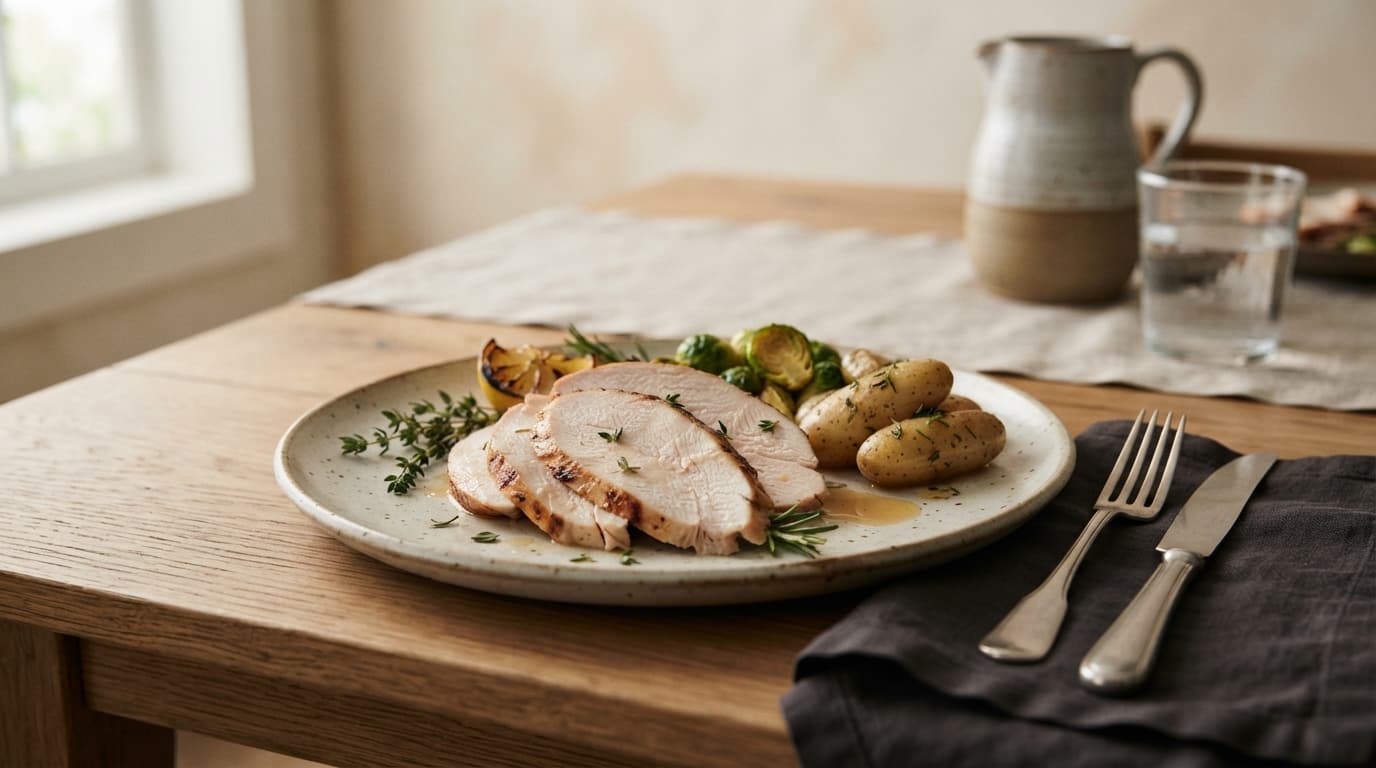
Plan on 3/4 to 1 pound of boneless turkey breast per person, less than the USDA's 1 to 1 1/4 pounds for whole turkey, since boneless meat has no bone weight.
10 min read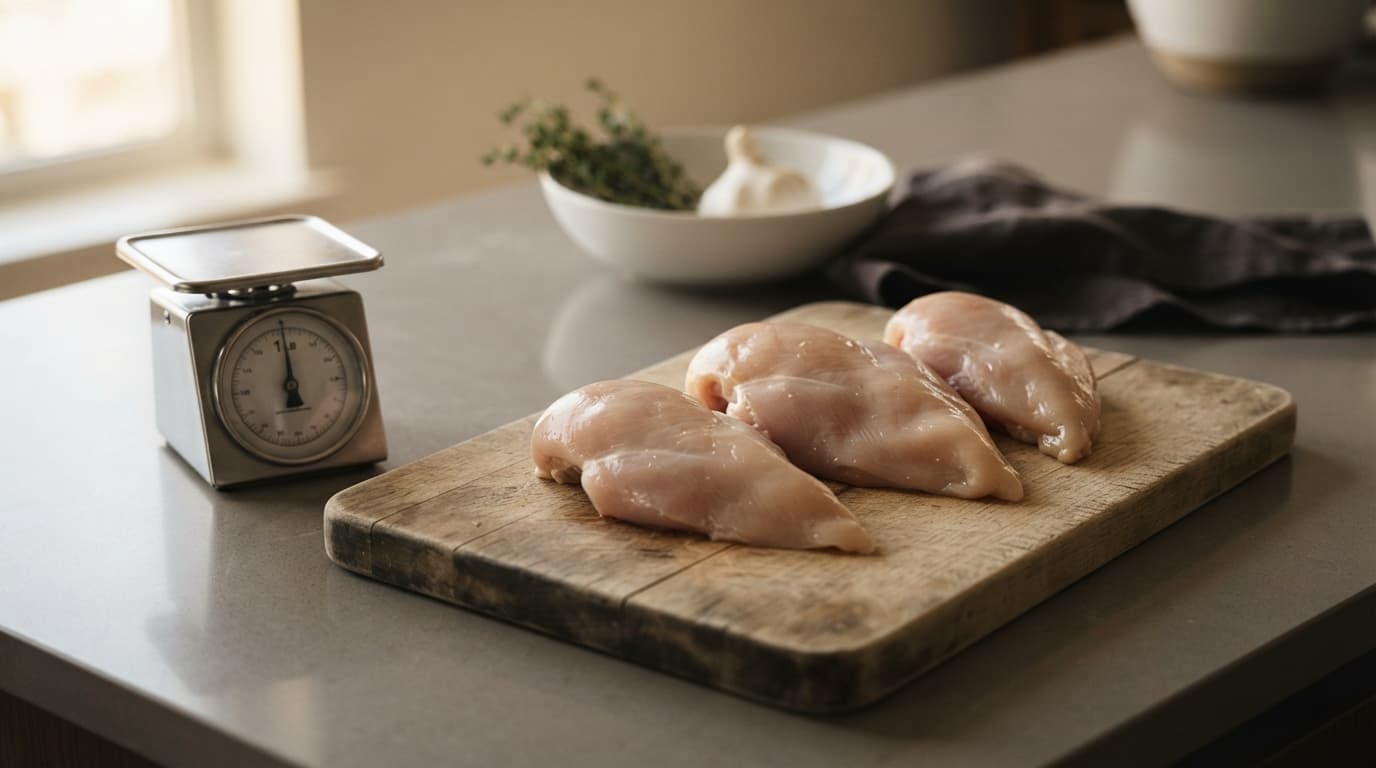
A pound of boneless chicken breast typically holds 2 to 3 pieces, since most breasts weigh 5 to 8 ounces. Size varies enough that weighing beats counting for a recipe.
10 min read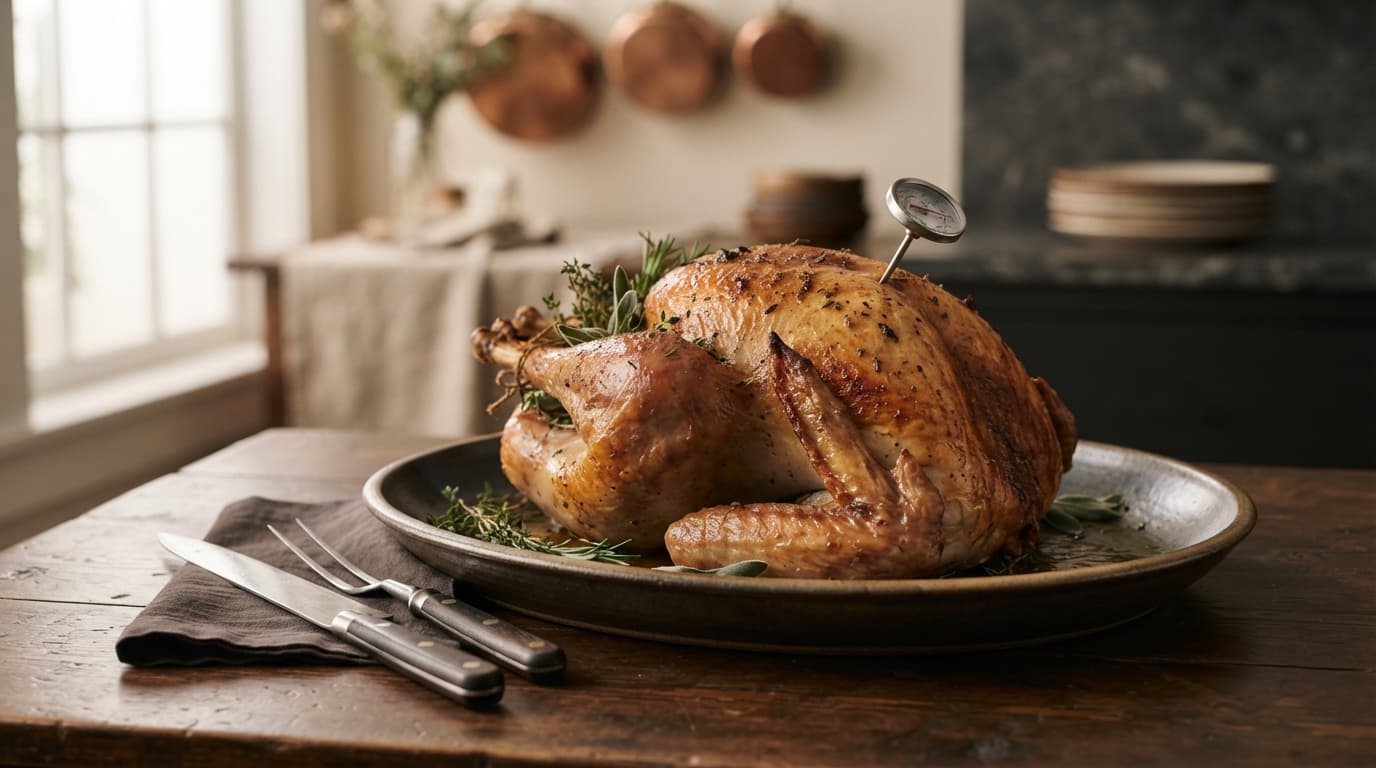
FoodSafety.gov's chart puts a 20-to-24-pound turkey at 4 1/4 to 4 1/2 hours unstuffed, based on 325°F, not 350°F. Check three spots for 165°F before serving.
9 min readTables release two weeks out on Resy, Shukette's own booking platform.
Book Now →