How Many Chicken Breasts Are in a Pound?
Editorial desk · 10 min read · Updated 2026-08-22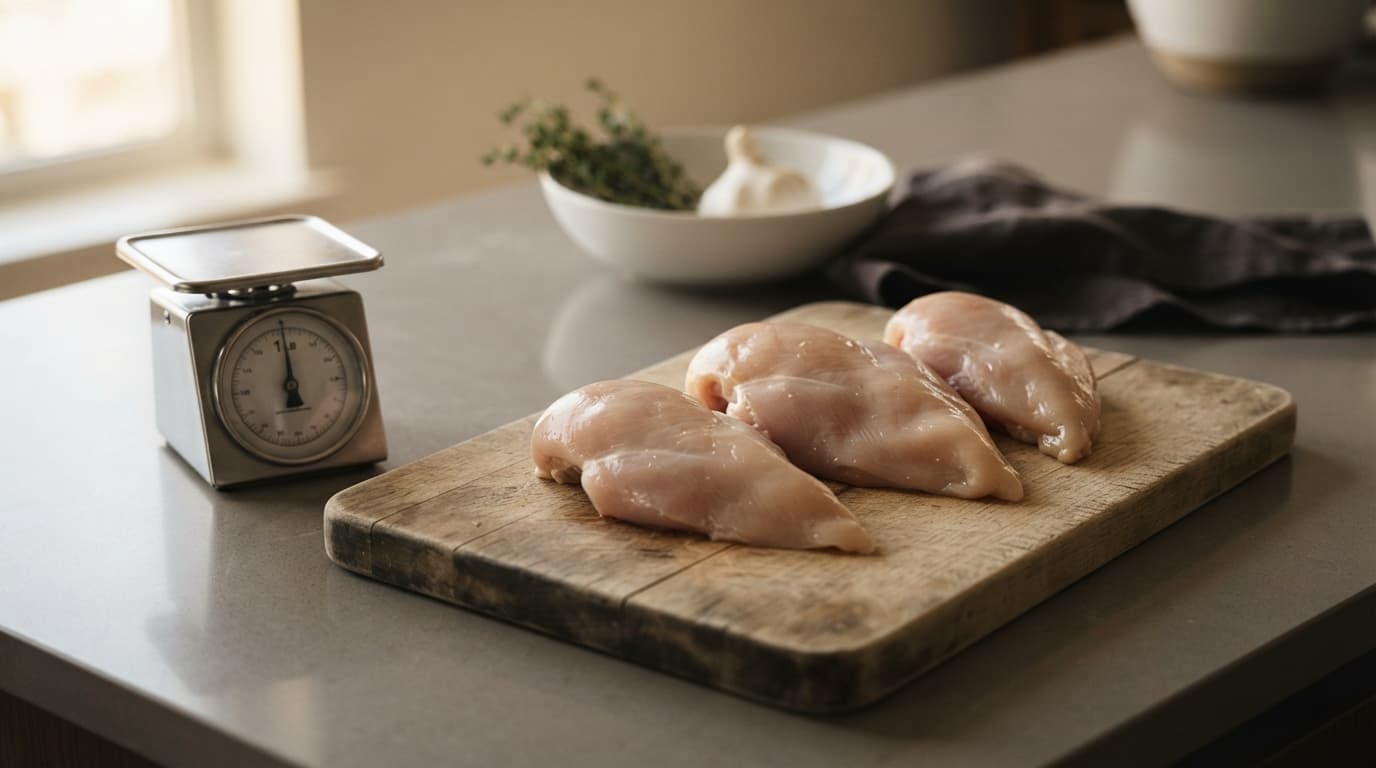
A pound of boneless, skinless chicken breast typically holds 2 to 3 individual pieces, since most chicken breasts sold this way weigh somewhere between 5 and 8 ounces each. That's a range, not a fixed number, because chicken breasts vary in size more than a lot of other packaged proteins do, and there's no single standard size a "chicken breast" is guaranteed to be. Anyone who's opened two different packages from the same store and found noticeably different piece sizes inside has already run into this firsthand, even without realizing why.
This matters more than it might seem for anyone following a recipe. A recipe calling for "two chicken breasts" is really asking for somewhere between 10 and 16 ounces of meat depending on how large those two breasts happen to be, which is a meaningfully wide range if the recipe's other measurements, seasoning, cook time, sauce ratios, were calibrated around a specific weight rather than a specific count.
Why the range is so wide
Chicken breast size depends on a combination of the bird's breed, its age at slaughter, and how the breast is trimmed and packaged afterward. None of these are standardized the way, say, a dozen eggs or a stick of butter is, which means "one chicken breast" simply isn't a fixed quantity the way those other kitchen staples are. A smaller bird or a breast trimmed closer to the bone yields a lighter piece; a larger bird or a less aggressively trimmed cut yields a heavier one, and both are sold under the same generic "boneless, skinless chicken breast" label.
This variation is also why grocery store packages of chicken breast vary noticeably in piece count even when the total weight on the label is identical. A one-pound package might contain two larger breasts or three smaller ones, and there's no way to know which without either weighing individual pieces or checking the count printed on the package, if one is listed at all.
Some stores and butchers sort chicken breasts into size categories, small, medium, large, before packaging, which narrows the range somewhat compared to a random, unsorted assortment. Even within a sorted category, though, real variation remains, since "large" describes a range rather than a single exact weight. If consistency across pieces matters for a specific dish, buying individually weighed pieces from a butcher counter rather than a pre-packaged tray gives you more control over matching pieces to a specific target weight.
Weight is more reliable than counting pieces
Given how much individual breast size varies, weight is the more dependable unit to work from, especially for a recipe where proportions matter, a marinade calibrated to a specific amount of meat, a sauce meant to coat a certain quantity, or a dish where cook time depends on total mass in the pan. If a recipe gives you both a piece count and a weight, like "2 chicken breasts (about 1 pound)," treat the weight as the more reliable figure and adjust the piece count to match what you actually have on hand, since the weight is what the rest of the recipe's ratios were actually built around.
This becomes especially relevant when scaling a recipe up or down. Doubling "two chicken breasts" by buying four more pieces can result in meaningfully more or less total meat than doubling "one pound" would, depending on the size of the specific breasts involved. Working from weight when scaling avoids that drift, since a pound is a pound regardless of how many individual pieces it happens to be divided into.
This also matters for portioning cutlets from whole breasts. Slicing a single large breast into two thinner cutlets versus slicing a smaller breast the same way produces noticeably different cutlet sizes, even though both started from "one chicken breast." If a recipe depends on a specific cutlet thickness or weight for even cooking, starting from a breast weighed to a target amount, rather than just grabbing "one breast" off a tray, produces more consistent results across multiple attempts at the same recipe.
What this means for cooking time
Because chicken breast size varies so much, cooking time varies right along with it, which is part of why any oven-timing chart for chicken breast lists an estimated time based on a specific weight rather than a generic "cook until done" instruction with no reference point. A thin, 4-ounce breast on the smaller end of the range cooks meaningfully faster than an 8-ounce breast from the larger end, even at the identical oven temperature, simply because there's more mass for heat to penetrate in the larger piece.
This is one more reason a food thermometer matters more than following a stated cooking time exactly. If your chicken breasts run larger than whatever reference weight a recipe or timing chart assumed, the estimated time will run short, and the only way to know for certain is checking that the internal temperature has actually reached 165°F, not trusting a clock calibrated to a different-sized piece of meat than the one actually in your oven.
This size variation also explains a common frustration people run into when baking multiple chicken breasts on the same tray: some pieces finish well before others even though they went into the oven at the same time. If a package contains a mix of smaller and larger breasts, as many do, checking each piece individually rather than pulling the whole tray at once based on a single check avoids either overcooking the smaller pieces while waiting for the larger ones, or serving undercooked chicken from the larger pieces because the smaller ones looked and felt done first.
A practical fix for this unevenness, if you regularly deal with a wide size range in one package, is pounding thicker breasts to a more uniform thickness before cooking, or trimming the thickest portion of an oversized breast so it's closer in size to the others on the tray. Either approach reduces the spread in finish times across a batch, which matters more the larger and more mismatched the individual pieces happen to be.
Practical math for meal planning
If you're planning a meal and need to know roughly how much chicken to buy, working backward from portions per person is more useful than trying to nail down an exact piece count. A single serving of chicken breast is commonly considered to be around 4 to 6 ounces of cooked meat, which means a pound of raw chicken breast, accounting for some moisture loss during cooking, reasonably serves two to three people depending on appetite and what else is part of the meal.
That moisture loss during cooking is worth factoring in explicitly, since it means the raw weight you buy isn't quite what ends up on the plate. Chicken breast typically loses somewhere around 20 to 25 percent of its raw weight during cooking as moisture evaporates, so a pound of raw chicken yields closer to 12 to 13 ounces once cooked. This isn't a food-safety concern, just a practical planning detail: if you're calculating portions based on a specific cooked-weight target per person, buying based on raw weight alone without accounting for that shrinkage will leave you slightly short of what you actually intended to serve.
Working from a few concrete examples makes this easier to plan around. Four people each wanting a standard 5- to 6-ounce cooked portion need roughly 20 to 24 ounces of cooked chicken total, which works out to needing about 1.5 pounds of raw chicken breast once the expected cooking loss is factored in. Scaling that up or down for a different group size follows the same basic math: multiply the per-person cooked target by your headcount, then add back roughly a quarter more to account for what's lost during cooking.
Portion size itself has effects beyond the shopping list, too. A larger single serving, say 8 ounces rather than a standard 5, doesn't just mean more food on the plate; it also generally means more total time for that meal to move through digestion, simply because there's more volume for the stomach and small intestine to process. That's a reasonable factor to weigh if you're planning a meal before an activity where feeling overly full would be inconvenient, not just a curiosity about portion math.
For a larger group meal built around several shared dishes rather than chicken as the sole protein, less chicken per person is typically needed than a chicken-only dinner would require, since the overall plate is filled out by other dishes as well. Buying by weight rather than trying to calculate an exact piece count per guest gives you more flexibility to divide the chicken into however many portions actually makes sense once you see the real size of what you've bought.
When exact piece count actually does matter
There are situations where the number of individual pieces matters more than total weight, mainly when a recipe calls for each portion to be a single, complete breast rather than chicken meat in general, a stuffed chicken breast recipe, for instance, or a dish plated with one breast per guest. In those cases, checking both the weight and the piece count on a package matters, since a pound split into two large breasts works for a two-person stuffed chicken dinner in a way that the same pound split into three smaller pieces wouldn't cleanly support.
A stuffed or rolled preparation adds one more reason piece count and individual size both matter: a filling designed to fit inside a specific-sized breast either overflows a smaller piece or leaves a larger one under-filled and unevenly proportioned. If a recipe specifies both a target breast weight and a specific amount of filling per piece, matching your actual chicken to that target weight, rather than assuming any breast from the package will work equally well, produces a more consistent result across the whole batch.
If piece count matters for your specific dish, it's worth asking at a butcher counter for breasts closer to a specific weight, or sorting through packaged options at the grocery store to find one where the stated count and total weight combination actually matches what the recipe needs, rather than assuming any "1 pound of chicken breast" package will work identically for a recipe that depends on individual piece size.
This piece-count question mostly disappears if you're ordering chicken already prepared rather than cooking it yourself, since a restaurant kitchen portions its own chicken to a consistent standard for each dish rather than working from whatever size happened to come in a retail package that day.
How this compares to buying a whole chicken or other cuts
Buying whole chicken breast isn't the only way to land on a specific weight of chicken, and it's worth knowing how the math shifts for other common forms. A whole chicken typically yields somewhere around 70 percent of its raw weight as edible meat once bones, skin, and trim are accounted for, which is a very different yield calculation than boneless breast, where nearly the entire purchased weight is usable meat. Buying a whole bird to get a specific amount of breast meat means buying considerably more total weight than buying pre-cut boneless breasts directly, since a meaningful share of a whole chicken's weight is thighs, wings, back, and bone that aren't part of the breast at all.
Tenderloins, the smaller strip of meat attached to the underside of each breast, add one more wrinkle worth knowing about. Some packages of "boneless chicken breast" include the tenderloin still attached, while others have it removed and sold separately, which means two packages listing an identical total weight can represent a meaningfully different number of distinct pieces once tenderloins are counted or not counted as part of the total. If a recipe calls for a specific number of whole, intact breasts rather than a general weight of chicken meat, checking whether tenderloins are attached or sold separately avoids a mismatch between what the recipe expects and what's actually in the package.
What to remember at the grocery store
Expect roughly 2 to 3 chicken breasts per pound, know that the actual number depends heavily on how large each individual piece happens to be, and lean on weight rather than piece count whenever a recipe gives you the option. That's enough to shop confidently without needing to calculate anything more precise than a rough estimate, and it explains why the same pound of chicken can look different from one package, or one grocery trip, to the next.
None of this variation is a flaw in how chicken is sold; it's simply a natural consequence of butchering a real animal rather than manufacturing an identical, standardized product. Once you build weight-based thinking into how you shop and cook, rather than assuming every "chicken breast" is interchangeable, the whole process becomes more predictable, even though the individual pieces themselves never will be perfectly uniform.
Frequently asked questions
How many chicken breasts are in a pound?+−
Typically 2 to 3, since most individual boneless, skinless chicken breasts weigh between 5 and 8 ounces each. A pound of smaller breasts might hold closer to 3, while a pound of larger ones might only hold 2.
Why do chicken breast sizes vary so much?+−
Chicken breeds, ages at slaughter, and how a breast is trimmed all affect final weight, and there's no single standardized size the way there is for some packaged foods. This is why recipes that specify weight rather than a piece count give more consistent, repeatable results.
Should I go by weight or by count when a recipe calls for chicken breasts?+−
Weight, whenever a recipe provides it. "Two chicken breasts" could mean anywhere from 10 to 16 ounces of meat depending on size, while "1 pound of chicken breast" is precise regardless of how many individual pieces that pound happens to be split into.
Does a package labeled "1 pound of chicken breast" always contain the same number of pieces?+−
No. The weight on the label is accurate, but the number of individual breasts inside varies depending on how large each one happens to be, which is exactly why the same 1-pound label can hold two large breasts in one package and three smaller ones in another.
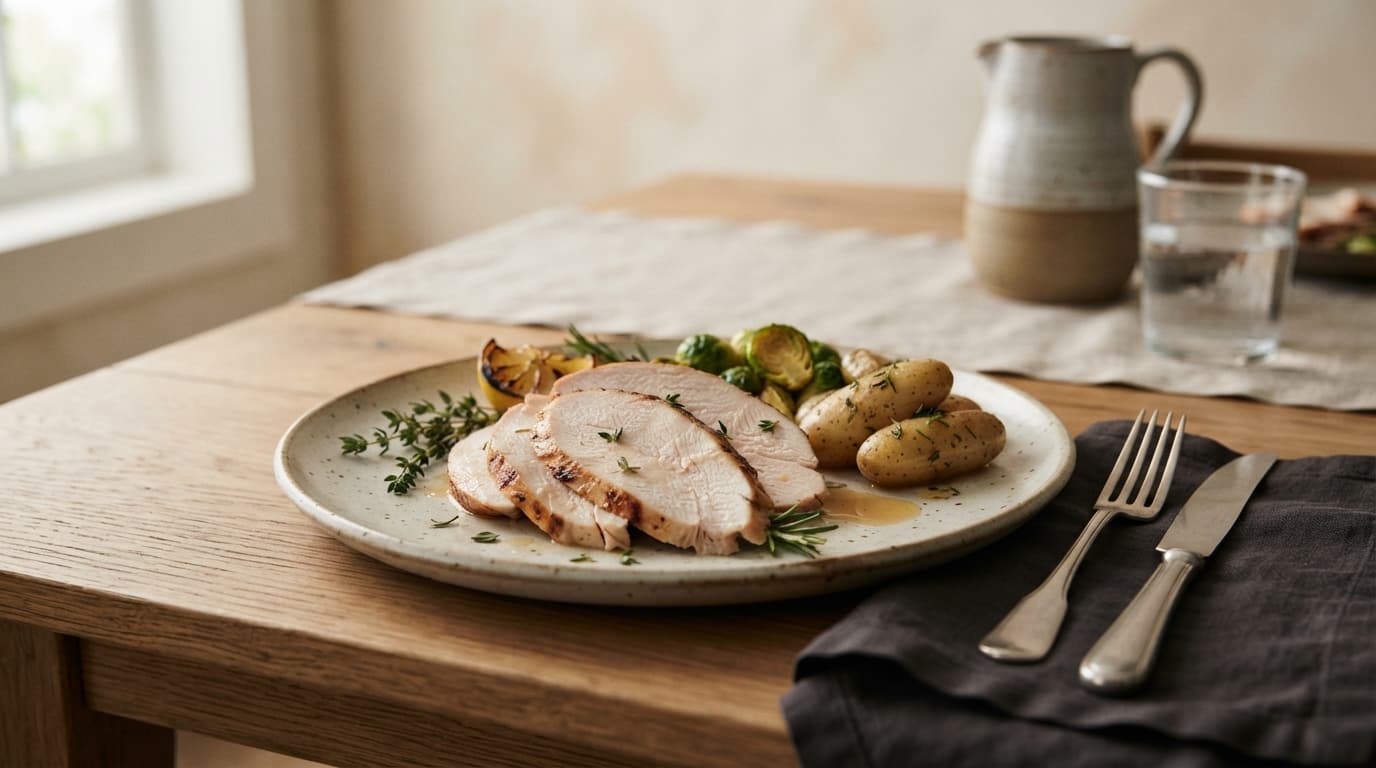
Plan on 3/4 to 1 pound of boneless turkey breast per person, less than the USDA's 1 to 1 1/4 pounds for whole turkey, since boneless meat has no bone weight.
10 min read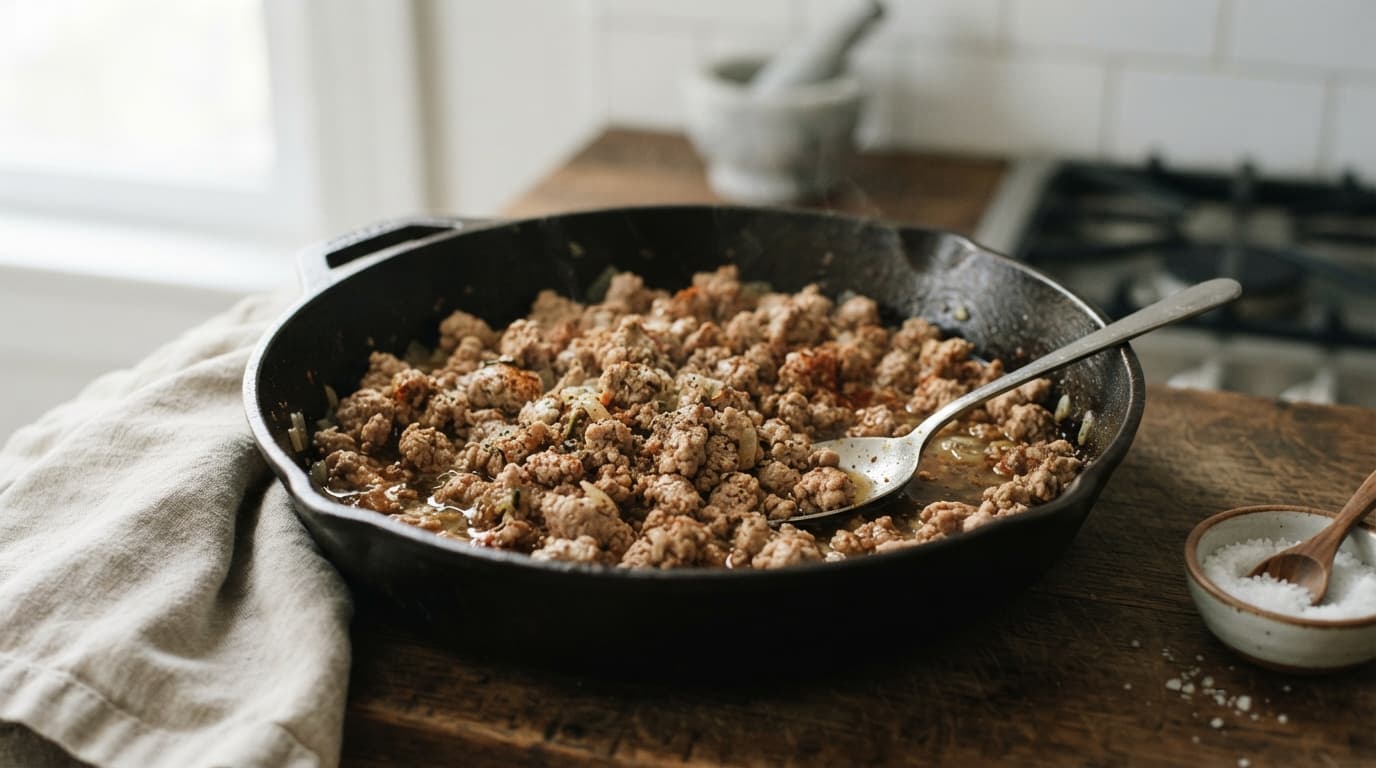
Ground turkey needs about 7 to 10 minutes over medium heat, but time is only a guide. The real requirement is 165°F all the way through, confirmed with a thermometer.
9 min read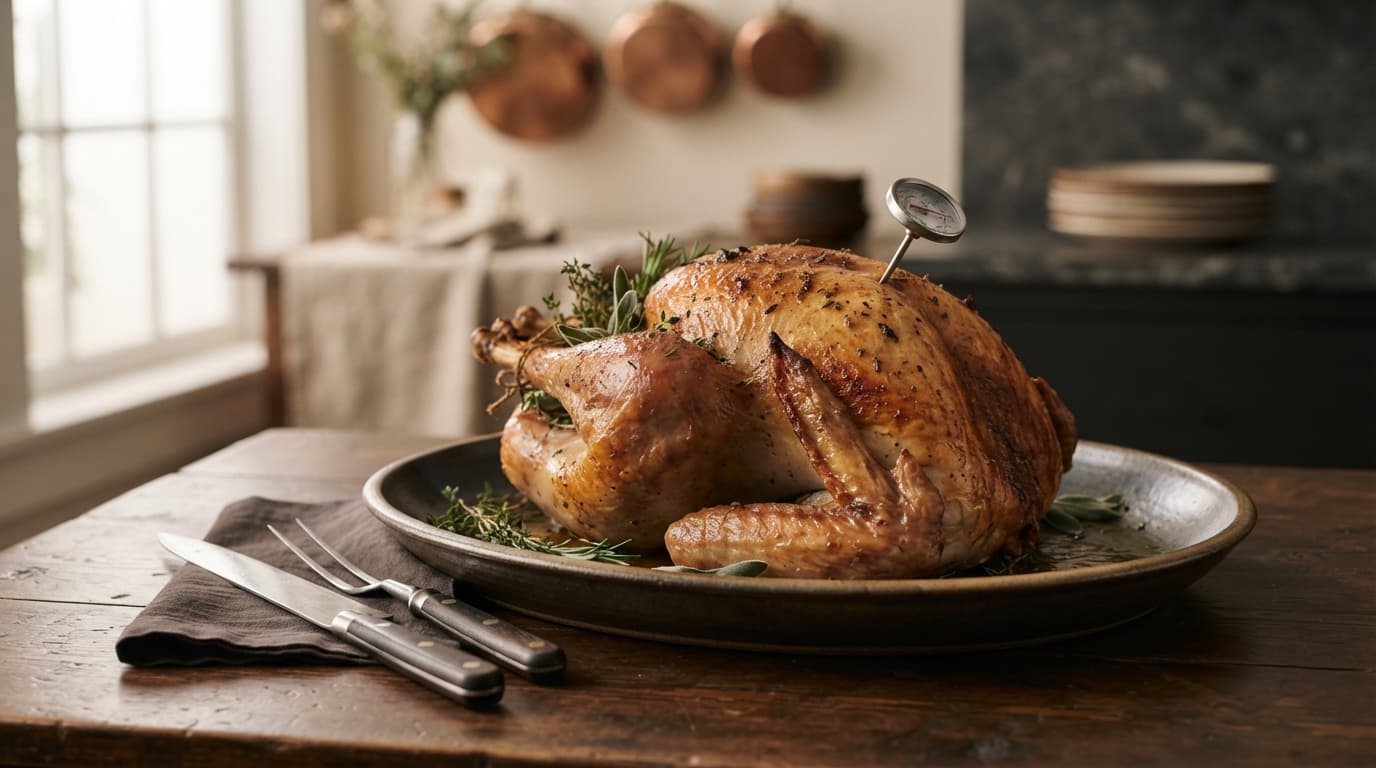
FoodSafety.gov's chart puts a 20-to-24-pound turkey at 4 1/4 to 4 1/2 hours unstuffed, based on 325°F, not 350°F. Check three spots for 165°F before serving.
9 min readTables release two weeks out on Resy, Shukette's own booking platform.
Book Now →