Steak on a George Foreman Grill
Editorial desk · 10 min read · Updated 2026-08-23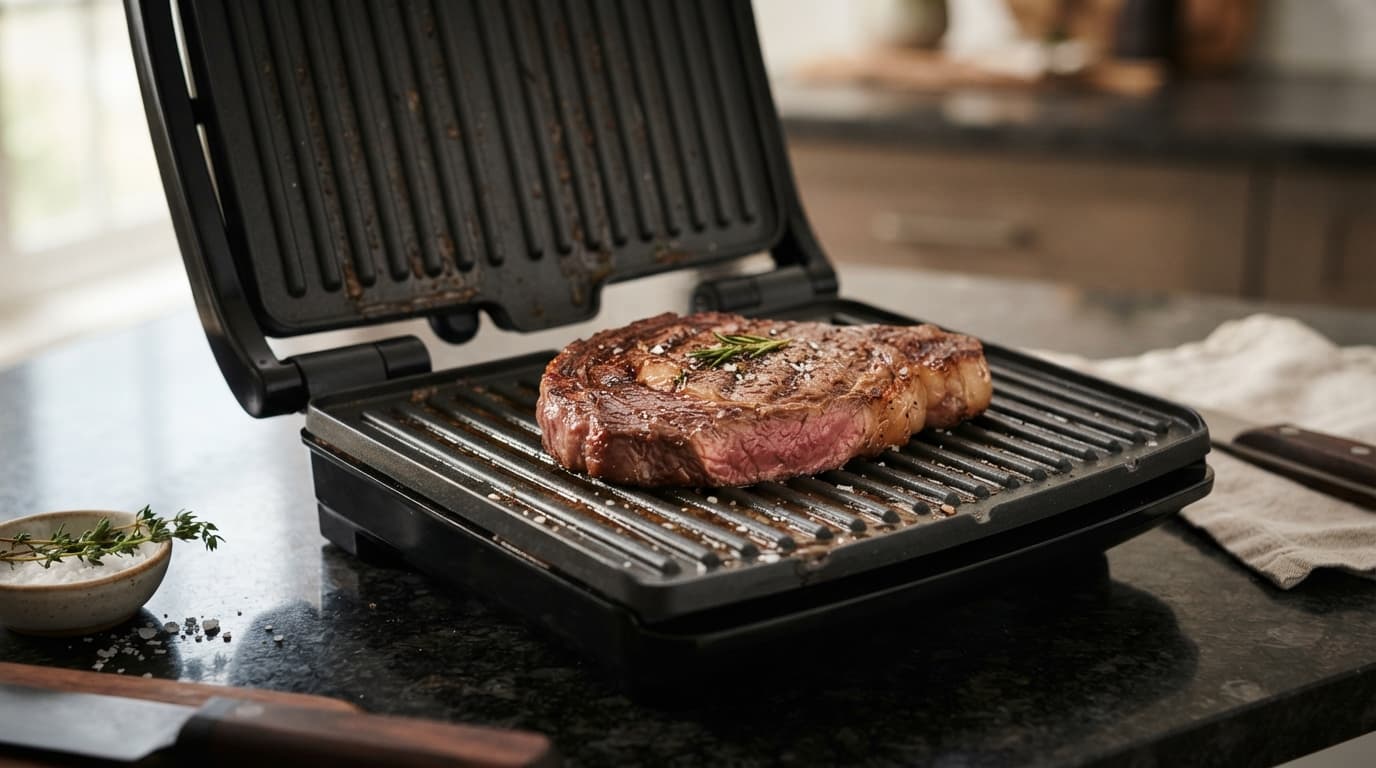
A 1-inch steak takes roughly 4 to 7 minutes on a George Foreman or similar contact grill to reach medium-rare, since the grill's two plates press against both sides of the meat simultaneously rather than requiring a flip partway through. That two-sided contact is the entire reason contact-grill times run so much shorter than a skillet or open grill; the actual safety target underneath it all, 145°F confirmed with a food thermometer, doesn't change based on which appliance got you there.
Thickness matters more than any stated time range, which is worth knowing before treating a recipe's minute count as a fixed rule rather than a starting estimate.
Why a contact grill cooks so much faster
A George Foreman grill, and contact grills generally, work by clamping two heated plates against opposite sides of whatever's cooking, which means heat is being applied to both surfaces of the steak at the same time from the moment it goes in. A traditional pan or open grill only heats one side at a time, requiring a flip to finish the second side, which roughly doubles the total hands-on cooking time compared to a contact grill's simultaneous approach.
This is the single biggest reason a steak that might take 8 to 10 minutes total in a skillet, four or five minutes per side, can finish in something closer to half that time on a contact grill. The heat isn't more intense; it's simply being applied from two directions instead of one, which shortens the path to the same internal temperature.
Getting that faster time actually requires real preheating first, typically several minutes with the lid closed, before the plates reach a temperature that will sear the steak's surface rather than simply warming it through without much color development. Skipping this step and placing a steak on a still-warming grill produces a paler, less flavorful crust and throws off the total cooking time estimate, since the plates aren't delivering full heat from the moment contact begins. Most contact grill models include an indicator light or a specific preheat time noted in their manual, and following that guidance rather than guessing when the grill "feels hot enough" produces a more consistent result from one cook to the next.
Typical times by thickness
A 1-inch steak, a common thickness for ribeye, sirloin, or strip, generally takes about 4 to 7 minutes on a preheated contact grill to reach medium-rare, with the higher end of that range suiting a slightly thicker cut or a grill running a bit cooler than expected. Medium doneness generally adds another minute or two beyond the medium-rare range, since it requires the internal temperature to climb further before pulling the steak.
Thinner steaks, closer to half an inch, cook noticeably faster, sometimes in as little as 3 to 4 minutes total, given how little distance heat has to travel to reach the center from both sides at once. A significantly thicker cut, closer to a tomahawk's roughly 2-inch profile, takes meaningfully longer and may not fit comfortably in a standard contact grill's clamshell design at all, which is worth checking before attempting an unusually thick cut on this specific appliance.
A standard home contact grill also has real limits beyond thickness. Most models top out at a cooking surface somewhere around 8 by 10 inches per plate, which is plenty for one or two steaks but crowds fast if you're cooking for a family. Cramming three or four steaks onto a grill sized for two means the edges touch, steam builds up where the pieces meet, and the outer crust suffers on whichever side faces a neighboring steak instead of open plate. If you're regularly cooking more than two steaks at once, working in batches, even though it costs a few extra minutes, produces a more even sear across all of them than overcrowding a single load. The hinge design also limits how thick a cut can go before the top plate can't close far enough to actually touch the meat, which matters more for something like a thick-cut ribeye than for a thinner sirloin.
The safety number never changes
Regardless of the specific minutes a given steak takes, 145°F remains the USDA's safe minimum internal temperature for whole cuts of beef, confirmed with a food thermometer inserted into the thickest part of the steak, followed by a 3-minute rest. This is the same standard that applies whether the steak was grilled outdoors, seared in a cast iron pan, or cooked on a contact grill; the appliance changes how quickly you get there, not the number that confirms it's actually done.
Checking with a thermometer matters more on a contact grill than it might on a method you've used for years, simply because contact grills are a less universally familiar cooking method for many home cooks, and a stated time range is even more of a rough estimate here than usual given how much thickness and specific grill model affect the real result. It also matters because a closed contact grill makes it harder to visually judge doneness mid-cook the way you might by peeking at a steak in an open pan, which means checking requires briefly opening the grill and inserting a probe rather than relying on any visual cue available while the lid is still down. A thermometer that reads quickly and accurately removes most of the guesswork this enclosed design otherwise introduces, letting you check at the lower end of your expected time range and adjust from there rather than guessing based on total minutes alone.
The same 145°F target applies whether you're cooking a steak or a completely different piece of meat on the same appliance, though the number itself changes by protein. Chicken needs a higher internal temperature than beef does, and knowing where poultry's actual done point sits matters if the same contact grill sees both steak night and chicken thighs later in the week, since carrying over a beef mindset to poultry risks serving an undercooked thigh. Whatever the protein, a thermometer replaces guesswork with an actual reading, and that matters even more on an appliance where you can't watch the meat cook the way you can in an open pan.
Why thickness varies results more than the clock does
Two steaks of similar weight can have meaningfully different actual thicknesses depending on how they were cut, and thickness, not weight, is what actually determines how long heat takes to reach the center from both plates. A wider, thinner steak of a given weight cooks faster than a narrower, thicker one of the same weight, which is why relying purely on a stated time for "a steak" without accounting for its actual profile can lead to either an undercooked center or an overcooked, dry result.
This is the same principle that applies to checking any steak's internal temperature accurately regardless of cooking method: the actual physical dimensions of the specific piece of meat in front of you matter more than a generic time estimate written for an average case. Measuring the thickest part of your specific steak before cooking, rather than assuming it matches whatever thickness a recipe had in mind, is a more reliable way to predict your real cooking time.
How the steak gets handled before it ever touches the grill affects the result almost as much as thickness does. Raw steak should stay refrigerated until shortly before cooking, and any surface moisture is worth patting off with a paper towel first, since a wet surface steams rather than sears even on a contact grill's two-sided heat. Cutting boards, tongs, and plates that touched the raw meat need a wash before touching the cooked steak or anything else that won't be cooked further, since raw beef juice carries bacteria that heat alone on the finished plate won't reach. Bringing a steak closer to room temperature for 15 to 20 minutes before it goes on the grill, rather than cooking it straight from the fridge, also helps it cook more evenly front to back, though it shouldn't sit out for more than about half an hour on the counter given the same food-safety window that applies to any raw meat left unrefrigerated.
Doesn't sear quite like cast iron, and that's fine
A contact grill's plates generally don't reach the same extreme surface temperature a well-preheated cast iron pan can sustain, which means the crust a George Foreman grill produces, while real and visible as grill marks, tends to be less deeply browned than what a dedicated high-heat sear delivers. This isn't a flaw specific to contact grills so much as a tradeoff inherent to the format: convenience and speed in exchange for a slightly less intense sear.
If a maximally developed crust is the priority for a specific meal, a hot cast iron pan or a well-heated outdoor grill remains the better tool for that specific job. If convenience, quick cleanup, and a genuinely fast cook time matter more for a given weeknight, a contact grill produces a completely reasonable steak, just with a marginally different final texture on the surface than a more intense searing method would.
Marinades and rubs work differently here
A wet marinade left clinging to a steak's surface can behave differently on a contact grill than it does in a pan, since the closed clamshell design traps steam around the meat more than an open pan or grill grate does. This can mean a marinated steak develops less of a dry, browned crust than the same cut would in a hot skillet, even at a similar internal temperature, simply because the enclosed cooking environment holds more moisture around the surface throughout the cook.
Patting a marinated steak reasonably dry before it goes onto a contact grill, the same practice that helps searing generally, reduces some of this effect, though a contact grill will likely never develop quite as dry and crisp a crust as an open, high-heat method specifically because of how its two-sided, enclosed design traps moisture near the surface throughout the cook.
Thinner, leaner cuts like flank or skirt steak actually suit a contact grill's trapped-moisture environment better than a thick ribeye does, since these cuts are typically marinated anyway and benefit from a shorter, more even cook rather than a deep sear. A flank steak, generally under an inch thick and fairly uniform across its length, can finish in as little as 4 to 6 minutes on a preheated contact grill, and its tendency to toughen if overcooked makes the thermometer check even more worth doing than it is for a thicker cut. Skirt steak behaves similarly, though its thinner, more irregular shape means checking the thickest end specifically rather than assuming the whole piece cooks at one uniform rate. Both cuts still need to hit that same 145°F minimum and both benefit from slicing against the grain afterward, a step that matters more for these fibrous cuts than it does for a naturally tender ribeye or filet.
Getting a reliable result every time
The core process for a contact-grilled steak comes down to a short list: preheat the grill fully, account for your specific steak's actual thickness rather than assuming it matches a generic estimate, and confirm 145°F with a thermometer before calling it done. Once those three habits are in place, a contact grill becomes a genuinely fast, low-fuss way to cook a steak on a weeknight, even if the final crust reads a little different from what a cast iron sear or an outdoor grill would produce on the same cut.
Keeping the grill itself in good shape matters for getting a consistent result cook after cook, too. Cooked-on fat and juices left on the plates between uses build up into a sticky residue that smokes on the next preheat and can make the next steak taste faintly burnt even before it's actually overdone. Most contact grill plates are either dishwasher-safe or wipe clean with a damp cloth and mild soap once they've cooled fully; running a plate under water while it's still hot risks warping it or cracking a nonstick coating. A soft brush or a damp paper towel worked into the ridges gets out the bits that build up in the grooves, which is also where old residue is most likely to cause new steaks to stick or scorch unevenly. A grill with a well-maintained nonstick surface heats more evenly and releases the steak more cleanly, which affects how good that crust looks and tastes as much as the cooking time itself.
Frequently asked questions
How long does a steak take on a George Foreman grill?+−
Roughly 4 to 7 minutes for a 1-inch steak cooked to medium-rare, since a contact grill cooks both sides simultaneously rather than requiring a flip partway through. Thicker steaks need more time; thinner ones need less.
Why does a George Foreman grill cook steak faster than a regular pan or grill?+−
Because both plates make contact with the meat at once, heating it from both sides simultaneously rather than one side at a time. That effectively cuts the total cooking time close to in half compared to a method that requires flipping.
What internal temperature does steak need to reach on a contact grill?+−
145°F, the USDA's safe minimum for whole cuts of beef, followed by a 3-minute rest. This doesn't change based on which appliance or method cooked the steak.
Does a George Foreman grill sear steak as well as a cast iron pan?+−
Not quite as intensely, since a contact grill's plates generally don't reach the same extreme heat a well-preheated cast iron pan can. It still produces real grill marks and a reasonably browned crust, just typically less pronounced than a dedicated high-heat sear.
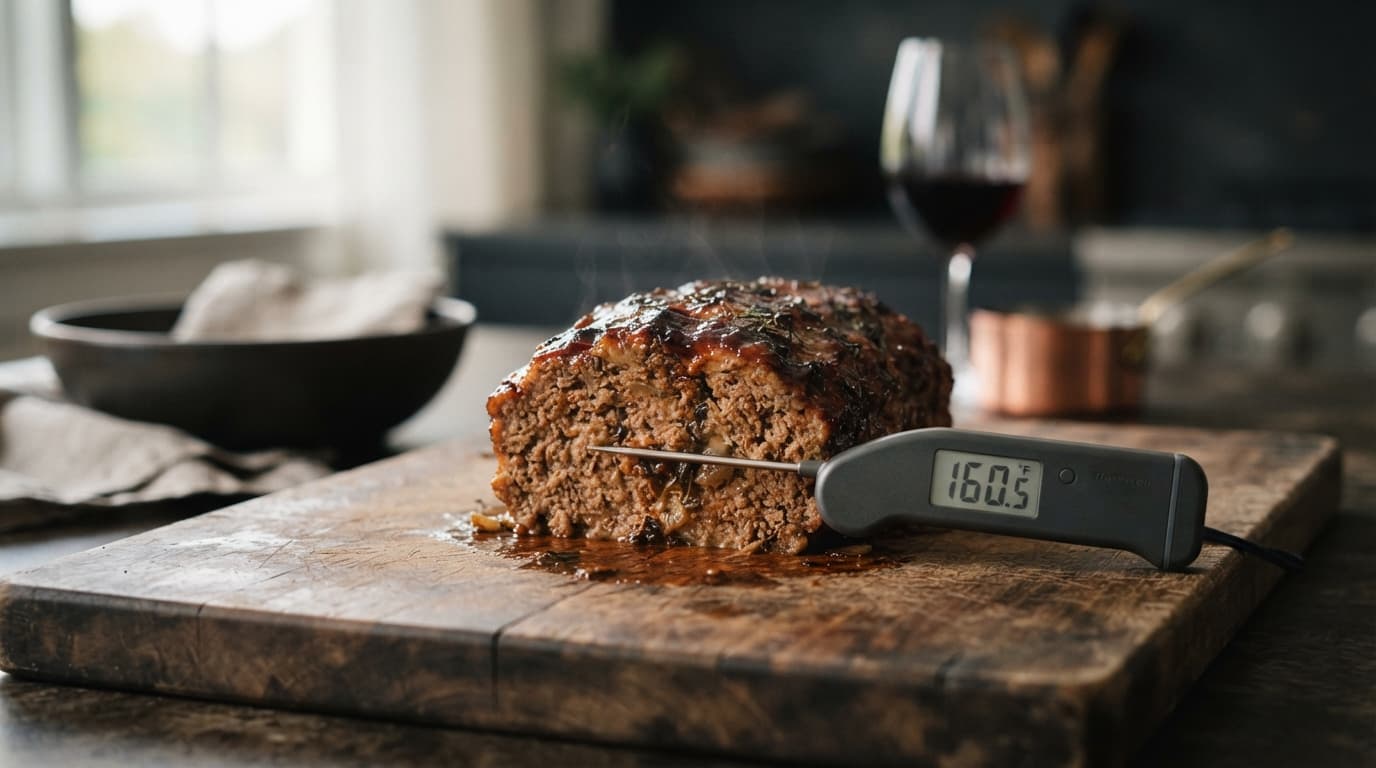
160°F, per USDA guidance for ground meat, beef, pork, veal, or a mix. That's higher than whole-cut beef's 145°F minimum, for a specific reason.
9 min read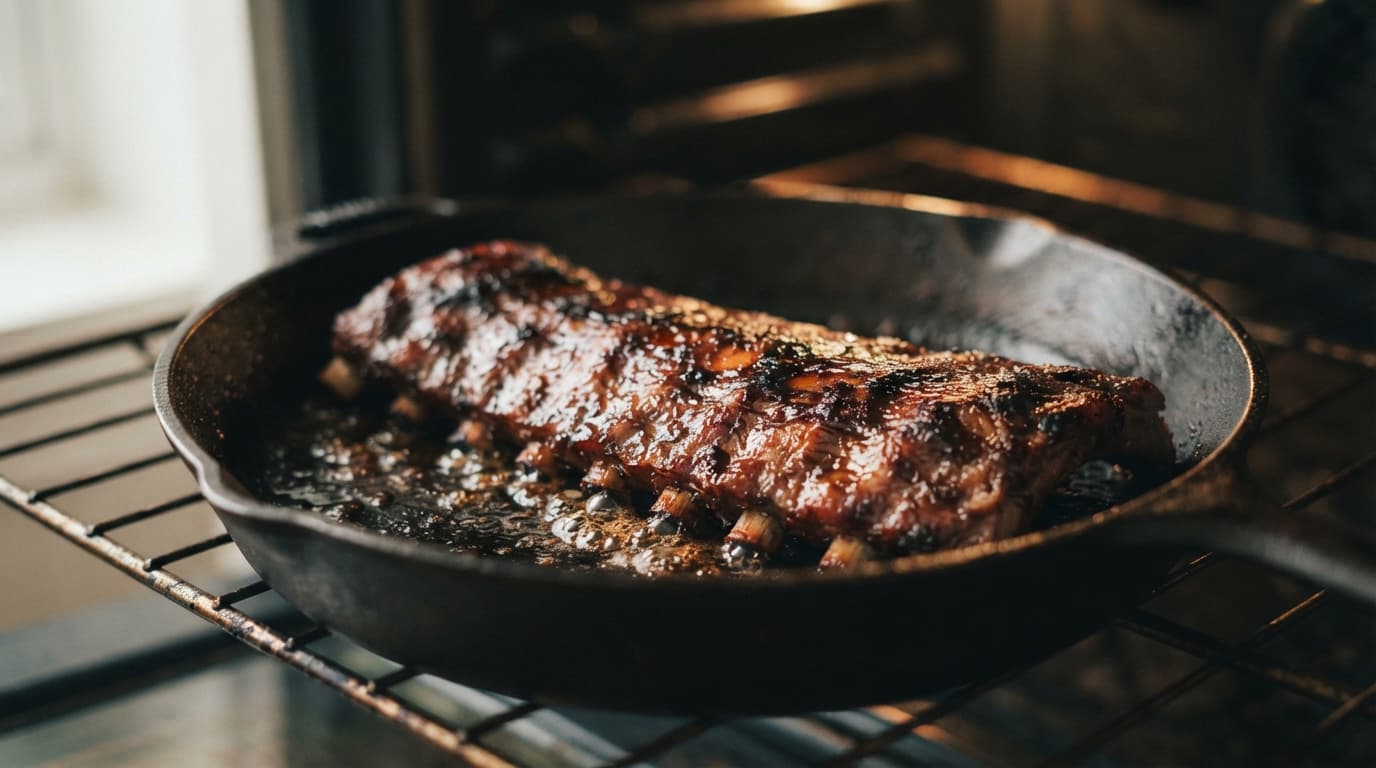
Precooked ribs need reheating to 165°F, not cooking from raw. The practitioner approach is about 250°F for 20 to 30 minutes, foil-wrapped with added moisture.
9 min read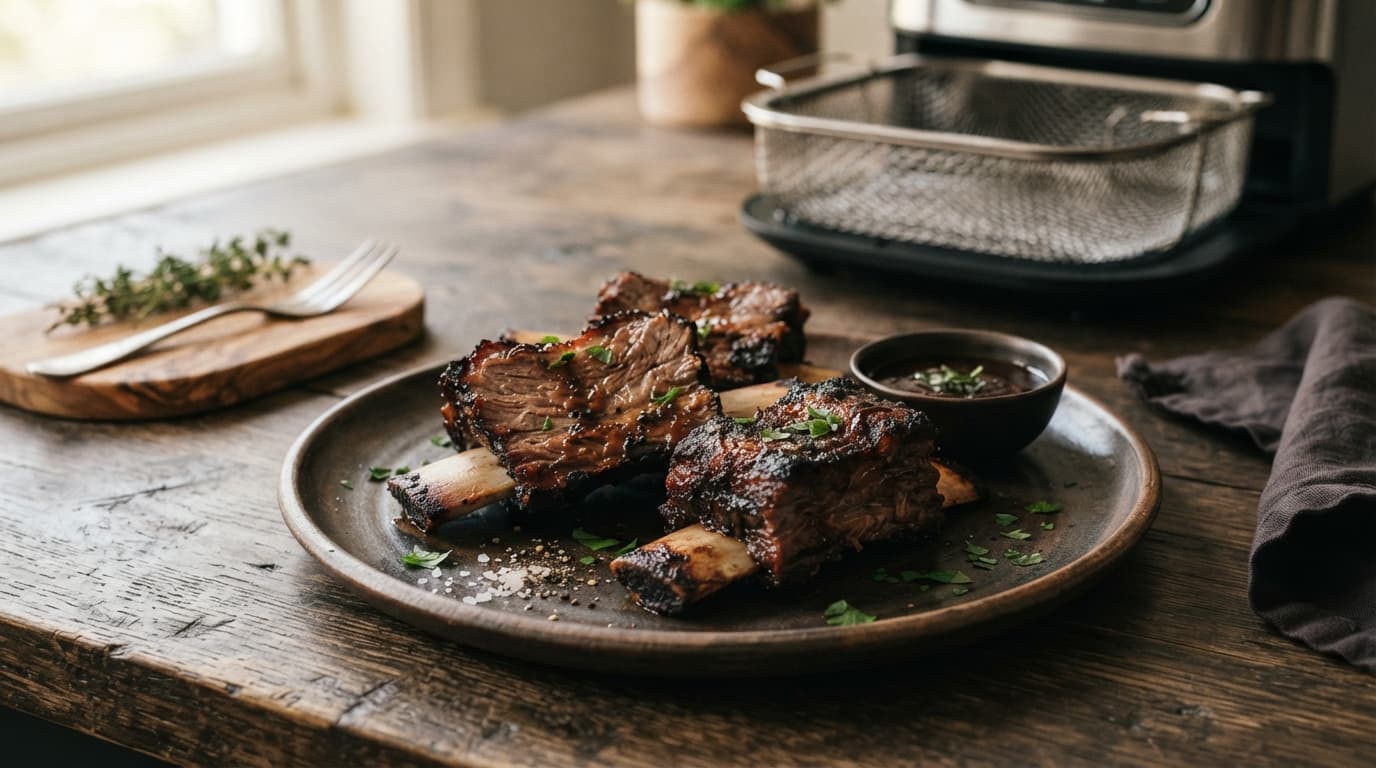
Thin, boneless flanken-style short ribs can cook in under 10 minutes at 400°F. Thicker bone-in, low-and-slow style pieces take closer to an hour at 325°F.
9 min readTables release two weeks out on Resy, Shukette's own booking platform.
Book Now →