Meatloaf Internal Temperature
Editorial desk · 9 min read · Updated 2026-08-23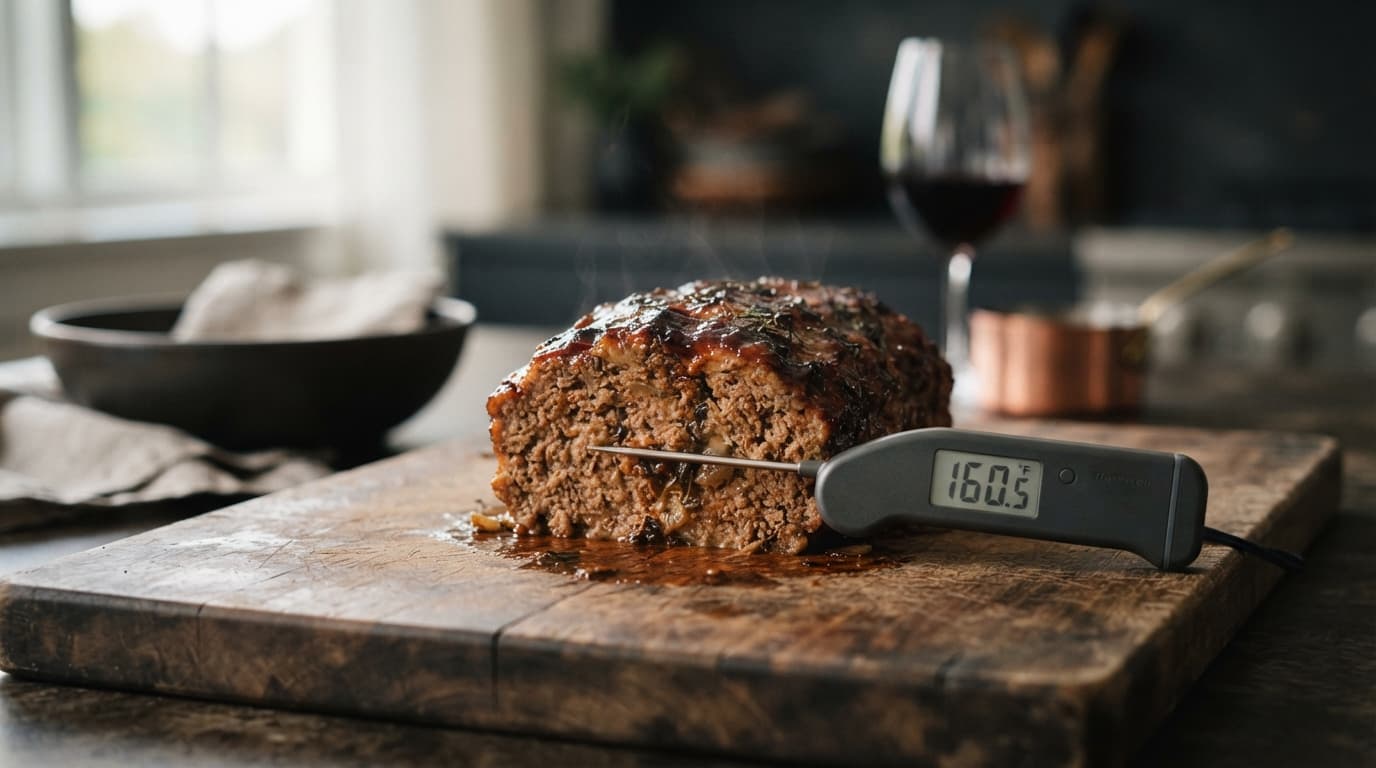
Meatloaf needs to reach 160°F internally, confirmed with a food thermometer in the thickest part of the loaf, regardless of whether it's made from ground beef alone or a blend of beef, pork, and veal. That number is higher than the 145°F minimum for a whole cut of beef like steak or roast, and the difference comes down to one specific factor: grinding meat distributes any surface bacteria throughout the entire mass, rather than leaving it concentrated on the exterior where a whole cut's cooking process reaches it earliest and most directly.
This is a genuinely common point of confusion, since a home cook comfortable checking a steak to 145°F might reasonably assume the same number applies to a dish that's still, technically, made of beef. It doesn't, and knowing why makes the higher number easier to trust rather than treat as an arbitrary rule.
Why grinding changes the safety math
A whole cut of beef, a steak or a roast, carries whatever bacteria it has almost entirely on its exterior surface, since the interior of an intact muscle is essentially sterile until it's cut into. Cooking that whole cut to 145°F, with a 3-minute rest, is sufficient specifically because the heat only needs to fully address that exterior layer; the interior was never meaningfully contaminated to begin with.
Grinding meat destroys that clean separation between exterior and interior entirely. The grinding process physically mixes surface meat, and whatever bacteria live on it, throughout the entire batch, which means what was once a surface-only concern becomes a distributed, throughout-the-product concern. Cooking ground meat to the same 145°F a whole cut would use leaves open the possibility that bacteria mixed into the center of the product hasn't been fully addressed, which is exactly why USDA guidance sets a higher minimum, 160°F, for any ground meat product.
The 160°F standard applies to any ground meat blend
Meatloaf recipes commonly combine ground beef with ground pork, ground veal, or both, often specifically for flavor and texture reasons rather than any food-safety consideration. The 160°F minimum applies regardless of which specific ground meats go into that mix, since the same grinding-distributes-bacteria logic applies equally no matter which animal, or combination of animals, the ground meat came from.
This is worth being explicit about because it would be reasonable to wonder whether pork's own whole-cut minimum, 145°F since USDA's 2011 update, changes anything once pork is ground and mixed into a meatloaf. It doesn't: ground pork on its own still requires 160°F, the same as ground beef, precisely because the whole-cut-versus-ground distinction, not the specific animal, is what determines the applicable number.
Where and how to actually check
Insert the thermometer into the very center of the loaf, its thickest and most insulated point, rather than near an edge or close to the pan itself. The center is the last part of the loaf to reach a safe temperature, since it's the most protected from direct heat on every side, which means a reading taken anywhere else can show 160°F while the true center still lags behind.
Meatloaf's shape adds a specific wrinkle worth knowing: a loaf baked in a standard loaf pan is more insulated on its sides and bottom than one shaped free-form on a sheet pan, since the pan itself blocks some direct heat exposure that a free-form loaf gets from all sides. A pan-baked meatloaf can take meaningfully longer to reach 160°F at its center than a free-form loaf of similar total weight, which is a reasonable thing to expect and check for rather than a sign something has gone wrong.
A reliable instant-read thermometer matters more for meatloaf than it might for some other dishes, precisely because the safety margin here is thinner in one specific sense: unlike a whole cut of beef where a slightly early pull is merely a texture letdown, an inaccurate reading on ground meat can mean serving something that reads as done but genuinely isn't. A thermometer that's been tested for accuracy, rather than trusted purely because of its price or brand, removes that particular source of risk.
Checking more than one spot is also worth doing on a larger loaf, since even the center of a long, wide meatloaf can vary in temperature from one end to the other depending on oven hot spots and how evenly the loaf itself was shaped. A reading of 160°F at one end doesn't guarantee the same number holds at the opposite end of an unevenly shaped loaf, so a second check partway down the length of a larger loaf is a reasonable extra step rather than excessive caution.
Why color and firmness aren't reliable substitutes
The same principle that applies to checking whether pork tenderloin is done applies here: appearance isn't a reliable stand-in for an actual thermometer reading. A meatloaf can look fully browned on the outside and still be well under 160°F at its center, especially a denser, more tightly packed loaf that takes longer for heat to penetrate all the way through. Conversely, a loaf can appear slightly pink in spots, particularly if it contains ingredients like certain seasonings or a glaze that affect surface color, while still being fully safe once the actual internal number is confirmed.
Firmness to the touch is similarly unreliable on its own, since a loaf's density depends heavily on its specific ratio of meat to filler ingredients like breadcrumbs or eggs, not just on doneness. A thermometer reading is the only method that actually confirms 160°F has been reached, regardless of how the loaf looks or feels from the outside.
Ingredients that affect how meatloaf cooks, without changing the target
Fillers like breadcrumbs, oats, or crushed crackers, along with binders like egg, change meatloaf's density and moisture content, which can shift how long it takes to reach 160°F without changing the actual target temperature itself. A denser, more tightly packed loaf with less filler generally takes longer to heat through evenly than a lighter, more loosely packed one, simply because there's more solid meat mass for heat to penetrate.
A glaze or topping applied partway through baking, a common addition for a ketchup-based or barbecue-style glaze, doesn't affect the internal safety target either, though it's worth applying glaze later in the bake if you want it to stay visually distinct rather than fully melting into the surface over a long total cook time.
Fat content in the ground meat itself also plays a role worth knowing about. A leaner blend, ground beef labeled 90 percent lean or higher, tends to produce a drier finished loaf than a fattier blend does, independent of whether it's been correctly cooked to 160°F, since there's simply less rendered fat keeping the interior moist. This is a texture and flavor consideration rather than a safety one; a lean meatloaf cooked correctly to 160°F is exactly as safe as a fattier one cooked to the same number, even if the fattier version generally eats more tender. Adding a moisture-rich ingredient like grated onion, a small amount of milk-soaked bread, or extra egg can help offset some of the dryness a leaner blend is prone to, without changing anything about the temperature target itself.
Vegetables mixed directly into the loaf, chopped onion, bell pepper, or carrot, add moisture and volume but generally don't slow the loaf's progress toward 160°F in any meaningful way, since they're distributed throughout the mass rather than concentrated at the center where the slowest heating actually happens. A loaf packed unusually full of mix-ins can end up slightly larger overall for the same weight of meat, though, which is worth factoring into your time estimate if a recipe with heavy mix-ins is baking noticeably larger than a plainer version would.
What happens if meatloaf is pulled too early
Meatloaf pulled before it reaches 160°F carries the same category of risk as any other undercooked ground meat product: potential bacterial contamination that wasn't fully addressed by the cooking process. Unlike a whole cut of pork pulled early, which is merely a texture disappointment rather than a safety issue, an undercooked ground meat product genuinely hasn't met the standard that makes it safe to eat, which makes checking with a thermometer a meaningfully higher-stakes step here than it is for many whole-cut proteins.
This is exactly why relying on a fixed bake time from a recipe, without a thermometer check to confirm the actual result, is a real risk with meatloaf specifically. Oven calibration, loaf shape and density, and pan type all affect actual cook time enough that a stated bake time is a reasonable starting estimate at best, never a substitute for confirming 160°F directly.
Once 160°F is confirmed, a brief rest, 5 to 10 minutes, before slicing helps the loaf hold together better, since cutting into it immediately gives juices no time to settle back through the meat. This is a much shorter rest than a large cut like brisket needs, simply because meatloaf's smaller total mass means less time is required for that same juice-redistribution process to meaningfully finish. The rest period doesn't change or extend the safety standard itself; 160°F confirmed at the center before the rest begins is what makes the loaf safe, and the rest afterward is purely about texture and presentation.
Leftover meatloaf follows the same general storage logic as any other cooked ground meat: refrigerate within two hours of cooking, and use within three to four days for best quality and safety. Reheating leftover meatloaf calls for a different number than the original bake, since it's now a cooked leftover rather than raw ground meat coming up to temperature for the first time; USDA's general leftovers guidance of 165°F applies here, a small but real distinction from the 160°F target that governed the original bake. Slicing leftover meatloaf into individual portions before reheating, rather than warming the whole loaf at once, generally produces a more even result and takes less total time than reheating a single large piece straight from the refrigerator.
Freezing meatloaf, either whole or pre-sliced, is a reasonable option if it won't be finished within that three-to-four-day window. A fully cooked, properly cooled meatloaf freezes well for several months without a meaningful safety concern, though texture can shift slightly upon thawing and reheating, particularly in a leaner loaf that had less fat to begin with. Portioning it into individual slices before freezing, rather than freezing one large block, makes for a faster, more even thaw and reheat later, the same practical benefit portioning offers for most other frozen cooked meats.
One number, regardless of the recipe
It's worth naming the underlying pattern one more time, since it explains a lot of otherwise-confusing kitchen advice: any product made from ground meat, meatloaf, burgers, meatballs, sausage, gets the higher 160°F standard, while an intact whole cut of the same animal, a steak, a roast, a chop, gets a lower number specific to that cut. This isn't inconsistency in food-safety guidance; it's the guidance correctly tracking a real, physical difference in how bacteria can end up distributed through two different forms of the same underlying meat. Once that distinction is clear, it becomes much easier to reason through a new or unfamiliar dish's safe temperature without needing to look up every individual product from scratch.
Whatever specific blend of ground meats, fillers, or glaze a meatloaf recipe calls for, the safety target underneath all of it stays fixed at 160°F, checked at the center with a food thermometer. That consistency is worth holding onto the same way it applies to any other ground meat product: the recipe can vary endlessly, but the number that confirms it's actually safe to eat does not.
Frequently asked questions
What internal temperature does meatloaf need to reach?+−
160°F, confirmed with a food thermometer inserted into the thickest part of the loaf. This is the USDA's standard for ground meat generally, which includes meatloaf, meatballs, and burgers.
Why is meatloaf's safe temperature higher than a steak's?+−
Grinding distributes any surface bacteria throughout the entire mass of meat, rather than leaving it concentrated on the exterior where cooking reaches it first and most directly. That's why ground meat needs a higher minimum, 160°F, than a whole cut like steak, which only needs 145°F.
Does a meatloaf made with a mix of ground beef, pork, and veal need a different temperature?+−
No. 160°F applies regardless of which ground meats are combined, since the same grinding-distributes-bacteria logic applies to any ground meat or blend of ground meats equally.
Where should I check the temperature on a meatloaf?+−
In the very center of the loaf, its thickest and most insulated point, which is also the last part to reach a safe temperature. Checking near the edges or the top surface can give a misleadingly high reading before the center has actually caught up.
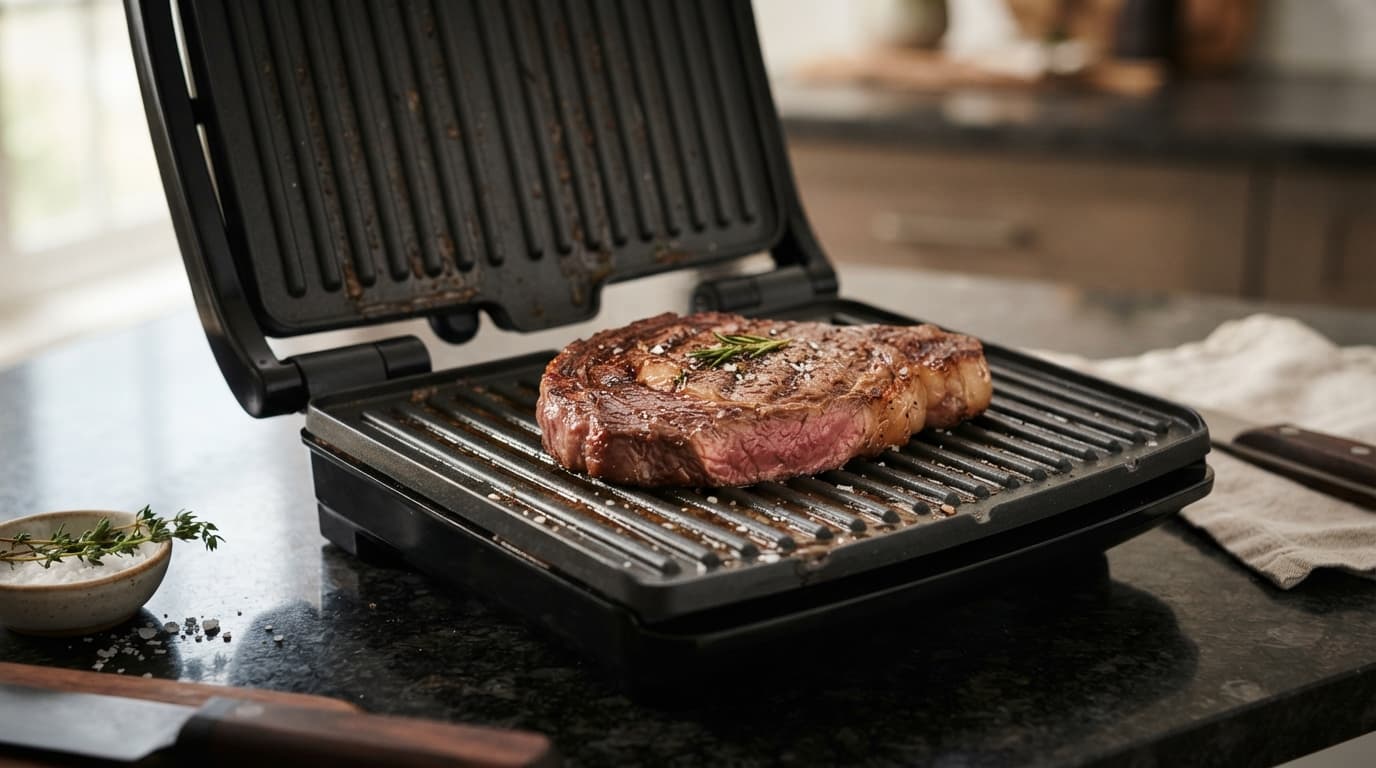
A 1-inch steak takes about 4-7 minutes for medium-rare on a contact grill, since both sides cook at once. Thickness affects time more than the clock does. Confirm 145°F.
10 min read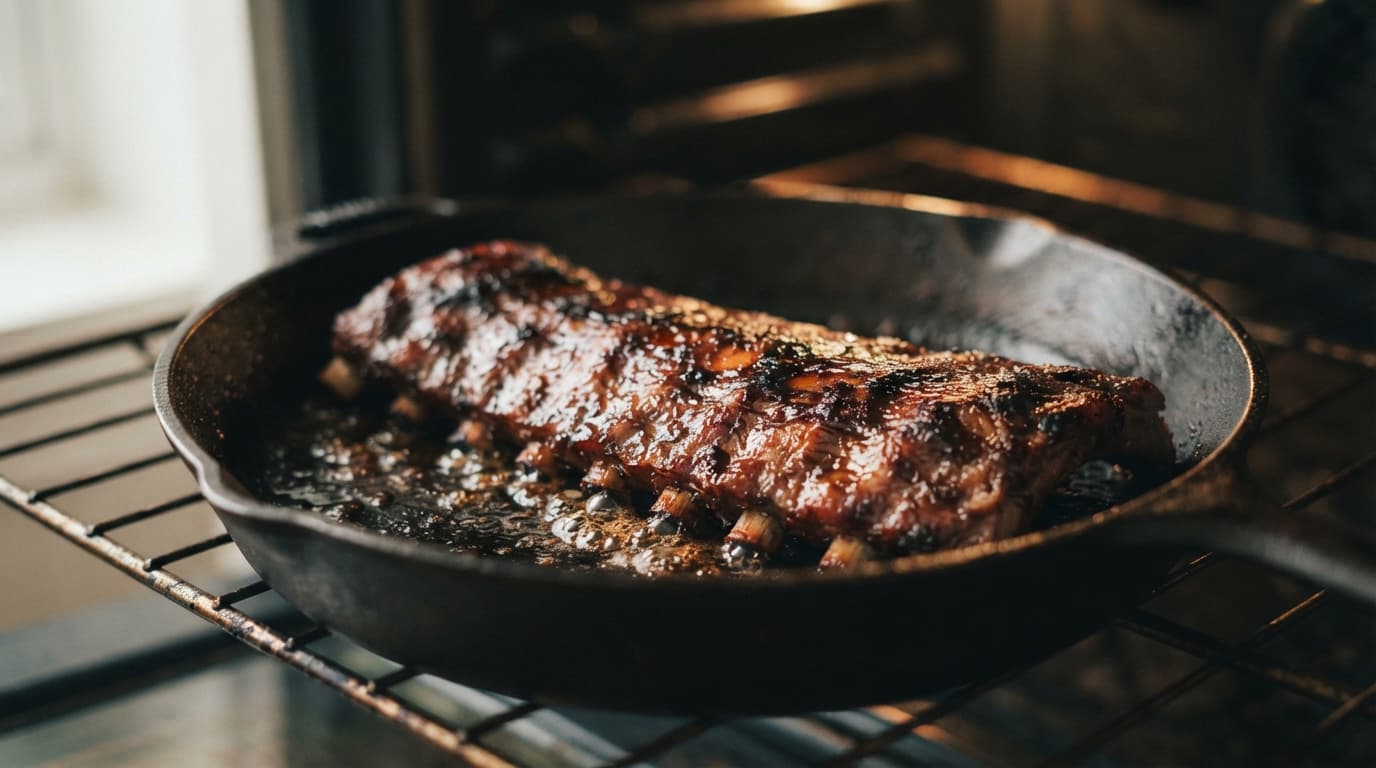
Precooked ribs need reheating to 165°F, not cooking from raw. The practitioner approach is about 250°F for 20 to 30 minutes, foil-wrapped with added moisture.
9 min read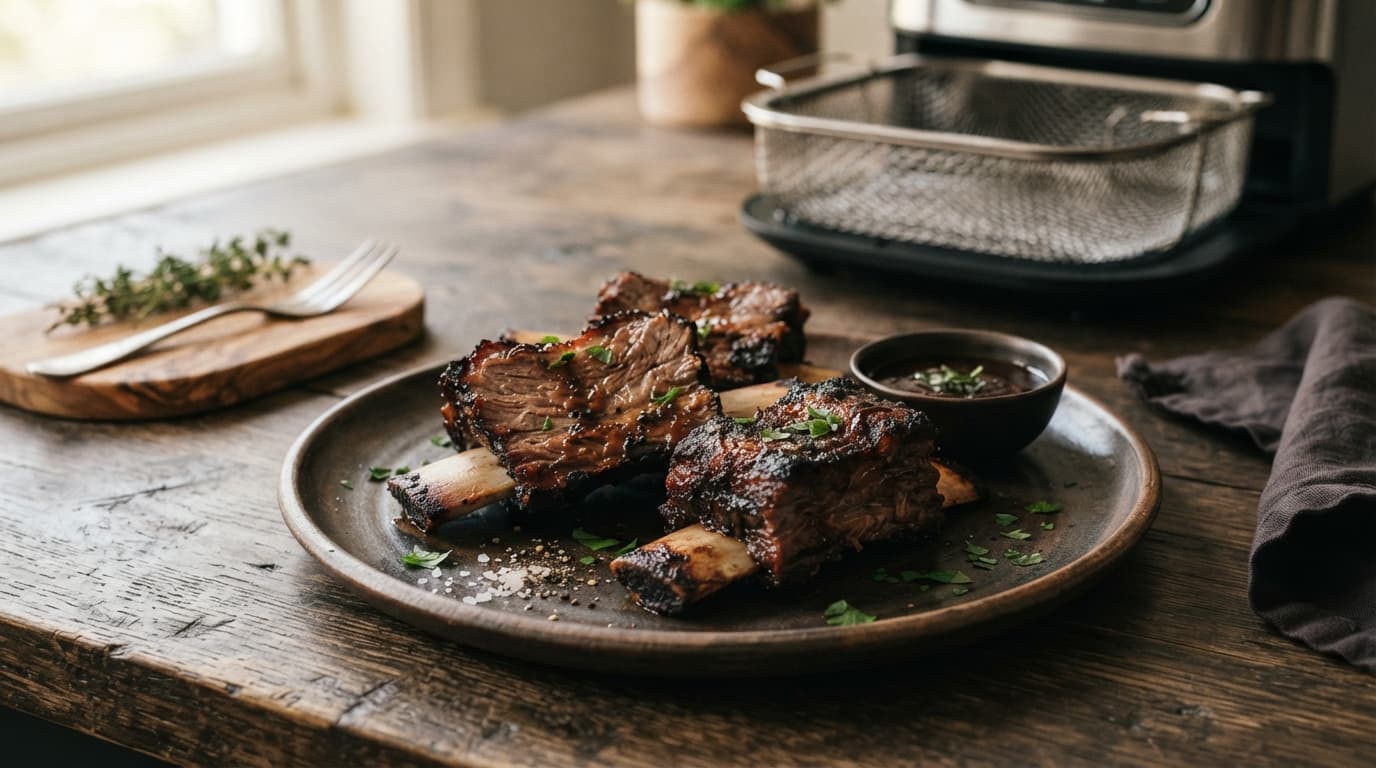
Thin, boneless flanken-style short ribs can cook in under 10 minutes at 400°F. Thicker bone-in, low-and-slow style pieces take closer to an hour at 325°F.
9 min readTables release two weeks out on Resy, Shukette's own booking platform.
Book Now →