Can Pork Tenderloin Be Pink?
Editorial desk · 9 min read · Updated 2026-08-22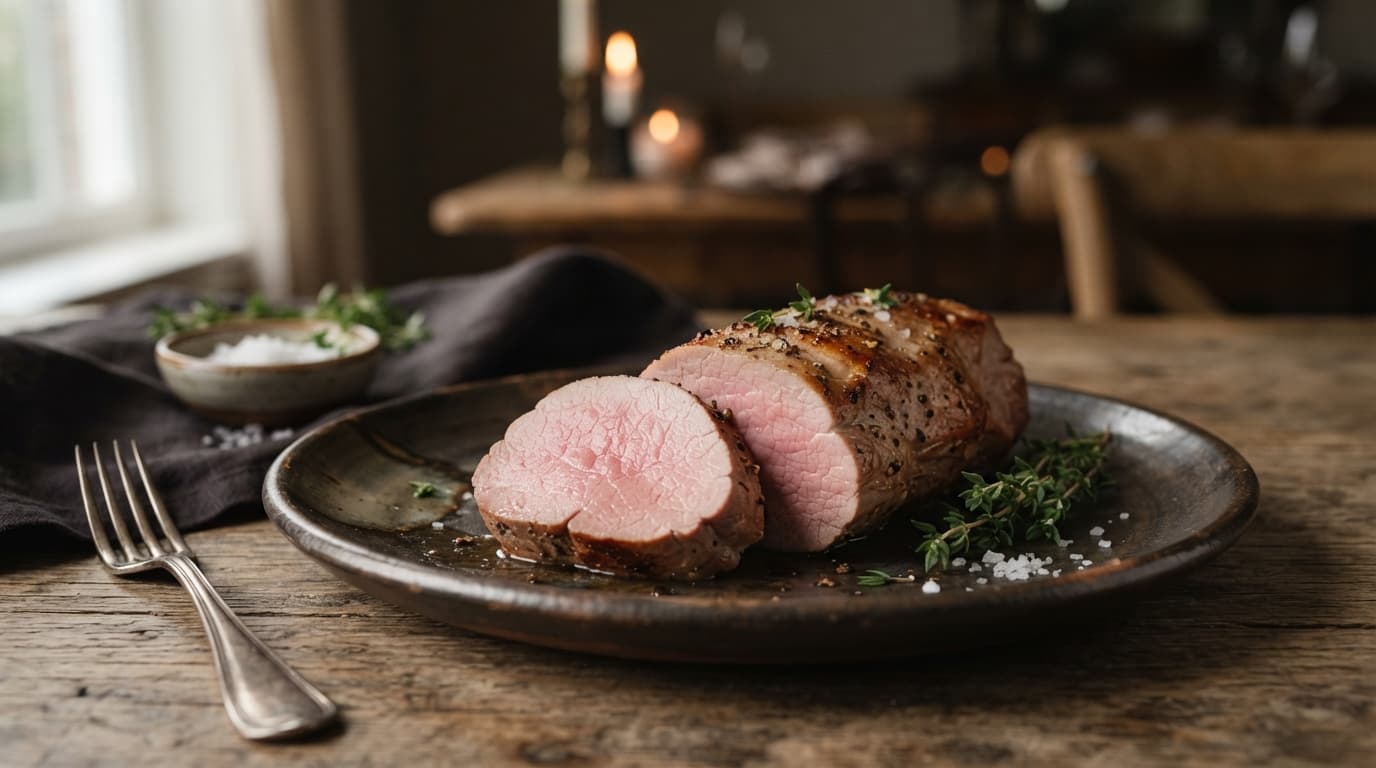
Yes, pork tenderloin can be pink and still be completely safe to eat, as long as it's reached 145°F internally, confirmed with a food thermometer, and rested for at least 3 minutes afterward. This is the current USDA standard for whole cuts of pork, and it's meaningfully different from the 160°F standard many people grew up with, which produced fully white meat with no pink remaining at all.
That older standard is exactly why pink pork still makes some people uneasy even though it's been officially safe for well over a decade. Understanding what actually changed, and why, clears up most of the lingering hesitation.
The 2011 change, and why it happened
Until 2011, USDA guidance for whole cuts of pork called for cooking to 160°F, a temperature that leaves little to no pink color in the finished meat. That year, USDA lowered the recommended safe minimum for whole pork cuts, tenderloin, chops, and roasts, to 145°F, combined with a required 3-minute rest time after cooking. This wasn't a loosening of food safety standards; it was a refinement based on updated data showing that 145°F held for a 3-minute rest achieves the same pathogen elimination as the older 160°F standard did without any rest period.
This kind of update, refining a standard based on new data rather than abandoning caution, happens periodically across food safety guidance generally, and pork's 2011 change is one of the more well-documented examples. It's worth remembering the next time a food safety number seems to have shifted from what you learned growing up: the change usually reflects better underlying science, not a lowering of the actual bar for safety.
The change specifically addressed concerns about trichinosis, a parasitic infection historically associated with undercooked pork. Trichinosis in commercially raised pork has declined dramatically over the decades due to changes in how hogs are raised and fed, and updated USDA research supported a lower, more precise temperature standard that still fully addresses that risk while producing noticeably better texture and moisture in the finished meat.
Why the rest time isn't optional
The 3-minute rest isn't a serving suggestion or a texture tip layered on top of the temperature requirement; it's part of the actual safety standard itself. USDA's research specifically established that 145°F combined with a 3-minute rest produces a safety outcome equivalent to the older, higher-temperature approach. During that rest period, the meat continues to hold at a temperature high enough to complete the pathogen-elimination process, which is why skipping the rest and cutting into the meat immediately after pulling it from heat doesn't fully match the tested, verified standard.
In practical terms, this means checking the temperature, confirming 145°F in the thickest part of the tenderloin, then actually waiting the full 3 minutes before slicing matters as much as hitting the number in the first place. Cutting into pork tenderloin the instant it reads 145°F, without observing the rest period, isn't quite following the complete standard the number is based on.
Why pink doesn't mean unsafe
USDA guidance is direct on this point: appearance and color aren't reliable indicators of whether meat has reached a safe temperature, in either direction. Pork tenderloin cooked to 145°F and properly rested can retain a pink or slightly rosy color throughout, particularly near the center, and that color has no bearing on whether the meat is actually safe. The only way to confirm safety is a food thermometer reading, not a visual check.
This cuts both ways, which is worth knowing. Pork that's turned fully white or gray isn't automatically safer than pink pork; it might simply be cooked well past the 145°F minimum, sacrificing moisture and tenderness for a color that doesn't actually reflect a meaningfully higher safety margin. And pork that looks pink is not automatically undercooked; it might be exactly at the properly verified 145°F standard, which happens to permit more retained pink than the older approach did.
A few specific factors can also affect pork's color independent of doneness entirely. Younger pigs, more common in today's commercial pork supply than decades ago, tend to have naturally lighter, pinker meat than older animals did, similar to how a young chicken shows more pink than an older bird even at a fully safe temperature. Diet and how the meat was handled before it reached the kitchen can shift color slightly as well. None of these factors change the actual safety threshold; they just mean two properly cooked pieces of pork tenderloin, both safely at 145°F, can look somewhat different from each other for reasons that have nothing to do with doneness.
The underlying color chemistry is the same pigment, myoglobin, responsible for meat color generally, whether in beef, pork, or poultry. Fresh meat's color shifts through a few different states depending on its exposure to oxygen and how it's been handled, and none of those shifts directly track with internal temperature. This is part of why relying on a thermometer rather than visual judgment isn't just good practice for pork specifically; it's the same principle that applies to virtually every meat and poultry safety question, since color has always been a byproduct of pigment chemistry rather than a direct readout of internal temperature.
Ground pork is a different rule entirely
The 145°F standard applies specifically to whole cuts of pork, tenderloin, chops, roasts, not to ground pork. Ground pork, along with ground pork mixtures like meatloaf or sausage, needs to reach 160°F, the same higher standard used for ground beef and other ground meats. The reasoning mirrors the same logic that applies to ground poultry: grinding distributes any surface bacteria throughout the entire product rather than leaving it concentrated on the exterior, where a whole cut's cooking process reaches it earliest and most directly.
This means the same animal, pork, carries two different safe temperatures depending on whether you're working with a whole cut or a ground product, which is worth keeping straight if you regularly cook both. A pork tenderloin and a package of ground pork sitting side by side in the same kitchen have genuinely different safety thresholds, not just different textures or uses.
This same whole-cut-versus-ground distinction applies across red meat generally, not just pork. Whole cuts of beef, lamb, and veal share the same 145°F minimum as pork, each with the same 3-minute rest requirement, while ground versions of any of these meats need to reach 160°F for the identical surface-versus-distributed-bacteria reason. Once you understand the underlying logic, the specific number for any given cut becomes easier to reason through rather than needing to memorize an unrelated list of temperatures for every individual protein.
Checking pork tenderloin correctly
Pork tenderloin's long, narrow, relatively uniform shape makes it easier to get an accurate thermometer reading than some other cuts, but it's still worth inserting the probe into the thickest part of the piece rather than the tapered end, which cooks faster and can show a misleadingly high reading before the rest of the tenderloin has caught up. If you're cooking more than one tenderloin at once, check each individually rather than assuming they'll finish at the same rate, since even similarly-sized pieces can vary slightly in actual cooking time.
Because pork tenderloin is a lean cut with relatively little fat, similar in that respect to chicken breast, it also dries out fairly quickly if cooked past the 145°F target, unlike a fattier cut of pork that has more forgiveness built in from its own fat content. Pulling it right at 145°F, then observing the full rest period, is the approach most likely to produce a tender, juicy result rather than an overcooked one.
This leanness also means carryover cooking matters more for pork tenderloin than it does for a fattier cut. Residual heat continues cooking the meat for a short time after it's removed from direct heat, which is part of why the 145°F reading should be taken right as you pull the tenderloin, not after it's already been sitting for a few minutes. Some cooks pull lean cuts like tenderloin a few degrees before the target, anticipating that carryover heat during the rest period will finish the job, though checking again after the rest to confirm the final temperature is still the more reliable approach than estimating how much carryover will occur.
A two-stage check, once when you pull the meat and again after the rest period, removes the guesswork entirely. If the second check shows the tenderloin has settled below 145°F for any reason, a brief return to heat resolves it without having to start the whole cooking process over, which is a far better outcome than serving meat that never actually confirmed reaching the safe threshold in the first place.
Where you insert the thermometer matters almost as much as when you check it. A reading taken too close to the surface, rather than the true center of the thickest section, tends to run a few degrees hotter than the interior actually is, since the outer layer of any cut heats faster than its core throughout cooking. Sliding the probe in from one end, parallel to the length of the tenderloin, generally lands closer to the true center than inserting straight down through the top, which is worth practicing a few times if your readings have felt inconsistent from one cook to the next.
What this means if you're used to the old standard
If you learned to cook pork by the older 160°F rule, or you're cooking for someone who did, it's worth explaining the 2011 change directly rather than assuming everyone at the table already knows pink pork tenderloin is safe, the same way it's worth double-checking current guidance on other proteins before assuming an old rule of thumb still holds. This is a genuinely common source of hesitation at a shared meal, someone assuming a properly cooked, pink piece of pork is undercooked based on outdated guidance rather than the current, verified standard. A quick explanation of the actual rule, 145°F plus a rest, resolves the concern faster than either overcooking the pork to satisfy an outdated expectation or hoping no one notices the color.
This kind of outdated-standard confusion isn't unique to pork. Food-safety guidance evolves across categories as research improves, and a number someone learned decades ago isn't automatically wrong, but it's also not automatically still current. When in doubt about any specific meat or poultry temperature, checking the current standard rather than relying on memory is a habit worth building generally, not just for pork specifically.
A restaurant kitchen grilling pork or lamb night after night has usually internalized this exact distinction long ago, which is part of why a menu built around a wood-fired grill rarely draws the same pink-meat questions a home table sometimes does; the kitchen simply isn't second-guessing a color the way an unfamiliar home cook might. For home cooking, the fix is simple: trust the thermometer over the color, respect the rest period as part of the actual standard rather than an optional step, and treat a properly cooked, pink pork tenderloin as exactly what current food safety guidance says it is: fully safe to eat.
The next time pink pork tenderloin lands on your plate or your cutting board, that's the whole checklist worth running through: did it reach 145°F, did it actually rest for the full 3 minutes afterward, and does the answer to both of those questions matter more than what color the center happens to be. Once those two boxes are checked, the color is simply a description of the meat, not a verdict on whether it's safe to eat.
Frequently asked questions
Is it safe to eat pork tenderloin if it's still pink inside?+−
Yes, as long as it's reached 145°F internally, confirmed with a food thermometer, followed by a 3-minute rest. Whole cuts of pork like tenderloin can remain pink at that temperature and still be fully safe to eat.
Why did I grow up hearing pork needed to be cooked until it was completely white?+−
The USDA's safe minimum for whole cuts of pork used to be 160°F, a standard that produced gray, fully white meat with no pink at all. That guidance changed in 2011 to 145°F plus a 3-minute rest, which is food-safety-equivalent but leaves more pink than the old standard did.
Does the 145°F rule apply to ground pork too?+−
No. Ground pork needs to reach 160°F, since grinding distributes any surface bacteria throughout the product rather than leaving it on the exterior where cooking reaches it first. The 145°F rule is specifically for whole cuts like tenderloin, chops, and roasts.
Why does resting for 3 minutes matter for pork tenderloin specifically?+−
The rest time is part of the actual safety standard, not an optional step. USDA determined that 145°F combined with a 3-minute rest is equivalent to the old, higher-temperature standard without a rest, since the meat continues working to eliminate pathogens during that rest period.
Pork belly shows up at large supermarkets, warehouse clubs, Asian grocery stores, and butcher counters, though selection and cut style vary a lot by store type.
9 min read
Pork cushion meat is a boneless cut from the picnic shoulder, officially known as IMPS 405B. It's lean, well-worked, and best cooked low and slow, like pork butt.
9 min read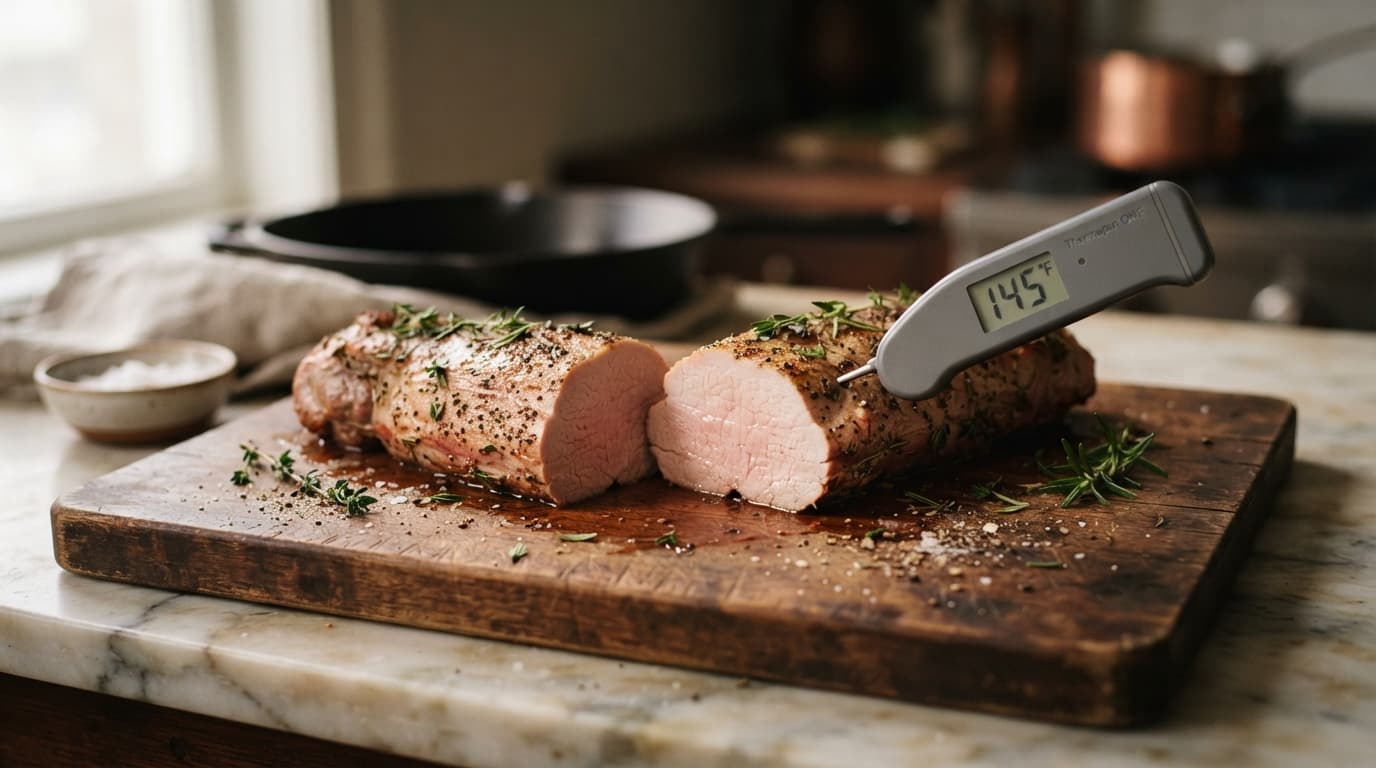
Pork tenderloin is done at 145°F, checked in the thickest part with a thermometer, then rested 3 minutes. Same number whether you grill, roast, or pan-sear it.
9 min readTables release two weeks out on Resy, Shukette's own booking platform.
Book Now →