Internal Temperature for Pork Tenderloin
Editorial desk · 9 min read · Updated 2026-08-22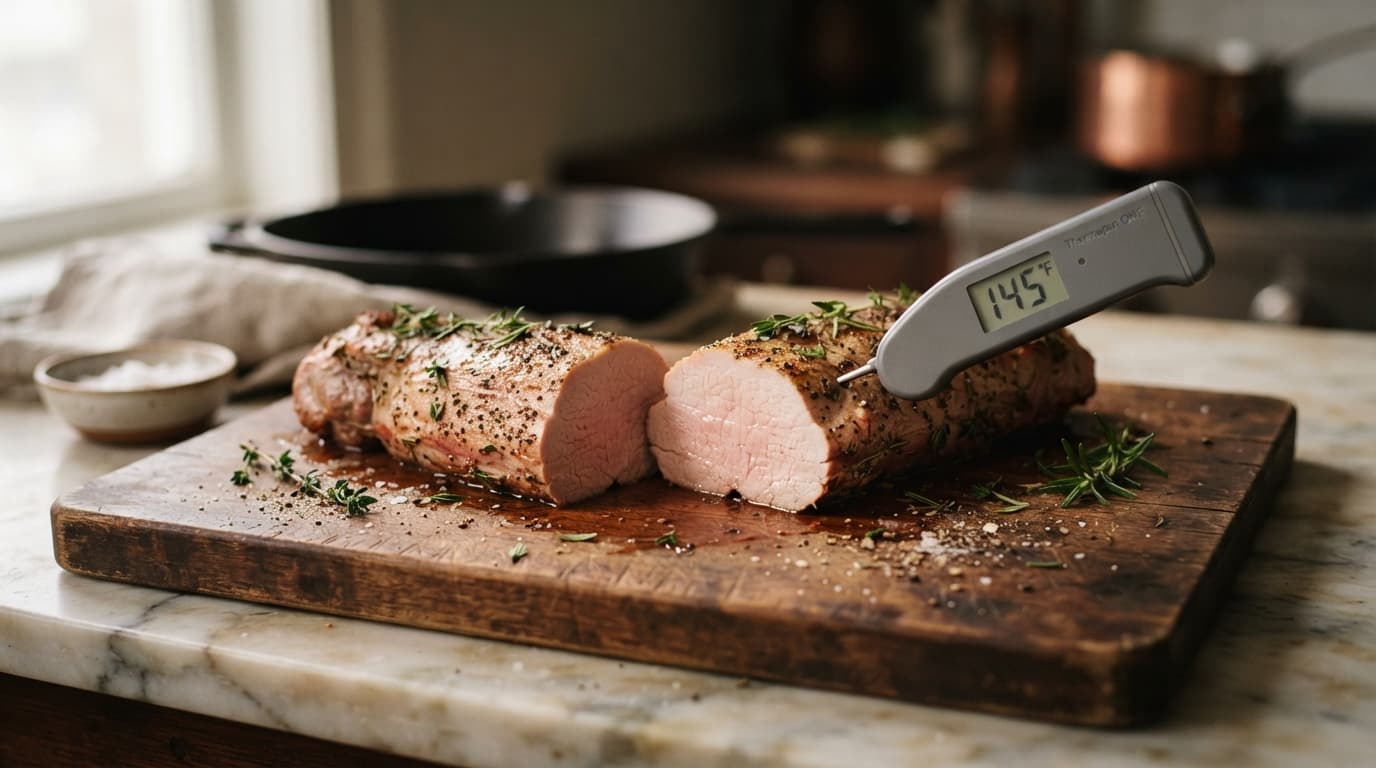
Pork tenderloin is done at 145°F, checked with a food thermometer in the thickest part of the meat, followed by a 3-minute rest before slicing. This is the USDA's safe minimum for whole cuts of pork, and it holds steady regardless of whether you're grilling, roasting, pan-searing, or cooking it sous vide. The number doesn't change; what changes between methods is how quickly the meat gets there and how easy it is to check accurately.
Because pork tenderloin is long, narrow, and relatively uniform in shape, it's one of the more forgiving cuts to check accurately with a thermometer, as long as you know where to actually place the probe.
Where to place the thermometer
Insert the thermometer into the thickest part of the tenderloin, which is usually somewhere in the middle third of the length, since tenderloins taper toward both ends. Insert from the side, angling the probe toward the center of the meat, rather than straight down through the top, which risks the tip passing through less meat overall and landing closer to the surface than the true center.
If your tenderloin has a noticeably thick end and a thin, tapered end, as most do, check the thick end specifically, since the thin end cooks faster and can read a higher, misleadingly "done" temperature well before the thicker portion has actually caught up. A single reading taken at the thinnest point can suggest the whole piece is ready when a meaningful portion of it isn't yet.
The same number, every cooking method
Whether you're searing pork tenderloin in a pan and finishing it in the oven, grilling it whole over direct heat, roasting it in a covered dish, or cooking it sous vide in a water bath, 145°F remains the target. This consistency is worth remembering specifically because different cooking methods can create the impression that they call for different standards, when really the only thing that changes is the path to the same destination.
Grilling and pan-searing tend to develop more exterior char and browning before the interior catches up, which means visual cues from the surface, a good sear, grill marks, browning, are even less reliable as a doneness signal for these methods than they already are for pork generally, and color inside the meat isn't a reliable check either. Roasting and sous vide cooking, by contrast, tend to produce a more even internal temperature with less of a gap between the surface and the center, since the heat is gentler and more consistent throughout the cook.
A common technique, searing pork tenderloin in a hot pan first, then finishing it in the oven at a lower temperature, combines the browning benefit of high heat with the more even internal cooking of a gentler finish. This two-stage approach doesn't change the target temperature, but it does mean your thermometer check matters most during the oven-finishing stage, since that's when the interior is actually approaching 145°F, rather than during the initial sear, which is mostly about developing color on the exterior.
Carryover cooking and when to actually pull it
Meat continues cooking briefly after it's removed from direct heat, a phenomenon called carryover cooking, driven by residual heat continuing to move toward the center of the piece. For a relatively thin, quick-cooking cut like pork tenderloin, this effect is real but modest, typically a few degrees, compared to the carryover you'd see on something much larger like a whole turkey or a roast.
Some cooks pull pork tenderloin a few degrees below 145°F, anticipating that carryover will close the gap during the rest period, then confirm with a second check once the rest is complete. Others simply cook straight to 145°F and treat the rest period as a texture benefit rather than a necessary step to reach the target. Both approaches work, as long as the confirmed reading after the full rest period is 145°F or higher; the rest itself isn't optional, since it's part of the actual tested safety standard, but exactly when during the process you take your primary reading is more a matter of technique preference.
How much carryover to expect depends partly on cooking method and ambient conditions. A tenderloin pulled from a very hot pan or a high-heat grill tends to carry over more than one pulled from a gentler oven roast, since more residual heat is stored at and near the surface in the high-heat scenario, and that heat has to travel toward the center during the rest. A tenderloin resting in a cold kitchen loses heat to its surroundings faster than one resting somewhere warmer, which can slightly reduce the carryover effect compared to resting it, loosely tented, in a warmer spot like near a stovetop that's still radiating some residual warmth.
None of this changes the actual target; it's simply useful context for why two people following the same "pull at 145°F" instruction can end up with slightly different actual results depending on their specific cooking setup. The one constant across every version of this process is the final check: confirm 145°F after the rest, regardless of exactly when or how you got there.
Sous vide changes the relationship between time and temperature
Sous vide cooking is worth calling out specifically because it changes the usual relationship between temperature and time. Commercial food-safety guidelines do recognize that holding meat at a sustained temperature for a long enough period can achieve the same pathogen reduction as a quicker cook at a higher temperature, which is the underlying principle sous vide relies on. Applying that principle safely at home requires following a specifically validated time-and-temperature combination from a reliable sous vide reference, not simply guessing at a lower number and holding it for a while.
For straightforward home cooking without a validated sous vide time-temperature chart in hand, treating 145°F as the target, reached in a reasonable amount of time through normal cooking methods, remains the simplest and most broadly applicable approach. If you do cook pork tenderloin sous vide, use a temperature and hold time from an established sous vide safety chart rather than assuming any low temperature becomes safe simply by holding it longer.
Multiple tenderloins, multiple checks
Pork tenderloins are often sold in pairs within a single package, and it's common to cook both at once, whether on the same grill, in the same pan, or on the same sheet pan in the oven. Don't assume both pieces finish at the same time just because they're roughly the same size and went in together. Position on the grill or in the oven, and even small size differences between the two pieces, can shift when each one actually reaches 145°F.
Check each tenderloin individually in its own thickest section rather than checking one and assuming the second matches. This is the same principle that applies to checking multiple pieces of chicken cooked together: cooking several pieces of the same food simultaneously doesn't guarantee they finish in sync, and treating them as a single unit for the purposes of a temperature check risks serving one piece that hasn't actually reached a safe temperature.
This matters even more when the two tenderloins in a package are visibly different sizes, which happens more often than you'd expect since they're typically sold as a matched pair by weight rather than by identical individual dimensions. A noticeably thicker tenderloin needs more time than its thinner counterpart even when both started cooking at the exact same moment, and pulling both together based on the smaller one's readiness risks leaving the larger piece short of 145°F.
What a reliable thermometer actually needs
An accurate reading depends on the thermometer itself as much as where you place it. A cheap or poorly calibrated instant-read thermometer can read several degrees off from the true internal temperature, which defeats the purpose of checking at all. Testing your thermometer periodically, in a glass of ice water, which should read close to 32°F, is a simple way to confirm it's still accurate, particularly if it's been dropped or used heavily over time.
Response time matters too. A slow-reading thermometer that takes 15 or 20 seconds to settle on a final number is more likely to be pulled from the meat too early, before it's actually reached a stable reading, which can produce a falsely low result. A faster, well-maintained instant-read thermometer removes much of this uncertainty and is worth the modest investment if you cook pork tenderloin, or any other whole cut of meat, with any regularity.
Probe placement technique improves with practice more than most people expect. The first few times checking a tenderloin, it's easy to insert the probe at an angle that clips the surface rather than reaching the true center, producing a reading that's technically accurate for wherever the tip landed but not representative of the thickest, coolest part of the meat. Inserting slowly, feeling for the point of least resistance near the middle of the cut, and occasionally double-checking with a second insertion at a slightly different angle builds the kind of intuition that makes future checks faster and more reliable.
A dedicated instant-read model, rather than a leave-in oven thermometer or a dial-style probe meant for larger roasts, tends to suit a cut this size best, since it's designed for quick spot checks rather than continuous monitoring over a long cook. Leave-in probes work fine for something like a whole turkey that spends hours in the oven, but they're often bulkier than necessary for a piece of meat that finishes cooking in well under an hour, and a quick instant-read check causes less heat loss from repeatedly opening an oven or lifting a grill lid than a wired probe threaded through the door or lid the entire time.
Treat the number as fixed and the process as the variable
145°F, checked in the thickest part of the meat with a working thermometer, followed by a 3-minute rest, is the whole standard for pork tenderloin, and it doesn't change based on how you're cooking it. What does change from one method or one specific piece of meat to the next is how you get there: where exactly to check, how carryover cooking factors in, and how to handle checking more than one piece at a time. Master that process once, and the same 145°F target applies cleanly no matter which cooking method or specific tenderloin you're working with next.
This is genuinely one of the more approachable temperature targets to hit reliably at home, precisely because pork tenderloin's shape makes accurate thermometer placement so straightforward once you know where to look. A cut with more irregular thickness, a bone-in roast or a thick, unevenly shaped shoulder piece, demands more careful probe placement to avoid a misleading reading; tenderloin's long, uniform taper is about as forgiving as whole-cut pork gets for anyone still building confidence with a thermometer.
Keeping a simple mental checklist in mind, thickest part, angled from the side, confirmed again after the full rest period, turns this from a source of dinner-table anxiety into a routine, almost automatic step that takes less time than plating the rest of the meal. Once that checklist becomes automatic, 145°F stops feeling like a number to second-guess and starts functioning the way it's meant to: a fixed target that tells you the meat is done, regardless of which specific method or occasion brought you to cooking it that particular night.
Frequently asked questions
What internal temperature should pork tenderloin reach?+−
145°F, measured with a food thermometer in the thickest part of the meat, followed by a 3-minute rest before slicing. This is the USDA's safe minimum for whole cuts of pork, and it applies regardless of cooking method.
Where exactly should I insert the thermometer on a pork tenderloin?+−
Into the center of the thickest part, inserted from the side or the end rather than straight down through the top, which helps you reach the true center rather than an angled path through less meat.
Does the target temperature change if I'm grilling instead of roasting?+−
No. The safe minimum stays at 145°F regardless of cooking method, grilling, roasting, pan-searing, or sous vide. What changes between methods is how quickly the meat gets there and how evenly it heats, not the actual target.
Should I pull the tenderloin at exactly 145°F or a few degrees earlier?+−
Many cooks pull it a few degrees before 145°F, accounting for carryover cooking during the rest period, then verify the final temperature after resting. Either approach works as long as the confirmed final reading, after the rest, is 145°F or higher.
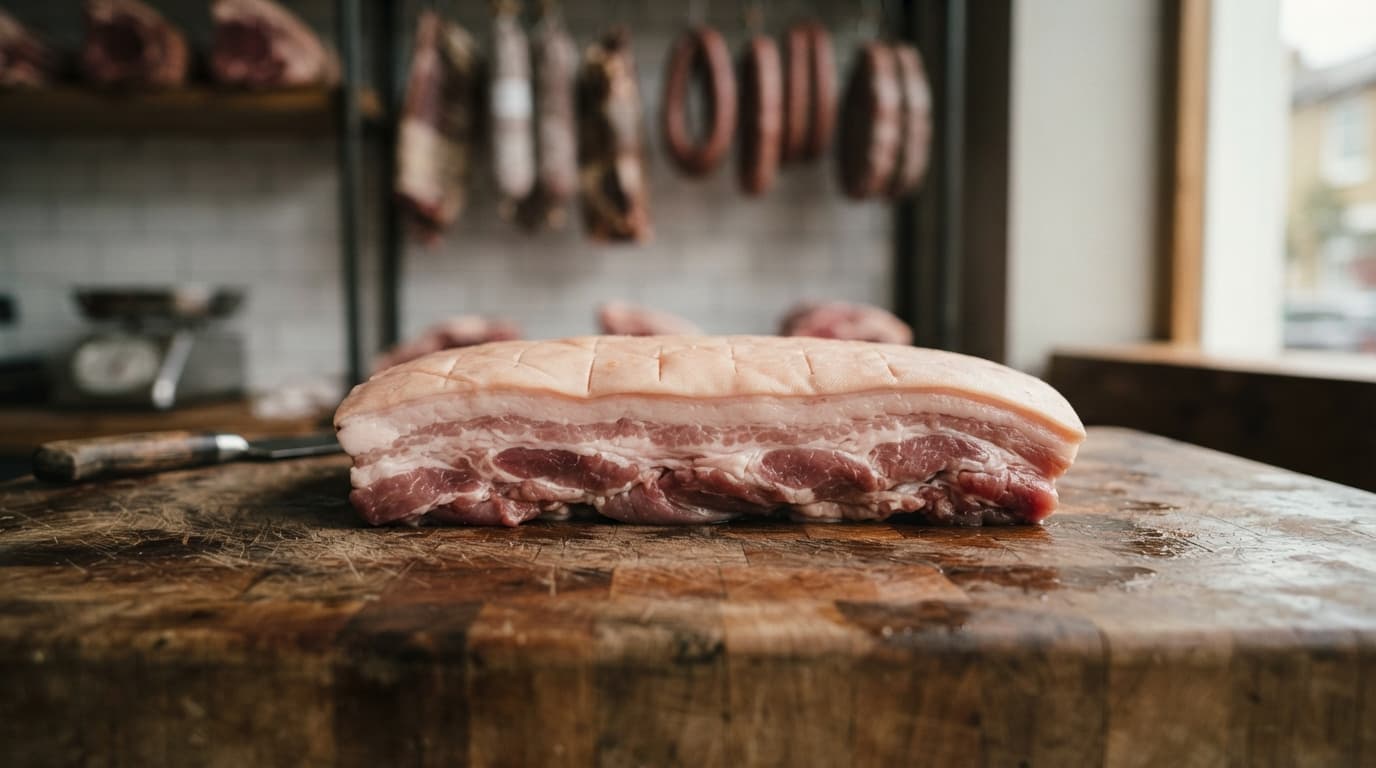
Pork belly shows up at large supermarkets, warehouse clubs, Asian grocery stores, and butcher counters, though selection and cut style vary a lot by store type.
9 min read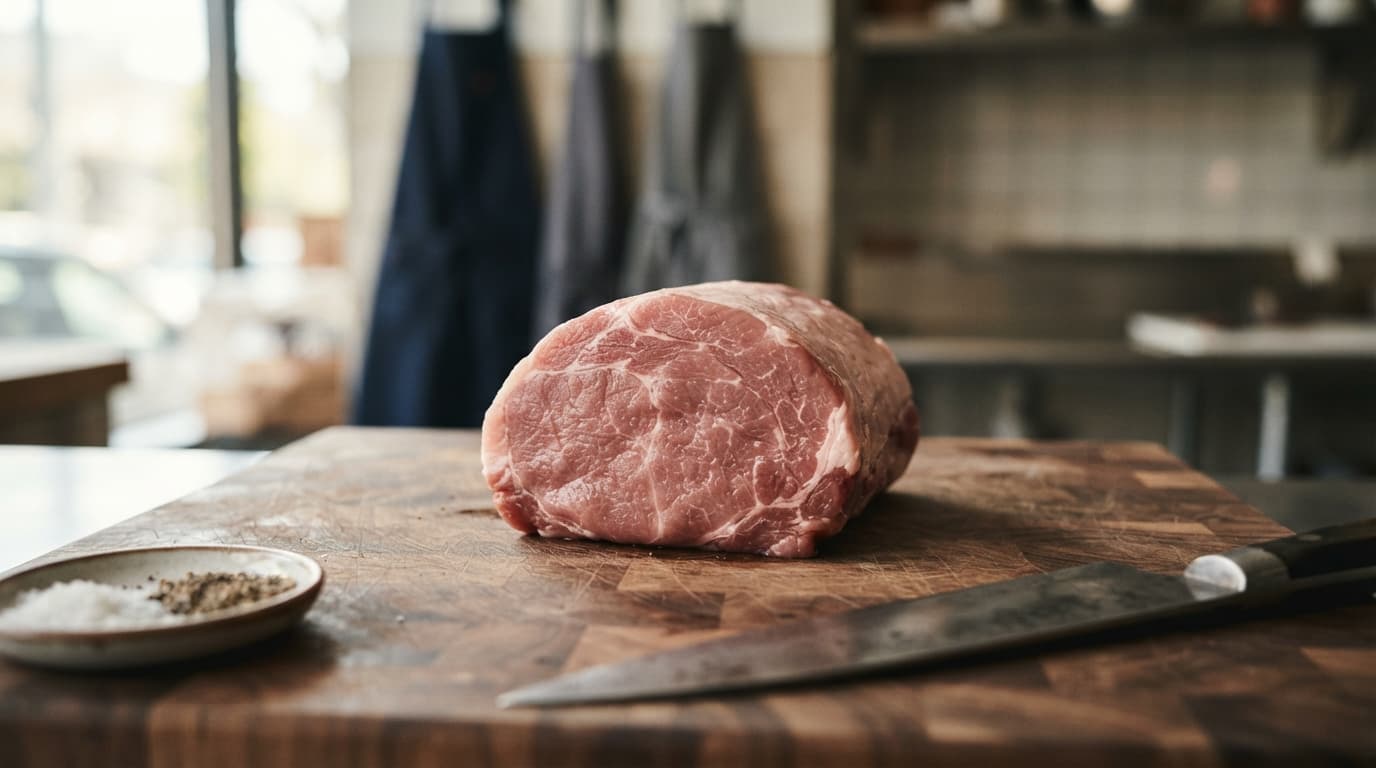
Pork cushion meat is a boneless cut from the picnic shoulder, officially known as IMPS 405B. It's lean, well-worked, and best cooked low and slow, like pork butt.
9 min read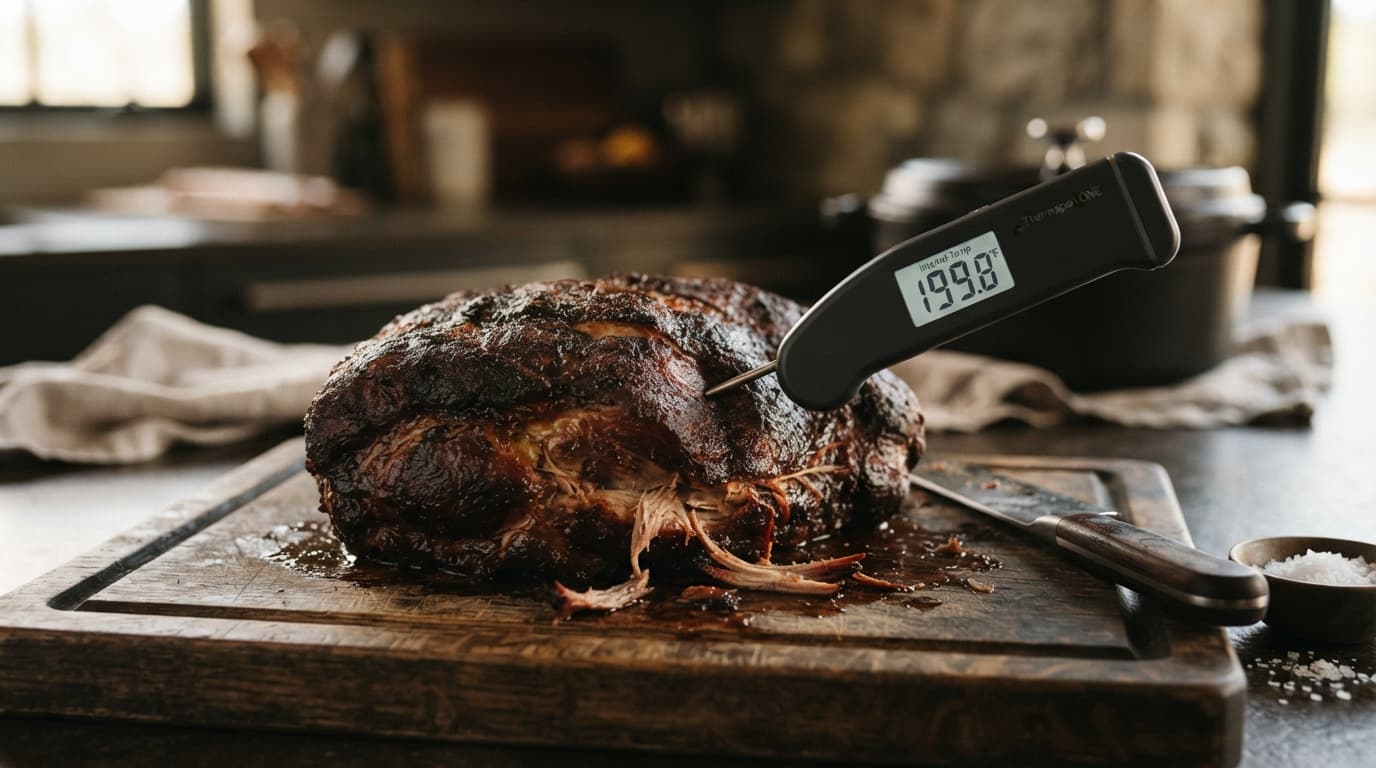
Pork butt is safe at 145°F, the USDA minimum, but pulled pork needs 195 to 205°F for the collagen to fully break down into tender, shreddable meat.
9 min readTables release two weeks out on Resy, Shukette's own booking platform.
Book Now →