How Long to Bake Chicken Drumsticks at 400°F
Editorial desk · 9 min read · Updated 2026-08-22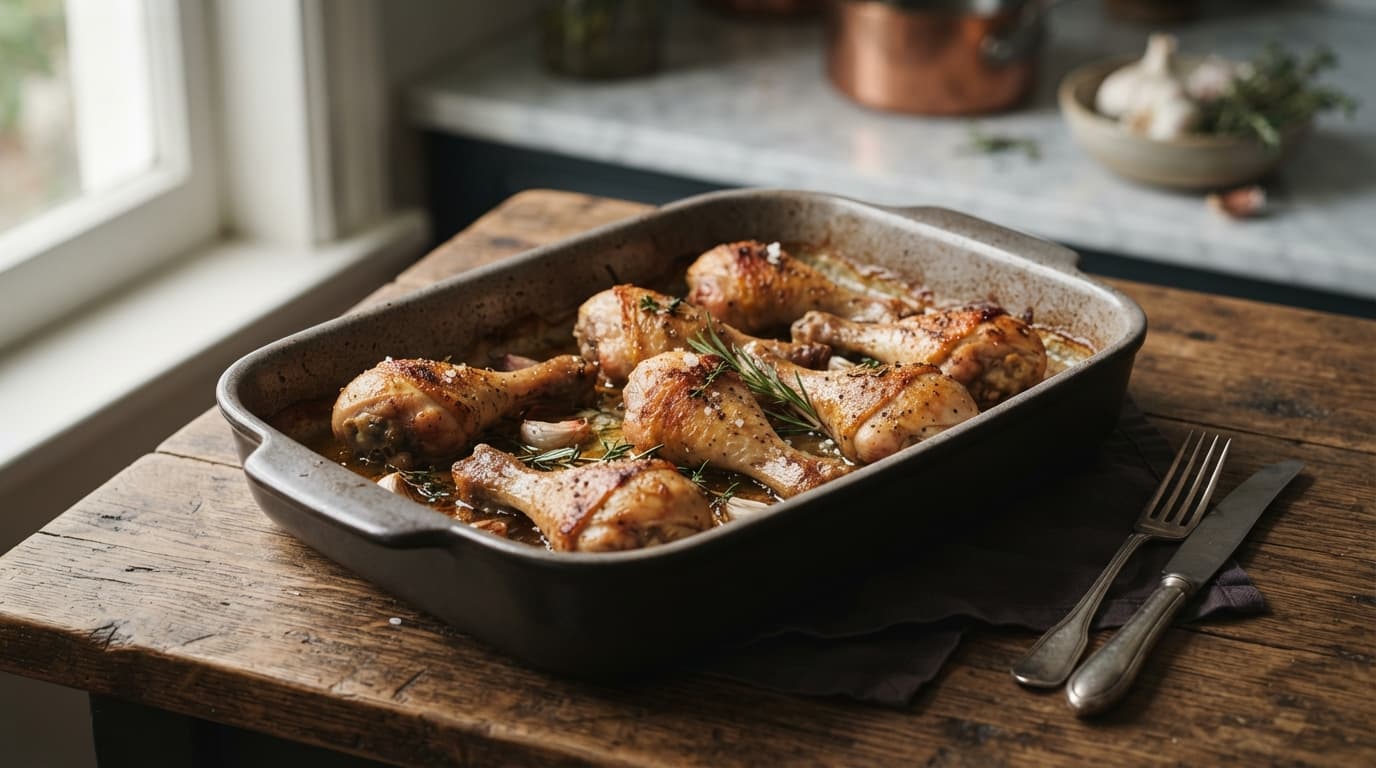
Chicken drumsticks typically take 35 to 45 minutes to bake at 400°F, based on common, widely repeated cooking practice rather than a specific line item on the USDA's official poultry roasting chart, which is built around 350°F and doesn't include a drumstick-specific entry at any temperature. That distinction matters: the number is a reasonable, well-supported estimate, not a government-verified figure the way a chicken breast's roasting time is. Either way, a food thermometer reading 165°F in the thickest part of the meat is what actually confirms a drumstick is done, regardless of which estimate you started from.
This is worth being upfront about, since not every commonly cited cooking time comes from the same kind of source, and it's more honest to say so than to present a recipe-blog consensus as if it carried the same authority as an official government chart. Knowing the difference between the two matters more than it might seem, since it changes how much weight you should put on the estimate versus the actual thermometer reading.
Why this number isn't on the official USDA chart
FoodSafety.gov's poultry roasting chart, the same one that lists exact times for chicken breast halves, whole chickens, and turkey, is built around 350°F as its reference temperature and doesn't include a specific entry for drumsticks at 400°F or any other temperature. That's a real gap in the official guidance, not an oversight on this article's part: the chart covers breasts, whole birds, and a few other specific cuts, but drumsticks and legs baked at higher temperatures aren't part of its published figures.
What is official and universal, regardless of cut or oven temperature, is the 165°F minimum safe internal temperature for all poultry. That number doesn't change based on which cut you're cooking or what oven temperature you're using. The 35-to-45-minute range for drumsticks at 400°F comes from broad consensus across cooking sources rather than a single authoritative chart, which is a meaningfully different kind of claim than the breast-roasting figures pulled directly from FoodSafety.gov.
This gap in official guidance isn't unique to drumsticks. Government food-safety charts tend to cover the most common reference points, whole birds, standard breast cuts, a handful of other primary cuts, at temperatures that represent typical home cooking practice, generally 325°F to 350°F for roasting. Less common combinations, a specific cut at a less standard temperature, often fall outside what any chart explicitly documents, which is exactly the situation with drumsticks at 400°F. That doesn't make the widely cited 35-to-45-minute estimate wrong; it just means it carries a different kind of authority than a number lifted directly from an official chart.
Why drumsticks cook differently than breast meat
Drumsticks are dark meat, smaller and denser than a chicken breast, with a higher fat and connective tissue content. That composition affects both how they cook and how they're often finished. Because drumsticks are smaller and have more surface area relative to their mass than a whole breast, they can cook relatively quickly at a higher oven temperature like 400°F, which is part of why 400°F is a commonly chosen temperature for drumsticks specifically rather than the 350°F more often used for larger cuts.
The higher fat and connective tissue content also means many cooks push drumsticks past the 165°F safety minimum in search of better texture, often toward 175°F, the same logic that applies to chicken thighs. That's a texture preference layered on top of the safety requirement, not a competing safety number. 165°F is still the point where a drumstick is safe to eat; anything beyond that is about how the connective tissue breaks down and how juicy the meat ends up, not about safety.
This is also why drumsticks tolerate a slightly higher oven temperature better than a lean cut like chicken breast would. The extra fat and connective tissue act as a buffer against drying out, which is part of why 400°F, hotter than the 350°F typically used for breast meat, works well for drumsticks specifically: the higher heat crisps the skin faster without drying out the meat underneath the way it would on a leaner cut cooked at the same temperature.
Checking the temperature correctly on a small, bone-in cut
Drumsticks present a specific thermometer challenge because they're both small and bone-in, which means there's less margin for error in where you check compared to a large chicken breast. Insert the thermometer into the thickest part of the meat, generally toward the top of the drumstick near where it would have connected to the thigh, and angle it to avoid the bone running through the center. Touching the bone can give a falsely high or low reading depending on how the bone is conducting heat at that moment, which matters more on a small cut where the bone takes up proportionally more of the piece than it would on a larger cut like a whole chicken breast.
If you're baking a full tray of drumsticks, check more than one rather than assuming they've all reached the same temperature at the same time. Drumsticks vary somewhat in size even within the same package, and smaller pieces on a shared tray will finish before larger ones do, the same way any batch of similarly-shaped but not identically-sized pieces cooks unevenly without individual checks.
It's worth sorting drumsticks by size before baking if a package contains a noticeably wide range, placing larger pieces toward the center of the pan where oven heat tends to be more consistent, and smaller pieces toward the edges where they'll have a bit more buffer against overcooking while the larger ones catch up. This isn't a strict requirement, but it's a small step that reduces the odds of pulling a tray where half the pieces are perfect and the other half are either underdone or overcooked.
Flipping, spacing, and other variables that affect the estimate
Flipping drumsticks partway through baking, generally around the halfway point, helps produce more even browning on all sides, since one side otherwise faces the oven's direct heat more than the other throughout the entire bake. This affects appearance more than safety, but it's a simple step that meaningfully improves the result without adding real complexity.
Spacing on the pan matters here the same way it does for larger cuts baked in batches: drumsticks crowded tightly together cook less evenly and can take longer overall than the same pieces spread out with room between them, since crowding restricts airflow and traps steam that works against both browning and even cooking. If you're baking a large batch for a group meal, giving each piece some breathing room on the pan pays off more than trying to fit everything as tightly as possible.
Covered versus uncovered, and what that changes
Baking drumsticks uncovered generally produces better skin, crisper and more browned, and tends to land closer to the estimated cooking time than baking them covered. Covering with foil traps steam, which softens the skin and can extend the actual cooking time somewhat compared to the same pieces baked uncovered, since trapped steam changes how heat reaches the surface of the meat.
Neither approach changes the 165°F safety requirement or the general logic behind checking with a thermometer rather than trusting a timer alone. The choice between covered and uncovered comes down to what texture you're after: crispier skin favors uncovered, and a more tender exterior with a shorter list of variables to manage favors covered, understanding that it may take a few extra minutes to reach a safe temperature.
A middle option some cooks use is starting drumsticks uncovered for most of the bake, then tenting loosely with foil only if the skin is browning faster than the interior is cooking through. This gives you most of the crisping benefit of uncovered baking while providing a way to slow down excess browning if a particular oven runs hot or if you're using a higher-sugar marinade or glaze that browns more aggressively than a plain, unseasoned drumstick would.
Marinades and dry rubs interact with the 400°F temperature a bit differently than they would at a lower setting. A sugar-heavy glaze or barbecue sauce applied before baking is more prone to burning at 400°F than it would be at 350°F, simply because there's more direct heat working on the surface for the same amount of time. If you're using a sweeter sauce, applying it partway through baking rather than at the very start, or brushing on a final layer only in the last several minutes, reduces the risk of a burnt, bitter exterior while the inside is still catching up to a safe temperature.
Trusting the thermometer over any specific number
Given that this specific combination, drumsticks at 400°F, doesn't come from an official government chart the way some other chicken-cooking questions do, the thermometer matters even more here than it would for a cut with a precisely documented, government-verified cooking time. The 35-to-45-minute range is a reasonable starting point built from wide cooking consensus, but treat it as a planning estimate to check within rather than a number to trust blindly.
This is a useful general principle beyond drumsticks specifically: the less official and specific a cooking-time source is, the more weight the actual thermometer reading should carry relative to the estimate. A government chart entry built around controlled testing conditions is a stronger starting point than a number repeated across recipe sites, though neither one replaces an actual temperature check for a specific piece of chicken in your specific oven.
If you'd rather skip the guesswork around a specific oven and cut entirely, ordering chicken cooked by a kitchen that's already calibrated its own process removes the estimation question altogether. For home cooking, though, the process stays the same regardless of which specific chicken-cooking question you're working through: start with a reasonable time estimate, check early, and let the thermometer, not the timer, make the final call.
This same approach scales to other bone-in dark meat cuts beyond drumsticks specifically. Chicken thighs, whole leg quarters, and wings all share enough similarity in composition, more fat and connective tissue than breast meat, generally cooked bone-in, that the same general logic applies: a widely cited time range as your starting point, an internal-temperature check as your actual confirmation, and a willingness to treat any timing estimate as a range rather than an exact countdown. Once you're comfortable applying that approach to one bone-in cut, it transfers easily to the others rather than requiring you to memorize a separate, precise number for every individual piece of the bird.
Buying an instant-read thermometer, if you don't already have one, pays for itself the first time it saves a batch of drumsticks from either an unsafe undercook or a dried-out overcook. It's a small, inexpensive tool that removes essentially all of the uncertainty this article has spent so much time discussing, and it's the one piece of equipment that matters more than getting the exact oven temperature or timing estimate right in the first place.
Every question this article has covered, official chart or not, bone-in or boneless, covered or uncovered, ultimately funnels down to the same two steps: start from a reasonable time estimate, then confirm with a thermometer rather than a guess. Master that habit once with drumsticks, and it carries over cleanly to whatever other cut of chicken shows up on your cutting board next.
Frequently asked questions
How long does it take to bake chicken drumsticks at 400°F?+−
Typically 35 to 45 minutes, based on common cooking practice, though this isn't a figure that appears on the USDA's official poultry roasting chart, which is built around 350°F rather than 400°F. A food thermometer reading 165°F is the only way to confirm doneness regardless of the estimate.
Should I flip drumsticks while baking them at 400°F?+−
It helps with even browning, since one side otherwise faces the oven's heat source more directly than the other. Flipping partway through, roughly at the halfway point, tends to produce more even color on all sides than leaving them untouched the whole time.
Why do some sources say to pull drumsticks at a higher temperature than 165°F?+−
Drumsticks are dark meat with more connective tissue than breast meat, and many cooks find the texture improves past the 165°F safety minimum, often around 175°F. That's a texture preference, not a different safety standard; 165°F remains the point where drumsticks are safe to eat.
Does covering drumsticks while baking change the cooking time?+−
Yes, slightly. Covering traps steam and tends to extend cooking time a bit while softening the skin, while baking uncovered lets the skin crisp and generally finishes closer to the estimated time.
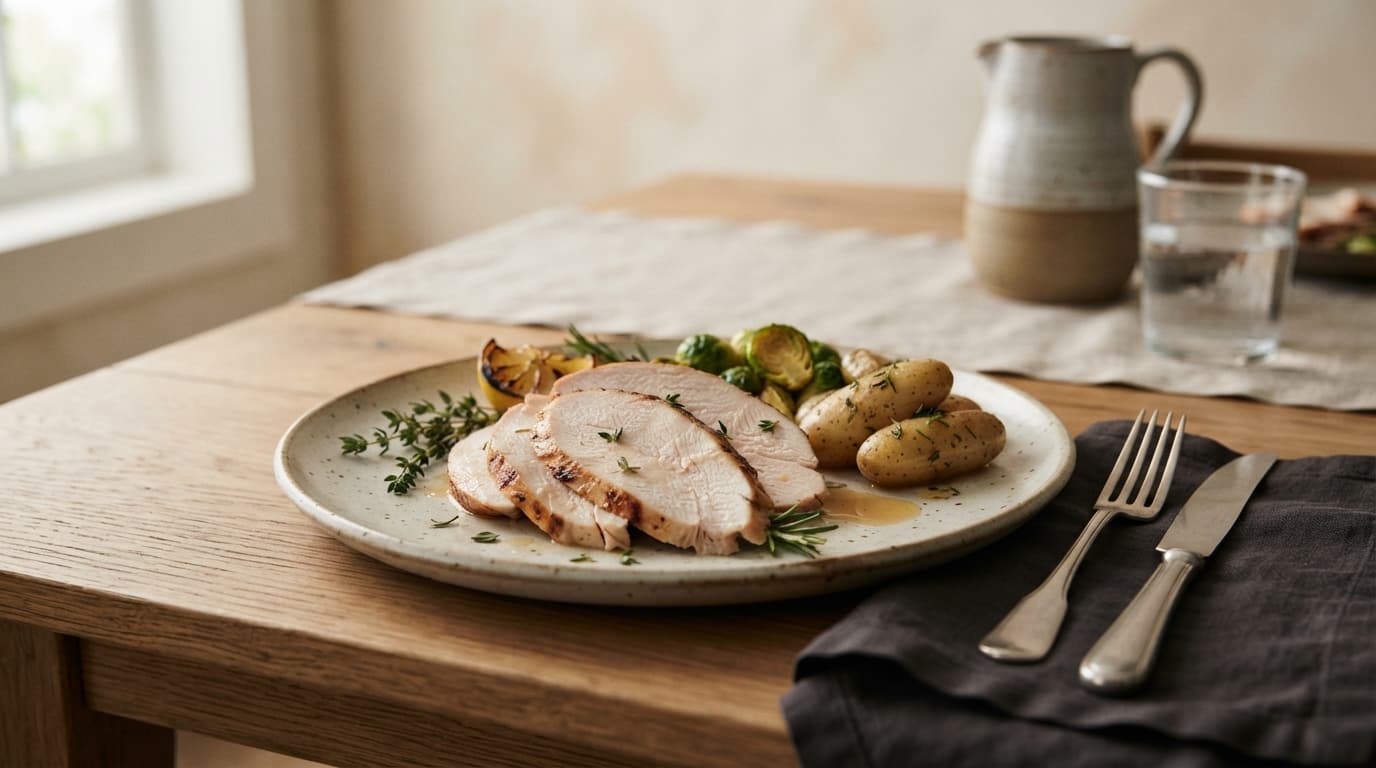
Plan on 3/4 to 1 pound of boneless turkey breast per person, less than the USDA's 1 to 1 1/4 pounds for whole turkey, since boneless meat has no bone weight.
10 min read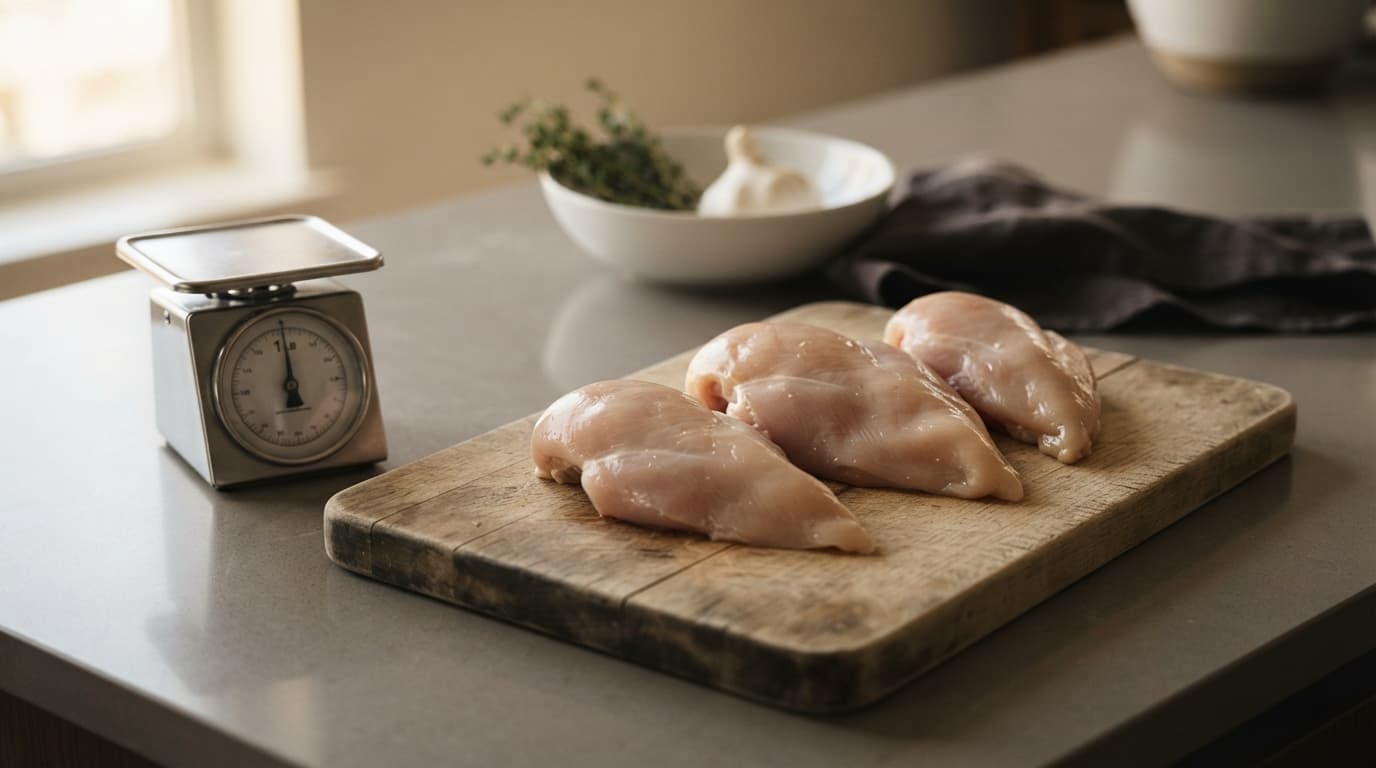
A pound of boneless chicken breast typically holds 2 to 3 pieces, since most breasts weigh 5 to 8 ounces. Size varies enough that weighing beats counting for a recipe.
10 min read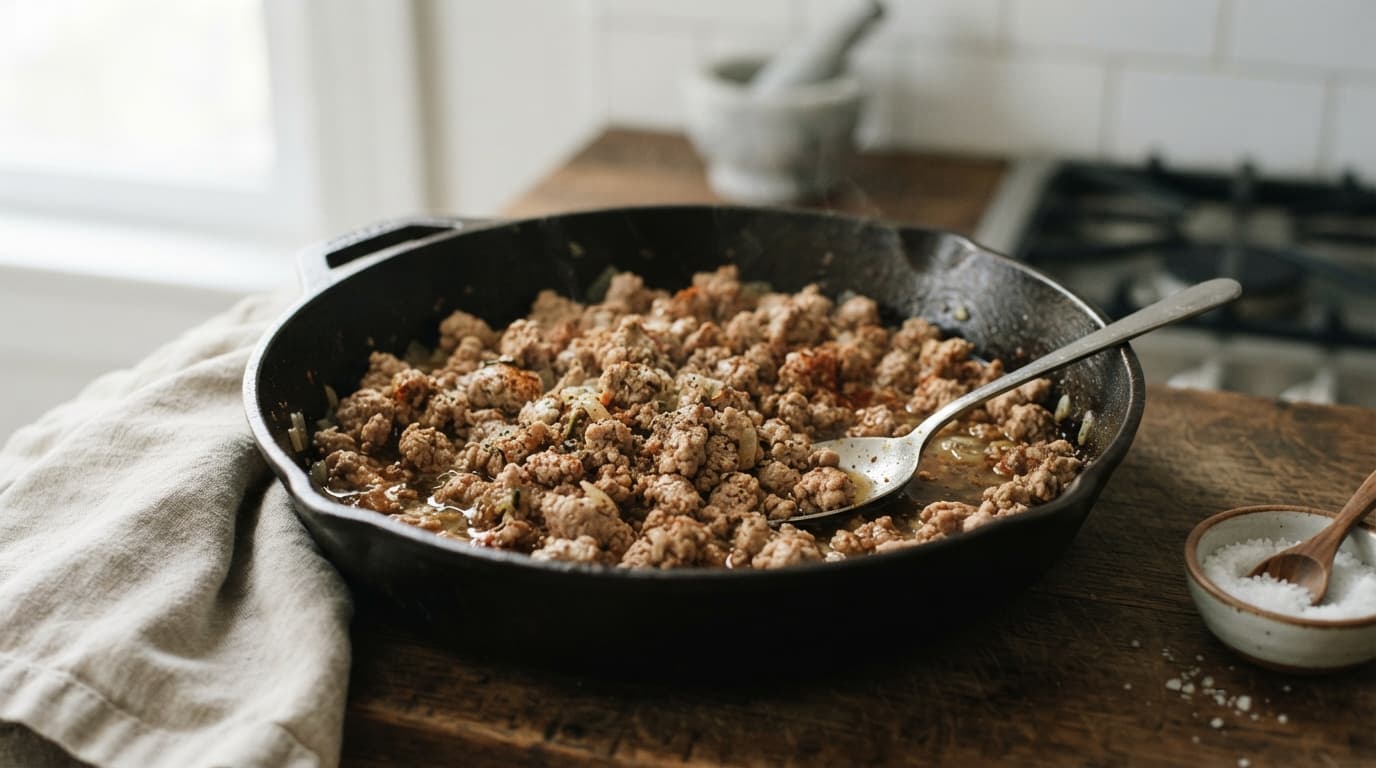
Ground turkey needs about 7 to 10 minutes over medium heat, but time is only a guide. The real requirement is 165°F all the way through, confirmed with a thermometer.
9 min readTables release two weeks out on Resy, Shukette's own booking platform.
Book Now →