Internal Pork Butt Temperature
Editorial desk · 9 min read · Updated 2026-08-22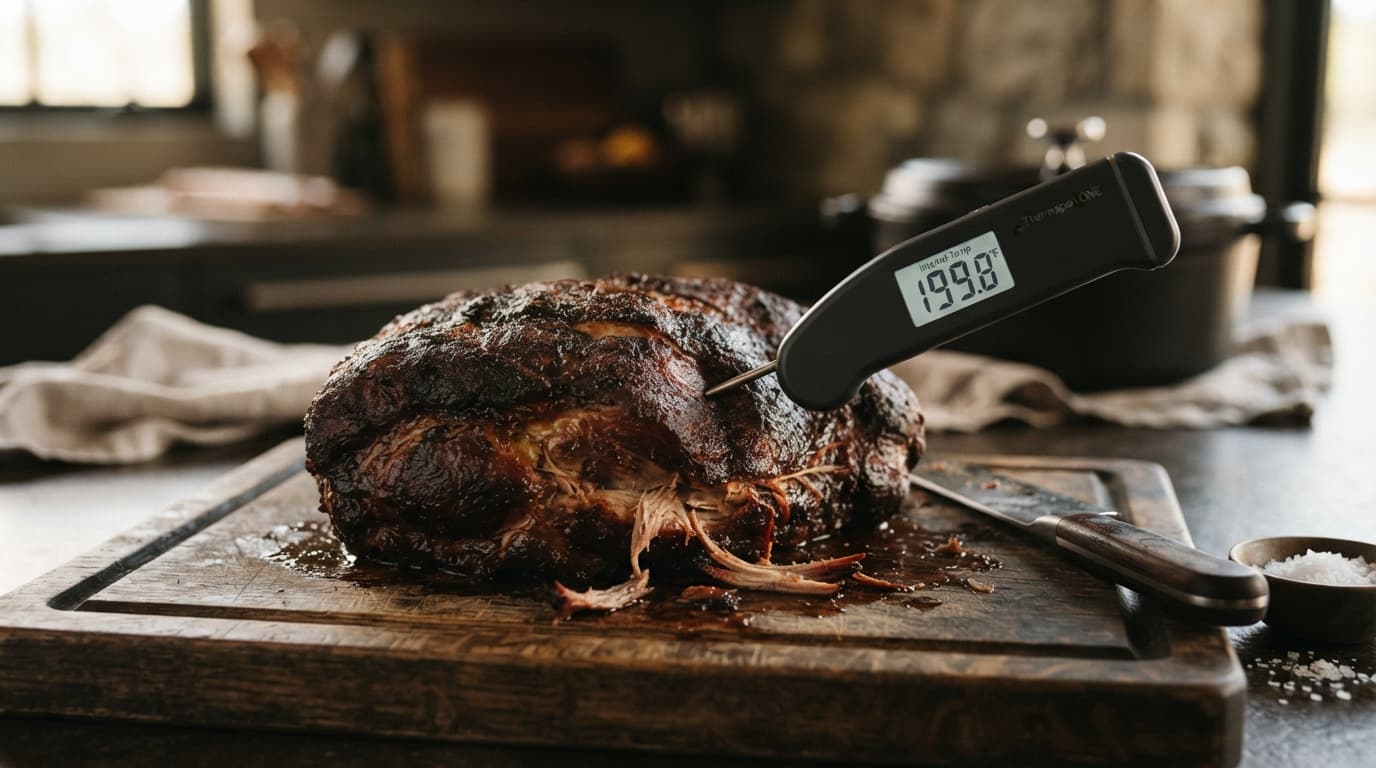
Pork butt is safe to eat once it reaches 145°F, the USDA's minimum internal temperature for whole cuts of pork, followed by a 3-minute rest. Pulled pork, though, needs to go much further, generally 195 to 205°F, before the meat's connective tissue actually breaks down into the tender, easily shredded texture the dish is known for. These are two different questions with two very different answers, and confusing them is the single most common mistake people make with this cut.
Pork butt is an extreme example of a pattern that shows up across several tougher cuts of meat: the safety minimum and the texture target aren't the same number, and the gap between them is unusually wide here compared to leaner cuts.
Why pork butt needs so much more heat than the safety minimum
Pork butt, despite the name, comes from the upper shoulder of the pig, a heavily worked muscle group full of connective tissue and collagen. That collagen is tough and unpleasant to eat at 145°F; it hasn't had nearly enough heat or time to transform. Pushed to roughly 195 to 205°F and held there, that same collagen breaks down into gelatin, which is what gives properly cooked pulled pork its signature tender, almost buttery texture rather than a chewy, resistant bite.
This is the same underlying mechanism behind why chicken thighs taste better well above their own safety minimum, just taken to a much greater extreme. Pork butt has far more connective tissue than a chicken thigh does, which is why the gap between its safety minimum and its ideal texture target is so much wider, 50 to 60 degrees rather than the 10 to 20 degree gap typical of dark meat poultry.
The safety number never changes, regardless of how you're cooking it
Whether you're smoking a pork butt low and slow for eight hours or roasting it in a home oven, 145°F remains the point where it's safe to eat, exactly as it is for any other whole cut of pork. Nothing about the extended cooking time typical of pulled pork changes that baseline; the long cook exists to reach a much higher texture target, not because pork butt requires more time to reach basic safety.
This distinction matters if you're new to smoking or slow-cooking pork butt and feel uncertain about pulling it at what seems like an unusually high number compared to other meat and poultry temperatures you might already know. 195 to 205°F sounds high next to poultry's 165°F or a tenderloin's 145°F, but it's not a safety concern; it's simply how far this specific, connective-tissue-heavy cut needs to go before it eats the way pulled pork is supposed to.
It's worth naming the actual numbers side by side to see how unusual pork butt's gap really is. A pork tenderloin is safe and at its best within a few degrees of 145°F, since it's lean and has little connective tissue to break down. A chicken thigh benefits from climbing toward 180°F, a 15-degree gap above its safety minimum. Pork butt's gap runs 50 degrees or more past its own 145°F floor, which is by far the widest spread of any commonly cooked cut discussed in food-safety guidance.
What happens if you pull it too early
Pulling pork butt right at 145°F, or anywhere well below the 195°F mark, produces meat that's completely safe but tough, chewy, and difficult to shred. The collagen that needs to melt into gelatin simply hasn't had the chance to do so yet, which means the meat resists pulling apart with a fork and eats more like a firm roast than the tender strands people expect from pulled pork.
This is one of the most common frustrations for anyone smoking pork butt for the first time, especially since many other meats are genuinely at their best pulled close to their safety minimum. Pork butt runs against that instinct entirely: pulling it early because "it's already technically safe" produces a genuinely disappointing result, even though nothing about the meat itself is unsafe.
The stall, and why patience matters here
Anyone who has smoked a pork butt has likely encountered "the stall," a period, often lengthy, where the internal temperature seems to stop climbing somewhere in the 150 to 170°F range despite steady heat. This happens because evaporative cooling from moisture on the meat's surface temporarily offsets the heat being applied, and it can last long enough to worry an inexperienced cook into thinking something has gone wrong.
The stall isn't a sign to pull the meat early or crank up the heat dramatically; it's a normal, expected part of cooking a large, moisture-rich cut like pork butt. Patience through the stall, maintaining steady heat rather than panicking and increasing it sharply, is part of what makes low-and-slow cooking work for this specific cut. Wrapping the meat in foil partway through, sometimes called the Texas crutch, is one common technique for pushing through the stall faster, trading a little bit of bark texture on the surface for a shorter overall cook time.
Total cook time for a full pork butt varies considerably based on size and cooking temperature, but it's common for an 8-to-10-pound piece to take anywhere from 12 to 16 hours at typical low-and-slow smoking temperatures. That's a genuinely long commitment compared to most other meat and poultry preparations covered elsewhere, which is part of why pulled pork tends to be a weekend project rather than a weeknight dinner for most home cooks.
Checking temperature accurately on a large, uneven cut
Pork butt is a large, irregularly shaped piece of meat, which makes thermometer placement matter more than it does on a smaller, more uniform cut. Insert the probe into the thickest part of the meat, away from the bone if the butt is bone-in, since bone conducts heat differently and can produce a misleading reading if the probe touches it. Because the shape is irregular, checking in more than one spot, especially on a particularly large or unevenly shaped piece, gives a more reliable overall picture than trusting a single reading.
Many experienced cooks pair a temperature reading with a physical tenderness check once they're in the 195 to 205°F range: the probe should slide into the meat with very little resistance, almost like inserting it into softened butter, when the collagen has fully broken down. If the temperature reads in the target range but the probe still meets real resistance, giving it more time rather than pulling it immediately tends to produce a better final result.
Yes, you can overcook it
Despite the wide safe-to-ideal range, pork butt can be overcooked. Past roughly 205°F, the muscle fibers begin losing moisture faster than any remaining connective tissue benefits from the additional heat, which can leave the finished meat drier than it would have been if pulled a few degrees earlier. This is a real, if less commonly discussed, risk with a cut people often assume can only benefit from more time and heat.
The fork-tenderness check described above helps avoid this: once the probe slides in with minimal resistance, additional time in the smoker or oven adds diminishing returns and eventually starts working against the final texture rather than for it. Treating 205°F as a rough ceiling, checked against actual tenderness rather than as a target to blow past, produces a more consistently good result than assuming higher is always better with this specific cut.
A rest period after cooking helps regardless of exactly where within the 195-to-205°F range you pull the meat. Letting a finished pork butt rest, wrapped and covered, for at least 30 minutes to an hour before shredding gives the juices time to redistribute through the meat rather than running out the moment you start pulling it apart. This matters more for a large cut like pork butt than it does for a smaller piece of meat, simply because there's more total juice and a longer path for it to travel back through the meat during the rest.
Bone-in versus boneless pork butt
Pork butt is sold both bone-in and boneless, and the choice affects more than just how easy the meat is to portion afterward. A bone-in butt generally holds moisture slightly better through the long cook, since the bone itself doesn't lose water the way surrounding muscle tissue can, and some cooks find bone-in pieces cook a touch more evenly as a result. The bone also provides a useful secondary doneness check: in a fully cooked bone-in pork butt, the bone should twist out cleanly with only light resistance once the meat has reached that fork-tender stage.
Boneless pork butt cooks a bit more predictably in terms of shape and thickness, since it's usually tied or formed into a more uniform piece before cooking, which can make thermometer placement slightly more straightforward. Neither option carries a different safety threshold; both still need to reach 145°F to be considered safe, and both benefit from the same 195-to-205°F range for genuinely tender, pullable meat.
Cost is often the deciding factor between the two in practice, since a bone-in butt typically runs a little cheaper per pound than boneless, a pattern that holds across most bone-in versus boneless comparisons in the meat case generally. If you're cooking for a crowd and trying to stretch a budget, that per-pound difference can add up meaningfully on a cut this large, and the bone itself, while not edible, isn't taking away from the actual yield of usable pulled pork by much once the fat cap and any excess connective tissue are trimmed away regardless of which version you bought. Availability follows a similar pattern to other pork cuts that aren't always stocked consistently at a general supermarket; a dedicated butcher counter is usually the more reliable source if your regular grocery store's selection is limited to whichever version happens to be on the shelf that week.
Applying this pattern beyond pork butt
The core lesson here, that a safety minimum and a texture target can be two very different numbers on a collagen-heavy cut, extends to other tough, well-worked cuts beyond pork butt specifically. Brisket follows a similar logic, needing to climb well past any food-safety minimum before its own connective tissue breaks down into a tender result. Recognizing this pattern once makes it easier to approach any unfamiliar tough cut with the right expectation: check the safety number if you're unsure, but don't assume the meat is actually at its best the moment it clears that threshold.
A restaurant kitchen taking on this same cut has usually already solved the stall, the timing, and the tenderness check through repetition, which is a meaningful part of why a slow-cooked pork dish can taste more consistently right than a first attempt at home, no matter how carefully that first attempt follows the numbers above. That's not a reason to skip trying it yourself; it's simply a reasonable explanation for why the restaurant version and the first home version of the same cut don't always land the same way.
Getting pork butt right at home mostly comes down to trusting the process described above rather than rushing it: hold at 145°F for safety, keep going to 195-205°F and a probe that slides in easily for texture, and give the finished meat a real rest before pulling it apart. Once those three checkpoints are in place, the wide gap between pork butt's safety number and its ideal number stops being confusing and starts being the whole reason the cut rewards patience in the first place.
Frequently asked questions
What temperature is pork butt safe to eat at?+−
145°F, the USDA's minimum safe internal temperature for whole cuts of pork, followed by a 3-minute rest. At that temperature, pork butt is fully safe, though it won't have the tender, shreddable texture most people associate with pulled pork.
Why does pulled pork need to reach 195 to 205°F if 145°F is already safe?+−
Texture, not safety. Pork butt is full of tough connective tissue that only breaks down into gelatin well above the safety minimum, generally in the 195 to 205°F range. Below that, the meat is safe but tight and difficult to shred.
What happens if I pull pork butt too early, right at 145°F?+−
It will be safe to eat but tough and hard to pull apart, since the collagen hasn't had the heat or time to convert into gelatin yet. This is a texture disappointment, not a safety issue, and it's the most common reason first-time smokers pull pork butt too soon.
Can pork butt actually be overcooked past 205°F?+−
Yes. Past roughly 205°F, the meat's muscle fibers start losing moisture faster than the connective tissue benefits from additional heat, which can leave the finished pulled pork drier despite the extra time and temperature.
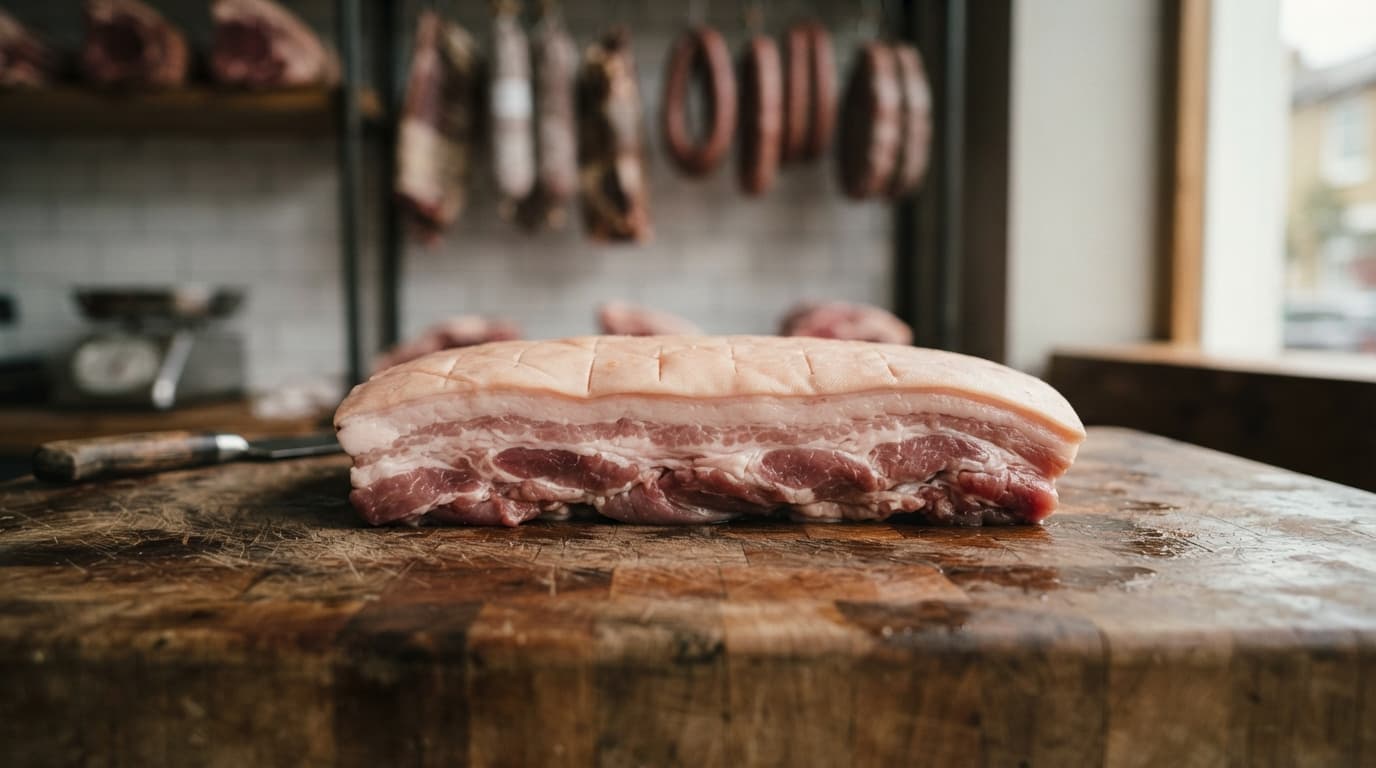
Pork belly shows up at large supermarkets, warehouse clubs, Asian grocery stores, and butcher counters, though selection and cut style vary a lot by store type.
9 min read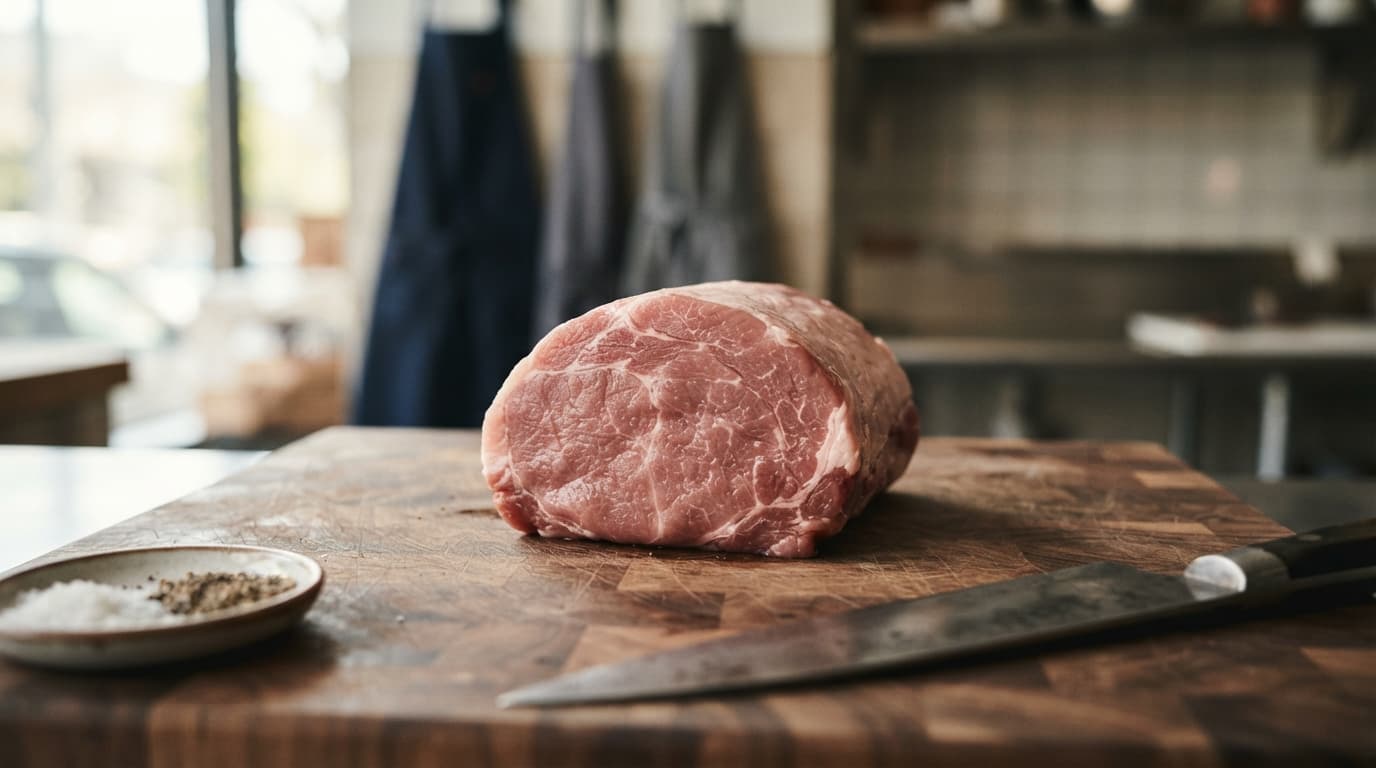
Pork cushion meat is a boneless cut from the picnic shoulder, officially known as IMPS 405B. It's lean, well-worked, and best cooked low and slow, like pork butt.
9 min read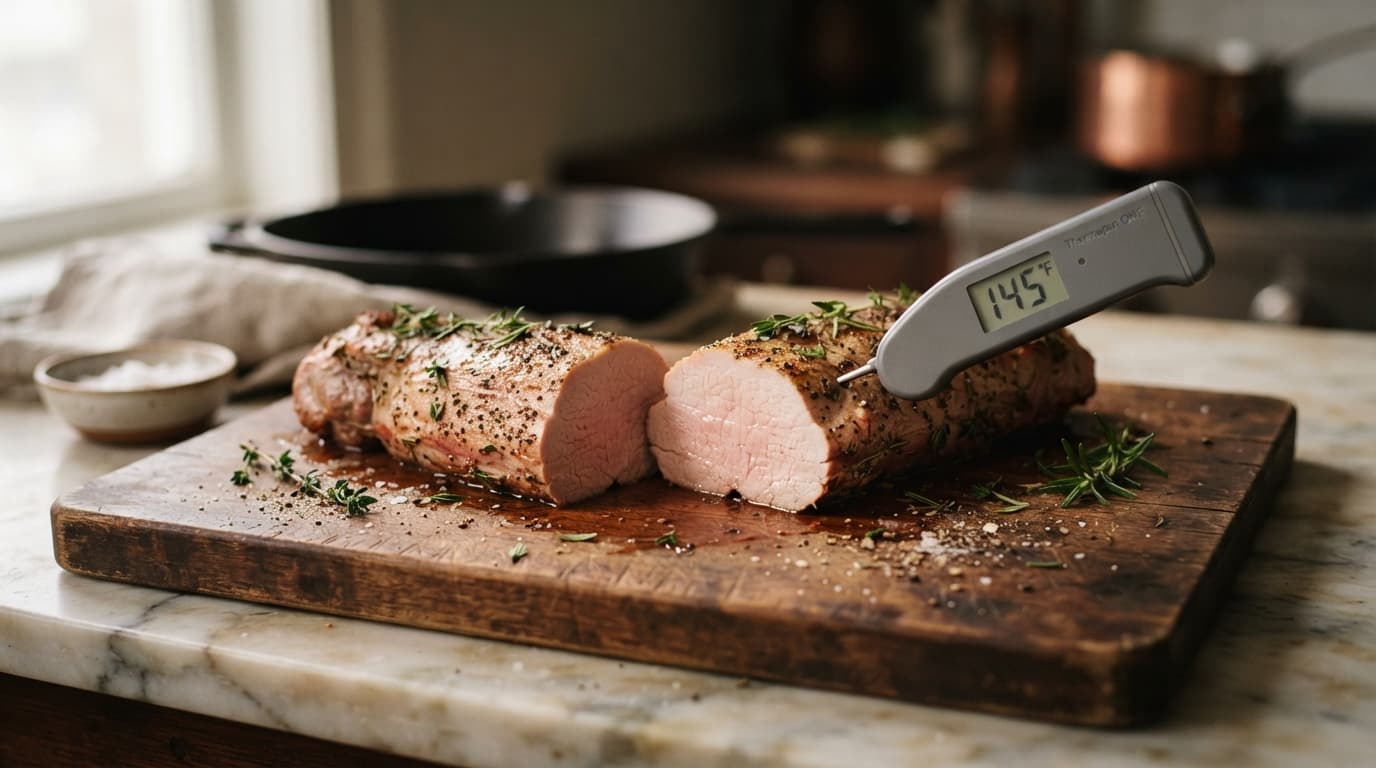
Pork tenderloin is done at 145°F, checked in the thickest part with a thermometer, then rested 3 minutes. Same number whether you grill, roast, or pan-sear it.
9 min readTables release two weeks out on Resy, Shukette's own booking platform.
Book Now →