What Is Pork Cushion Meat?
Editorial desk · 9 min read · Updated 2026-08-22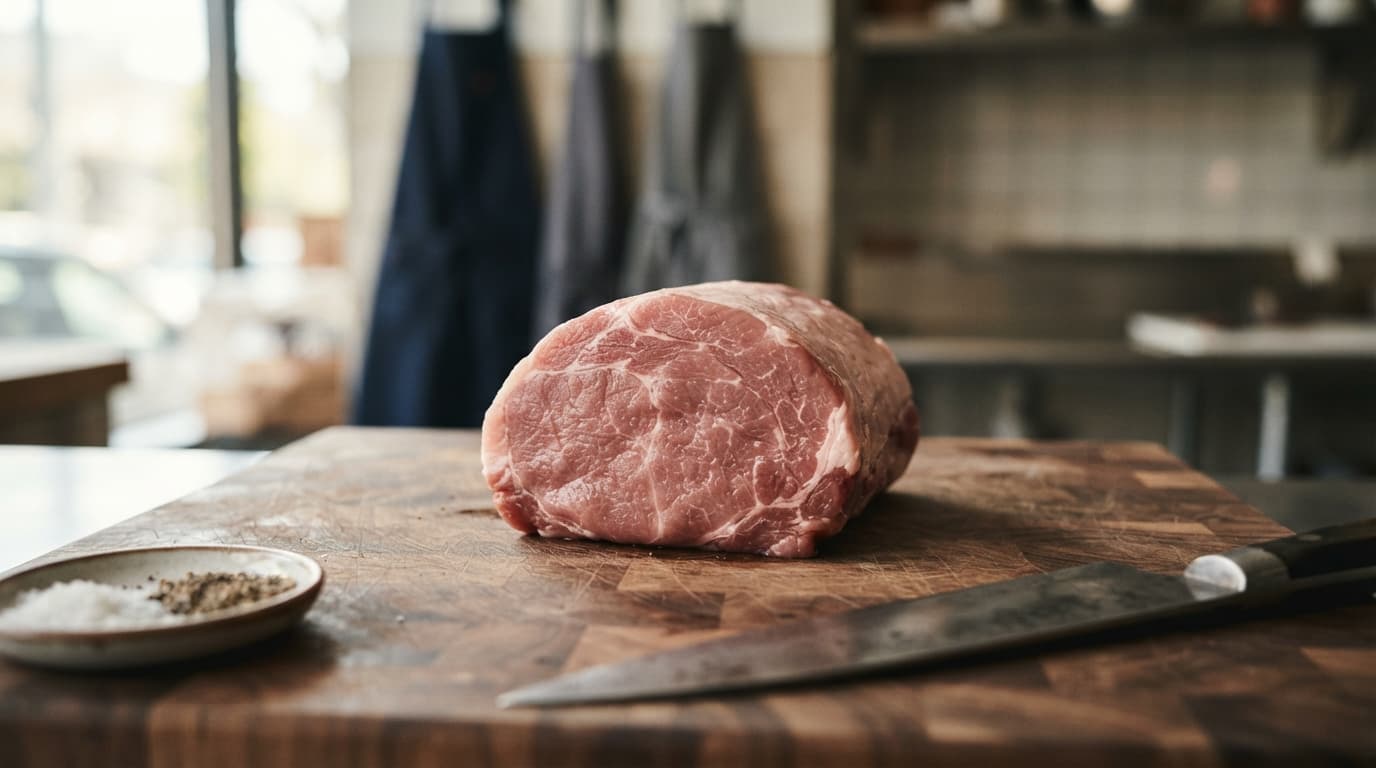
Pork cushion meat is a boneless cut taken from the picnic shoulder, the lower portion of a pig's front shoulder, specifically the triceps brachii muscle. It's officially identified as IMPS 405B within the USDA-linked meat purchasing specification system, though "cushion" or "shoulder cushion" is the name you'll actually hear at a butcher counter or on a restaurant menu. It's a lean, heavily worked, connective-tissue-rich cut, closer in cooking behavior to pork butt than to a naturally tender cut like tenderloin.
This is a cut most home cooks have never specifically shopped for, since it's more common in butcher shops, barbecue circles, and foodservice than on a typical grocery store shelf labeled by that exact name. Understanding what it actually is helps explain why it shows up where it does, and how to treat it once you have it.
Where cushion meat actually comes from
A pig's front leg and shoulder area is generally divided into two primal sections: the Boston butt, the upper portion, and the picnic shoulder, the lower portion, closer to the front leg itself. Pork butt, despite its name, doesn't come from the rear of the animal at all; it's the upper shoulder. Cushion meat comes from the picnic shoulder specifically, distinct from butt even though both sit in the same general shoulder region.
Within the picnic shoulder, cushion meat refers to one particular muscle, the triceps brachii, removed boneless from the rest of the picnic cut. This is a real, officially documented cut within the USDA-linked IMPS and NAMP meat identification system, listed as item 405B under the broader pork shoulder, picnic, boneless family of cuts. That official designation is worth knowing because it confirms cushion meat isn't a vague, informal butcher's term without a real standard behind it; it's a specifically identified muscle with a documented industry name.
The IMPS system, short for Institutional Meat Purchase Specifications, exists precisely so that restaurants, distributors, and large-scale buyers can order a specific, standardized cut of meat by number and know exactly what they're getting, regardless of which supplier fills the order. That a cut as specific as cushion meat has its own IMPS number reflects real, established demand for it in foodservice and butchery, even though it's less visible to the average home cook browsing a supermarket meat case.
Why it behaves like a tough cut by default
Like the rest of the shoulder and leg area, the triceps brachii is a heavily worked muscle in a living pig, which means it's dense, full of connective tissue, and lower in the intramuscular fat that makes some other cuts naturally tender. Cooked quickly with high, direct heat, the way you might cook a naturally tender steak or chop, cushion meat tends to come out chewy and resistant, since that connective tissue hasn't had the time or gentle heat needed to break down.
This puts cushion meat in the same general category as pork butt: both are tough by default, and both reward long, low-temperature cooking that gives the connective tissue time to convert into gelatin rather than fighting it with a quick sear. The safety minimum for cushion meat, like any other whole cut of pork, remains 145°F, but the texture that actually makes it enjoyable to eat requires going well past that number, generally into the same 195-to-205°F range associated with pulled pork, if you're aiming for that same fall-apart tenderness.
How cushion meat is typically prepared
Because of its size, usually in the range of two to three pounds, and shape, generally a rough triangle once removed from the bone, cushion meat lends itself to a few specific preparations. Low and slow cooking, smoking, braising, or slow roasting until the connective tissue breaks down, produces a tender, often shreddable result similar to pulled pork, and it's a genuinely common substitute for pork butt in exactly that kind of preparation.
The other common approach treats cushion meat differently: sliced into individual cutlets and either marinated or physically tenderized by pounding, the same treatment given to schnitzel-style preparations. This works because slicing across the muscle's fibers and mechanically breaking down some of that toughness with a meat mallet accomplishes a version of what long, slow cooking does thermally, just through a different mechanism. Neither approach is more "correct" than the other; they're simply suited to different final dishes.
A marinade for cutlet-style cushion meat works best when it includes some acid, citrus juice, vinegar, or a fermented dairy component like yogurt, since acid helps begin breaking down surface proteins in a way that complements physical tenderizing. This won't fully replicate what hours of low, slow heat accomplishes on a whole cushion, but combined with pounding the meat to an even, thinner cutlet, it produces a genuinely tender quick-cooking result from a cut that would otherwise resist quick cooking entirely.
Why you don't see it labeled this way at most grocery stores
Cushion meat is more commonly found at butcher shops, specialty meat counters, and in foodservice and barbecue circles than pre-packaged under that specific name at a typical grocery store. Retail packaging more often groups this cut generically as "pork shoulder" or "picnic roast" without breaking out the cushion specifically, which means asking a butcher directly, rather than searching shelf labels, is usually the more reliable way to find it if a specific recipe calls for it by name.
This is a common pattern with less mainstream cuts generally: the official industry designation and the cut's actual culinary identity exist and are well-documented, but retail packaging doesn't always reflect that level of specificity for a home cooking audience. If you're having trouble finding cushion meat specifically, asking whether a butcher can pull it from a picnic shoulder, or describing what you're looking for by its alternate name of shoulder cushion, is more productive than searching for a package pre-labeled with that exact term.
A whole picnic shoulder, bone-in, is far easier to find at a typical grocery store than the boneless cushion cut isolated from it. If cushion meat specifically isn't available, buying a whole picnic shoulder and either breaking it down yourself or asking a butcher to remove the cushion muscle for you is a reasonable workaround, though it requires more effort than picking up a pre-portioned package. Learning to identify the cushion muscle within a whole picnic shoulder is a genuinely useful butchery skill if you find yourself returning to this cut regularly.
Watching a butcher break down a picnic shoulder once, even just observing rather than doing it yourself, teaches you more about where cushion meat actually sits within the larger cut than any written description can. If your butcher is willing to walk through the process while filling your order, it's worth asking, since that kind of hands-on familiarity makes future requests, whether for cushion meat or another specific muscle within a larger primal cut, much easier to describe accurately.
What to expect flavor- and texture-wise
Cushion meat's flavor profile leans similar to pork butt, savory and pork-forward, though slightly leaner given its lower intramuscular fat content. That leanness means it can dry out a bit more easily than pork butt if overcooked or cooked too quickly, which is part of why the low-and-slow approach matters even more here than it does for a fattier cut that has more built-in forgiveness.
Texture-wise, a properly slow-cooked cushion roast pulls apart in long, distinct strands similar to pulled pork made from butt, though some cooks note it can feel slightly less rich given the lower fat content. This isn't a downside so much as a different eating experience: a leaner pulled-pork-style dish that still delivers real tenderness once the connective tissue has broken down properly.
Comparing cushion meat to more familiar cuts
Cushion meat sits in an interesting middle position relative to more commonly known cuts. It shares pork butt's need for long, slow cooking and its suitability for pulled-pork-style preparations, but it comes from a physically different part of the shoulder and carries somewhat less intramuscular fat, which can make it slightly leaner once cooked. It's tougher and less naturally tender than pork tenderloin, which comes from an entirely different, much less worked part of the pig and cooks at a quick, high-heat pace rather than a long, slow one.
Knowing where a specific cut falls on this spectrum, worked-and-tough versus naturally-tender, is more useful for deciding how to cook it than memorizing the name of every individual muscle a pig is broken down into. Cushion meat's position, heavily worked and connective-tissue-rich, tells you almost everything you need to know about how to approach it in the kitchen even before considering its specific name or official designation.
Cost is another point of comparison worth knowing about before you go looking for this particular cut. Because cushion meat is less widely stocked and requires more butchery labor to isolate from the rest of the picnic shoulder, it sometimes carries a modest premium over a whole, bone-in picnic or a standard pork butt at the same counter, even though all three cuts genuinely do come from a similarly inexpensive part of the animal overall. That premium tends to be fairly small compared to the price gap between shoulder cuts generally and a naturally tender cut like tenderloin, so a budget-conscious cook looking specifically for a pulled-pork-style dish still comes out ahead choosing cushion meat over a pricier, more tender cut suited to an entirely different cooking method altogether.
That same worked-versus-tender spectrum shows up across other animals too, not just pork. Ground turkey and whole turkey breast sit at different points on a similar spectrum for poultry, and beef has its own well-known version of the same pattern, tender steaks that cook quickly versus tough, connective-tissue-heavy cuts like brisket that need hours of low heat. Once you recognize the pattern in one animal, spotting it in another becomes much easier.
What you're actually getting if a recipe calls for it
If a recipe, a butcher, or a menu references pork cushion meat, you're looking at a boneless cut from the picnic shoulder, officially designated 405B, that behaves like a tougher, well-worked muscle needing low, slow cooking or mechanical tenderizing to eat well. It's a legitimate, specifically defined cut rather than a vague or invented term, even though it's less commonly stocked by that exact name at a typical grocery store than at a dedicated butcher counter.
For anyone who enjoys the sourcing and cooking process itself, cushion meat is a genuinely rewarding cut to seek out specifically, offering pulled-pork-style results with a slightly leaner profile than the more commonly available pork butt. It rewards the extra effort of tracking it down precisely because so few home cooks bother, which makes a well-executed cushion roast a small point of distinction at a table where pulled pork made from butt is the more familiar, expected version.
If you're planning to serve it to a group rather than just your own household, cushion meat's typical two-to-three-pound size works well for a modest gathering without the leftovers a full pork butt often produces. Portioning a smaller cut to match your actual group size, rather than defaulting to the larger, more commonly stocked pork butt out of habit, is a reasonable reason on its own to seek cushion meat out specifically for a smaller dinner.
Frequently asked questions
What part of the pig does cushion meat come from?+−
The picnic shoulder, the lower portion of the front shoulder, sitting just below the pork butt. Cushion meat specifically refers to the triceps brachii muscle removed boneless from that picnic shoulder.
Is pork cushion the same thing as pork butt?+−
No, even though both come from the general shoulder area. Pork butt is the upper shoulder, while cushion meat comes from the picnic, the lower shoulder, and refers to a specific boneless muscle within that cut rather than the whole shoulder piece.
Is cushion meat tender or tough?+−
Tough by default, since it's a heavily worked muscle with a lot of connective tissue and less internal fat than pork butt. Low, slow cooking breaks that connective tissue down; quick, high-heat cooking tends to leave it chewy.
What's the official name for pork cushion meat?+−
Within the USDA-linked IMPS/NAMP meat identification system, it's designated 405B, part of the boneless picnic shoulder family. "Cushion meat" or "shoulder cushion" is the common trade name for that same officially specified cut.
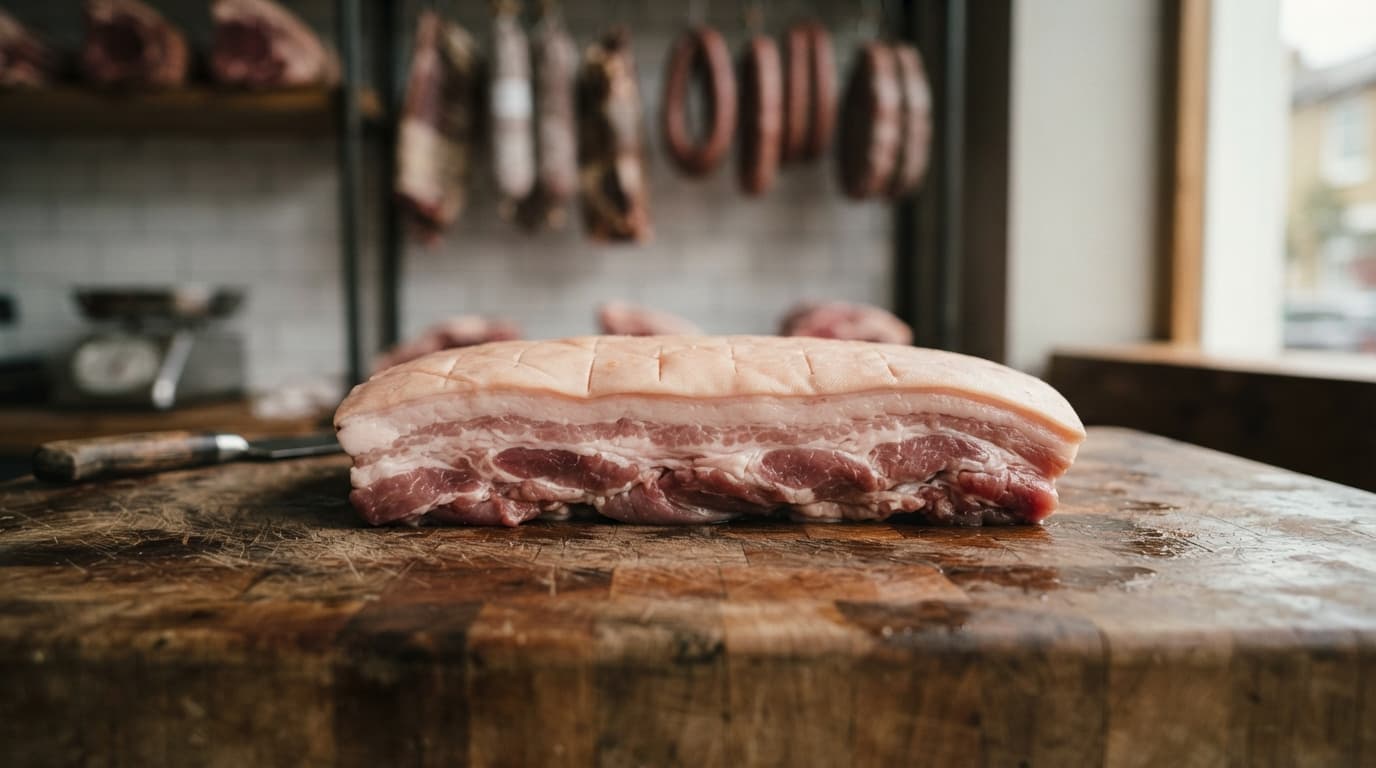
Pork belly shows up at large supermarkets, warehouse clubs, Asian grocery stores, and butcher counters, though selection and cut style vary a lot by store type.
9 min read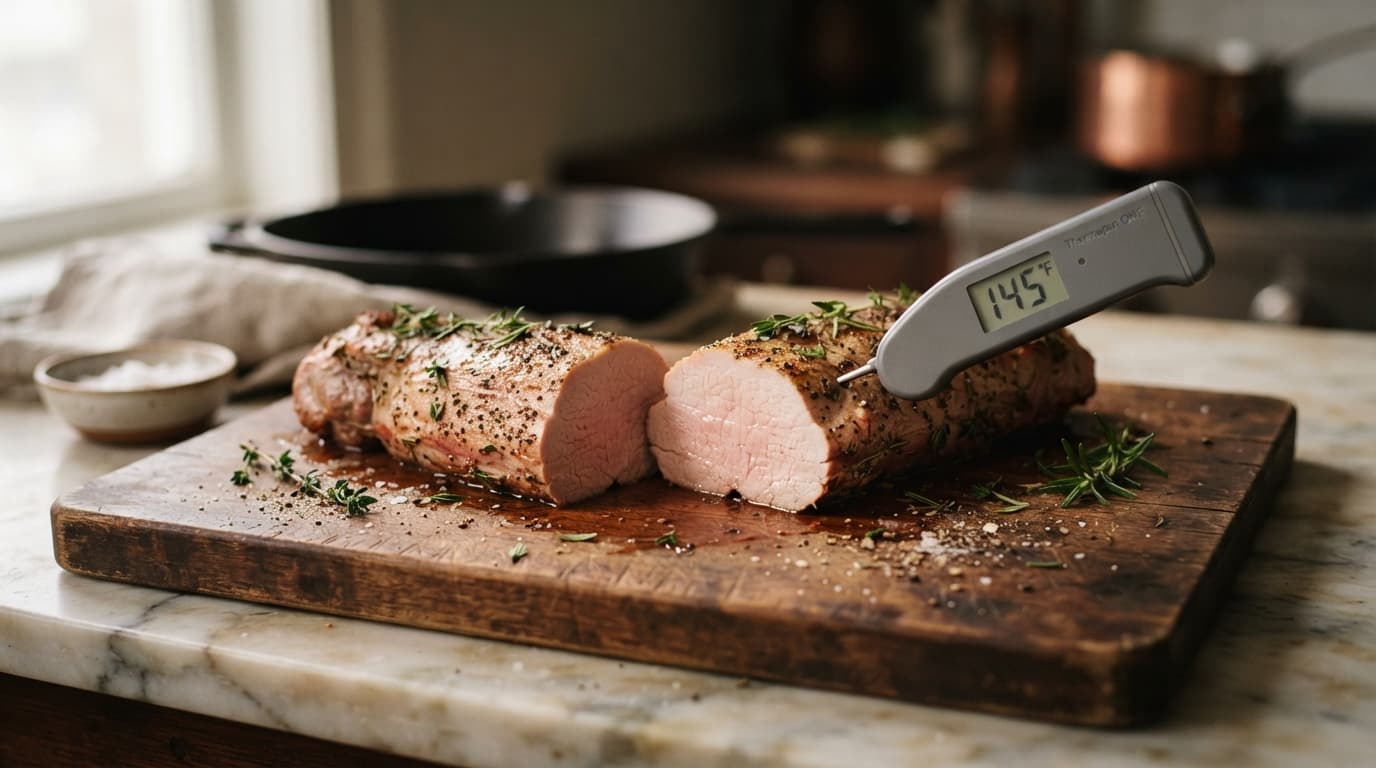
Pork tenderloin is done at 145°F, checked in the thickest part with a thermometer, then rested 3 minutes. Same number whether you grill, roast, or pan-sear it.
9 min read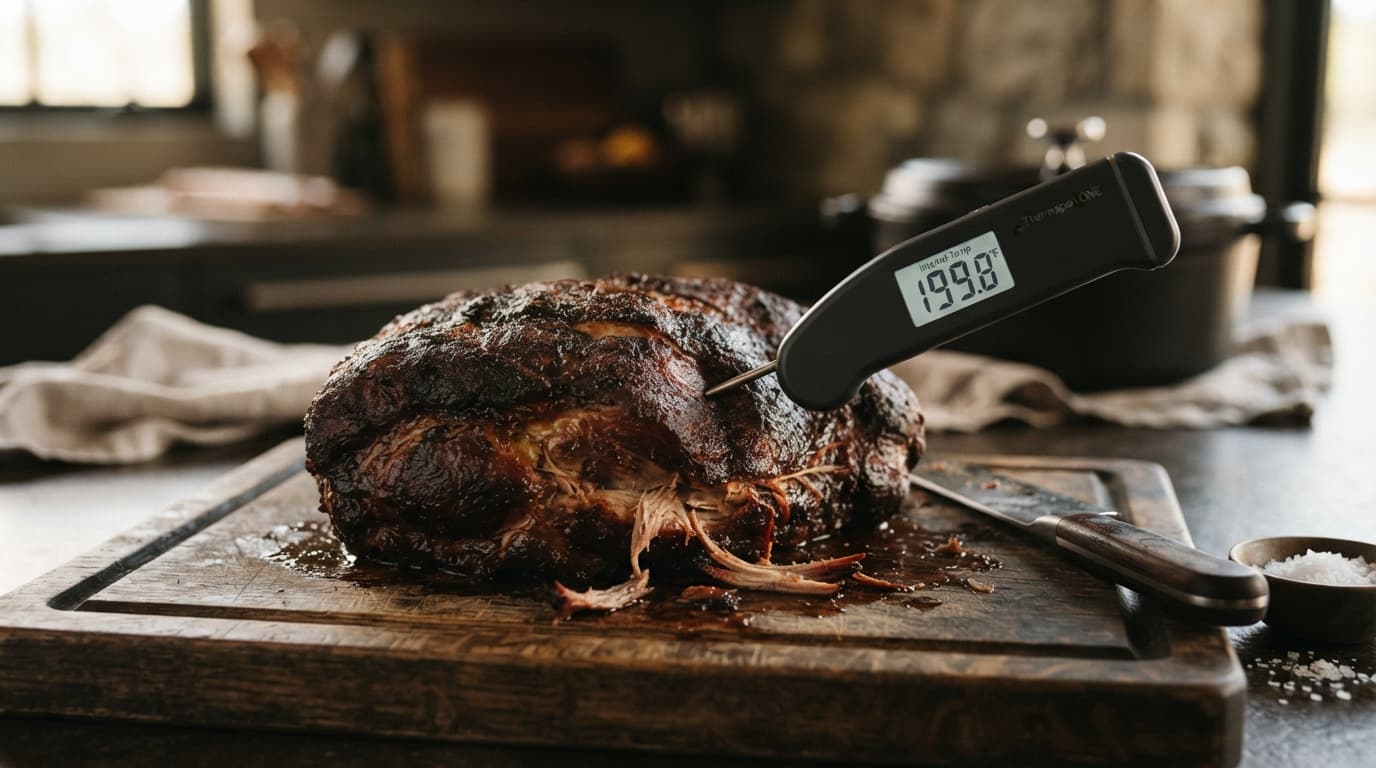
Pork butt is safe at 145°F, the USDA minimum, but pulled pork needs 195 to 205°F for the collagen to fully break down into tender, shreddable meat.
9 min readTables release two weeks out on Resy, Shukette's own booking platform.
Book Now →