Reheating Precooked Ribs in the Oven
Editorial desk · 9 min read · Updated 2026-08-23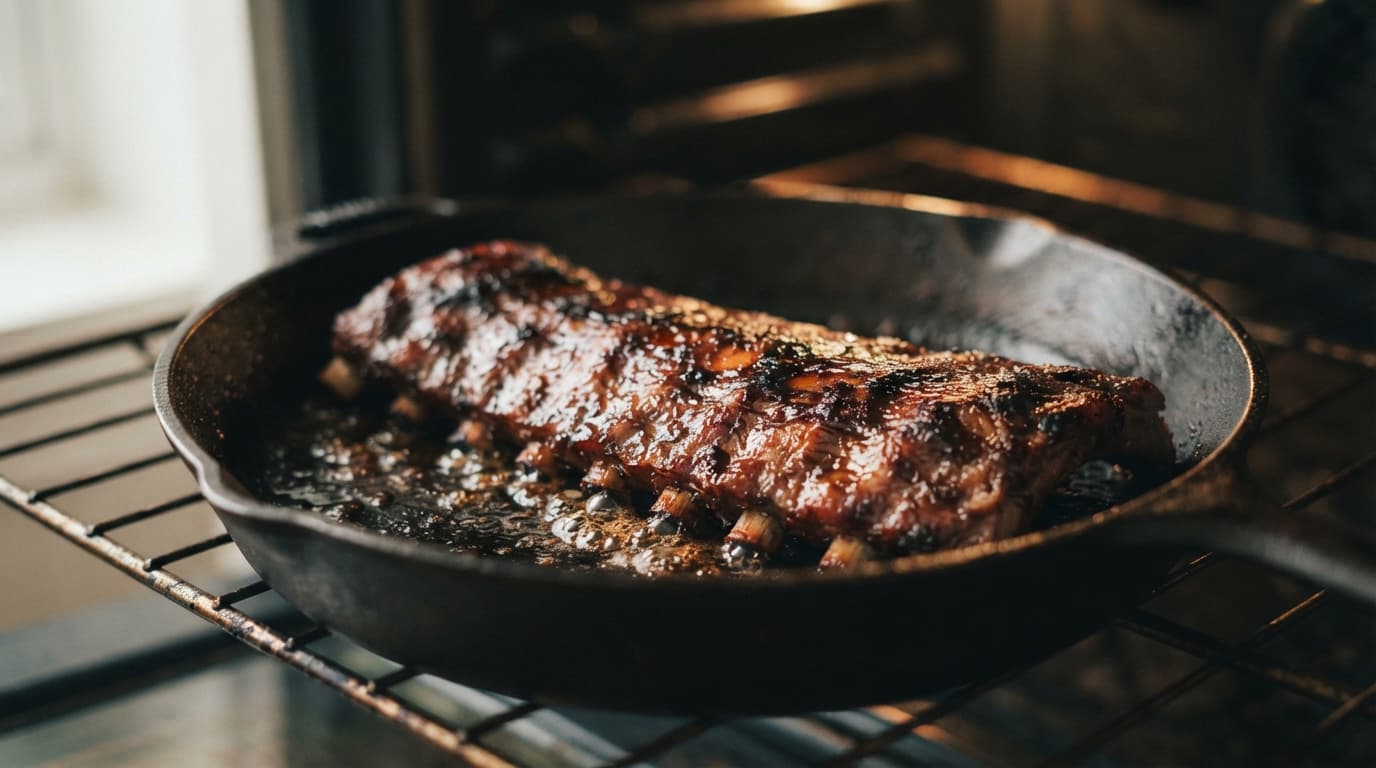
Precooked ribs need about 20 to 30 minutes in a 250°F oven, wrapped in foil with a little added moisture, to reach 165°F internally, the USDA's standard for reheating already-cooked food. That's a meaningfully lower and gentler process than cooking raw ribs, since the meat has already done its cooking; the oven's only job now is bringing it back up to a safe, hot, moist state.
Confusing this with a from-raw cook is the most common way reheated ribs end up dry and tough despite starting from a perfectly good product.
Reheating and cooking from raw are different questions
Store-bought fully-cooked ribs, restaurant leftovers, or a rack from a previous cook you're bringing back for a second meal are all in the same category: already-cooked meat that needs to be made hot and safe again, not meat that needs to be transformed from raw. The USDA/FSIS standard for reheating leftovers is 165°F internal, and that number applies here regardless of what the ribs were originally cooked to.
This is a genuinely different target from baking raw ribs at 325°F, where 145°F is only the safety floor and the real goal is pushing into a much higher 190 to 203°F range for the connective tissue to break down into tender, fall-off-the-bone texture. Precooked ribs have already been through that transformation once. Reheating them to 165°F doesn't undo any of that work or require redoing it; it simply restores warmth and safety to meat whose texture is already set.
Treating precooked ribs like a from-raw cook, chasing a much higher final temperature or a much longer cook time, doesn't make them more tender. It just dries them out further, since there's no additional collagen left to break down and no benefit to extra time beyond what it takes to get back to a safe, hot temperature.
It helps to picture the two questions as entirely separate projects rather than points on the same scale. Cooking raw ribs is a construction project: heat has to do real work over hours, breaking down tough connective tissue into something tender that didn't exist in that form before. Reheating precooked ribs is closer to maintenance: the construction is finished, and the only remaining job is restoring warmth safely without undoing the result. Approaching a reheat with a construction-project mindset, more time, more heat, is exactly backward.
The 250°F, 20-to-30-minute approach
Reheating precooked ribs at a relatively low 250°F, rather than a hotter oven setting, gives the heat time to reach the center gently without scorching the surface before the inside catches up. Wrapped in foil, most racks or portions reach 165°F within 20 to 30 minutes at this temperature, though a larger rack or one straight from the refrigerator rather than room temperature may run slightly longer.
This lower, slower reheat mirrors the same logic behind foil-wrapped low-and-slow cooking generally: trapped steam protects the meat from the drying effect of prolonged dry oven heat. The difference here is duration and purpose. A raw bake runs for hours because the meat needs that time to transform; a reheat runs for well under an hour because the meat only needs to come back up to temperature.
Starting temperature affects the low end versus the high end of that 20-to-30-minute window more than most people expect. Ribs going into the oven cold, straight from the refrigerator, sit closer to the 30-minute mark, since the oven has to first bring a cold interior up through a wider temperature range before it even reaches 165°F. Ribs that have had 15 or 20 minutes to sit at room temperature first, covered, will generally reach the target closer to the 20-minute end of the range, since there's less of a temperature gap for the oven to close.
Why added moisture matters more here than with raw ribs
Precooked ribs have already lost some moisture during their first cook, which means a second round of dry heat has less water left to work with before the meat starts drying out noticeably. Wrapping in foil with a splash of broth, apple juice, or barbecue sauce brushed over the ribs before sealing gives the meat something to reabsorb during the reheat rather than losing more moisture to the oven's dry air.
This step matters more for precooked ribs than it does for a raw cook, where the meat still holds most of its original moisture going in. Skipping the added liquid on a reheat, or leaving the ribs unwrapped for the entire time, is the fastest way to turn a perfectly good rack of ribs into something noticeably tougher and drier than it was the first time it came off the heat.
A light coating of sauce also does double duty here, since it both protects the surface during the wrapped portion of the reheat and sets up the optional finishing step below.
Liquid choice makes a small but real difference in the final flavor, not just the moisture level. Apple juice or a light stock keeps the original flavor of the ribs mostly intact, adding moisture without changing much else. Barbecue sauce brushed on before wrapping adds moisture too, but it also builds a second layer of flavor on top of whatever the ribs were originally seasoned or sauced with, which some people prefer and others find redundant if the ribs were already heavily sauced the first time around. Either approach works for the core job of protecting against drying out; the choice comes down to how much additional flavor you want layered on during the reheat itself.
The optional foil-off finish
Once the ribs have reached 165°F wrapped, removing the foil for the last 10 to 15 minutes lets the surface re-crisp slightly and lets any sauce applied earlier re-glaze under direct oven heat. This step is optional, since the ribs are already safe and warm by the time it starts, but it noticeably improves texture and appearance compared to serving them straight out of the foil with a soft, steamed surface.
If you're adding more sauce for this finishing stage, brushing it on right as the foil comes off gives it enough time to set and slightly caramelize without burning, especially if the oven is still at the same 250°F the reheat used rather than a hotter setting. Watching this stage rather than walking away is worth it, since sauce can go from nicely glazed to burnt faster than the earlier, gentler wrapped portion of the reheat.
Some cooks raise the oven temperature slightly for just this final stretch, moving from 250°F up to around 350°F for the last five minutes once the foil is off, to speed up the re-crisping without extending the total time much. This works, but it demands closer attention, since the margin between a nicely set glaze and a scorched one narrows considerably at the higher setting. Sticking with the original 250°F for the whole process, foil-off stage included, just takes a few extra minutes for the same visual result with less risk of overshooting.
Checking that 165°F has actually been reached
An instant-read thermometer is the only reliable way to confirm precooked ribs have hit 165°F, since appearance alone can be misleading on meat that was already fully cooked and browned before it ever went back in the oven. Insert the probe into the thickest part of the meat, away from bone, the same placement principle that applies to checking a raw cut for doneness in an air fryer, even though the target number here is different.
A dependable, accurate thermometer matters just as much for a 20-minute reheat as it does for an hours-long cook, arguably more, since there's less visual or textural feedback to lean on with meat that already looks fully cooked before you've even confirmed it's hot enough. Guessing based on how long the ribs have been in the oven, rather than checking the actual number, is the most common reason a reheat comes out either under-warmed in the center or overcooked at the edges.
If you're reheating a large batch, several racks or a mix of individual portions at once, checking more than one piece matters more than it would for a single rack going in alone. Pieces near the edges of a baking sheet or closer to the oven door tend to run slightly behind pieces in the center, and a single reading from the most accessible piece can give a falsely confident picture of where the whole batch actually stands.
What this means for leftovers from a home cook or a restaurant
Ribs you smoked or baked yourself and are reheating a day or two later follow this same 165°F standard, regardless of how carefully you originally hit the 190-to-203°F tenderness range during the first cook. That earlier, higher number was about breaking down connective tissue; this second number is purely about bringing already-transformed meat back to a safe, hot serving temperature without drying it out in the process.
The same logic applies to ribs brought home from a restaurant meal, including a shared plate meant for a group that didn't get finished at the table. Whatever tenderness the kitchen achieved the first time around is already locked in; the oven's only job on the second pass is restoring warmth and moisture without undoing that work through excess heat or a dried-out reheat.
How the ribs were stored between the first meal and the reheat also affects how the process goes. Ribs cooled quickly and stored in a sealed container hold moisture noticeably better than ribs left loosely covered in the refrigerator, since more surface area exposed to the fridge's dry air means more moisture lost before reheating even begins. If a rack has been sitting loosely wrapped for more than a day or two, adding slightly more liquid than usual before sealing the foil helps compensate for whatever moisture was already lost in storage.
A microwave can technically bring ribs to 165°F faster than an oven can, but it tends to produce a noticeably worse result on this specific food. Microwaves heat unevenly and don't develop the gentle, steady warmth that lets moisture redistribute the way a slower oven reheat does, and there's no equivalent to the foil-off finishing step that restores any real surface texture afterward. The oven method takes longer, but for a food where texture is as central to the appeal as it is with ribs, the extra 15 or 20 minutes is a reasonable trade.
A grill or smoker set to a low, indirect temperature works about as well as an oven for this same reheating job, if that's the equipment already set up and available. The same core principles carry over directly: keep the heat gentle rather than aggressive, wrap to trap moisture during the bulk of the reheat, and finish unwrapped only at the very end to restore some surface texture. An oven simply tends to be the most accessible option for a smaller batch or a quick weeknight reheat, since it doesn't require lighting a grill or a smoker for a task that only takes 20 to 30 minutes start to finish.
Getting a rack of precooked ribs right the second time comes down to remembering which question you're actually answering. Raw ribs ask how to make the meat tender and safe from scratch, a question that runs through 145°F as a floor on the way to 190-203°F. Precooked ribs ask a smaller, faster question: how to get the meat back to safe and hot without losing what already made it good. Answer that second question with 250°F, foil, added moisture, and a thermometer confirming 165°F, and the ribs come out the second time nearly as good as they were the first.
Frequently asked questions
How long do precooked ribs take to reheat in the oven?+−
Around 20 to 30 minutes at 250°F, wrapped in foil with a little added liquid or sauce, is the commonly cited practitioner approach. The goal is reaching 165°F internally, the USDA's standard for reheated leftovers, not cooking the meat further.
What temperature should precooked ribs reach when reheating?+−
165°F internally, the USDA/FSIS standard for reheating already-cooked food. This is different from the temperature target for raw ribs, since precooked ribs only need to be brought back up to a safe, hot temperature, not cooked to tenderness from scratch.
Why do precooked ribs dry out in the oven?+−
Because they're already fully cooked, a second round of dry oven heat with no added moisture pulls out more water than the meat has left to spare. Wrapping in foil with sauce or a splash of liquid traps steam and protects against that.
Should I unwrap precooked ribs at any point while reheating?+−
Yes, optionally, for the last 10 to 15 minutes. Removing the foil near the end lets the surface re-crisp and lets any sauce re-glaze under direct heat, after the wrapped portion of the reheat has already restored moisture and warmth.
Is reheating precooked ribs the same process as baking raw ribs?+−
No. Reheating targets 165°F for safety and moisture retention in meat that's already cooked. Baking raw ribs targets a much higher tenderness range, generally 190 to 203°F, well past the 145°F safety floor that applies to raw cuts.
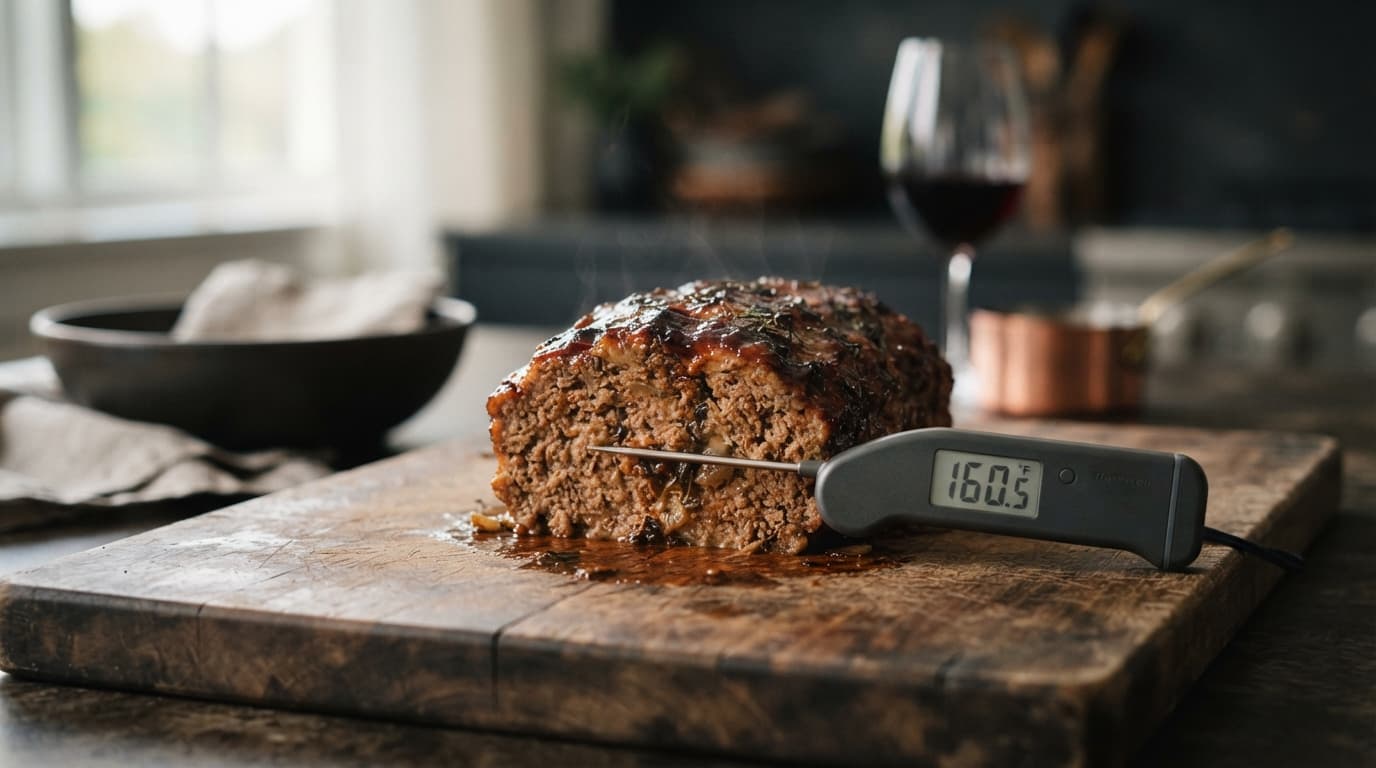
160°F, per USDA guidance for ground meat, beef, pork, veal, or a mix. That's higher than whole-cut beef's 145°F minimum, for a specific reason.
9 min read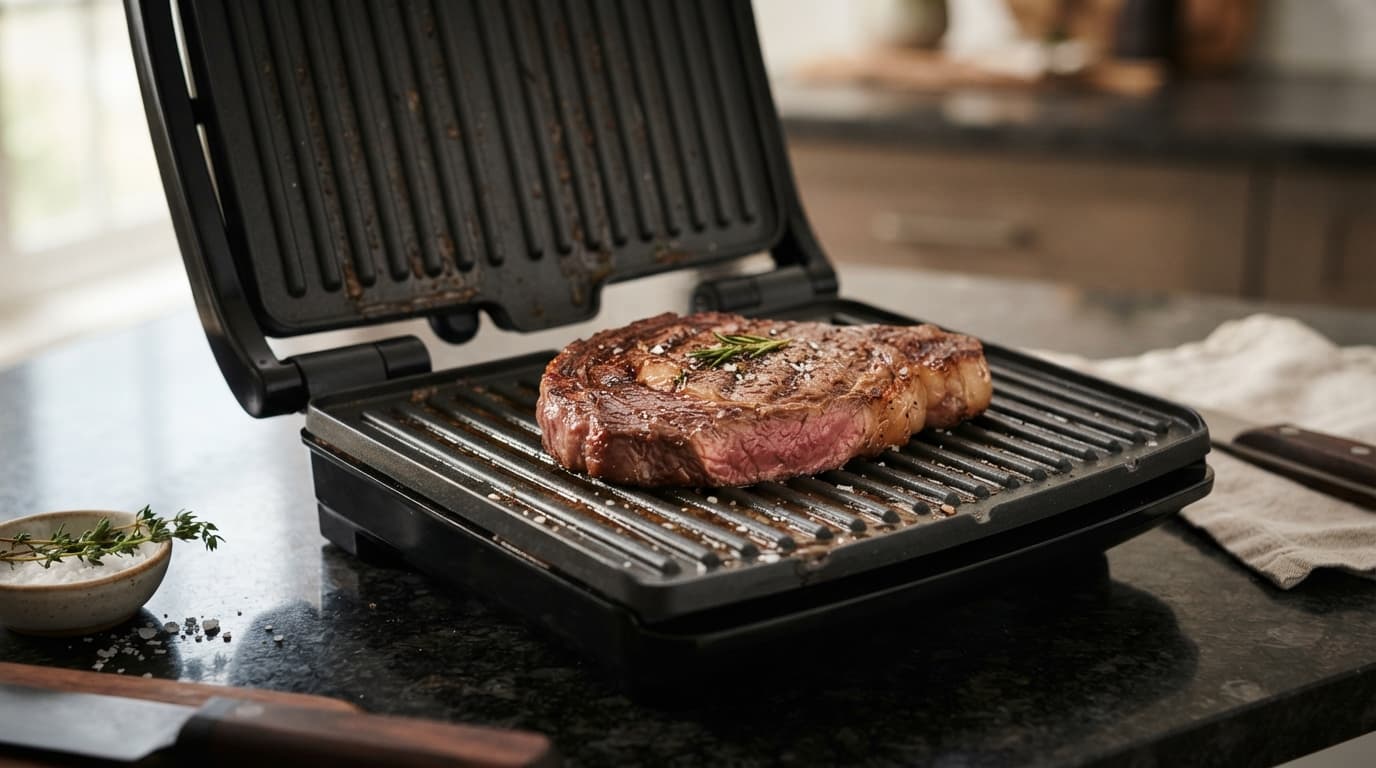
A 1-inch steak takes about 4-7 minutes for medium-rare on a contact grill, since both sides cook at once. Thickness affects time more than the clock does. Confirm 145°F.
10 min read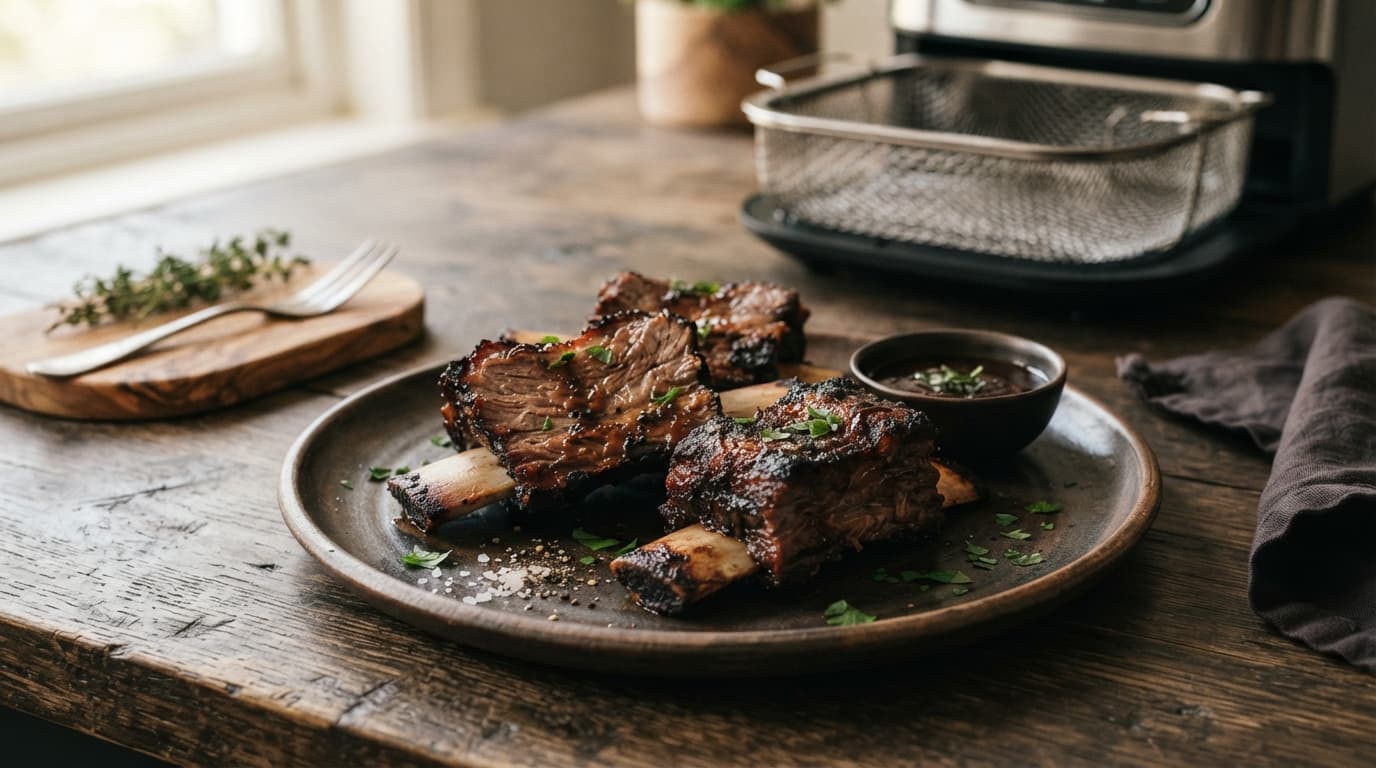
Thin, boneless flanken-style short ribs can cook in under 10 minutes at 400°F. Thicker bone-in, low-and-slow style pieces take closer to an hour at 325°F.
9 min readTables release two weeks out on Resy, Shukette's own booking platform.
Book Now →