Beef Ribs in the Air Fryer
Editorial desk · 9 min read · Updated 2026-08-23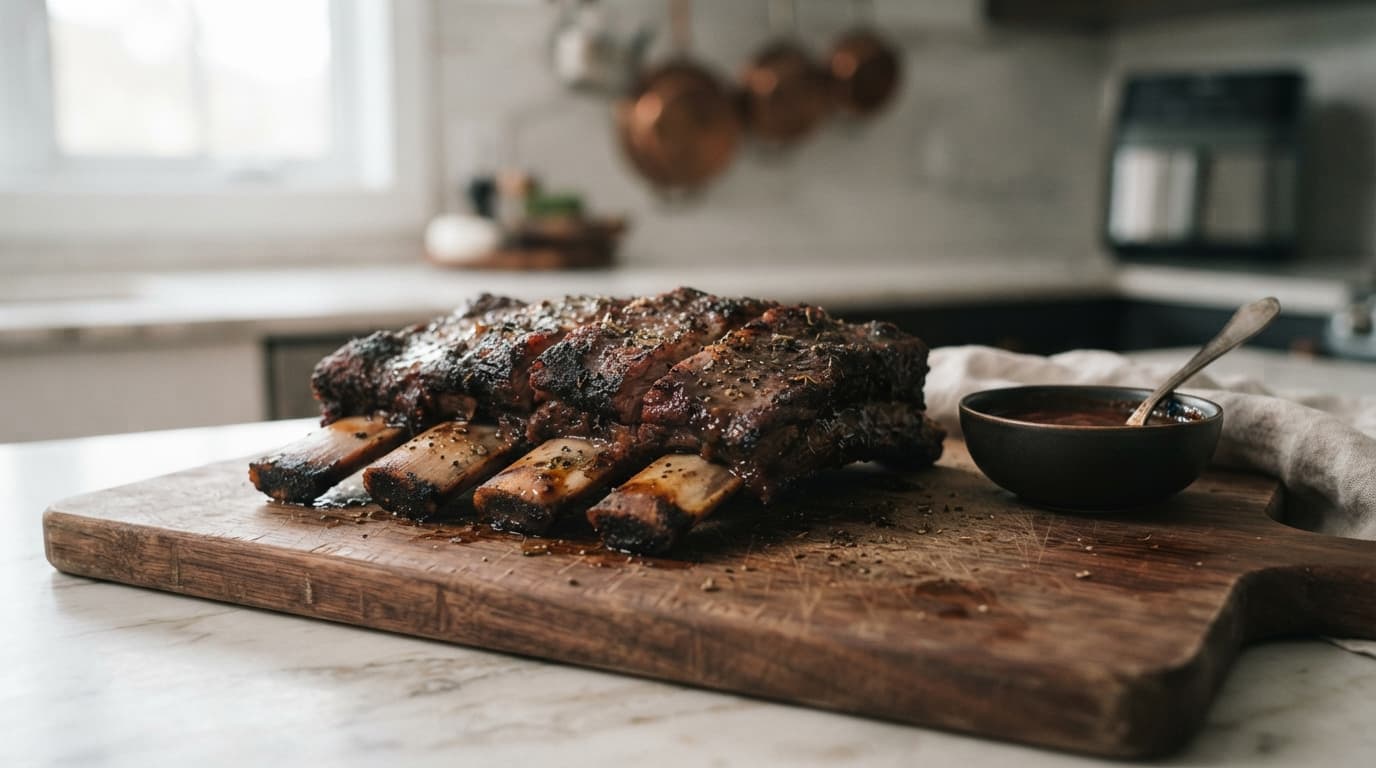
Beef back ribs commonly cook in about 35 minutes at 320°F in an air fryer, noticeably faster than the same cut would take in a conventional oven at a similar setting. That speed comes from how an air fryer actually works, not from a different safety standard, and it's worth understanding both before you load a rack in.
Ribs are a forgiving cut in most cooking methods, but an air fryer's small chamber and aggressive airflow mean less margin for guessing than a full-size oven allows.
Why an air fryer cooks beef ribs faster than an oven
An air fryer is, mechanically, a small convection oven. Its cooking chamber is a fraction of the size of a full oven's interior, and a fan actively circulates hot air around the food rather than relying on the more passive heat distribution typical of a conventional oven. Concentrating that much moving hot air into a small enclosed space transfers heat to the food's surface faster, which is the core reason air fryer times consistently run shorter than oven times for the same cut at a similar temperature.
That faster surface heating matters for beef ribs the same way it matters for most foods cooked in an air fryer: the exterior firms up and browns quickly, which is a real advantage for texture, but it also means the window between properly cooked and overdone is narrower than it is in a larger oven where heat builds more gradually. Beef ribs benefit from the fast browning; they don't get more forgiving of being left in too long.
This mechanical difference is worth understanding on its own terms, not just as a quirk to work around. A conventional oven heats a large volume of air and relies on that air slowly transferring warmth to the food sitting inside it, plus a meaningful amount of radiant heat from the walls and heating elements themselves. An air fryer skips most of that slow buildup. The fan forces hot air directly against every exposed surface of the food, which is closer to convection cooking at its most aggressive, and it's the same basic principle that makes a convection setting in a full oven cook faster than a standard bake setting, just taken further because the chamber is so much smaller and the airflow so much more concentrated.
Preheating plays a bigger role in an air fryer's speed advantage than it does in a full oven, too. A small chamber reaches its target temperature in a couple of minutes rather than the ten or fifteen a full oven typically needs, which means less of the total cook time is spent waiting for the appliance itself to catch up. Skipping preheat entirely on an air fryer costs proportionally more of the total cook time than skipping it on a full oven would, simply because the cook itself is so much shorter to begin with.
The ~35 minute, 320°F range for beef back ribs
Beef back ribs, cut from the rib section after the ribeye has been removed, are a commonly air-fried option because individual ribs or short sections fit the typical basket size more easily than they would as a full rack. At 320°F, roughly 35 minutes is the practitioner-cited range most home cooks land on for this cut, though checking rather than relying on the clock alone remains the more reliable approach given how much basket size, rack thickness, and individual air fryer models vary.
Flipping the ribs partway through, generally around the midpoint of the cook, helps even out browning given how directional an air fryer's airflow can be depending on basket design. This is a smaller adjustment than the wrapping and unwrapping steps used in an oven bake at 325°F, but it serves a similar purpose: making sure heat reaches the meat evenly rather than concentrating unevenly on whichever surface faces the heating element most directly.
Seasoning beef back ribs before an air fryer cook works largely the same as it would for any other method, though a dry rub tends to perform a little better than a wet marinade given how quickly the surface firms up. A wet marinade that hasn't had time to penetrate past the surface mostly just sits there and can interfere with browning, while a dry rub adheres directly to the meat and benefits from the fast, direct heat working on it right away. If sauce is part of the plan, brushing it on during the last five to ten minutes rather than at the start avoids the sugar in most barbecue sauces burning under sustained high heat in such a small, hot chamber.
Basket size is a real practical constraint
Air fryer baskets and trays are built for volume, not length, which creates a genuine limitation with ribs specifically: most consumer air fryers simply aren't long enough to hold a full, intact rack of beef back ribs. Cutting the rack down into smaller sections, generally two to four ribs per piece, or buying ribs already cut individually, is usually necessary before they'll fit the chamber at all.
This isn't a workaround so much as the standard approach for cooking ribs in this appliance. A butcher can cut a rack down on request, or a home cook can do it with a sturdy knife along the bones, cutting between them into two- or three-rib sections that fit comfortably without overlapping in the basket. Overlapping pieces block airflow between them, which undercuts the entire reason an air fryer cooks faster than an oven in the first place, so leaving space between sections matters more here than it would in a full-size oven with more interior volume to work with.
If a whole intact rack is the goal, an oven remains the more practical appliance regardless of the time savings an air fryer otherwise offers, sidestepping the size constraint entirely at the cost of a longer total cook time. Larger air fryer models with a wider tray, rather than a deep basket, handle this constraint slightly better than the compact basket-style units common in smaller kitchens, though even those wider models rarely accommodate a full rack of beef back ribs without at least some trimming at the ends.
The 145°F safety floor vs. the tenderness target
145°F, held for at least 3 minutes, is the USDA's minimum safe internal temperature for any whole cut of beef, and that includes beef ribs cooked in an air fryer exactly as it would in any other appliance. At 145°F, beef ribs are fully safe. They are not, however, tender in the way most people associate with good ribs, since the connective tissue holding the meat to the bone hasn't had the heat or time to fully break down at that number.
Barbecue practitioner consensus points to a much higher range, generally 190 to 203°F, as the target for genuinely tender, easily-pulled rib meat, the same range used for low-and-slow brisket and pork butt. An air fryer's shorter, faster cook makes hitting that higher range a little different in practice than a multi-hour smoke does, but the target temperature itself doesn't change based on the appliance. Beef ribs pulled at 320°F for 35 minutes and checked at 145°F alone may be safe but noticeably tougher than the same ribs given more time toward that higher tenderness range.
It helps to think of these as two separate finish lines rather than one sliding scale. 145°F answers the question "is this safe to eat right now." The 190 to 203°F range answers a completely different question, "has the connective tissue actually broken down into something tender." An air fryer can get beef back ribs to either point; the 35-minute, 320°F range described above is generally aimed at the higher end of that spectrum for a smaller cut like back ribs, since their thinner profile means they can reach real tenderness in a shorter window than a thicker cut would need.
Checking temperature without constantly opening the basket
An air fryer's small, enclosed chamber holds heat differently than a full oven does, and opening the basket repeatedly to check on the ribs lets that concentrated heat escape each time, which can meaningfully extend the total cook time if it happens often enough. Checking once, toward the end of the estimated 35-minute window rather than every few minutes, keeps the chamber's heat more consistent while still giving you a real reading before deciding whether the ribs need more time.
An instant-read thermometer inserted into the thickest part of the meat, away from direct bone contact, gives the clearest picture of where the ribs actually stand. Because an air fryer's small chamber can create more variation between the ribs closest to the fan and those further away compared to a larger oven's more even heat, checking more than one section if you've cut the rack into pieces is worth the extra few seconds, especially the first few times you cook this cut in a given air fryer model.
The bend test, useful for a full rack in the oven, is harder to apply to smaller sections cooked in an air fryer, simply because there's less rack length to flex and observe. A thermometer reading, backed up by how easily the probe slides in, is the more practical doneness check for this format, and it removes the guesswork a purely visual test can't fully resolve on a cut this size.
Color alone is an unreliable stand-in for either check. Beef back ribs can look fully browned and appealing well before the interior has actually reached a safe or tender temperature, especially given how quickly an air fryer's forced convection browns the exterior compared to how long the center actually needs to catch up. Treating a good sear as confirmation of doneness, rather than as one input alongside an actual thermometer reading, is a common way a rack that looks perfect on the outside turns out undercooked once it's cut into.
Getting a consistent result from a fast-cooking appliance
The tradeoff with an air fryer is speed for a slightly smaller margin of error. Thirty-five minutes at 320°F is a genuinely useful starting point for beef back ribs, but it's still a starting point, not a guarantee, given how much basket size, rack thickness, and individual appliance behavior vary from one kitchen to the next. Checking with a thermometer near the end of that window, rather than trusting the clock alone, is what turns a rough estimate into ribs that are both safe and actually tender.
If beef back ribs aren't what you have on hand, the timing changes meaningfully with a different cut. Beef short ribs run on a much wider range depending on whether they're thin and boneless or thick and bone-in, so it's worth checking which specific cut you're working with before assuming the back-rib numbers here will transfer directly.
Batch size affects consistency more in an air fryer than it does in a full oven, simply because the chamber is so much smaller relative to the food inside it. A single layer of ribs with visible space between pieces cooks close to the times described above; crowding the basket to fit more in at once blocks the airflow the whole method depends on, which can leave pieces in the middle of a crowded batch undercooked well past the point where the outer pieces read fully done. Cooking in two smaller batches rather than one crowded one takes a little longer overall but produces a far more even result across every piece.
Once you've run a rack of beef back ribs through your specific air fryer once and confirmed roughly how it behaves, that first attempt becomes a reliable reference point for every batch after it, which is really the main adjustment period this appliance asks for compared to a more predictable full-size oven.
Frequently asked questions
How long do beef ribs take in an air fryer?+−
Beef back ribs commonly cook in about 35 minutes at 320°F in an air fryer, a shorter time than the same cut would need in a conventional oven at a similar temperature.
Why does an air fryer cook beef ribs faster than an oven?+−
An air fryer's cooking chamber is much smaller than a full oven, and a fan drives hot air directly around the food. That combination concentrates heat far more efficiently than an oven's larger, more passive airflow, which shortens cook time.
Do I need to cut a rack of beef ribs down to fit an air fryer?+−
Often, yes. Most air fryer baskets or trays aren't long enough to hold a full, intact rack, so cutting the rack into smaller sections, or buying individual ribs, is usually necessary to fit the cooking chamber.
Is 145°F enough for beef ribs to be tender?+−
No. 145°F is the USDA's safety minimum for whole cuts of beef, including ribs, but it's well short of the tenderness most people want. Practitioner consensus for fall-off-the-bone texture runs closer to 190 to 203°F.
How do I check beef rib temperature in an air fryer without opening it too often?+−
Use an instant-read thermometer and check toward the end of the estimated time rather than repeatedly. Opening the basket frequently lets heat escape and can extend the total cook time in a chamber that's already small and heat-sensitive.
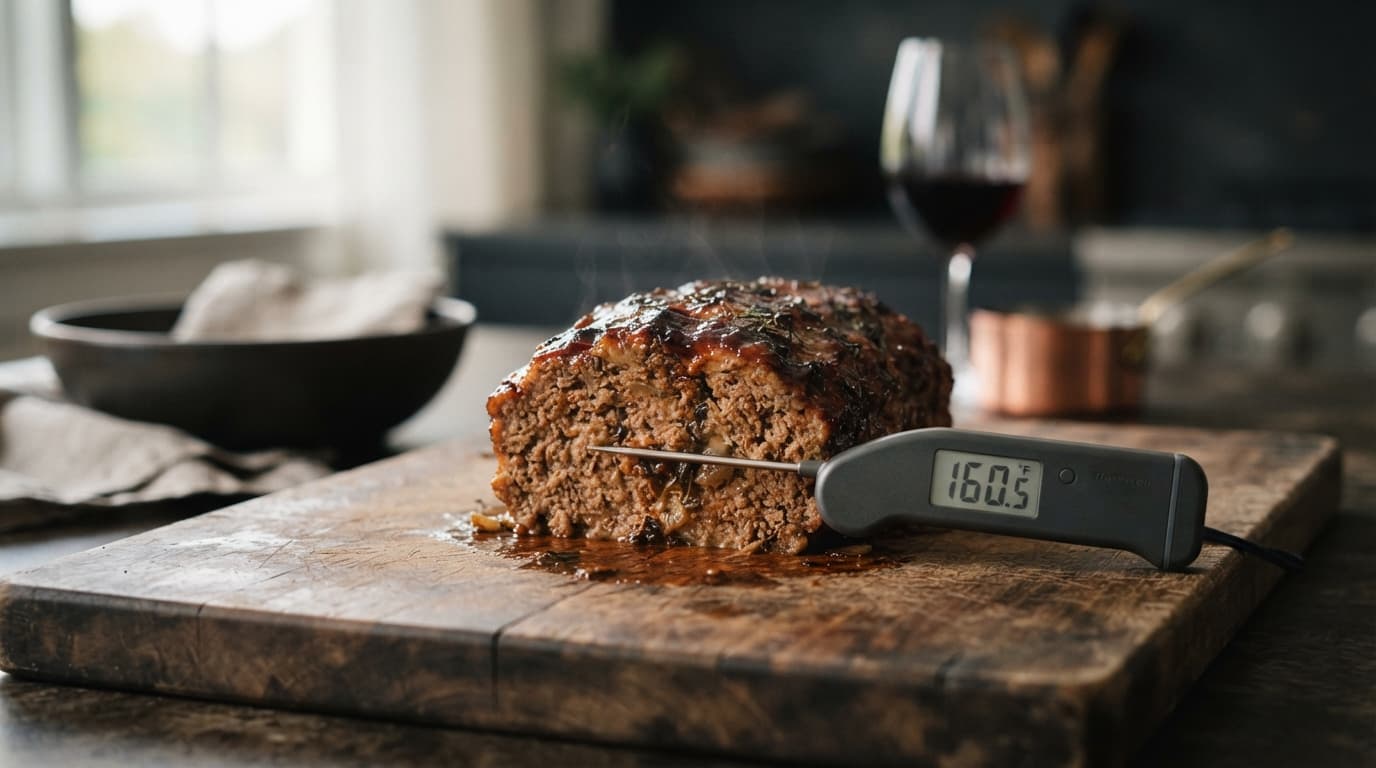
160°F, per USDA guidance for ground meat, beef, pork, veal, or a mix. That's higher than whole-cut beef's 145°F minimum, for a specific reason.
9 min read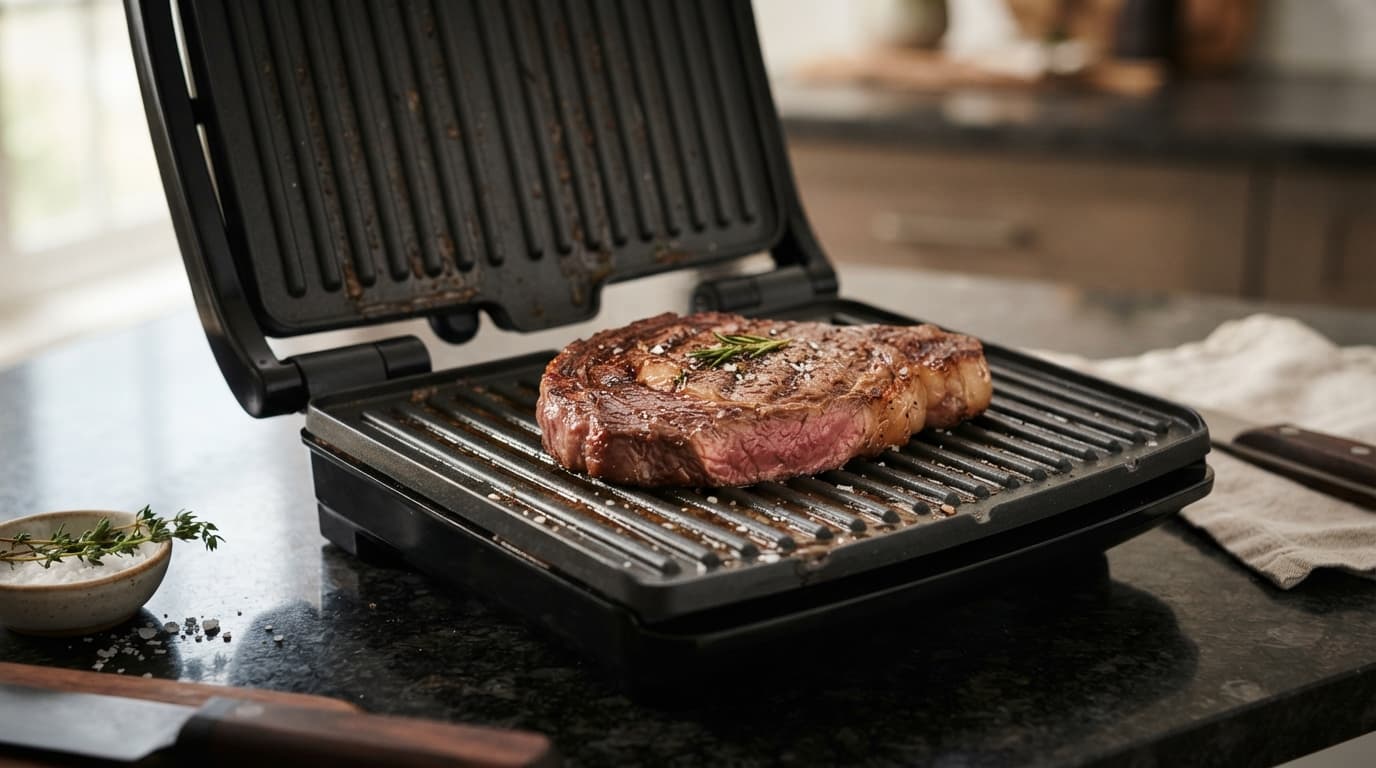
A 1-inch steak takes about 4-7 minutes for medium-rare on a contact grill, since both sides cook at once. Thickness affects time more than the clock does. Confirm 145°F.
10 min read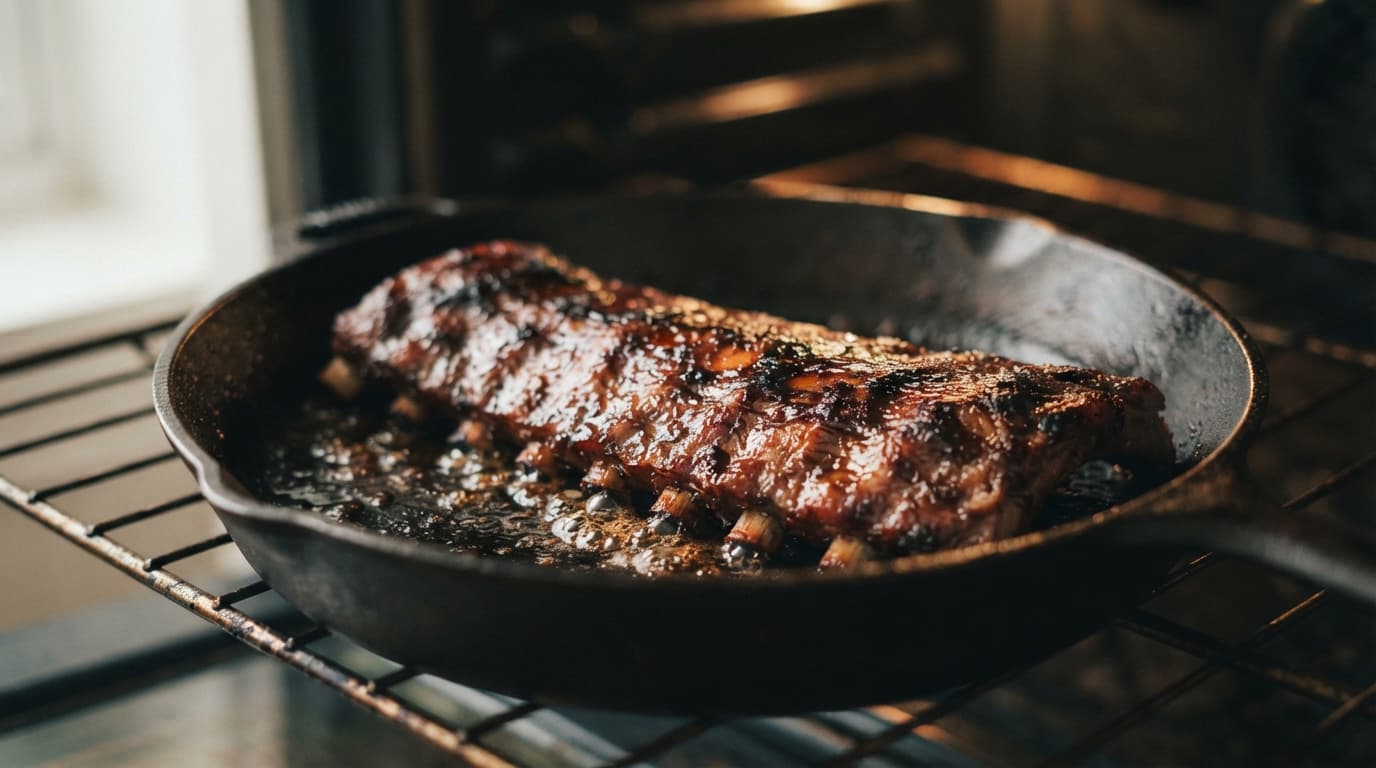
Precooked ribs need reheating to 165°F, not cooking from raw. The practitioner approach is about 250°F for 20 to 30 minutes, foil-wrapped with added moisture.
9 min readTables release two weeks out on Resy, Shukette's own booking platform.
Book Now →