Brisket Internal Temp: Is 210°F Too High?
Editorial desk · 9 min read · Updated 2026-08-23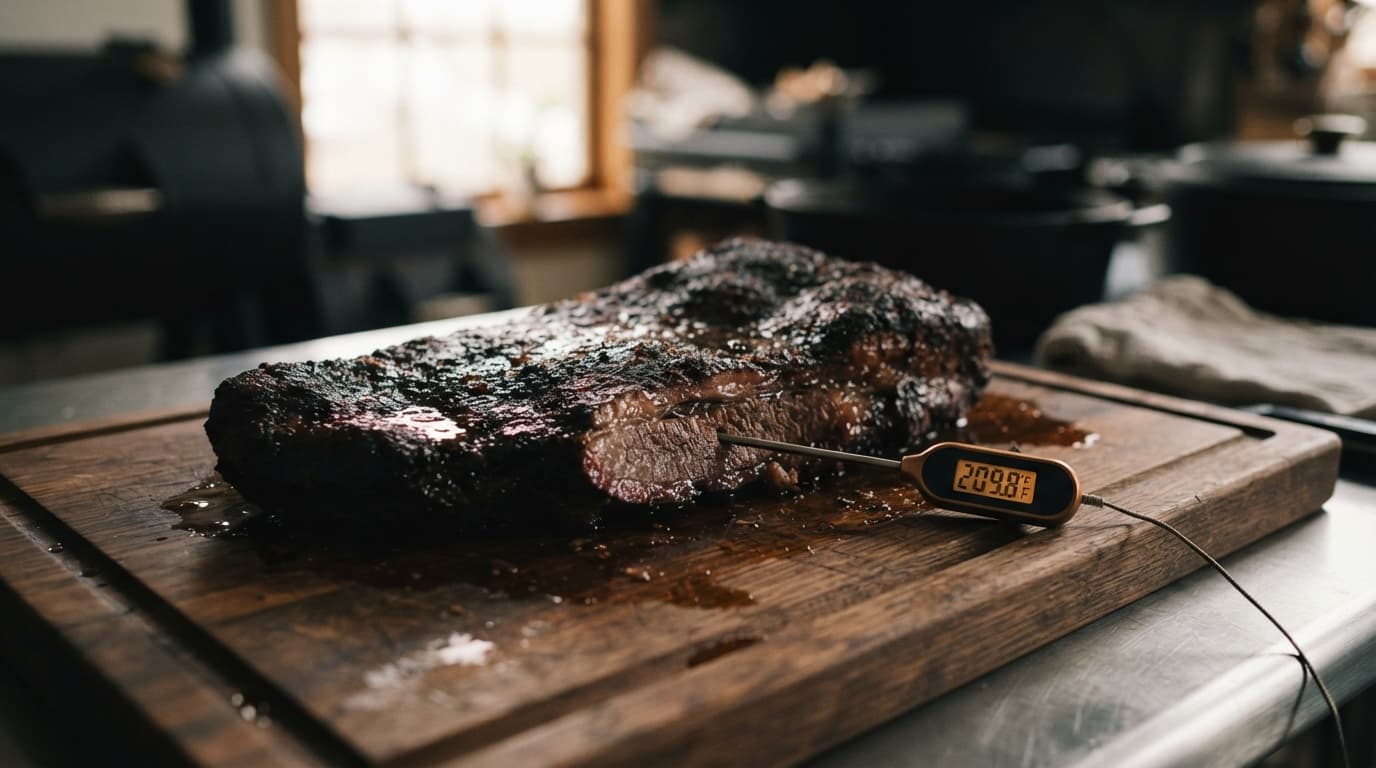
210°F sits right at the outer edge of the commonly cited 195-to-205°F range most barbecue sources point to for brisket doneness, and pushing a brisket that far does carry real risk of drying out the meat. It isn't an official food-safety number from USDA or any other regulatory body; the actual safety minimum for brisket, like any other whole cut of beef, is 145°F with a 3-minute rest. Everything above that is a texture target, not a safety threshold, and 210°F specifically sits close enough to the edge of that texture range that it's worth understanding rather than treating as either a magic number or an automatic mistake.
Whether 210°F is the right call for a specific brisket depends less on the number itself and more on what the meat is actually doing at that temperature.
Where this number actually comes from
The 195-to-205°F range brisket is commonly cooked into isn't published by USDA or FSIS; it's widely-repeated consensus among barbecue practitioners and pitmasters, built from years of collective experience about where brisket's dense collagen and connective tissue typically finish breaking down into gelatin. Some well-known pitmasters, Aaron Franklin among them, have described pulling brisket closer to 203°F based on their own process, which sits comfortably within that broader range rather than pushing past it.
The range persists across so many sources precisely because it describes a physical process rather than a regulatory line. Collagen, the tough connective tissue running through a brisket's flat and point, doesn't meaningfully soften until it's held at a sustained high temperature for an extended stretch, and somewhere in the 195-to-205°F window is typically where enough of it has converted to gelatin that the meat stops feeling tough and starts feeling tender. That conversion doesn't happen at one precise instant for every brisket; it's a gradual process, which is exactly why the accepted range spans ten degrees rather than landing on a single number, and why a specific piece might finish that process a few degrees earlier or later than another brisket cooked the same way.
210°F extends a few degrees beyond even the higher end of that already-informal range. It's not a number with any special significance on its own; it's simply what happens when a specific piece of brisket hasn't finished the fork-tender transformation yet at 205°F and continues cooking a little further before a cook decides it's finally ready.
That number is also only as trustworthy as where the probe actually sits, which is worth questioning before treating any reading as gospel. A probe resting in a pocket of fat rather than the meat itself reads noticeably hotter than the surrounding muscle, since fat renders and holds heat differently than muscle fiber does. The most reliable placement is the thickest part of the flat, away from the point's fat seam, inserted from the side so the tip sits at the center of the meat's mass rather than skimming close to a surface that's had more direct exposure to grate or smoker heat. A probe resting against bone, if any is still present, or one that's slipped partway out during a long cook and now reads closer to the surface, produces a number that doesn't reflect what's actually happening in the densest part of the brisket. An inexpensive thermometer that hasn't been checked for accuracy in a while compounds the problem further; a simple ice-water test, submerging the probe in a slurry where it should read close to 32°F, confirms whether it's trustworthy before a multi-hour cook where a few degrees of drift changes the whole picture. A dependable instant-read thermometer used to spot-check a leave-in probe's reading in a couple of spots is a quick way to catch drift or bad placement before that inaccurate number drives a decision to pull or keep cooking.
Why pushing past 205°F carries real risk
Past roughly 205°F, brisket's muscle fibers generally start losing moisture faster than any remaining connective tissue benefits from the additional heat. This is the same dynamic that applies to pork butt cooked well past its own safety minimum: a genuinely wide safe-to-ideal range exists, but it isn't unlimited, and continuing to push temperature upward past the point where connective tissue has already broken down mostly just dries the meat out further without adding any real benefit.
210°F isn't automatically past that point for every single brisket; a particularly large, dense, or well-marbled piece might still be working through the last bit of connective tissue breakdown at that number without meaningfully worse dryness than it would show at 205°F. But it's close enough to the edge that the odds of real moisture loss climb meaningfully compared to pulling at 200°F or 203°F, which is why most guidance treats 210°F as a temperature to reach cautiously and check carefully rather than target directly.
Size and thickness change how fast a brisket climbs through this whole range, and that speed matters as much as the target number itself. A smaller, thinner brisket, something in the 8-to-10-pound range, moves through the stall and on toward 205°F noticeably faster than a thick, 15-plus-pound packer cut, simply because heat has less distance and less mass to work through before the center catches up to the surface. A smaller piece that's climbing quickly can blow past 205°F and reach 210°F in the time it takes to walk away and come back, while a larger packer might sit stalled in the low 200s for what feels like a long stretch before finally finishing. This is part of why checking probe tenderness starting around 195°F matters more on a smaller brisket than a larger one: a thinner cut gives you a much narrower window to catch it at the right point before it overshoots into riskier territory. A thicker, larger brisket generally offers more margin for error simply because its sheer mass slows the climb, giving a cook more chances to check in before the internal temperature races past where it should have been pulled.
Probe tenderness matters more than the exact number
The most reliable way to judge actual doneness, at 200°F, 205°F, or 210°F, is a physical check: a thermometer probe should slide into the thickest part of the brisket with very little resistance, similar to inserting it into softened butter, once the connective tissue has genuinely finished breaking down. If a probe still meets real resistance at 205°F, that specific piece of brisket likely needs more time regardless of what a general guideline says, and continuing toward 210°F while checking probe feel along the way is a more reliable process than fixating on any single target number.
Conversely, if a brisket already probes tender well before reaching 205°F, there's no benefit to continuing further just to hit a commonly cited range; pulling it as soon as it's genuinely tender, rather than chasing a specific number past that point, produces a better result. The number on the thermometer is a helpful guide for roughly where to expect tenderness to develop, not a substitute for actually checking.
Why some cooks intentionally push this high
A handful of pitmasters do deliberately cook brisket, particularly the fattier point section, into the 205-to-210°F range on purpose, usually because they're aiming for a fully shreddable or chopped texture rather than clean, sliced pieces. The point's higher fat content gives it more built-in protection against drying out at these higher temperatures than the leaner flat has, which is part of why this approach shows up more often for point meat headed toward burnt ends than for a whole brisket meant to be sliced.
This is a legitimate, intentional choice for a specific final texture, not a universal target every brisket should be pushed toward. A flat destined for clean slices generally does better pulled earlier, closer to 195 to 200°F, precisely because it lacks the point's fat cushion against the drying effects of extended high heat.
What to do if your brisket hits 210°F before probing tender
If a brisket reaches 210°F and still doesn't probe fully tender, the connective tissue genuinely hasn't finished breaking down yet, and continuing to cook it, while accepting some additional moisture risk, is usually still the better choice than pulling a brisket that will be tough and chewy despite the high number. This is an uncomfortable position to be in, since further cooking risks more dryness while stopping risks a genuinely undercooked texture, but a tough, underdone brisket is rarely salvageable after the fact, while a slightly dry one can still be improved somewhat by resting properly and serving with jus or sauce.
Wrapping the brisket more tightly if it isn't already, and checking in multiple spots rather than just one, helps confirm whether it's genuinely still underdone throughout or just tough in one specific area, which sometimes reflects an uneven cook rather than the whole piece needing more time.
If the brisket does come out drier than you'd like after all that, a few real fixes exist beyond just serving it as-is. Slicing against the grain, thinner than usual, exposes less of the fiber structure per bite and makes a dry piece noticeably easier to chew. Warming sliced brisket briefly in its own reserved juices, or in a splash of beef broth, before serving adds back some moisture the meat lost during the final stretch of cooking. A quick jus made from pan drippings, beef stock, and a splash of the wrapping liquid, simmered down slightly and spooned over the sliced meat at the table, does more to rescue an overcooked brisket than almost anything else, since it reintroduces moisture at the exact moment it's needed rather than trying to fix the meat itself. Chopping the driest portions for brisket-adjacent dishes like chili or a sauced sandwich rather than serving them as clean slices is another reasonable way to use meat that came out tougher than planned, since sauce and moisture do a lot of the work that a drier cut can no longer do on its own.
Resting still matters just as much at this range
Whatever specific temperature a brisket comes off the heat at, resting it properly afterward remains just as important, and arguably more important, at the higher end of this range. A brisket pulled at 210°F has more residual heat and a more advanced state of rendered fat and gelatin than one pulled at 195°F, and a full rest, whether the one-hour minimum or an extended 2-to-4-hour cooler hold, gives that structure time to settle and redistribute moisture rather than losing it the moment a knife touches the meat.
Skipping or shortening the rest on a brisket that already ran hot compounds whatever moisture risk the higher pull temperature introduced, which makes the rest period a genuine opportunity to recover some of what a higher finishing temperature risked losing.
A number worth watching, not fearing
210°F isn't an automatic sign of a ruined brisket, but it does sit close enough to the edge of the accepted doneness range that treating it as a deliberate target rather than an occasional outcome deserves some caution. Checking probe tenderness throughout the final stretch of a cook, rather than watching the thermometer alone, is what actually tells you whether a specific piece of brisket needs to keep climbing past 205°F or has already finished the job. When in doubt, feel matters more than the number, and a full rest afterward helps recover moisture regardless of exactly where on the thermometer the brisket finished.
Frequently asked questions
Is 210°F too high for brisket?+−
It's higher than the commonly cited 195-to-205°F sweet spot, and it does carry real risk of drying out the meat, but it isn't automatically ruined at that number. Checking for probe tenderness matters more than the exact figure on the thermometer.
What's the actual USDA safe temperature for brisket?+−
145°F, the same minimum as any other whole cut of beef, followed by a 3-minute rest. The 195-to-205°F range, and 210°F beyond it, are texture targets for breaking down connective tissue, not food-safety numbers.
Why do some pitmasters pull brisket at 210°F?+−
Usually because a specific piece hasn't reached full probe tenderness yet at a lower number, or because they're aiming for a more shreddable, chopped texture rather than clean slices. It's a judgment call based on feel, not a fixed target most cooks aim for by default.
How do I know if my brisket is actually done, regardless of the exact number?+−
A thermometer probe should slide into the thickest part with very little resistance, almost like inserting it into softened butter. If it still meets resistance at 205°F or even 210°F, the connective tissue likely hasn't fully broken down yet.
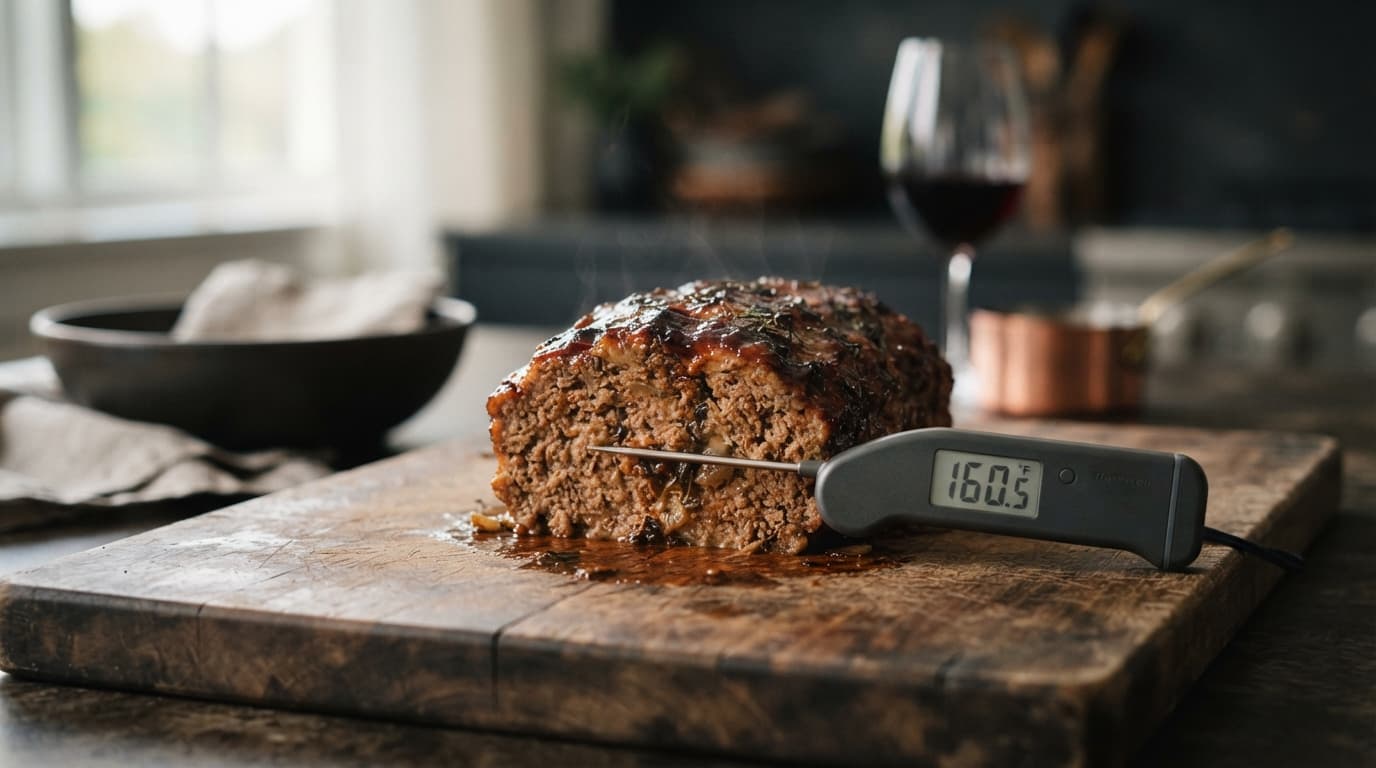
160°F, per USDA guidance for ground meat, beef, pork, veal, or a mix. That's higher than whole-cut beef's 145°F minimum, for a specific reason.
9 min read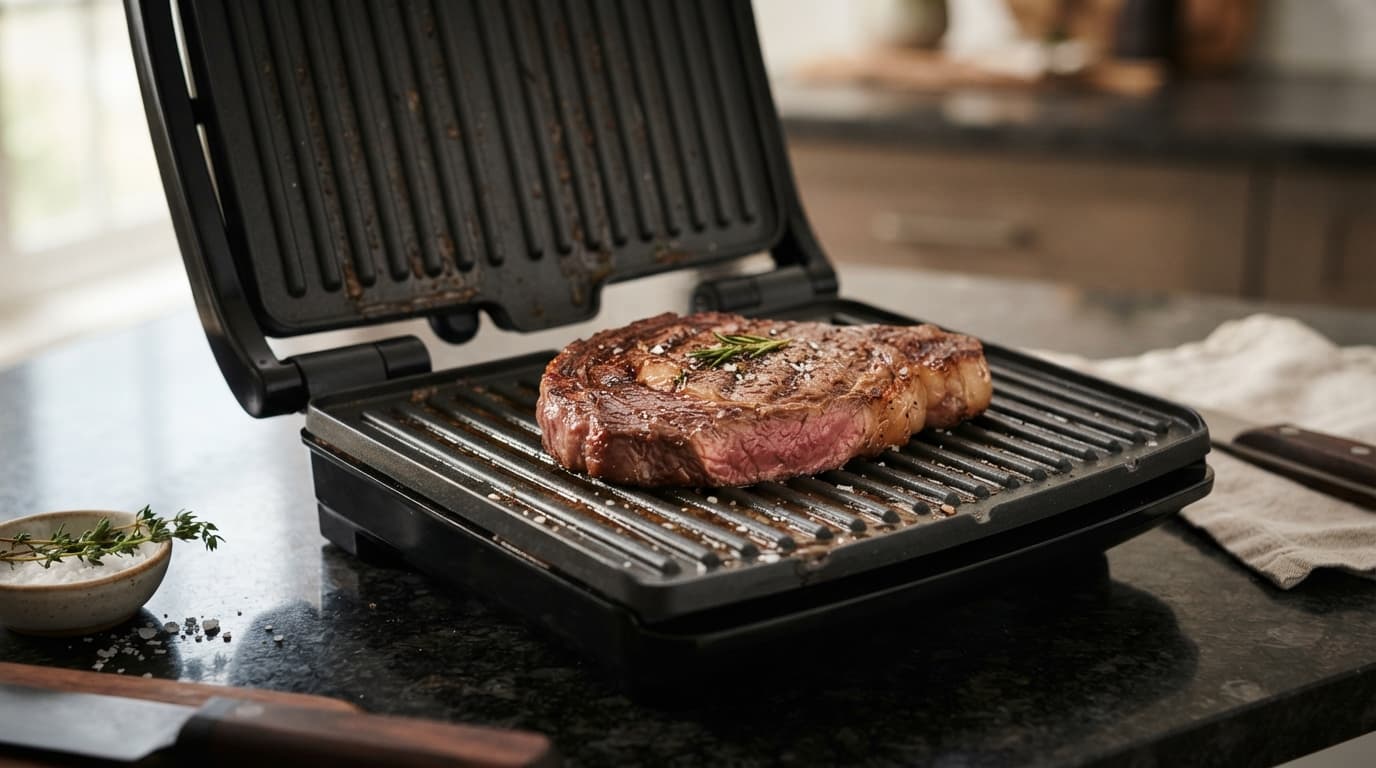
A 1-inch steak takes about 4-7 minutes for medium-rare on a contact grill, since both sides cook at once. Thickness affects time more than the clock does. Confirm 145°F.
10 min read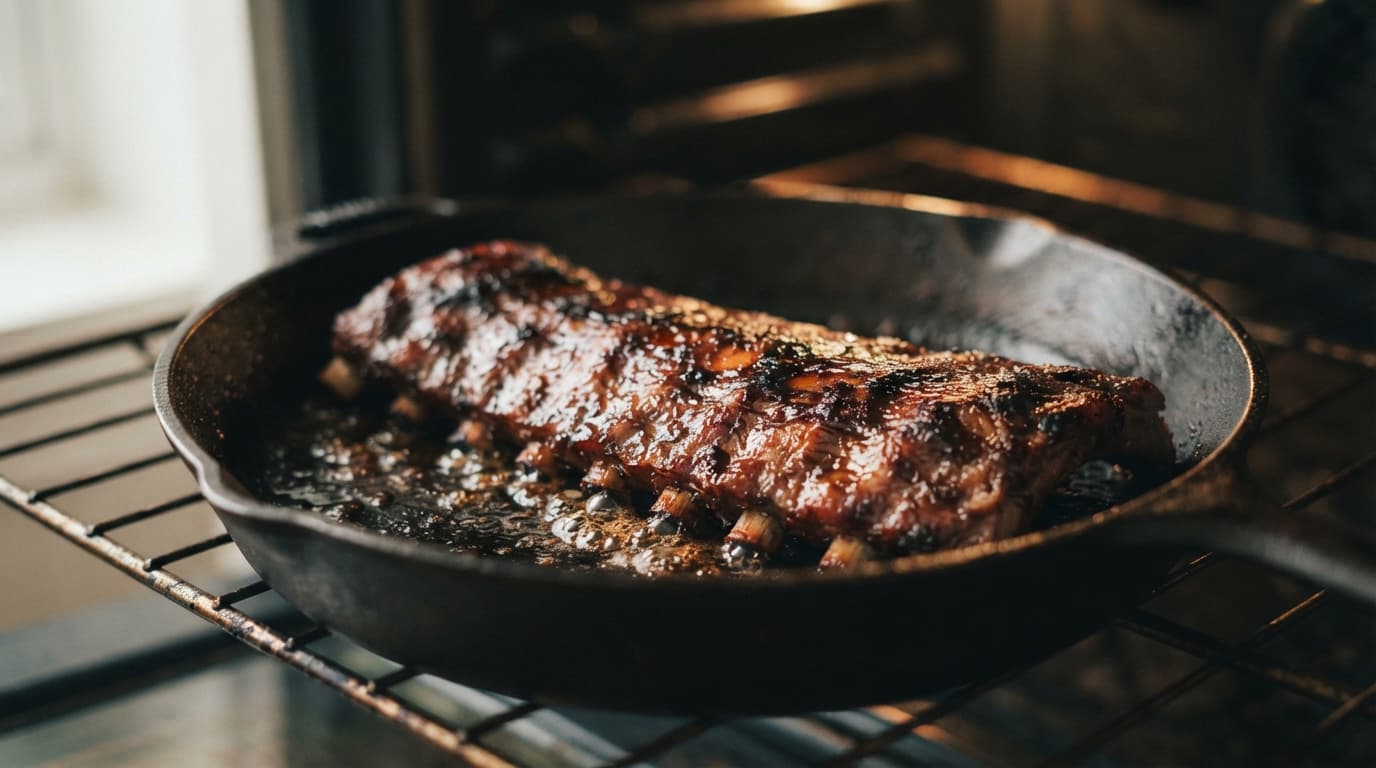
Precooked ribs need reheating to 165°F, not cooking from raw. The practitioner approach is about 250°F for 20 to 30 minutes, foil-wrapped with added moisture.
9 min readTables release two weeks out on Resy, Shukette's own booking platform.
Book Now →