How Long to Bake Ribs at 325°F
Editorial desk · 9 min read · Updated 2026-08-23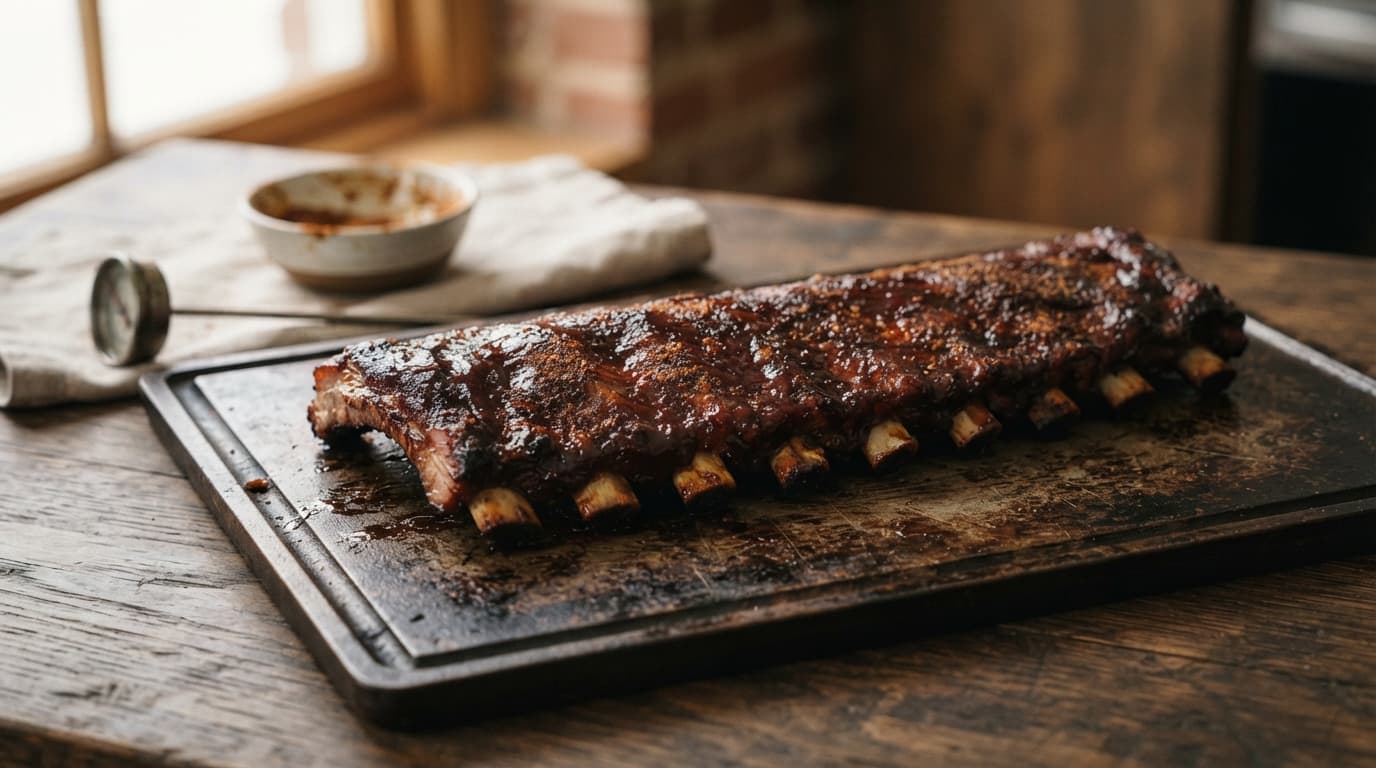
Baby back ribs baked at 325°F, wrapped tightly in foil, typically take 1.5 to 2.5 hours. Spare ribs, a larger and meatier cut from further down the rib cage, need more like 2.5 to 3 hours at the same temperature. Both numbers assume you're chasing the tender, easily-pulled texture ribs are known for, not just the point where they're technically safe to eat.
Those are two different targets, and mixing them up is where most oven-rib disappointment starts. Getting the timing right means understanding both.
| Rib type | Bake time at 325°F (foil-wrapped) | Typical size/meatiness |
|---|---|---|
| Baby back ribs | 1.5 to 2.5 hours | Shorter, curved, leaner cut from higher on the hog near the spine |
| Spare ribs | 2.5 to 3 hours | Longer, flatter, meatier cut with more fat and connective tissue, from lower on the rib cage near the belly |
Baby backs vs. spare ribs: why the times differ
Baby back ribs come from higher on the hog, near the spine, and they're shorter, curved, and leaner than spare ribs. That smaller size is exactly why they cook faster: less total mass means the oven's heat reaches the center sooner and the connective tissue inside has less distance to travel before it breaks down.
Spare ribs come from lower on the rib cage, closer to the belly. They're longer, flatter, and carry noticeably more fat and connective tissue than baby backs, which is what makes them meatier but also what pushes their bake time out to 2.5 to 3 hours. The extra half hour or so isn't arbitrary; it's the time that thicker cut needs to reach the same internal transformation a smaller rack of baby backs gets to more quickly.
If a recipe or package doesn't specify which type you're holding, checking the shape is the fastest way to tell them apart. Baby backs curve more sharply and top out around 3 to 6 inches per rib; spare ribs run flatter and longer, often 6 inches or more, with a rectangular slab shape once the rack is laid flat. This same distinction matters if you're weighing ribs against a thicker cut like brisket, where cut identity, not just weight, drives how long something needs in the oven.
A third, less common option worth knowing about is St. Louis-style spare ribs, which are simply spare ribs trimmed into a more rectangular shape after the sternum bone and cartilage have been removed. They cook on roughly the same 2.5-to-3-hour timeline as untrimmed spare ribs at 325°F, since the trimming changes the shape more than it changes the total mass of meat and connective tissue involved. If a package is labeled St. Louis-style, treat the spare-rib range as the more accurate starting point rather than the shorter baby-back window.
The foil-wrap method, step by step
Foil-wrapping is the dominant approach for baking ribs at home, and for good reason: it traps steam around the meat, which keeps a long, dry-heat cook from drawing out too much moisture before the connective tissue has time to soften. Season the rack, wrap it tightly in two layers of heavy-duty foil so no steam escapes at the seams, and set it on a rimmed baking sheet in case any juice leaks through.
Bake at 325°F for the bulk of the time listed above, then check. This is where the bend test and a thermometer both earn their place, since oven hot spots and rack thickness vary enough that a fixed clock time alone isn't a fully reliable stopping point. A rack that's been in the oven for the low end of its range is worth checking rather than assuming it needs the full window regardless of how it's actually behaving.
Unwrapping for the final 15 to 30 minutes is the step that turns soft, steamed ribs into ribs with real texture on the surface. Pull the foil back, brush on sauce if you're using it, and let the exposed surface firm up under direct oven heat. Skipping this step doesn't ruin the ribs, but it does leave them uniformly soft rather than giving you the slight chew and caramelized edge most people associate with good baked ribs.
Placement inside the oven matters more than it might seem for a method that relies on trapped steam. A middle rack position gives the most even heat on all sides of the foil packet, while a rack positioned too close to the bottom heating element can scorch the underside of the foil before the top ever catches up. Lining the baking sheet with a second layer of foil underneath the wrapped ribs also makes cleanup considerably easier, since a punctured wrap or an overflowing bit of rendered fat is common enough over a two-to-three-hour bake that planning for it upfront saves a genuinely unpleasant oven-cleaning session later.
A dry rub applied before wrapping does more work here than most people expect from something applied hours before the ribs are actually eaten. Salt drawn onto the meat's surface early has time to work its way slightly into the muscle during the long, moist cook inside the foil, seasoning the meat more evenly than a rub applied right before serving ever could. A simple combination of salt, pepper, paprika, garlic powder, and a little brown sugar covers most of what a rack needs, though the exact blend matters far less to the final result than the total bake time and the doneness check that follows it.
The 145°F floor vs. the 190-203°F tenderness target
145°F, held for at least 3 minutes, is the USDA's minimum safe internal temperature for any whole cut of pork, and the same 145°F floor applies to whole cuts of beef, which covers beef ribs too. At that number, ribs are fully safe to eat. They are not, however, tender in the way most people expect from a rack of ribs pulled from the oven.
Barbecue practitioners commonly push ribs well past that safety minimum, generally into a 190 to 203°F range, the same territory brisket and pork butt get cooked into. That higher range isn't an official safety number; it's a texture target, and it's where the collagen holding rib meat to the bone actually breaks down into the soft, easily-separated bite that defines a good rack of ribs. Pulling ribs at 145°F because that's "technically done" produces meat that's safe but noticeably tougher and more resistant to the bone than most people want.
This is a genuinely common point of confusion, since 145°F sounds like a reasonable stopping point if you're used to thinking about food safety as the only number that matters. With ribs, as with brisket and pork butt, safety and tenderness are two separate questions, and the 325°F bake times above are built around reaching that higher tenderness range, not just clearing the safety floor.
Checking doneness: the bend test and probe feel
The bend test is the fastest doneness check that doesn't require a thermometer. Pick the rack up with a pair of tongs from one end and let it hang. Ribs that are ready will bend noticeably, and the surface between the bones often cracks slightly under the bend. A rack that stays rigid and barely flexes needs more time, regardless of what the clock says.
A probe thermometer backs up the visual check with an actual number. Insert it into the thickest part of the meat between two bones, avoiding direct contact with bone itself, since bone conducts heat differently and can throw off the reading. Ribs in the 190 to 203°F range should let the probe slide in with very little resistance, almost the way it would slide into softened butter. If the temperature reads in range but the probe still meets real resistance, giving the rack more time produces a better result than pulling it early on the strength of the number alone.
Using both checks together is more reliable than either alone, especially early on while you're still calibrating what "done" feels like on your own oven and your own cuts. A reliable instant-read thermometer removes most of the guesswork here, since an inaccurate reading can make a rack that's actually ready seem underdone, or the reverse.
A third, less scientific check worth mentioning: the bones themselves often pull back slightly from the meat as ribs approach full doneness, exposing a small amount of bone at the tip that wasn't visible when the rack went into the oven. This isn't as precise as a thermometer reading, and it varies somewhat by cut and individual rack, but it's a useful visual confirmation to look for alongside the bend test once a rack is getting close to its estimated finish time.
Bone-in racks vs. pre-cut individual ribs
Most recipes assume a full, intact rack, but ribs are sometimes sold or prepped already cut into individual bones, especially for smaller air-fryer-style portions or quick weeknight cooking. Cutting a rack down before baking changes the math: individual ribs have far more exposed surface area relative to their mass than a whole rack does, so they cook faster and dry out more easily under the same 325°F heat.
If you're working with pre-cut ribs rather than a whole rack, checking meaningfully earlier than the full range above, and watching moisture more closely inside the foil, avoids overshooting past the tender range into dry, stringy meat. A whole rack's outer bones and connective structure help protect the interior somewhat as it cooks; individual ribs don't have that same buffer, so the margin between tender and overdone narrows considerably.
The reverse situation, ribs that come already fully cooked from a store or from a previous meal, is a different question entirely from baking raw ribs to tenderness. Reheating precooked ribs targets a completely different number, since the goal there is restoring warmth and moisture to meat that's already fully cooked, not developing tenderness from raw.
Membrane removal is worth mentioning here too, since it affects both bone-in racks and pre-cut pieces the same way. A thin, tough membrane runs along the back side of most rib racks, and left in place, it can prevent seasoning from penetrating and leave the underside noticeably chewier than the rest of the rack, regardless of how accurately the internal temperature is checked. Sliding a butter knife under one end of the membrane, then gripping it with a paper towel for traction and pulling it off in one motion, is a five-minute step before baking that measurably improves the finished texture on either format.
Getting the timing right for your specific rack
The ranges above, 1.5 to 2.5 hours for baby backs and 2.5 to 3 hours for spare ribs, both at 325°F and foil-wrapped, are starting points rather than fixed rules. A particularly large or thick rack of either type will run toward the top of its range or slightly past it, while a smaller rack might finish early. Checking with the bend test and a thermometer starting around the low end of the range, rather than waiting until the clock hits the maximum, is the habit that consistently produces ribs cooked to actual doneness rather than to a guessed number.
Oven calibration is worth a mention too, since a home oven's actual internal temperature can run 15 to 25 degrees off from what the dial or display claims, even in a well-maintained kitchen. An inexpensive oven thermometer left inside during the bake catches this kind of drift, and it explains a fair number of cases where a rack finishes noticeably earlier or later than the ranges here would predict despite every other step being followed closely.
Once you've baked a few racks this way, reading a rack's shape and thickness before it even goes in the oven starts to tell you roughly where in its range to expect it to land, which makes the whole process faster to plan around the next time ribs are on the menu.
Frequently asked questions
How long do baby back ribs take at 325°F?+−
Roughly 1.5 to 2.5 hours, wrapped tightly in foil, is the commonly cited range for baby back ribs at 325°F. Exact time depends on the rack's size and how tender you want the final result.
How long do spare ribs take at 325°F?+−
Around 2.5 to 3 hours, foil-wrapped, at the same 325°F. Spare ribs are a larger, meatier cut than baby backs, which is why they need the extra time to reach the same tender texture.
Is 145°F enough to consider ribs done?+−
145°F with a 3-minute rest is the USDA's minimum safe temperature for any whole cut of pork or beef, including ribs. That number only covers safety, though; ribs cooked to fall-off-the-bone tenderness are typically taken much further, generally into a 190 to 203°F range.
Should I unwrap ribs before they finish baking?+−
Yes, for the last 15 to 30 minutes. Baking them foil-wrapped the whole time keeps them moist but leaves the surface soft; unwrapping near the end lets the bark or sauce firm up under direct oven heat.
How can I tell ribs are actually done without cutting into them?+−
Use the bend test: pick the rack up with tongs at one end and watch it flex. Meat that's ready cracks slightly at the surface and bends easily; meat that's still tough barely moves. A probe thermometer sliding in with little resistance backs up the same read.
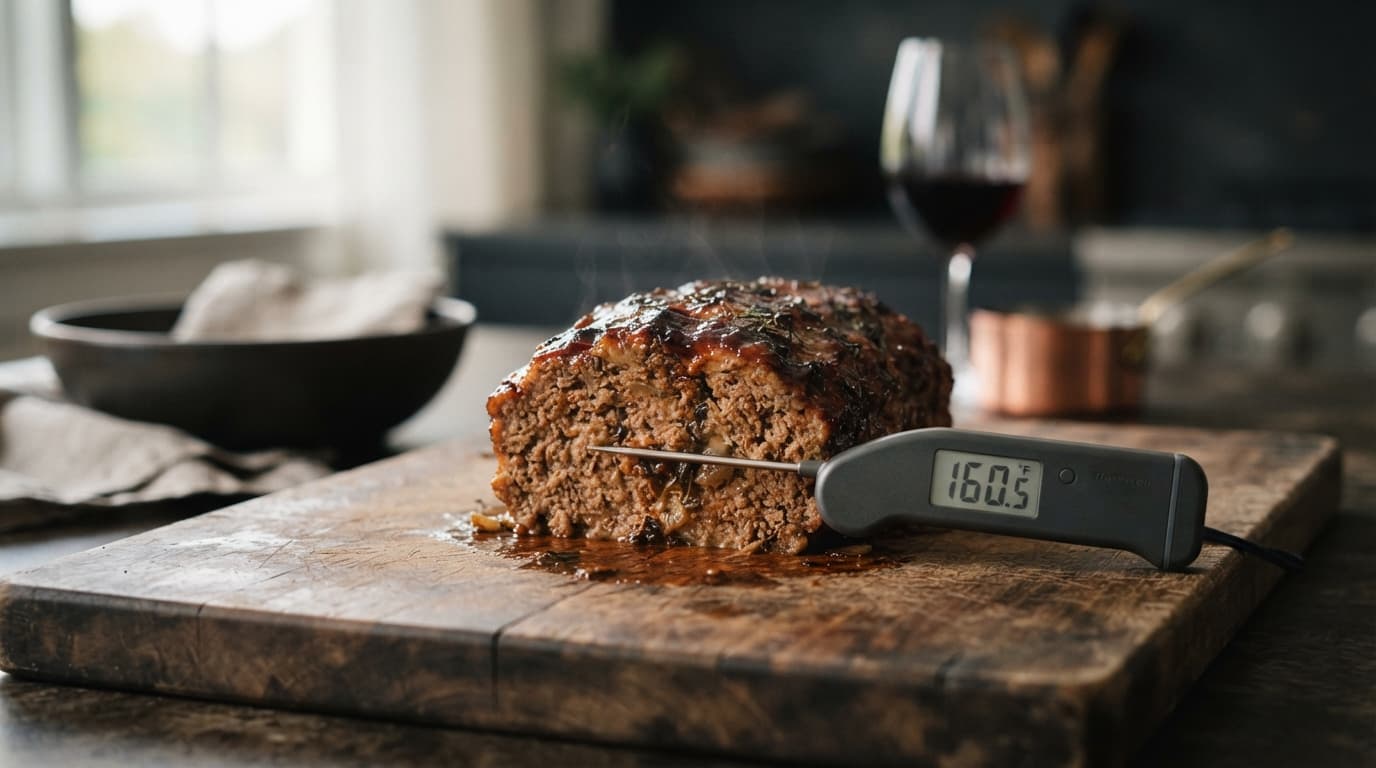
160°F, per USDA guidance for ground meat, beef, pork, veal, or a mix. That's higher than whole-cut beef's 145°F minimum, for a specific reason.
9 min read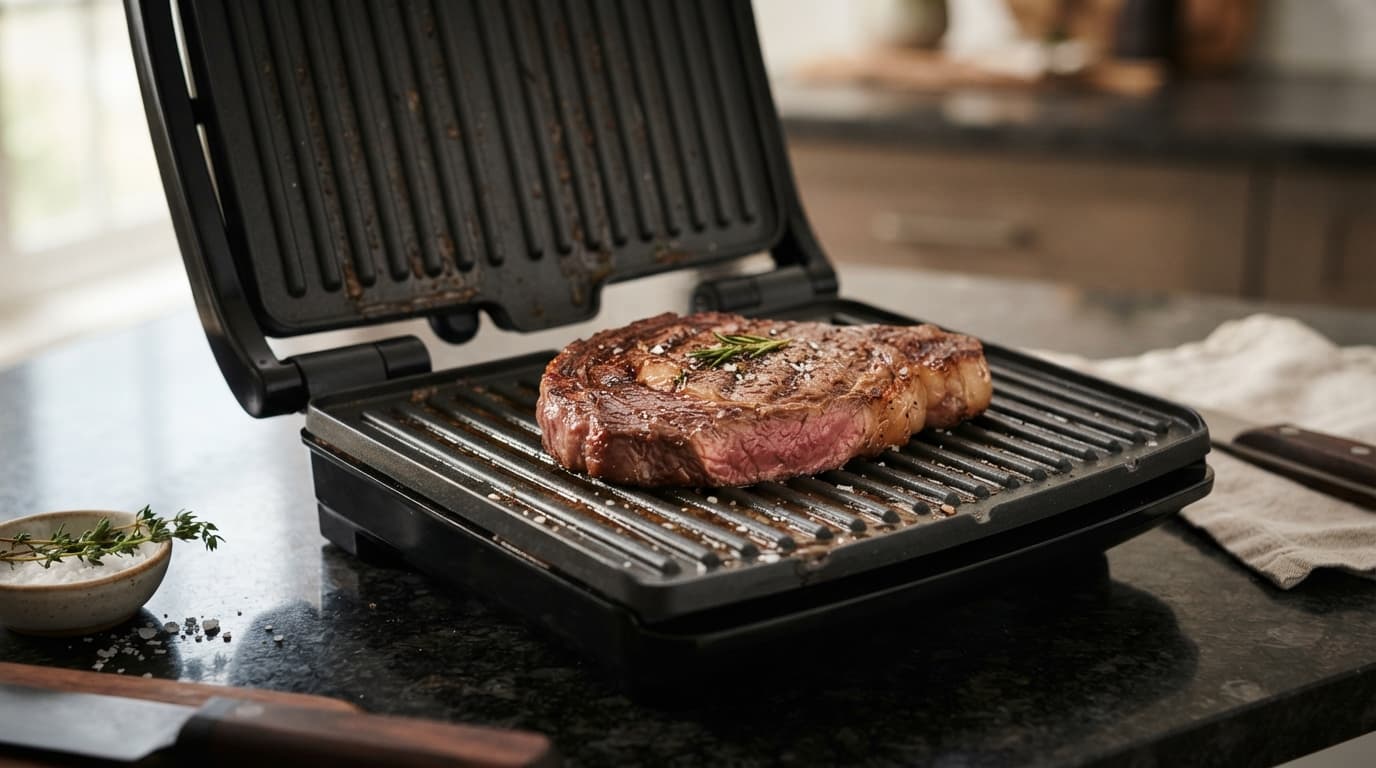
A 1-inch steak takes about 4-7 minutes for medium-rare on a contact grill, since both sides cook at once. Thickness affects time more than the clock does. Confirm 145°F.
10 min read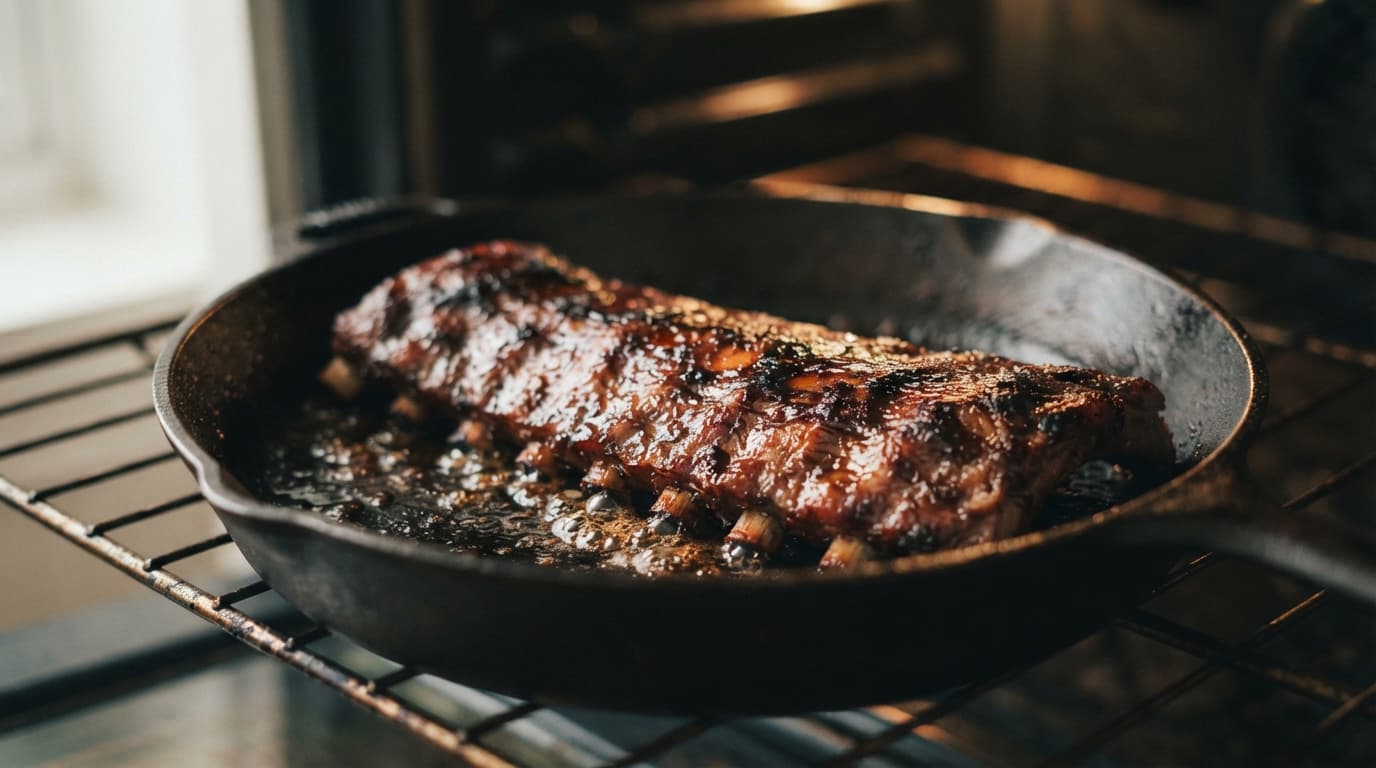
Precooked ribs need reheating to 165°F, not cooking from raw. The practitioner approach is about 250°F for 20 to 30 minutes, foil-wrapped with added moisture.
9 min readTables release two weeks out on Resy, Shukette's own booking platform.
Book Now →