How to Reheat French Fries
Editorial desk · 9 min read · Updated 2026-08-23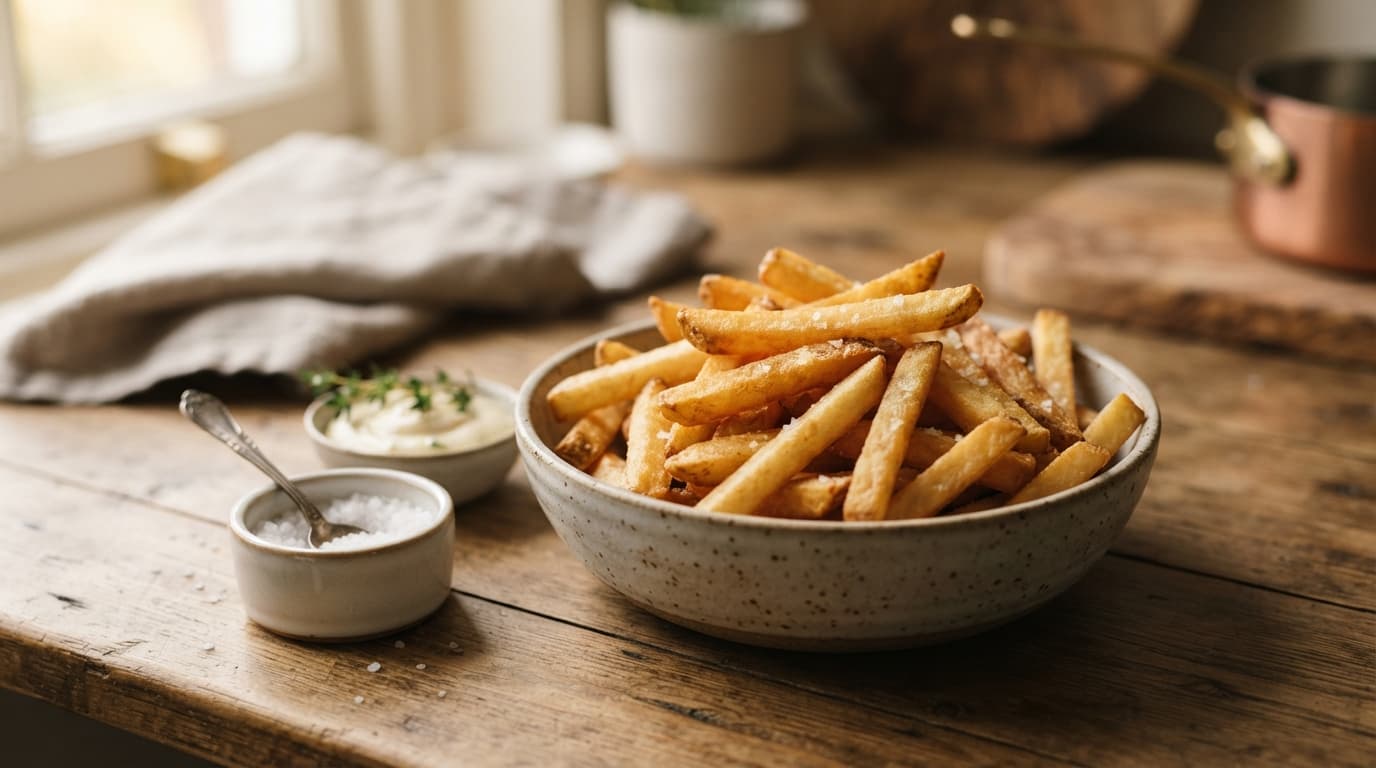
An air fryer at 350-400°F for 3 to 5 minutes is the best way to reheat french fries, shaking the basket halfway through so they crisp evenly. The oven is a strong second option at 375-400°F for 5 to 10 minutes, as long as the fries aren't crowded. Skip the microwave if you care about texture at all — it turns fries soggy almost every time.
This is really a texture question more than a food-safety one. Fries are already fully cooked the first time around, so reheating them isn't about reaching some critical safety threshold the way reheating a meat dish is. It's about getting that crisp exterior back after a stint in the refrigerator softened it, which is exactly why the method you choose matters so much more here than it would for, say, reheating a bowl of soup.
| Temperature | Time | Result | |
|---|---|---|---|
| Air fryer | 350-400°F | 3-5 min | Best, most even crisp |
| Oven | 375-400°F | 5-10 min | Nearly as good, single layer needed |
| Skillet | Medium heat, thin layer of oil | Varies, hands-on | Solid, more attention needed |
| Microwave | N/A | N/A | Soggy, trapped steam softens crust |
Why the microwave ruins fries
A microwave heats food by exciting water molecules inside whatever you're cooking, which generates heat directly inside the food rather than applying heat from the outside in. That process works fine for a lot of leftovers, but it's specifically bad for anything that depends on a crisp, dry exterior, because the moisture being driven out of the food as it heats turns to steam, and in an enclosed microwave that steam has nowhere to escape.
That trapped steam surrounds the fry as it heats and softens the very crust that made it crisp in the first place. You end up with fries that are hot, sometimes even hot all the way through, but limp and slightly damp on the outside instead of crackly. This isn't a matter of microwave power or timing you could dial in better; it's a structural mismatch between how microwaves heat food and what fries actually need to stay crisp.
If a microwave is truly your only option, shorter intervals at lower power reduce the sogginess somewhat compared to one long blast, and patting the fries dry with a paper towel right after can help pull off some of that surface moisture. Neither trick gets you close to what an air fryer or oven produces, though, so treat the microwave as a last resort for fries specifically, even if it's your default for other leftovers.
Thicker-cut fries and wedges hold up slightly better in a microwave than thin shoestring fries do, simply because they have more interior mass relative to their surface area, which means a smaller share of the total fry is exposed to that trapped steam. It's still not a good method for either cut, but if a microwave really is the only appliance available, reaching for the thickest fries in the container gives you a marginally better result than thin ones.
The air fryer: the best method for a reason
An air fryer works by circulating hot air rapidly around the food, which is close to a miniature convection oven in a much smaller, more concentrated space. That circulating air does two things well at once for leftover fries: it drives off the surface moisture that built up in the refrigerator, and it does so fast enough that the fry's interior doesn't have time to overcook while the exterior re-crisps.
Set the air fryer to 350-400°F and reheat for 3 to 5 minutes, shaking the basket around the halfway mark so fries on the bottom or edges get the same air exposure as the ones on top. Thicker-cut fries, like steak fries or wedges, tend to want the longer end of that time range, while thin shoestring fries are often done closer to 3 minutes and can go from perfectly crisp to overly dark quickly if you walk away.
Don't overload the basket. An air fryer's whole advantage comes from hot air reaching every surface of every fry, and piling them too deep blocks that airflow in the middle of the pile, recreating a smaller version of the same steaming problem a microwave causes. If you're reheating a large batch, running two shorter rounds in a half-full basket beats one longer round jammed full.
A light spray or toss of oil before reheating isn't strictly necessary, but it can help thin, already-dry fries pick up a bit more color and crispness in the short window an air fryer gives them. Skip this step for fries that were heavily seasoned or coated the first time around, since extra oil on top of an already well-coated fry can make them greasy rather than crisp.
The oven: a strong second option
If you don't own an air fryer, a regular oven does nearly as good a job with the right setup. Preheat to 375-400°F and spread the fries out on a baking sheet in a single layer, with space between them rather than piled together. Heat for roughly 5 to 10 minutes, checking around the 5-minute mark since oven wattage and fry thickness both shift the actual time needed.
That single-layer instruction matters more than people expect. Crowding fries together on a baking sheet traps moisture between them in exactly the same way an overloaded microwave or air fryer basket does, just at oven scale. Two fries touching each other on a sheet pan create a small pocket where steam collects instead of escaping upward into the oven's dry heat, and that pocket softens both fries right at the point where they're touching.
A wire rack set inside the baking sheet improves results further, since it lets hot air circulate underneath the fries as well as above and around them, rather than trapping a thin layer of steam against the pan's surface the way a flat sheet can. This is the same airflow principle the air fryer relies on, just achieved with a simple rack instead of a dedicated appliance. If you're already using a good oven thermometer or probe to check other reheated food, the same tool works fine here, though you're mainly watching for color and crispness rather than chasing a specific number.
The skillet: a solid third option
Reheating fries in a skillet on the stovetop doesn't get talked about as often as the air fryer or oven, but it's a genuinely workable third choice, especially for a smaller portion. Heat a thin layer of oil in a skillet over medium heat, add the fries in a single layer, and turn them occasionally as they heat, giving each side a chance to touch the hot pan directly and crisp up.
This method takes more hands-on attention than either the oven or air fryer, since you're standing at the stove turning fries rather than setting a timer and walking away, and it's easier to end up with some fries more done than others if you're not turning them regularly. For a small leftover portion, though, a skillet heats up faster than an oven and gives you more direct control over browning than a microwave ever could.
A little extra oil in the skillet, beyond what's strictly needed to prevent sticking, can actually help here, since it conducts heat to the fry's surface more evenly than a dry pan would and mimics some of what the original deep-fry did in the first place. Just don't use so much that the fries end up sitting in oil rather than making brief, hot contact with the pan.
Cast iron holds and distributes heat more evenly than a thin nonstick pan, which makes a real difference for this method specifically, since even, consistent contact with a hot surface is most of what's driving the fry's crust back to life. A well-seasoned cast iron skillet also tolerates the higher heat this method benefits from better than most nonstick coatings do over a long stretch on the stove.
The safety baseline, briefly
Because fries are already fully cooked before you ever refrigerate the leftovers, reheating them doesn't carry the same weight a raw-to-cooked safety threshold does with something like reheating a cut of steak or a piece of leftover meatloaf. There's no equivalent to checking that ground meat has reached a specific internal temperature the way there is with a protein that could carry harmful bacteria if undercooked the first time around.
That said, the general USDA guidance for reheating leftovers, 165°F, still exists as a baseline for any previously cooked food sitting in the refrigerator, fries included. In practice, getting fries properly hot and crisp with any of the methods above will comfortably clear that number well before the texture goal is even met, so it's rarely the limiting factor. The real thing you're chasing with fries specifically is crispness, not a thermometer reading.
Storage affects how well fries reheat
How you stored the fries in the first place has more influence on the reheated result than people usually credit. Fries piled into a sealed container while still warm trap steam inside as they cool, which pre-softens them before they even hit the refrigerator, meaning you're fighting an uphill battle no matter which reheating method you choose afterward.
Letting fries cool to room temperature before sealing them up, and storing them in a single layer or loosely packed rather than piled deep in a small container, gives you a meaningfully better starting point. This is the same shallow-storage logic that applies to cooling other food properly before refrigerating it — a thinner, more spread-out layer cools faster and traps less of its own moisture against itself in the process.
Fries kept in the refrigerator for more than a couple of days will also reheat less crisply than ones reheated the next day, regardless of method, simply because more moisture has had time to migrate through them the longer they sit. If you know in advance you won't get to leftover fries quickly, it's reasonable to expect the air fryer or oven method to bring them back most of the way, even if a day-old fry rarely reheats to a result that's fully indistinguishable from fresh out of the fryer.
Freezing is worth considering if you know a batch of fries won't get eaten within a few days. Spread them out on a tray to freeze individually before transferring them to a bag or container, rather than freezing them already clumped together, so you can pull out and reheat just the portion you need later rather than thawing the whole batch at once. Frozen fries generally need a few extra minutes in the air fryer or oven compared to refrigerated ones, but the same single-layer, no-crowding principle still applies.
Matching the method to what you have on hand
If you own an air fryer, use it for fries specifically, even if you default to the microwave for most other leftovers, since the time cost is small and the texture difference is large. Without one, the oven with a single layer and enough space between fries gets you most of the way there for only a few extra minutes compared to a microwave. And if it's just a handful of fries and a skillet's already out from cooking something else, that stovetop method closes the gap almost as well, provided you're willing to stand there and turn them.
Fries reheated alongside a main dish are also a good moment to think about total oven or stovetop timing rather than treating each item as its own separate task. If you're already reheating a burrito or another dense leftover in the oven, running fries on a second rack or a nearby burner at the same time saves a step, as long as you're still checking each food's own texture and doneness on its own terms rather than assuming one timer covers both.
Frequently asked questions
What's the best way to reheat french fries?+−
An air fryer at 350-400°F for 3 to 5 minutes, shaking the basket halfway through. The circulating hot air re-crisps the outside better than any other common method, since fries are already fully cooked and just need their crust restored.
Why do fries get soggy in the microwave?+−
A microwave heats food by exciting moisture inside it, and in an enclosed space that moisture escapes as steam with nowhere to go. That trapped steam softens the fry's crisp exterior instead of letting it stay dry and crunchy.
Can I reheat french fries in the oven instead of an air fryer?+−
Yes, and it works well. Spread the fries in a single layer on a baking sheet, without crowding them, and heat at 375-400°F for about 5 to 10 minutes. Crowding causes the same steaming problem as a microwave, just on a smaller scale.
What temperature do reheated fries need to reach for safety?+−
French fries are already fully cooked, so reheating them is mainly about texture rather than food safety. The general USDA reheating guidance of 165°F still applies as a baseline, but getting fries hot and crisp matters more here than hitting an exact number.
Can you reheat fries in a skillet on the stovetop?+−
Yes, it's a solid third option. A little oil in a hot skillet, fries spread in a single layer and turned occasionally, can re-crisp them almost as well as an air fryer, though it takes more hands-on attention.
No single person did. Melted cheese on bread is centuries old, but the sandwich took shape in the 1920s and '30s once sliced bread and cheap cheese arrived.
9 min read
Roughly 185 to 205°F, well below a full boil at 212°F. Here's how to spot it by bubble pattern alone, since most stovetop cooking never touches a thermometer.
9 min read
The oven gives the most even result: 350°F for 15-20 minutes in foil. Microwave is faster with a damp paper towel; air fryer needs a foil-then-unwrap approach.
9 min readTables release two weeks out on Resy, Shukette's own booking platform.
Book Now →