How Long Does It Take to Boil Potatoes?
Editorial desk · 9 min read · Updated 2026-08-23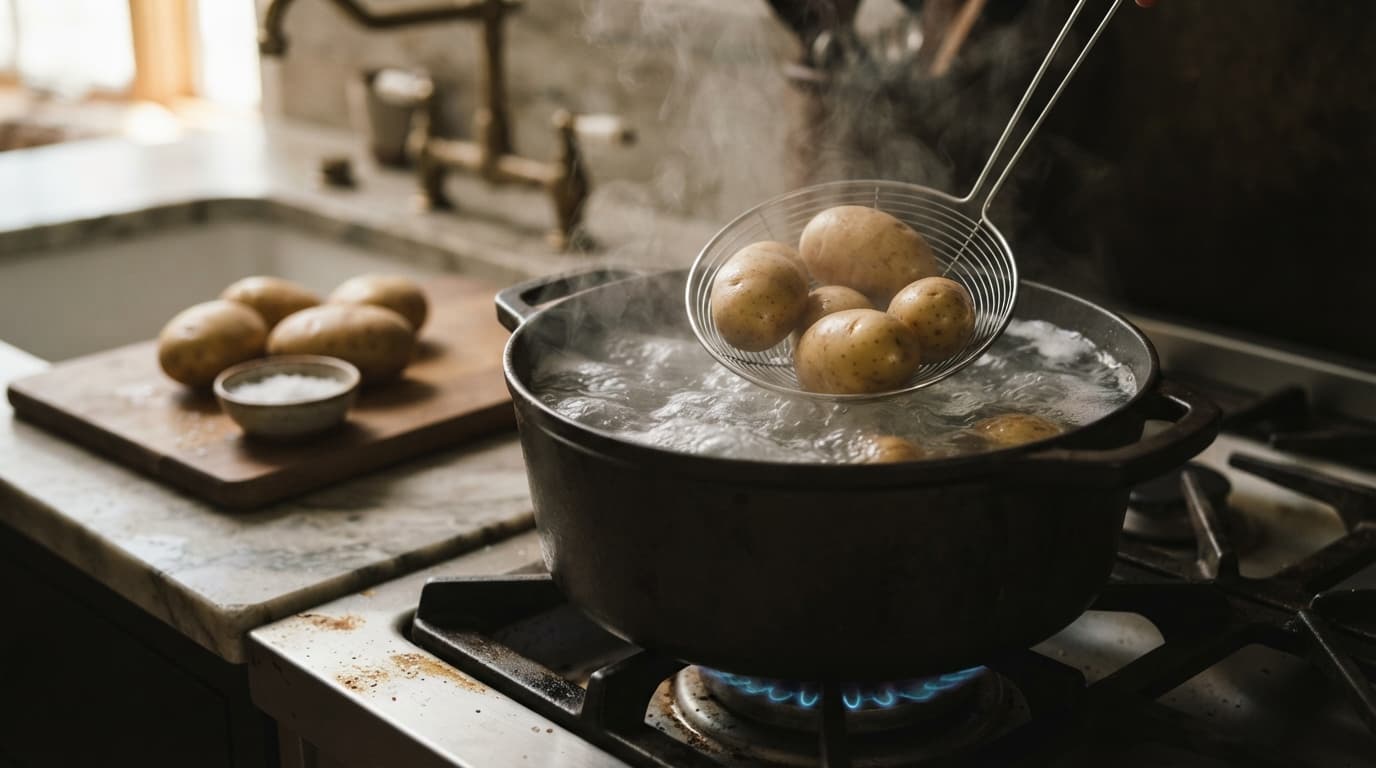
Whole small potatoes take about 15 to 20 minutes to boil, whole large russets take 25 to 30 minutes, and cubed or diced potatoes of any type generally take 10 to 15 minutes. This is a question about texture and timing, not food safety. There's no USDA or FDA minimum internal temperature that applies to boiling a vegetable, unlike cooking meat, poultry, or fish, so the real goal is simply getting the potato fork-tender all the way through.
That distinction is worth making explicit up front, because it changes what you're actually checking for. You're not confirming a safety threshold with a thermometer here; you're judging doneness by feel, and the times above are a practical starting point rather than a rule to hit exactly.
Why this is a texture question, not a safety one
Meat, poultry, and fish carry real food-safety minimums because undercooking them can leave harmful bacteria or parasites alive. Potatoes don't carry that same category of risk once they're clean and free of green, sprouted, or spoiled sections. Boiling a potato is entirely about breaking down its starch structure until it reaches a soft, tender texture throughout, not about crossing a specific internal temperature that determines whether it's safe to eat.
This means there's more flexibility in exactly how long you boil potatoes than there is with, say, checking a chicken thigh against its actual safety minimum. A potato boiled a couple minutes past ideal doneness isn't unsafe, it's just softer or slightly mushier than you might have wanted. A potato pulled a couple minutes early isn't unsafe either, it's just underdone in the center. Both are texture outcomes, not safety failures, which is exactly why the times below are a genuinely useful guide rather than a number you need to hit precisely.
Times by size and cut
Whole small potatoes — red potatoes, gold potatoes, and new potatoes left whole — take about 15 to 20 minutes at a steady boil. Their smaller size means less distance for heat to travel to the center, so they cook through relatively quickly even without cutting them down first.
Whole large russets take considerably longer, typically 25 to 30 minutes, since a russet's larger size and denser starch structure both mean more time is needed for heat to reach and soften the very center. If you're boiling a mix of small and large potatoes together in the same pot, expect the large ones to finish later, which is one good reason to keep potato sizes reasonably consistent within a single batch.
Cubed or diced potatoes, regardless of variety, generally take 10 to 15 minutes, with cut russets specifically often landing closer to 10 to 12 minutes. Cutting a potato down before boiling shortens the distance heat has to travel through the flesh, which is the main reason cubed potatoes cook meaningfully faster than the same potato left whole.
| Potato type and cut | Approximate boil time |
|---|---|
| Whole small (red, gold, new) | 15–20 minutes |
| Whole large russet | 25–30 minutes |
| Cubed or diced (any type) | 10–15 minutes |
| Cubed russet specifically | 10–12 minutes |
These figures assume a steady, rolling boil maintained the whole time, not a pot that keeps dropping back to a simmer because the burner's turned too low or the pot's overcrowded. Overcrowding a pot with too many potatoes for the amount of water can drop the boil to a weaker simmer the moment they go in, which stretches every time in the table above longer than expected, so it's worth using a pot roomy enough that the water keeps actively bubbling once the potatoes are added.
Potato variety affects timing too, separate from just size and cut. Waxy varieties like red or new potatoes hold their shape well and tend to cook slightly faster than starchy varieties like russets of a similar size, since starchy potatoes have a denser internal structure that takes longer for heat to fully soften. This is part of why the table separates russets out specifically rather than treating "whole potato" as a single category regardless of type.
Water boils at a lower temperature the higher you go in elevation, which means potatoes genuinely take longer to cook at high altitude than the times above suggest, even though the water still looks like it's boiling just as vigorously. At significant elevation, a few thousand feet and up, it's worth adding extra time and leaning more heavily on the fork test than the stated minutes, since the same visual "rolling boil" doesn't correspond to the same actual water temperature it would at sea level.
The size and material of your pot plays a smaller but real role as well. A wide, heavy-bottomed pot distributes heat more evenly than a thin, narrow one, which can mean more consistent cooking across all the potatoes in the batch rather than the ones near the edges finishing at a different rate than the ones in the center. This matters more with a large batch of whole potatoes than with a smaller amount of cubed pieces, since cubed pieces are already more uniform and forgiving.
Freshly dug potatoes, more common right after a fall harvest, tend to cook a little faster than potatoes that have been in storage for months, since stored potatoes lose some moisture over time and their starch structure firms up slightly. This isn't something you can control when buying from a regular grocery store, but it's worth keeping in mind if a normally reliable time estimate suddenly seems to be running short with a specific batch.
The fork test is more reliable than the clock
Because pot size, stove output, potato variety, and even altitude can all shift actual cooking time, the times above are a starting point, not a guarantee. The more reliable way to confirm doneness is a fork or a thin knife slid into the thickest part of the potato. If it goes in with no resistance and slides out cleanly, the potato is done. If you feel any firmness or resistance partway through, it needs more time.
Check a couple of different potatoes if you're boiling a full pot, rather than assuming one test represents the whole batch, since even potatoes that look similarly sized can vary a little in actual density. This is a quick, low-effort check worth doing a couple minutes before your estimated time is up, rather than only checking once the timer goes off and discovering the potatoes need several more minutes than planned.
Why starting in cold water works better than adding to boiling water
Potatoes cook more evenly when they start in cold water that's brought up to a boil together, rather than being dropped into water that's already boiling. This might seem backward, since boiling water sounds like it should cook things faster from the start, but the actual result works out differently, similar to how starting a piece of meat from a cold, even temperature rather than straight from the fridge changes how evenly it cooks through.
When a potato goes into already-boiling water, the outside starts cooking immediately while the heat is still working its way toward the center. By the time the center finally reaches doneness, the outer layer has often been cooking considerably longer, which can leave the exterior slightly overcooked or falling apart while you're waiting for the middle to catch up.
Starting in cold water and heating the pot gradually lets the temperature rise more uniformly through the whole potato, since the outside and the interior are heating up together rather than the outside racing ahead. The practical result is a potato that's evenly tender all the way through rather than mushy on the outside and firm in the center. This matters more for larger, whole potatoes like a whole russet than it does for small cubed pieces, where the distance heat has to travel is short enough that the difference is less noticeable either way.
Salting the water, and why it's worth doing
Salting the boiling water isn't just a seasoning step tacked onto the process; it's one of the few real opportunities to season a potato from the inside as it cooks, rather than relying entirely on salt added afterward at the surface. A generously salted pot of water, similar to how pasta water is often salted, lets the potato absorb some seasoning as it cooks, which produces a more evenly flavored result than salting only after boiling and draining.
This matters more for boiled potatoes than for some other cooking methods, since boiling doesn't create the browned, concentrated surface flavor that roasting or grilling does, unlike a dish that gets its flavor from direct contact with a hot grill. Salting the cooking water is one of the more effective ways to compensate for that, especially if the potatoes are headed toward a simple preparation like mashing, where there's no additional browning step later to add flavor.
Adjusting for what you're making next
How you plan to use the boiled potatoes afterward can shift which end of a given time range you should aim for. Potatoes headed for mashing benefit from being fully, thoroughly tender, even slightly past the earliest point they'd pass the fork test, since a firmer texture is harder to mash smooth. Potatoes going into a potato salad often do better pulled right at the earliest point they pass the fork test, since they'll continue softening slightly as they cool and you generally want them to hold their shape rather than fall apart when tossed with dressing.
If you're boiling potatoes as a component of a larger meal, alongside a roast or a grilled protein, timing the pot so the potatoes finish close to when everything else is ready avoids either rushing the potatoes past done or letting them sit and cool while the rest of the meal catches up. A properly timed pot of boiled potatoes fits into a shared table the same practical way a well-planned round of shareable plates does, with each component landing on the table close to when the others are ready, rather than one dish sitting and cooling while everything else finishes. Pairing boiled potatoes with a piece of baked fish works especially well for this kind of timed plate, since both finish in a comparable window and neither benefits from sitting around waiting on the other.
Storing and reheating boiled potatoes
Boiled potatoes, drained and cooled, keep in the refrigerator for about 3 to 5 days in a sealed container, similar to most other cooked vegetable sides. Cooling them fully before sealing the container helps avoid trapping steam that can make them slightly waterlogged by the time you reheat them, which matters more for boiled potatoes than for a drier side dish since they've already absorbed water during cooking.
Reheating leftover boiled potatoes works well in a hot pan with a little oil or butter, which also gives them a chance to pick up some browning and crisp edges they didn't get the first time around in the pot. A microwave works fine too if texture matters less than speed, though the potatoes will come out softer and won't develop any of that browning.
If you cooked more potatoes than you'll use within that window, mashing and freezing the extras is a reasonable option, though plain boiled potato cubes or wedges don't freeze and reheat quite as well on their own, since the texture tends to turn a bit grainy after thawing. This is one more reason it's worth boiling closer to the amount you'll actually eat within a few days rather than treating a big pot of potatoes the way you might treat a larger cut of meat meant to be portioned and frozen for later.
Once you know the rough time range for the size and cut you're working with, and you're checking doneness with a fork rather than relying on the clock alone, boiling potatoes stops being a guessing game and turns into one of the more forgiving, low-stress parts of getting a meal on the table.
Frequently asked questions
How long does it take to boil whole potatoes?+−
Whole small potatoes like red, gold, or new potatoes take about 15 to 20 minutes. Whole large russets take longer, typically 25 to 30 minutes, since more of the potato's mass sits farther from the boiling water at the surface.
How long does it take to boil cubed or diced potatoes?+−
Cubed or diced potatoes of any type generally take 10 to 15 minutes, with cut russets often finishing closer to 10 to 12 minutes. Smaller, more uniform pieces cook faster and more evenly than whole potatoes do.
Should I start potatoes in cold water or add them to already-boiling water?+−
Start them in cold water, then bring the pot up to a boil together. This lets the potato's exterior and interior heat at closer to the same rate, producing more even cooking than dropping potatoes into water that's already boiling.
How do I know when boiled potatoes are actually done?+−
A fork or thin knife should slide into the center of the potato easily, with no resistance. This works better than relying on time alone, since pot size, potato variety, and altitude can all shift the actual cooking time.
Is boiling potatoes a food-safety concern the way cooking meat is?+−
No. Boiling potatoes is a texture and doneness question, not a food-safety one. There's no USDA or FDA minimum internal temperature for a boiled vegetable the way there is for meat, poultry, or fish; the goal is simply a fork-tender texture.
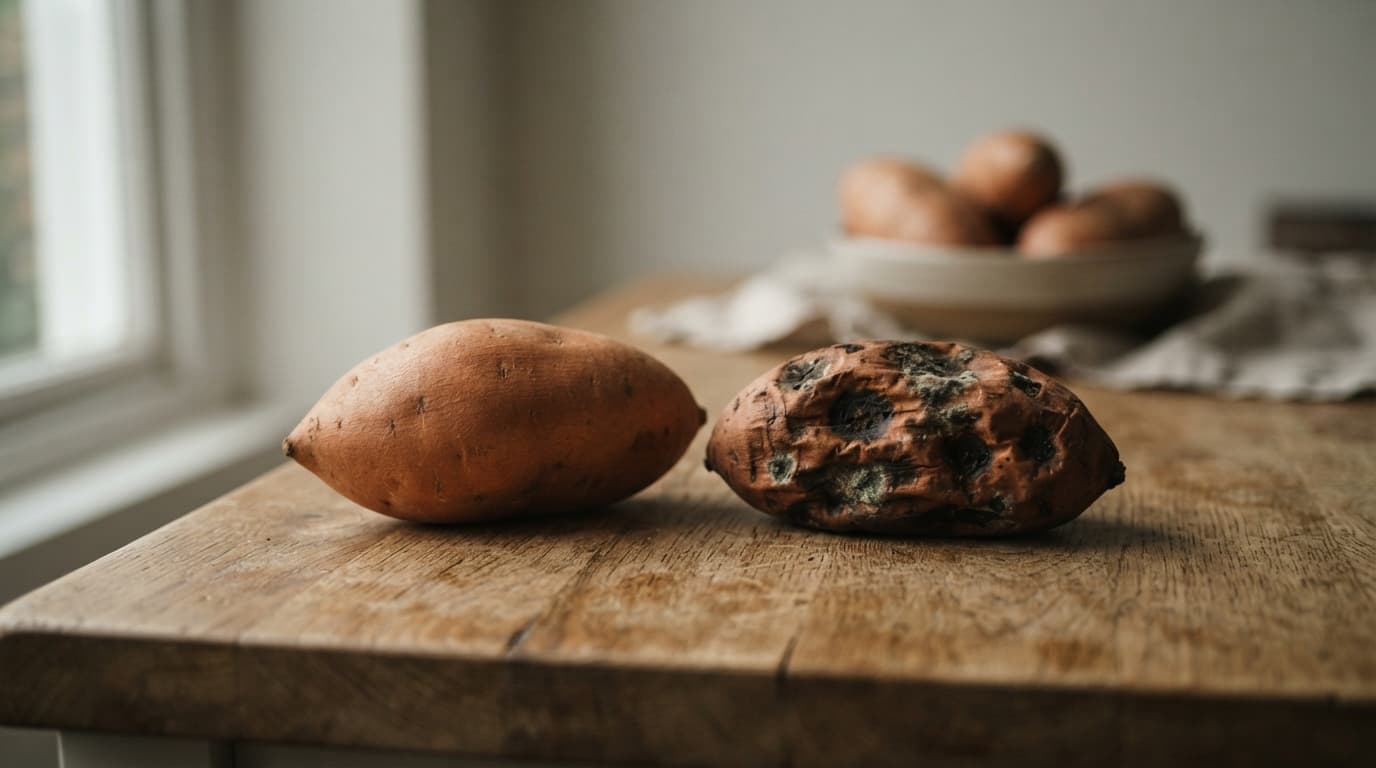
A bad sweet potato has soft spots, mold, dark spots, wrinkled skin, or a sour smell. Sprouted sweet potatoes stay safe if otherwise firm, unlike white potatoes.
10 min read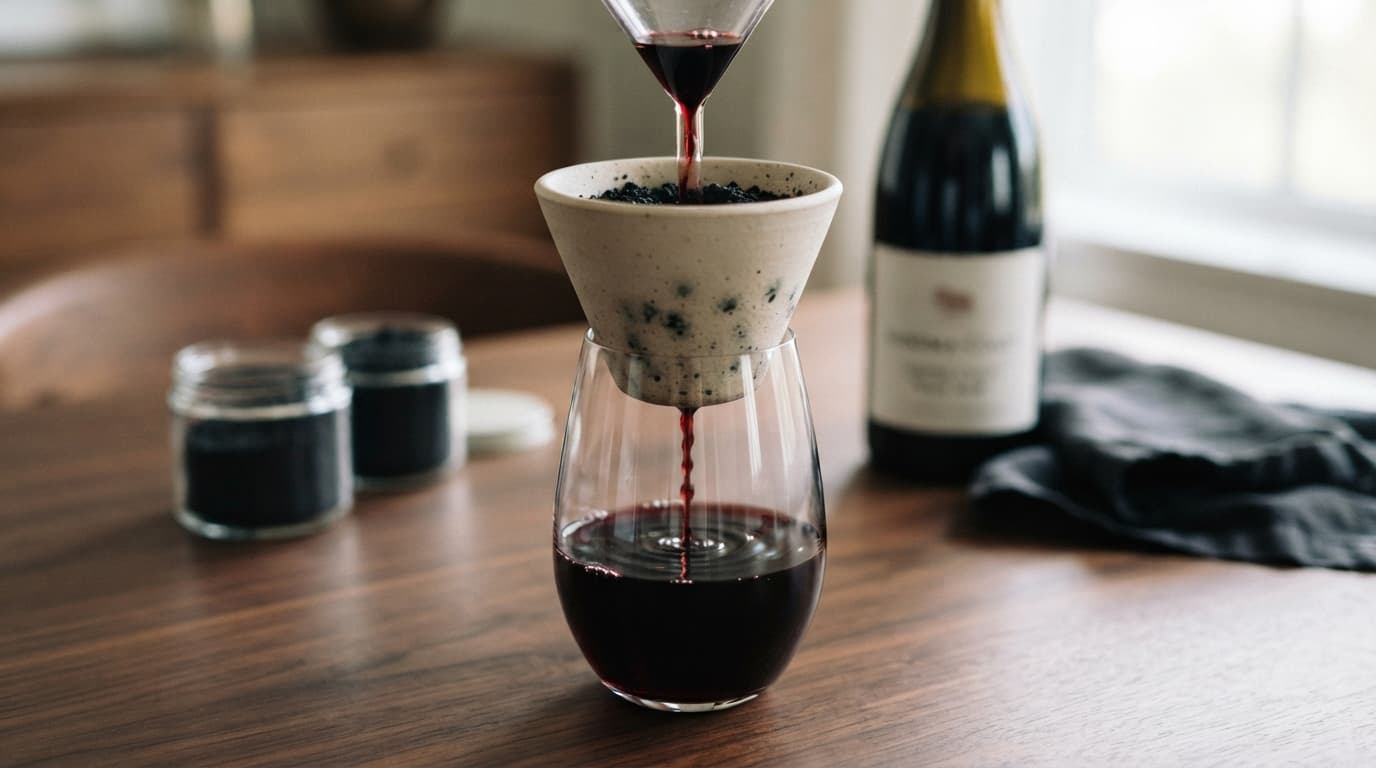
No reliable method removes sulfites from wine after bottling. Wine wands rely only on manufacturer data; lower-sulfite or organic wine is the real alternative.
9 min read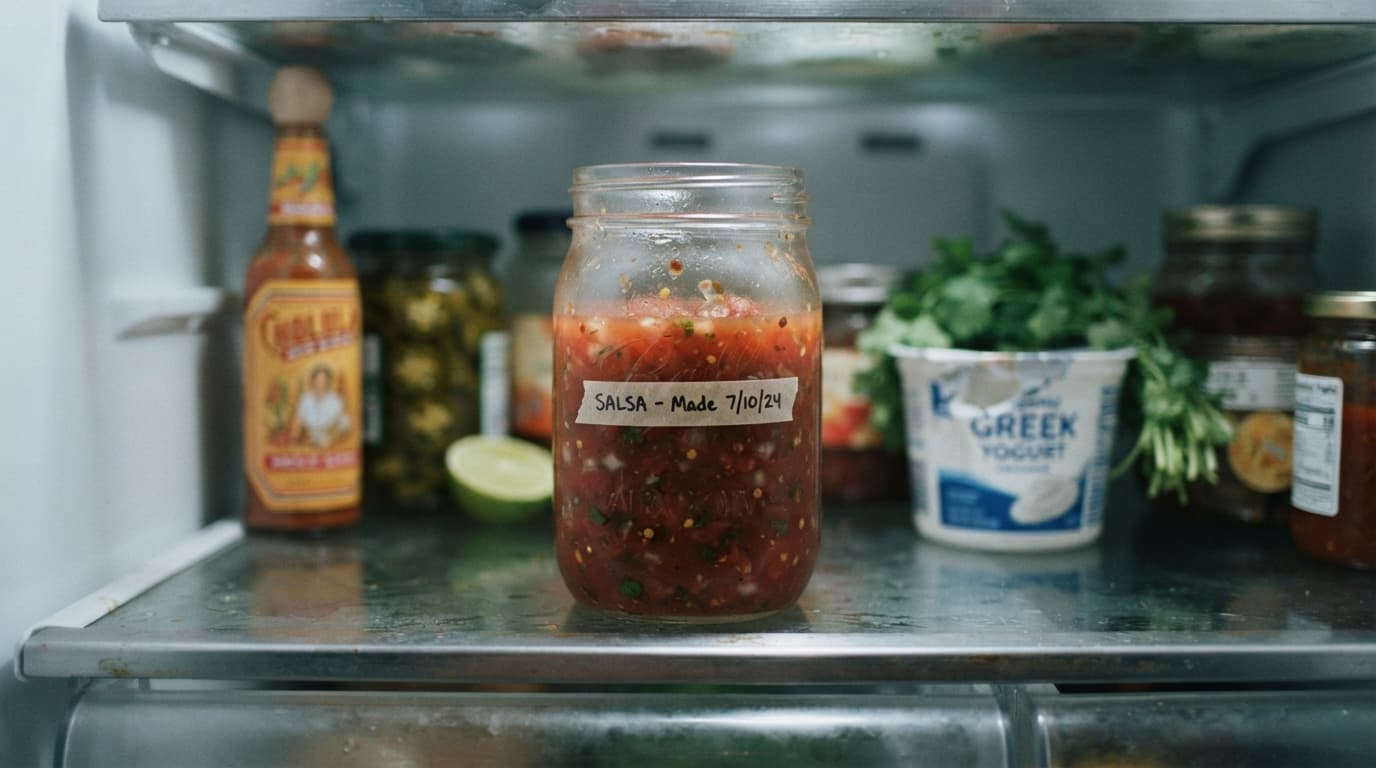
Homemade salsa lasts 3-5 days refrigerated. Opened jarred salsa is good for about a month, while refrigerated-case fresh salsa runs shorter, around 7-14 days.
9 min readTables release two weeks out on Resy, Shukette's own booking platform.
Book Now →