How to Reheat a Burrito
Editorial desk · 9 min read · Updated 2026-08-23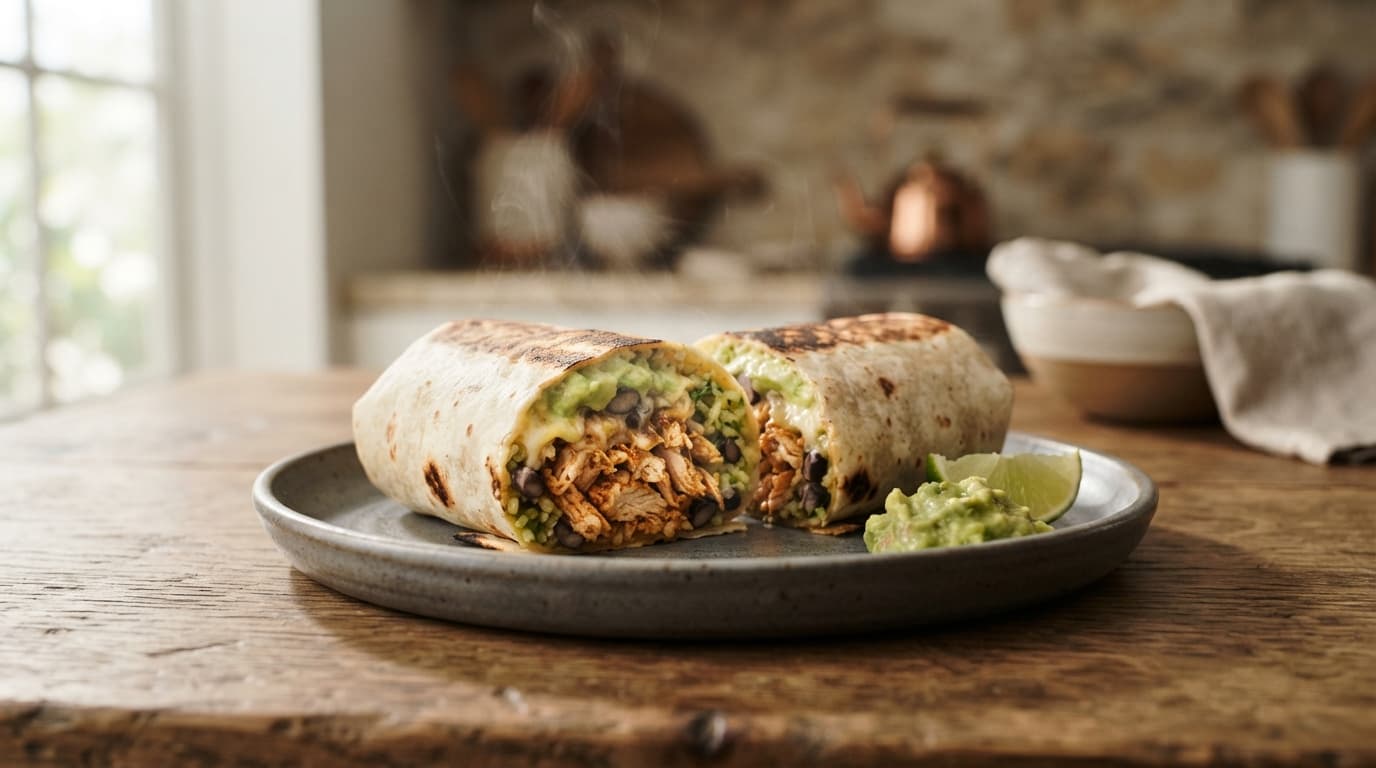
The oven gives you the most even reheated burrito: wrap it in foil and heat at 350°F for 15 to 20 minutes. The microwave is faster but riskier for texture, and an air fryer lands somewhere in between if you use the right technique. Whichever method you pick, the inside should reach 165°F, the standard USDA reheating target for leftovers.
A burrito is a genuinely tricky thing to reheat well, and it's worth understanding why before picking a method. You're trying to heat a dense, tightly packed filling all the way through without turning the tortilla wrapped around it into something either soggy or leathery. Different methods solve that problem differently, with real tradeoffs between speed and result.
| Temperature/setting | Time | Best for | |
|---|---|---|---|
| Oven | 350°F, wrapped in foil | 15-20 min | Most even result, texture |
| Microwave | Wrapped in damp paper towel | 1.5-3 min | Speed |
| Air fryer | Foil first, then unwrap, 350-400°F | 8-10 min foil + 2-3 min unwrapped | Crisp exterior |
The oven method: most even, most reliable
Preheat your oven or toaster oven to 350°F. Wrap the burrito tightly in aluminum foil, keeping the seam closed so steam stays trapped inside rather than escaping and drying the tortilla out. Place it directly on the oven rack or a baking sheet and heat for 15 to 20 minutes, flipping it halfway through so both sides get even exposure to the oven's heat.
The foil is doing real work here. It holds in the moisture already inside the burrito, so the tortilla steams gently from the inside rather than drying out under direct oven heat, while still letting the whole thing come up to temperature slowly and evenly. That slow, even heating is exactly what a dense filling of rice, beans, meat, and cheese needs, since a fast blast of heat tends to overheat the outer layer of filling long before the center catches up.
If you want a slightly crisper tortilla exterior once it's heated through, unwrap the foil for the final 3 to 5 minutes and let the burrito sit directly on the rack or sheet. This gives the tortilla surface a chance to firm up and pick up a little color, similar to the same principle behind uncovering a baked dish near the end to brown the top rather than leaving it covered the whole way through.
A baking sheet with a wire rack set inside it helps more than people expect, since it lets air move underneath the burrito as well as around it, instead of trapping a thin layer of steam against a flat pan surface. If you don't have a rack that fits, flipping the burrito once partway through the covered stage does some of the same job by making sure both sides get direct contact with the hot pan or rack rather than one side sitting in its own condensation the whole time.
Some people prefer an even gentler oven approach: 225°F for about 30 minutes instead of 350°F for 15 to 20. This lower, slower method reduces the risk of the outside overheating before the center is done, which can matter more for a very large or very densely packed burrito. Either oven approach beats the microwave for texture; the tradeoff is mainly how much time you're willing to spend.
The microwave method: fastest, needs a trick to avoid toughness
Microwaving is by far the fastest way to reheat a burrito, and it's the default most people reach for on a weekday lunch break. The problem is that a microwave heats unevenly and does nothing to add moisture back into a tortilla that's already started drying out in the refrigerator, which is why a straight, uncovered microwave reheat often comes out with a tough, chewy, or rubbery exterior even when the filling inside is properly hot.
The fix is simple: wrap the burrito in a damp paper towel before microwaving it. The towel's moisture creates steam as it heats, which keeps the tortilla soft instead of letting it dry out and toughen under the microwave's direct energy. Microwave in 30-to-45-second intervals, checking and flipping between each one, rather than running one long cycle straight through, since shorter intervals give you more control over hot spots developing in the filling.
A full-size burrito usually needs somewhere between 1.5 and 3 minutes total this way, depending on your microwave's wattage and how cold the burrito was to start. The tradeoff compared to the oven is real: you'll get a faster result, but even with the damp towel, the texture rarely matches what a slower oven or air fryer reheat produces, and the center-versus-edge heating can still be uneven enough that checking with a thermometer in a couple of spots is worth the extra ten seconds.
The air fryer method: foil first, then unwrap to crisp
An air fryer splits the difference between the oven's even heating and a faster total time. Wrap the burrito in foil, the same way you would for the oven, and run it at 350-400°F for about 8 to 10 minutes. The foil traps steam during this stage so the interior heats through and the tortilla softens rather than drying out under the air fryer's more concentrated, circulating heat.
Once that first stage is done, unwrap the foil and run the burrito for another 2 to 3 minutes at the same temperature. This final unwrapped stage is where the air fryer earns its reputation for texture: the circulating hot air crisps the tortilla's outer surface noticeably better than an oven does in the same amount of time, the same reason an air fryer works so well for re-crisping other refrigerated food that's gone soft.
Check the burrito's internal temperature after the unwrapped stage rather than assuming the total time guarantees it, since air fryer baskets and wattages vary more between models than ovens tend to. If the center isn't yet at 165°F, a couple more minutes wrapped in foil brings it the rest of the way without risking the already-crisped exterior.
Hitting 165°F, and why it matters more with a dense filling
Regardless of which method you use, the actual safety target is 165°F measured at the center of the burrito, checked with a food thermometer pushed into the thickest part of the filling rather than just touching the tortilla's surface. This is the same general USDA/FSIS reheating standard that applies to most cooked leftovers, not a burrito-specific number, but it's worth taking seriously here because of how burritos are built.
A tightly rolled burrito packs rice, beans, meat, and cheese into a dense, insulated bundle, and that density works against even heating. The tortilla and outer layer of filling can feel hot to the touch well before the very center, buried under several layers of other ingredients, has actually caught up. This is exactly the kind of situation where checking by feel or by how long it's been in the microwave undersells the risk of a still-cold center, so a quick thermometer check in the middle removes the guesswork.
If you're reheating a burrito that contains raw-adjacent ingredients like sour cream or fresh salsa added before storage, be aware that those components don't reheat the same way the rest of the filling does, and it's often better to add fresh cold toppings after reheating rather than expecting them to come through a 165°F reheat unaffected.
A burrito built around rice and beans behaves a little differently from one built mostly around meat and cheese, worth keeping in mind since fillings vary so much from one burrito to the next. Rice in particular holds onto moisture and can develop a slightly gummy texture if it's reheated too slowly or at too low a temperature for too long, which is one more reason the oven and air fryer methods, both of which move real heat through the filling in a reasonable window, tend to outperform a slow, gentle approach for a rice-heavy burrito specifically.
Reheating from frozen takes meaningfully longer
A frozen burrito needs more time and often a higher temperature than one that's simply been in the refrigerator overnight. In the oven, a frozen burrito typically needs closer to 400°F for 20 to 30 minutes, compared to 350°F for 15 to 20 minutes from the refrigerator. The extra heat and time account for the fact that you're not just reheating the filling, you're also thawing it, which takes real additional energy before the center can even begin climbing toward 165°F.
Wrapping a frozen burrito in foil matters even more than it does for a refrigerated one, since the outside would otherwise dry out significantly over that longer cook time before the center finishes thawing and heating. If you have the option, moving a frozen burrito to the refrigerator the night before you plan to reheat it, the same refrigerator-thawing approach recommended for other frozen cooked foods, gets you back to the shorter refrigerated timing rather than the longer frozen one.
Skip the microwave's defrost setting followed by a full reheat cycle if you can, since that two-stage process on a dense, wrapped burrito is exactly the setup that produces an overcooked outer layer sitting around a still-cool center. If a frozen burrito absolutely has to go straight into the microwave, break it into shorter intervals with checks in between more aggressively than you would for a refrigerated one.
Picking the right method for the moment
None of these three methods is universally "best" — they're suited to different situations. The oven or toaster oven method makes sense when you have 20 minutes and care about texture, which describes most weekend lunches or a burrito reheated alongside other food. The microwave earns its place when you genuinely only have a couple of minutes, and the damp paper towel trick closes most of the texture gap without adding real time. The air fryer is worth the extra few minutes of hands-on attention specifically when you want that final crisp exterior and already own one.
A burrito that's been stored properly, refrigerated within two hours of the original meal and used within a few days, gives you more flexibility to pick based on convenience rather than urgency. One that's been sitting at the back of the fridge for closer to a week is worth a closer look and a firmer 165°F check regardless of which reheating method you land on, since storage time matters just as much as reheating technique for the final result.
How you wrap and store the burrito before it ever gets reheated affects the result almost as much as the reheating method itself. A burrito wrapped tightly in foil or plastic wrap right after it cools, rather than left loose in an open container, holds onto more of its original moisture balance and reheats more predictably than one that's dried out unevenly in the fridge overnight. This is the same reasoning behind wrapping other leftover food tightly before refrigerating it rather than leaving it loosely covered — an uncontrolled amount of moisture loss during storage makes any reheating method work harder to compensate later.
Leftover fillings that started out crisp, like fries tucked inside a burrito, are worth a mention on their own, since anything crispy going in tends to soften considerably in storage regardless of how well the rest of the burrito was wrapped. The same air fryer technique that works so well for reheating fries on their own is part of why unwrapping a burrito for the last couple of minutes in an air fryer helps more than people expect — it's rebuilding crispness in more than just the tortilla.
Whichever method fits your afternoon, the same short checklist applies every time: wrap or wrap-then-unwrap depending on the appliance, check the center rather than the surface, and don't rush a dense, cold filling past what the method can actually deliver in the time you're giving it.
Frequently asked questions
What's the best way to reheat a burrito?+−
The oven or toaster oven gives the most even result: wrap the burrito in foil and heat at 350°F for 15 to 20 minutes. It takes longer than a microwave, but the tortilla stays intact instead of turning rubbery or soggy.
How do I reheat a burrito in the microwave without it getting tough?+−
Wrap it in a damp paper towel before microwaving. The moisture from the towel steams the tortilla gently as it heats, which keeps it from drying out and turning tough the way an uncovered microwaved burrito often does.
Can I reheat a burrito in an air fryer?+−
Yes. Wrap it in foil first so the inside heats through with trapped steam, then unwrap it for the last couple of minutes at 350-400°F to crisp the outside of the tortilla.
What temperature should a reheated burrito reach inside?+−
165°F at the center, the standard USDA/FSIS reheating target for leftovers generally. Check with a food thermometer inserted into the thickest part of the filling, not just the tortilla.
Does reheating a frozen burrito take longer than a refrigerated one?+−
Yes, noticeably longer. A frozen burrito in the oven often needs closer to 400°F for 20 to 30 minutes, compared to 350°F for 15 to 20 minutes starting from the refrigerator.

No single person did. Melted cheese on bread is centuries old, but the sandwich took shape in the 1920s and '30s once sliced bread and cheap cheese arrived.
9 min read
Roughly 185 to 205°F, well below a full boil at 212°F. Here's how to spot it by bubble pattern alone, since most stovetop cooking never touches a thermometer.
9 min read
An air fryer at 350-400°F for 3-5 minutes gets fries crisp again. The oven at 375-400°F works nearly as well spread thin, while a microwave leaves them soggy every time.
9 min readTables release two weeks out on Resy, Shukette's own booking platform.
Book Now →