How Long to Bake Lasagna at 350°F
Editorial desk · 9 min read · Updated 2026-08-23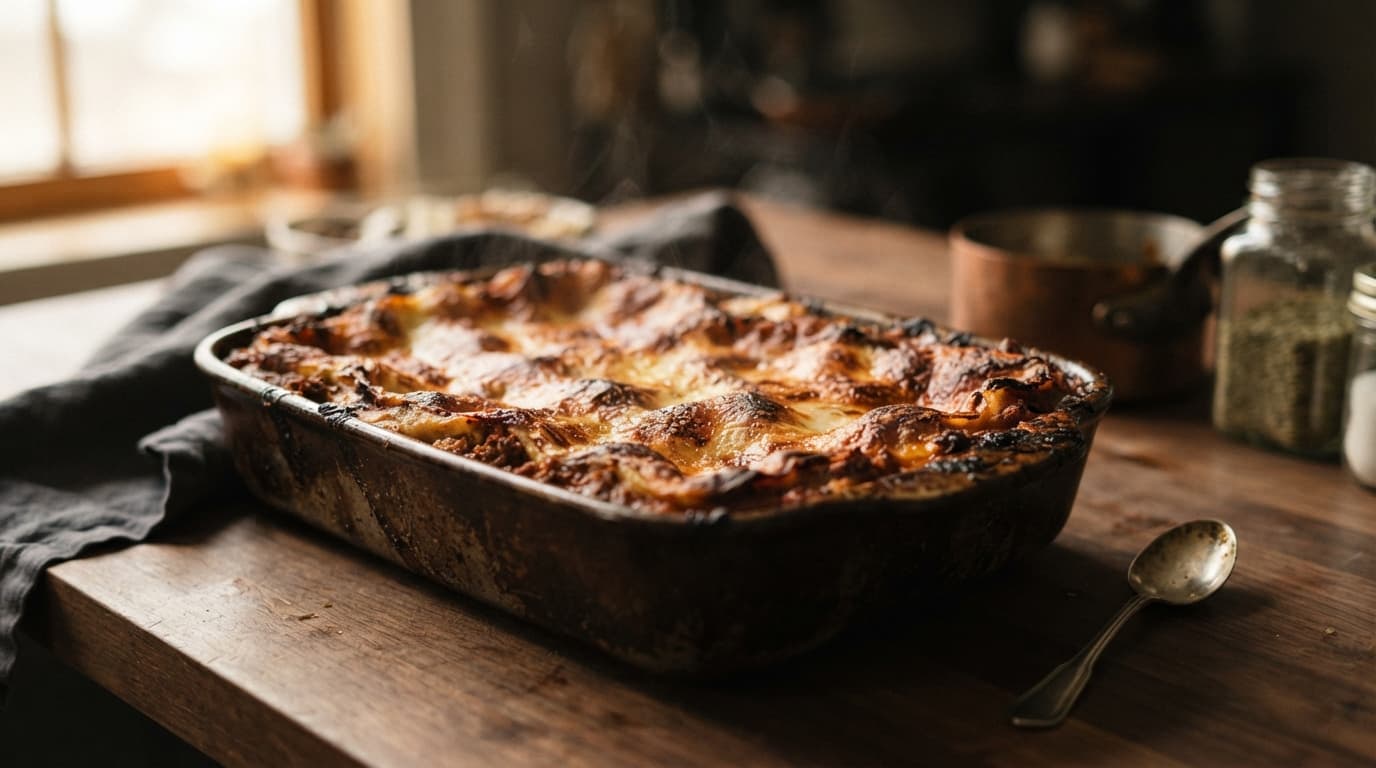
Lasagna baked at 350°F needs 45 minutes to an hour covered with foil, then another 10 to 15 minutes uncovered to brown the top. The number that actually matters for safety isn't the clock, though — it's 165°F measured in the center of the dish, the standard for lasagna as a combination dish, not the 160°F figure you might remember from plain ground beef.
That distinction trips up a lot of home cooks, and it's worth clearing up before you even preheat the oven. Ground beef on its own is safe at 160°F. Lasagna is never just ground beef, though — it's meat, cheese, and pasta layered together with sauce, and once you combine ingredients like that, the food-safety guidance changes.
Why 165°F, not 160°F
The USDA's Food Safety and Inspection Service publishes a minimum safe temperature chart that most people know for one line: ground beef, 160°F. Fewer people know the chart also has a separate category for casseroles and other combination dishes, and that category sits at 165°F, regardless of what meat is inside.
Lasagna falls squarely into that combination-dish category. It doesn't matter whether you used ground beef, Italian sausage, ground turkey, or a mix of meats in the sauce — once it's layered with ricotta, mozzarella, and pasta into one baked dish, the higher 165°F standard applies. This isn't a stricter interpretation someone added for caution; it's the actual FSIS classification, and it supersedes the plain-meat number once the dish becomes a casserole.
Skipping this distinction is an easy mistake to make, since 160°F feels like the "correct" beef number if that's the only one you've memorized. But a thermometer reading of 160°F in a fresh-from-the-oven lasagna doesn't mean it's done by the standard that actually applies to the dish you made. Push it those extra five degrees before you call it finished.
The same combination-dish logic applies to plenty of other layered or mixed dishes, not just lasagna. A shepherd's pie, a baked ziti, a chicken and rice casserole — anything that mixes a protein with starch, dairy, or vegetables into one baked dish generally falls under that same 165°F standard rather than whatever number applies to the protein cooked on its own. Once you know to look for that pattern, it's easier to recognize which foods need the higher number instead of guessing.
Covered time: 45 minutes to an hour
Covering the dish tightly with foil for the first stretch of baking does two jobs at once. It holds in steam and heat so the layers in the middle of the dish, which are the hardest part for heat to reach, actually cook through. It also protects the top layer of cheese from browning or burning long before the center is anywhere close to hot.
For a standard 9x13 pan at 350°F, 45 minutes to an hour covered is the range most recipes and practitioners land on. A deeper dish, or one packed with more layers than a typical recipe, tends to need the longer end of that range. A shallower pan with fewer layers can often come in closer to 45 minutes.
Tenting the foil slightly, rather than pressing it flush against the top layer of cheese, helps prevent the cheese from sticking to it and pulling away when you lift it off later. A little airspace between the foil and the cheese is enough to avoid that annoying half-melted mess stuck to the underside of the foil.
The type of pan you're covering matters here too, in a small but real way. A deep pan holds heat differently than a wide, shallow one, since a taller stack of layers means more distance between the top of the dish and the very center. If you're using a deeper pan than a standard 9x13, lean toward the longer end of the 45-minute-to-an-hour range, and don't be surprised if you need a few extra minutes beyond even that on the first attempt in a new pan.
Uncovered time: 10-15 minutes to brown the top
Once the covered stage is done, pull the foil and give the lasagna another 10 to 15 minutes uncovered. This is the stage that actually builds the golden, slightly bubbling top that makes lasagna look finished, and it's also a reasonable window to confirm the center has actually caught up to temperature before you pull the whole dish.
Watch it during this stretch rather than walking away, since ovens vary and a cheese-heavy top can go from perfectly browned to overly dark faster than the covered stage would suggest. If the top is browning faster than the center is heating, that's usually a sign the dish went in too cold or the oven's running a little hot, not a reason to panic — just keep an eye on it.
If your lasagna's top looks pale even after the full uncovered stretch, a couple of minutes under the broiler can finish the job fast, but it needs constant attention. Broilers work by direct, intense radiant heat from above, and a cheese top that's fine one moment can scorch within seconds under a broiler, so stand at the oven rather than setting a timer and walking away for that last step.
Where to check the temperature
The single most common mistake with lasagna doneness is checking the temperature somewhere convenient, like near the edge of the pan, instead of where it actually matters. Heat reaches the edges of a baking dish faster than it reaches the center, since the edges are closer to the hot pan walls on more sides. That means an edge reading of 165°F tells you almost nothing about whether the middle of the dish has caught up.
Insert your food thermometer into the thickest part of the lasagna, ideally right in the middle of the pan, and push it down through the layers rather than just skimming the top. If you're working with a reliable instant-read thermometer, this takes just a few seconds and removes all the guesswork that comes with judging doneness by sight or smell alone.
Check more than one spot if you're at all unsure, especially with a large or unevenly layered lasagna. A thermometer reading near 165°F in the center and a similar reading a couple inches away gives you real confidence the whole dish reached a safe temperature, rather than one lucky probe in a spot that happened to heat faster than its surroundings.
This same center-versus-edge gap shows up whenever you're reheating lasagna leftovers the next day, too. A refrigerated portion reheated in the oven or microwave needs the same 165°F check in the middle before you call it done, since a cold center hiding under warm cheese and sauce is an easy thing to miss on a reheat, the same reason a reheated burrito's dense filling needs a center check rather than a surface guess.
Resting before you cut
Once the lasagna comes out of the oven, let it sit for 10 to 15 minutes before cutting into it. This isn't just a suggestion for looks, though it does help with that. The cheese, sauce, and layers are still loose and settling right out of the oven, and cutting immediately tends to produce slices that slide apart into a messy pile rather than holding together.
That resting window gives everything time to firm up slightly as it cools just a bit, so the layers set and a slice comes out looking like an actual slice instead of a scoop. It's the same reason a roast benefits from resting before you carve it — the internal structure needs a few minutes to stabilize after coming out of high heat, and lasagna's layered structure is even more dependent on that setting time than a solid piece of meat is.
Resting also buys you a small safety margin, since a dish sitting at a very hot temperature right out of the oven often continues to climb slightly in the first few minutes through residual heat, sometimes called carryover cooking. It's not the main reason to rest a lasagna, but it doesn't hurt.
Does the baking dish material matter?
Glass and metal conduct heat differently, and that difference shows up in lasagna's bake time. Glass baking dishes, like the common 9x13 Pyrex style, heat up more slowly and hold that heat more evenly once they get there. Lasagna in a glass dish can need a few extra minutes at either stage, covered or uncovered, to reach the same internal temperature you'd get in a metal pan.
Metal pans heat up faster and transfer that heat to the food more quickly, which often means a slightly shorter total bake time and can also mean more browning on the bottom layer of noodles, since metal conducts heat efficiently right through the pan's base. If you've always used a glass dish and switch to metal, or the other way around, it's worth checking the internal temperature a few minutes earlier than your usual timing to see how the new pan behaves.
Dark, nonstick metal pans absorb and hold heat even more aggressively than a plain aluminum pan, which can push browning further still. If you're using a dark pan and notice the bottom or edges getting close to overdone before the center is anywhere near 165°F, dropping the oven temperature slightly, to around 325°F, and extending the covered time is a reasonable adjustment.
Building in some flexibility
Every lasagna is a little different depending on how many layers you built, how much sauce you used, and whether the noodles were fresh, dried, or no-boil. No-boil noodles, in particular, need enough surrounding sauce and moisture to hydrate properly during baking, and a lasagna that's short on sauce can end up with firmer noodles even after the full bake time, regardless of what the thermometer says about the cheese and meat layers.
If you're assembling a lasagna ahead of time and baking it cold from the refrigerator rather than right after building it, add extra time to both the covered and uncovered stages, since you're starting from a colder base temperature throughout the whole dish. A lasagna that went together an hour before baking behaves differently in the oven than one that sat overnight in the fridge, so treat the times in this article as a starting point you check against a thermometer, not a fixed countdown.
Once you've made a particular lasagna recipe a couple of times in your own oven, in your own pan, you'll get a feel for exactly where that recipe lands within these ranges. Until then, lean on the thermometer in the center of the dish rather than the clock, and you'll consistently land on a lasagna that's fully cooked through without a dry, overbaked top or noodles that never quite got there.
Leftovers follow their own separate timeline once the original bake is done. Cooked lasagna keeps for 3 to 4 days properly refrigerated, the same general window that applies to most cooked meat and combination dishes, and it freezes well for longer storage if you portion it into smaller pieces before wrapping rather than freezing one large uncut block. A smaller portion also reheats more evenly later, for the same reason a whole dish heats unevenly the first time around: less distance for heat to travel means less gap between an overdone edge and an underdone center.
Pair a baked lasagna with a simple green side or shareable starter and you've got a full meal that scales easily for a crowd, without needing to double the lasagna itself or push it into a pan so deep that the center becomes hard to reach with even heat.
Frequently asked questions
How long does lasagna take to bake at 350°F?+−
Plan on 45 minutes to an hour covered with foil, then another 10 to 15 minutes uncovered so the top can brown. Total oven time usually lands close to an hour and 15 minutes for a standard 9x13 pan.
What internal temperature should lasagna reach?+−
165°F, checked in the center of the dish with a food thermometer. This is the FSIS standard for casseroles and other combination dishes, which covers lasagna regardless of whether the meat inside is beef, pork, or a mix, and it's higher than the 160°F figure often quoted for plain ground beef.
Why does lasagna need to be covered with foil while baking?+−
Foil traps steam and heat so the interior layers cook through evenly without the cheese on top burning or the noodles drying out before the center is hot. Removing it for the last stretch lets that same top layer brown and turn slightly crisp.
Does a glass or metal baking dish change the bake time?+−
Glass holds and releases heat more slowly than metal, so lasagna in a glass dish can take a few extra minutes to reach the same internal temperature. Metal heats up faster and often browns the bottom layer a bit more aggressively.
Should lasagna rest before cutting?+−
Yes, for 10 to 15 minutes after it comes out of the oven. Resting gives the cheese and sauce time to set, so slices hold their shape instead of sliding apart the moment you cut in.

No single person did. Melted cheese on bread is centuries old, but the sandwich took shape in the 1920s and '30s once sliced bread and cheap cheese arrived.
9 min read
Roughly 185 to 205°F, well below a full boil at 212°F. Here's how to spot it by bubble pattern alone, since most stovetop cooking never touches a thermometer.
9 min read
An air fryer at 350-400°F for 3-5 minutes gets fries crisp again. The oven at 375-400°F works nearly as well spread thin, while a microwave leaves them soggy every time.
9 min readTables release two weeks out on Resy, Shukette's own booking platform.
Book Now →