How to Reheat and Store a Spiral-Cut Ham
Editorial desk · 9 min read · Updated 2026-08-22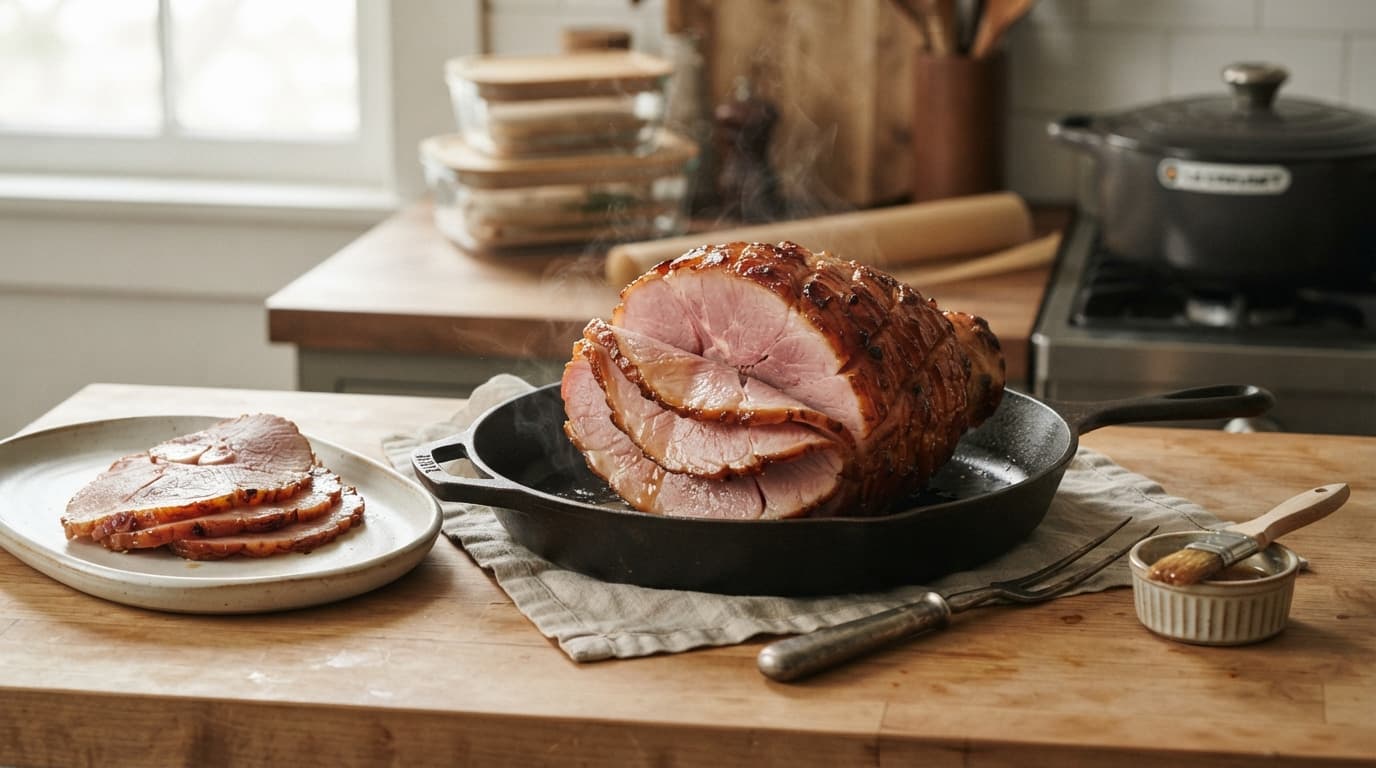
A fully cooked spiral-cut ham doesn't actually need to be reheated at all. USDA guidance is specific on this point: spiral-cut cooked hams are safe to eat cold, and they're genuinely best served that way, since reheating a sliced ham risks drying out the meat and melting the glaze right off it. If you do want it warm, cover it tightly with foil and heat at 325°F for about 10 minutes per pound. Leftovers, once the ham has been served and stored, keep for 3 to 4 days in the refrigerator, the standard window for cooked meat generally.
This surprises a lot of people, since ham is so strongly associated with a warm holiday centerpiece that "reheat it" feels like the obvious default. For a spiral-cut ham specifically, that default isn't necessary, and it can actually work against the dish.
Why cold is the better default for spiral ham
Spiral-cut ham arrives fully cooked, and slicing it into that spiral pattern before you ever get it home exposes far more surface area than a whole, uncut ham has. That extra surface area is great for eating cold or at room temperature, but it becomes a liability once you apply heat: more surface means more moisture lost to evaporation during reheating, and a glazed ham's coating, built to sit nicely on the meat at room temperature, tends to soften, melt, and slide off once real heat is applied.
This is why USDA's own guidance doesn't just say cold ham is safe; it specifically recommends serving it cold as the better choice for a spiral-cut product. If your priority is the best possible texture and an intact glaze, skipping reheating entirely and serving the ham cold or at room temperature is the more reliable path to that result.
Room temperature is worth distinguishing from truly cold, straight-from-the-refrigerator ham, since the two eat quite differently even though neither requires reheating in the food-safety sense. Letting a ham sit out briefly to take some of the chill off, generally not more than an hour or two given the same danger-zone limits that apply to any perishable food, softens the fat slightly and brings out more of the flavor than serving it directly from the refrigerator would. This isn't a food-safety recommendation to leave it out longer than that window; it's simply a note that "cold" and "fridge-cold" aren't quite the same eating experience, and a brief rest at room temperature before serving can improve the result without any actual reheating involved.
If you do want it warm
Some people simply prefer warm ham regardless of the texture tradeoff, and that's a reasonable preference to prioritize over the "best texture" recommendation. If you're reheating, cover the whole ham, or whatever portion you're serving, tightly with heavy aluminum foil, which helps trap moisture and slow down the same evaporation that a spiral cut is especially prone to. Heat at 325°F, budgeting roughly 10 minutes per pound as a starting estimate, and check with a food thermometer rather than trusting the time estimate alone, since ham size and oven calibration both affect how closely the actual result matches that per-pound guideline.
Individual slices can also be reheated faster and more simply in a skillet over medium heat or in a microwave, which makes sense if you're only warming up a portion for one or two people rather than an entire ham for a full table. Either approach avoids exposing the whole ham to extended oven heat when only a portion actually needs to be warm.
If you're serving a group where some people want it warm and others are happy with it cold, there's no reason to reheat the entire ham to satisfy everyone. Setting aside and reheating only the portion that will actually be eaten warm, while leaving the rest cold for guests who prefer it that way, avoids subjecting meat nobody wanted reheated to unnecessary drying and glaze loss. This same logic, cooking or reheating only what a group will actually eat rather than treating an entire dish as one all-or-nothing unit, applies just as well to planning portions for a larger group meal generally.
The reheating temperature depends on where the ham was packaged
This is a genuinely specific and easy-to-miss detail: the safe reheating temperature for ham isn't always the same number, and it depends on where the ham was packaged. Ham packaged in a USDA-inspected processing plant, meaning it was never removed from its original, factory-sealed packaging before you bought it, needs to reach 140°F when reheated. Ham that's been repackaged anywhere outside that original plant packaging, which includes most leftover ham that's already been sliced, served, and stored in a different container, needs to reach the higher standard of 165°F, the same target used for reheating cooked leftovers generally.
In practice, this means a ham you bought pre-sliced in its original sealed package and are reheating for the first time follows the lower 140°F target, while the same ham's leftovers, now in a storage container after the meal, follow the higher 165°F standard the next time you reheat them. This distinction is easy to miss since it isn't intuitive that the same food would carry two different reheat targets depending on packaging history, but it's a real, specific piece of USDA guidance worth knowing rather than assuming one number applies universally.
Storing leftovers properly
Once a ham has been served, cut into, and has leftovers to store, the standard USDA leftovers guidance applies: refrigerate within two hours of serving, and use within 3 to 4 days. This is the same window that applies to most other cooked meat leftovers, not a ham-specific extension, so don't assume ham keeps meaningfully longer than other cooked meat once it's been opened and served.
Cutting a whole or partial ham into smaller pieces or slices before refrigerating, rather than storing one large, dense piece, helps it cool faster and more evenly, the same shallow-storage principle that applies to other large cuts of cooked meat. A large, uncut piece of ham takes longer to cool through, which extends the time it spends in the temperature danger zone before it's actually safely chilled.
Storage containers matter here too. Wrapping ham tightly, or storing it in a sealed, airtight container rather than loosely covered, does more than just prevent it from drying out in the refrigerator; it also keeps it from picking up other odors from nearby food, a common complaint with ham specifically given how effectively it can absorb surrounding smells over several days of storage. A few smaller, well-sealed containers generally outperform one large, loosely covered platter for both of these reasons.
Don't confuse this with an unopened, shelf-stable ham
It's worth distinguishing spiral-cut, fully cooked ham from a different category entirely: unopened, shelf-stable canned ham, which follows its own separate and much longer storage timeline specific to that particular product type, precisely because it's processed and packaged differently to achieve that extended shelf stability. If you have a canned ham product rather than a spiral-sliced holiday ham, don't assume the 3-to-4-day leftover window applies to it in its original, unopened state; check the specific product's own label and guidance instead, since canned and spiral-cut hams aren't interchangeable categories despite both being labeled "ham."
This kind of category confusion, assuming one product's rules apply to a differently processed product with a similar name, is a common source of food storage mistakes generally. When in doubt about which category a specific ham product falls into, the packaging itself usually states clearly whether it's shelf-stable, requires refrigeration, or needs to be cooked before eating.
Country ham is another related but distinct category worth mentioning specifically, since it sits somewhere between spiral-cut ham and shelf-stable canned ham in how it's handled. A whole, uncut country ham, processed through a specific dry-curing and aging method, can actually be safely stored at room temperature for up to a year, a genuinely different standard from either the spiral-cut ham this article focuses on or the canned variety mentioned above. If you're working with a country ham specifically, its own packaging and preparation instructions are the reliable source, since it follows neither of the other two categories' rules.
Freezing ham for longer storage
If you won't get through a ham within the 3-to-4-day refrigerator window, freezing extends that timeline safely, since frozen food remains safe indefinitely, with quality as the main factor that degrades over extended freezer time rather than safety. Wrapping ham tightly, portioned into meal-sized amounts rather than one large block, both speeds up freezing and makes future thawing and reheating more manageable than trying to work with one large frozen mass later.
Thawing frozen ham follows the same general principles as thawing any other cooked or raw meat: refrigerator thawing is the safest, most flexible method, giving you a reasonable window afterward before it needs to be used, while faster methods like cold water thawing call for using the ham promptly rather than storing it again once thawed. Starting the thaw a day or two earlier than you think you need avoids the last-minute scramble of a still-frozen centerpiece on the day you actually planned to serve it.
Serving it cold is genuinely the right call
Serve a spiral-cut ham cold if you want the best texture and an intact glaze; that's genuinely the recommended default, not just an acceptable shortcut. If you do reheat, cover it with foil, heat at 325°F for about 10 minutes per pound, and check the actual internal temperature, 140°F for still-sealed, plant-packaged ham or 165°F for anything repackaged since, including most leftovers. Once served, refrigerate leftovers within two hours and use them within 3 to 4 days, or freeze what you won't get through in time.
None of this requires specialized equipment or a complicated process; it mostly requires resisting the instinct to treat ham the same way you'd treat a turkey or a roast that genuinely does need reheating to taste its best. Once that instinct is set aside, a spiral-cut ham becomes one of the lower-effort parts of a holiday meal rather than another dish competing for oven time and attention.
If ham is part of a larger holiday spread you're planning, thinking through which dishes actually need reheating and which are better served cold or at room temperature, ham chief among them, can simplify oven and stovetop logistics on a day when several dishes are competing for the same limited cooking space and time.
Freeing up oven space by leaving ham cold rather than warming it is a genuinely practical benefit beyond just texture, especially on a day when a turkey or other large dish is already occupying the oven for hours. Knowing you can skip that step entirely for the ham, without sacrificing anything in terms of safety or, honestly, taste, is one less thing to coordinate on a day that's often already tight on both oven space and time.
Slicing strategy affects how well cold ham holds up on a serving platter, too. Thinner slices dry out faster once exposed to open air than thicker ones do, simply because more surface area is exposed relative to the total volume of meat, so slicing only as much as you expect to serve in the next hour or so, rather than the whole ham at once, keeps more of it looking and tasting fresh throughout a long gathering. Any unsliced portion can stay wrapped and chilled until it's actually needed, then get sliced fresh right before it goes out, which noticeably outperforms a fully pre-sliced platter that's been sitting out since the meal began.
Frequently asked questions
Do I need to reheat a spiral-cut ham before eating it?+−
No. USDA guidance notes that spiral-cut cooked hams are safe to eat cold and are actually best served that way, since reheating a sliced ham can dry it out and cause the glaze to melt and run off.
How do I reheat a spiral ham if I want it warm?+−
Cover the whole ham or a portion tightly with heavy aluminum foil and heat at 325°F for about 10 minutes per pound. Individual slices can also be warmed in a skillet or microwave for a quicker option.
What internal temperature does reheated ham need to reach?+−
It depends on the packaging. Ham packaged in a USDA-inspected plant needs to reach 140°F. Ham that's been repackaged elsewhere, including most sliced leftovers, needs to reach 165°F, the same standard as other reheated leftovers.
How long can leftover ham stay in the refrigerator?+−
3 to 4 days for properly stored, fully cooked ham leftovers, the standard USDA window for cooked meat leftovers generally. This applies to an already-served, opened ham, not an unopened, factory-sealed product, which follows different storage guidance.
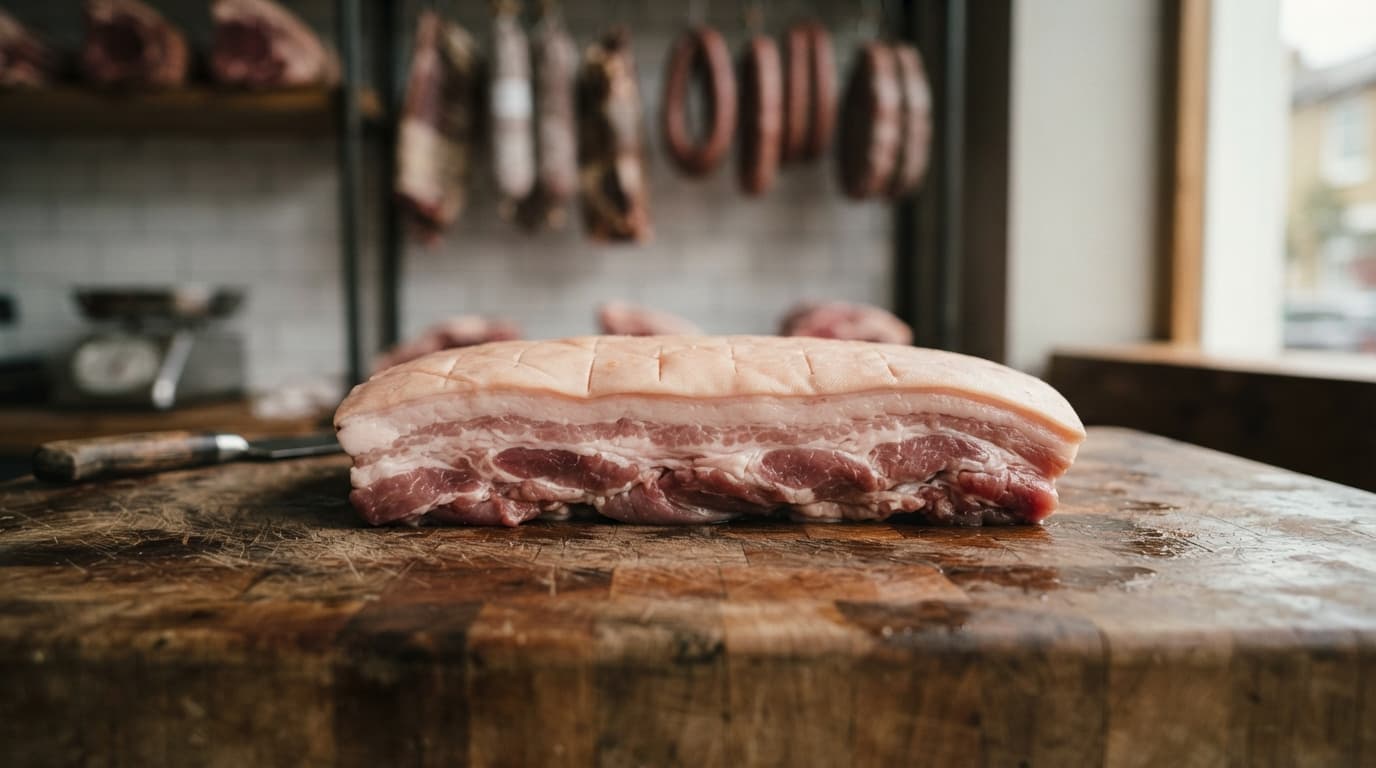
Pork belly shows up at large supermarkets, warehouse clubs, Asian grocery stores, and butcher counters, though selection and cut style vary a lot by store type.
9 min read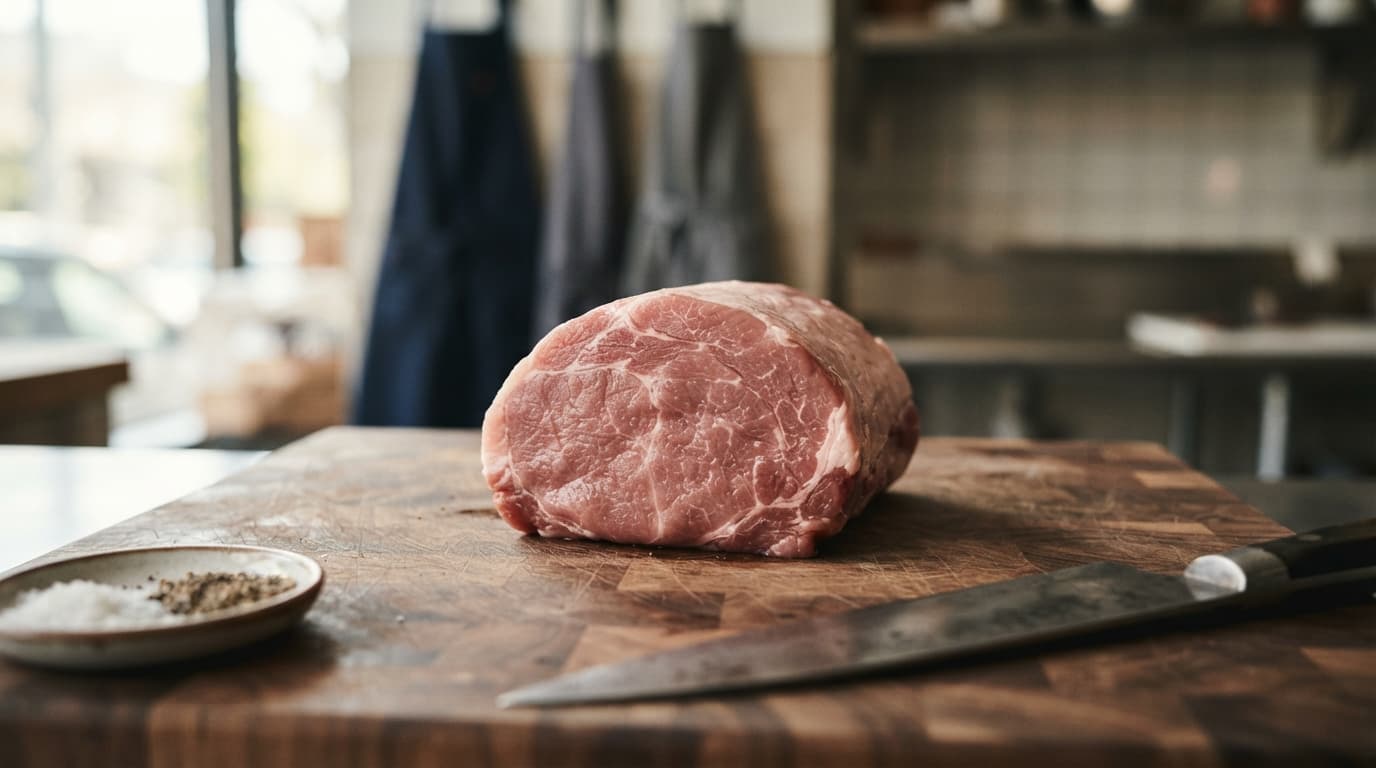
Pork cushion meat is a boneless cut from the picnic shoulder, officially known as IMPS 405B. It's lean, well-worked, and best cooked low and slow, like pork butt.
9 min read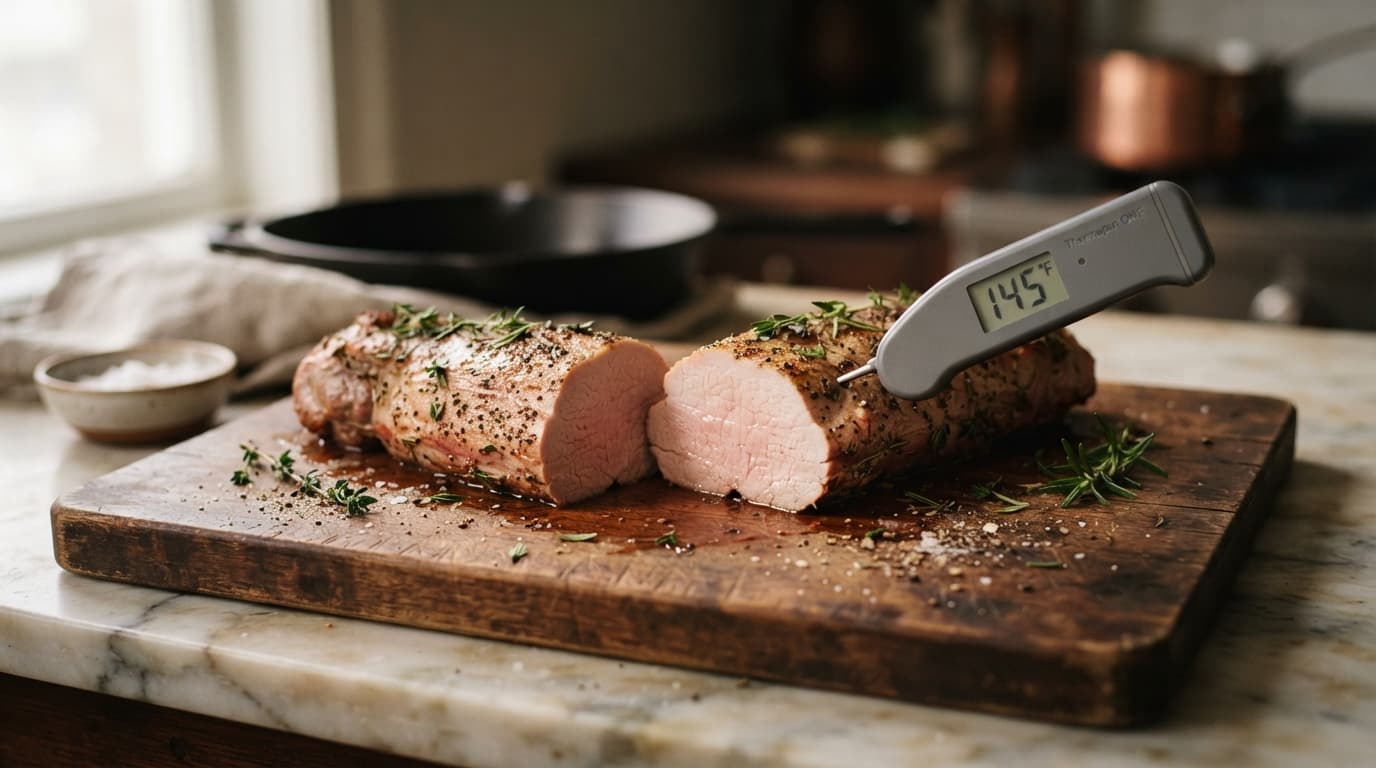
Pork tenderloin is done at 145°F, checked in the thickest part with a thermometer, then rested 3 minutes. Same number whether you grill, roast, or pan-sear it.
9 min readTables release two weeks out on Resy, Shukette's own booking platform.
Book Now →