How Long Can Thawed Chicken Stay in the Fridge?
Editorial desk · 9 min read · Updated 2026-08-22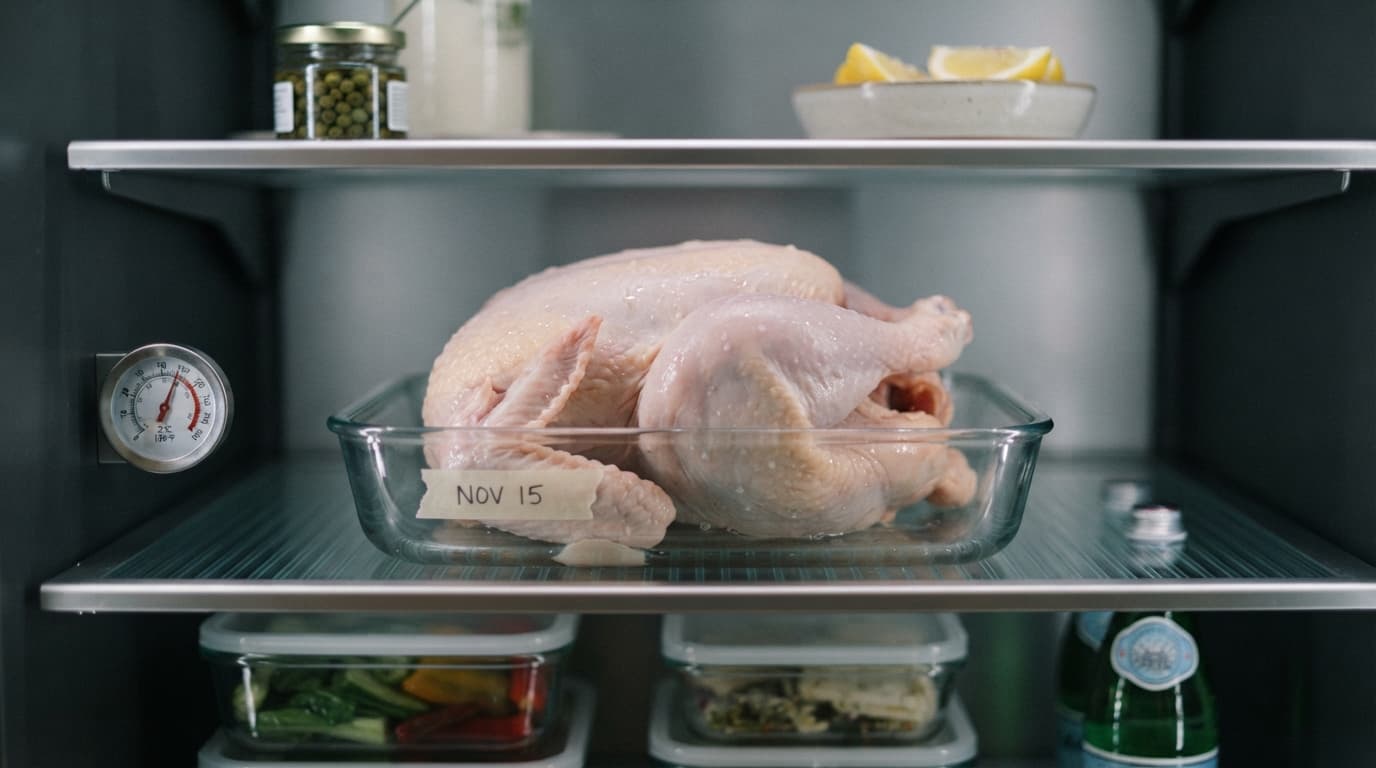
Chicken thawed in the refrigerator stays safe to cook for one to two more days after it's fully thawed. That window shrinks to zero if the chicken was thawed a different way: chicken thawed in cold water or in the microwave needs to be cooked immediately, not stored raw in the fridge for later. The method you used to thaw it, not just how long it's been sitting there, is what actually determines how much time you have left.
That's a more useful, more specific answer than a single number, and it's worth understanding why the methods diverge rather than just memorizing the rule.
This distinction gets lost in a lot of general food-safety advice, which tends to treat "thawed chicken" as one category with one rule. It isn't. The USDA's own guidance splits thawing into three separate methods, and only one of them buys you extra days afterward.
| Thaw method | Extra fridge time after thaw | Safe to refreeze raw? | Must cook immediately? |
|---|---|---|---|
| Refrigerator thaw | 1 to 2 days | Yes, within that same 1-to-2-day window | No |
| Cold water thaw | None | No, cook first, then freeze | Yes |
| Microwave thaw | None | No, cook first, then freeze | Yes |
Why the thawing method changes everything
The USDA recognizes three safe ways to thaw chicken: in the refrigerator, in cold water, and in the microwave. Each keeps the chicken at a different temperature profile during thawing, and that difference is exactly why the after-thaw rules aren't the same across all three.
Refrigerator thawing keeps chicken at a constant 40°F or below for the entire process, the same safe temperature it would sit at anyway if it had never been frozen. Because the chicken never leaves that safe zone, it's essentially just cold raw chicken once it's thawed, and it gets the same one-to-two-day runway that fresh refrigerated chicken would.
Cold water and microwave thawing work differently. Cold water thawing is faster, but parts of the chicken can rise above 40°F during the process even while the water around it stays cold, especially near the surface. Microwave thawing is faster still, but it actively heats the food unevenly, which means some areas can climb well into the temperature danger zone, 40°F to 140°F, while other parts are still icy. Both methods trade speed for a loss of that "never left a safe temperature" guarantee, which is exactly why both require cooking immediately rather than extra time in the fridge.
The one-to-two-day window, and how to actually track it
If you thawed chicken in the refrigerator, you have one to two days from the point it's fully thawed before it needs to be cooked. That's not one to two days from when you moved it from the freezer to the fridge; it's from when it's actually thawed through, which can itself take a day or more depending on the size of the piece. A whole chicken or a large package of thighs takes meaningfully longer to fully thaw in the refrigerator than a single boneless breast does.
The practical way to track this is to write the thaw date somewhere you'll actually see it, a sticky note on the package, a note on your phone, rather than trying to remember or guess later. "It's been in there a few days" isn't precise enough when the safe window is measured in one or two days total. If you're not sure whether a piece of chicken is fully thawed yet or has been sitting thawed for a day already, treat the more cautious estimate as the real one.
Package size changes this timeline more than people expect. FSIS notes that even a pound of boneless chicken breast needs a full day to thaw in the refrigerator, and larger cuts or whole birds need proportionally more. That means a chicken you moved to the fridge yesterday morning might not even be fully thawed yet, which matters because the one-to-two-day clock only starts once it's actually thawed through, not from the moment you took it out of the freezer. Cutting a large piece into smaller portions before freezing in the first place is one way to make future thawing more predictable, since smaller pieces thaw faster and more evenly than one large block. Hot dogs follow a notably different, more forgiving timeline once opened, since they're already fully cooked rather than raw, which is worth knowing if the two proteins are sitting side by side in the same fridge.
Cold water and microwave thawing: cook it now, not later
If you thawed chicken using the cold water method, submerging a sealed package in cold tap water and changing the water every 30 minutes, the chicken needs to go straight into cooking once it's thawed. The same applies to microwave thawing. Neither method is unsafe on its own; both are listed as legitimate ways to thaw chicken quickly. The catch is that neither one preserves the same safety margin refrigerator thawing does, so the appropriate next step is the stove, oven, or grill, not the fridge for another day.
This matters most when a thawing method is chosen for speed, cold water or microwave, specifically because someone's short on time. It's worth planning the actual cook time into that same window rather than thawing quickly and then still needing to delay cooking for other reasons. If your schedule doesn't actually allow for cooking right after a fast thaw, refrigerator thawing, planned a day or two ahead, is the better method to reach for in the first place.
There's also a difference worth knowing between the two fast methods. Cold water thawing, done correctly with the water changed every 30 minutes, keeps the chicken sealed and largely protected from direct temperature swings, even though parts of it can still edge into the danger zone as thawing finishes. Microwave thawing is more aggressive: microwaves heat unevenly by nature, which means some spots on the chicken can start actually cooking while others are still frozen solid. That unevenness is exactly why microwave-thawed chicken has the least flexibility of the three methods and the strongest expectation that cooking happens immediately, with no pause in between.
Can you refreeze chicken after thawing?
Whether you can refreeze thawed chicken also comes down to which method you used. Chicken thawed in the refrigerator can be refrozen raw within that same one-to-two-day window, since it never left a safe temperature to begin with. There's a real tradeoff here: refreezing raw chicken causes some loss of moisture and quality compared to cooking it fresh, but it remains safe to eat once it's eventually cooked.
Chicken thawed in cold water or the microwave doesn't get that same option. If you want to refreeze it, cook it first, then freeze the cooked chicken, rather than refreezing it raw. This follows the same logic as the cooking-time rule: since both methods can bring parts of the chicken into unsafe temperatures during thawing, cooking first is what actually neutralizes that risk before the chicken goes back into the freezer.
Quality is worth separating from safety here, since the two get conflated easily. Refrozen raw chicken is safe to eat once it's eventually cooked, but it will likely lose some moisture and texture compared to chicken that was thawed once and cooked without a second freeze-thaw cycle. That's a cooking-quality tradeoff, not a food-safety one. If you're planning to refreeze chicken you thawed in the refrigerator but didn't end up using, doing so sooner within that one-to-two-day window, rather than waiting until the last possible moment, tends to preserve more of the original texture.
What this means for planning a meal ahead of time
If you know you're cooking chicken on a specific day but want to thaw it ahead of time, refrigerator thawing is the method that gives you real flexibility. Move chicken from the freezer to the fridge one to two days before you plan to cook it, accounting for how long full thawing takes based on size, and you'll have a buffer if your plans shift by a day.
If you're thawing same-day because you forgot to plan ahead, cold water thawing is the faster, still-safe option, but it comes with the firm expectation that cooking happens right after, not whenever you get around to it. This is one more reason a wood-fired grill dish like Shukette's Joojeh Chicken, prepared fresh by a kitchen working through inventory daily rather than thawing and re-storing, sidesteps this entire question: a restaurant's volume means chicken moves from thaw to cook without the multi-day gaps a home cook has to plan around.
Planning ahead applies just as much to a night out as it does to a home-cooked meal. If chicken is the dish you're after and you'd rather skip the thawing math entirely, checking what's actually on the menu and booking a table in advance removes the whole question, since a kitchen cooking at volume has already solved this timing problem as part of its daily routine.
Trust the timeline, not your senses
As with most chicken food-safety questions, appearance and smell aren't reliable ways to judge whether thawed chicken is still good. The safe window is defined by time and thawing method, not by how the chicken looks when you pull it out of the fridge. Chicken that's been refrigerator-thawed for three or four days can look and smell completely normal while already being outside the recommended window, and relying on that impression instead of the actual date is how people end up eating chicken that's less safe than they assumed.
If you're ever unsure how long thawed chicken has actually been sitting, or which method it was thawed with in the first place, the safer call is to either cook it right away or discard it rather than guess. The one-to-two-day rule exists precisely because it's a clearer, more reliable standard than trying to judge freshness by eye once chicken is already out of the freezer.
This same reasoning applies once the chicken is actually cooked, too. A safe thaw and a properly tracked timeline get you to the stove with chicken that's still good, but the 165°F safety minimum still has to be checked with a thermometer once it's cooking. Thawing correctly and cooking to a safe temperature are two separate steps in the same chain, and skipping the verification step at the end undoes some of the care taken getting the chicken safely to that point.
Between the three thawing methods, refrigerator thawing is the only one that buys you time afterward, and even that time is limited to a day or two, not a week. Plan around that reality rather than treating "thawed" as a single, open-ended state, and the rest of the timeline takes care of itself.
It also helps to remember that "cook it from frozen" is always a legitimate fourth option when the timing on any of these methods doesn't work out. The USDA is explicit that meat and poultry can go straight from freezer to oven or stovetop safely; it just takes roughly 50 percent longer to cook through than a fully thawed piece would, including on the stovetop specifically. That's a reasonable backup plan on a night when you realize the thawed chicken in your fridge has already passed its window, rather than either eating something outside the safe range or scrapping dinner entirely: a fresh piece straight from the freezer sidesteps the whole thawed-storage question by never putting you in that position to begin with.
One exception worth knowing: frozen chicken shouldn't go straight into a slow cooker or a microwave for full cooking. Both of those methods bring food through the temperature danger zone too slowly or too unevenly when starting from frozen, which is different from the oven and stovetop, where consistent, direct heat gets frozen chicken through that range quickly enough to stay safe. If a slow cooker or microwave is your plan, thaw first using one of the three safe methods rather than starting from frozen.
Frequently asked questions
How long can thawed chicken sit in the fridge before cooking?+−
If it was thawed in the refrigerator, one to two more days. If it was thawed in cold water or the microwave, it should be cooked immediately rather than stored raw in the fridge for later.
Can I refreeze chicken after it's thawed?+−
Yes, if it was thawed in the refrigerator; it's safe to refreeze raw within that same one-to-two-day window, though quality may drop slightly. Chicken thawed in cold water or the microwave should be cooked before refreezing, not refrozen raw.
Why does it matter how the chicken was thawed?+−
Refrigerator thawing keeps the chicken at a safe, constant temperature the whole time, which is why it gets extra days afterward. Cold water and microwave thawing can bring parts of the chicken into the temperature danger zone during the process, which is why both require cooking right away instead of extra storage time.
How can I tell if thawed chicken has been in the fridge too long?+−
Track the date you thawed it rather than relying on appearance or smell, since the USDA is clear that neither reliably indicates spoilage or safety. If it's been more than two days since a refrigerator thaw, it's safer to cook it immediately or discard it than to guess based on how it looks.
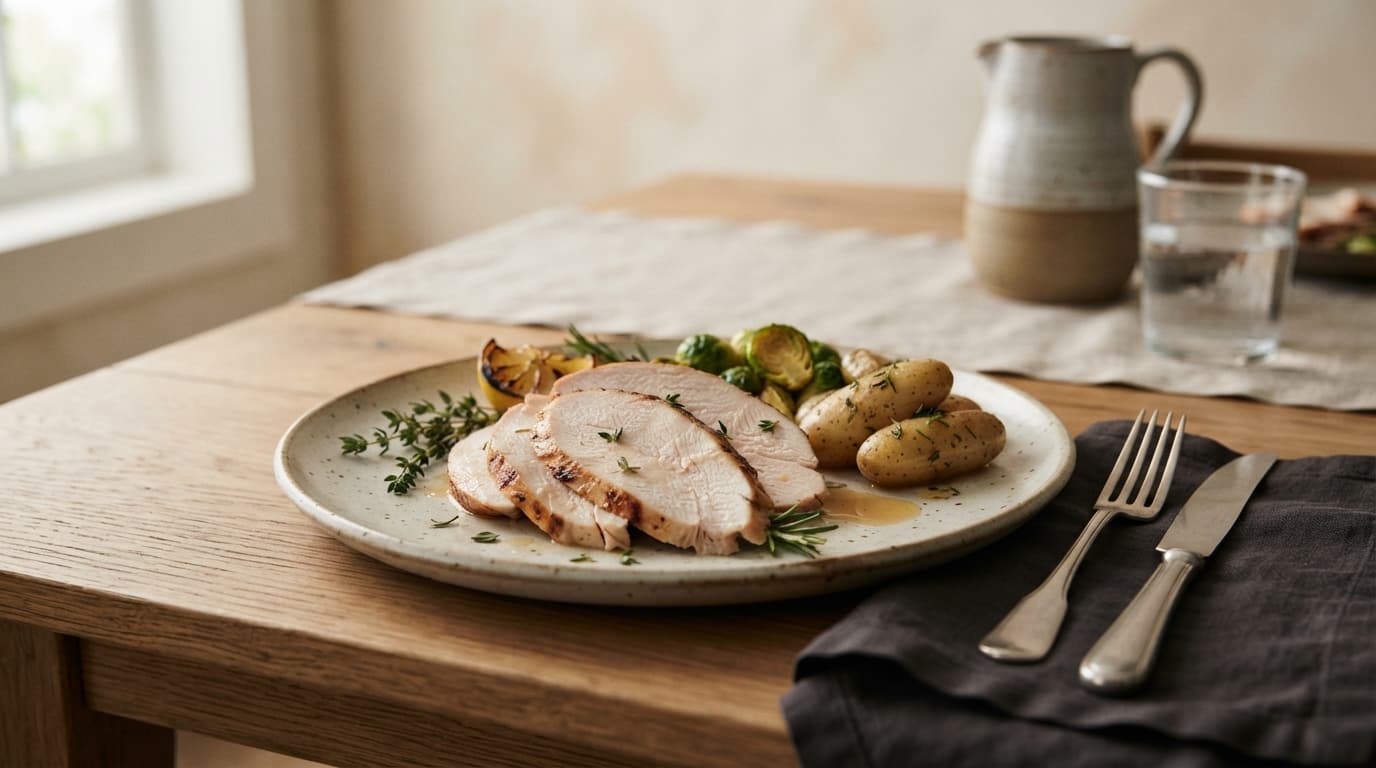
Plan on 3/4 to 1 pound of boneless turkey breast per person, less than the USDA's 1 to 1 1/4 pounds for whole turkey, since boneless meat has no bone weight.
10 min read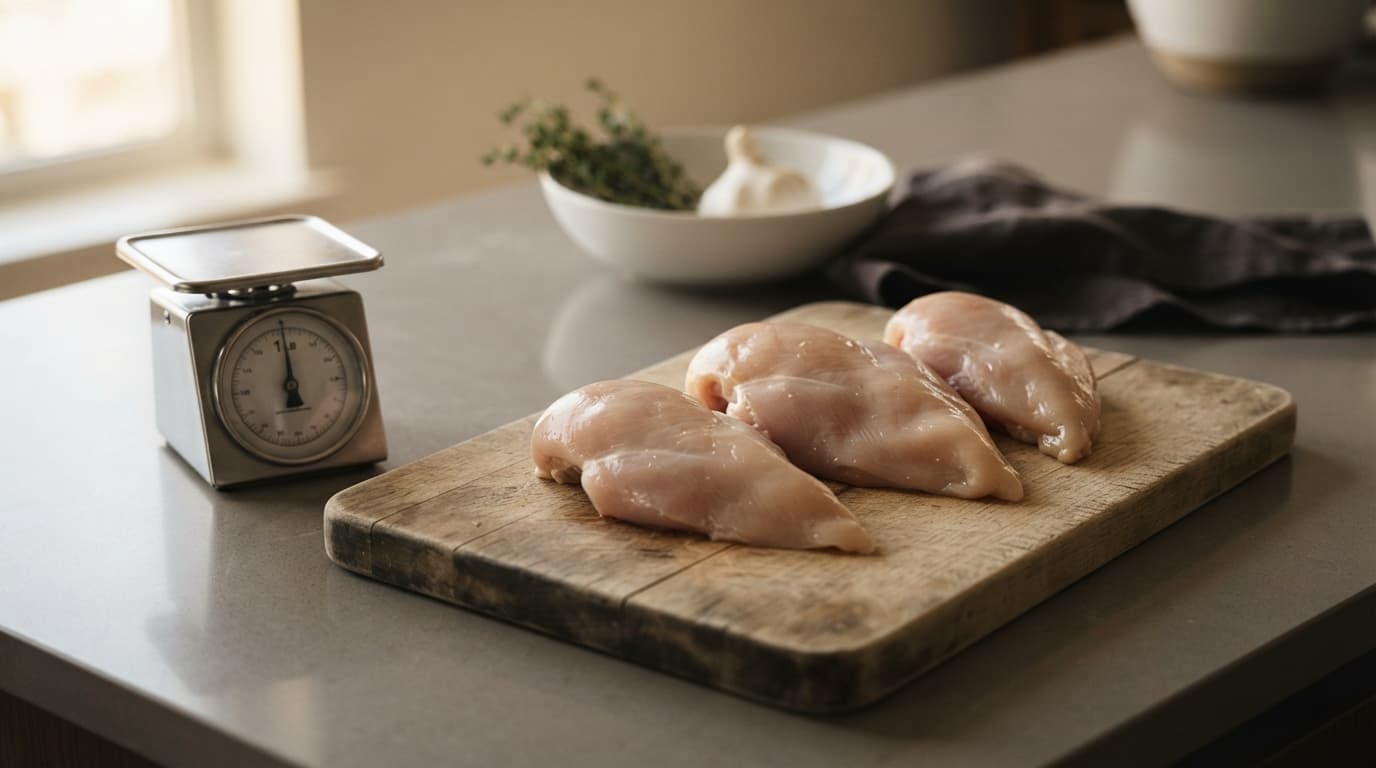
A pound of boneless chicken breast typically holds 2 to 3 pieces, since most breasts weigh 5 to 8 ounces. Size varies enough that weighing beats counting for a recipe.
10 min read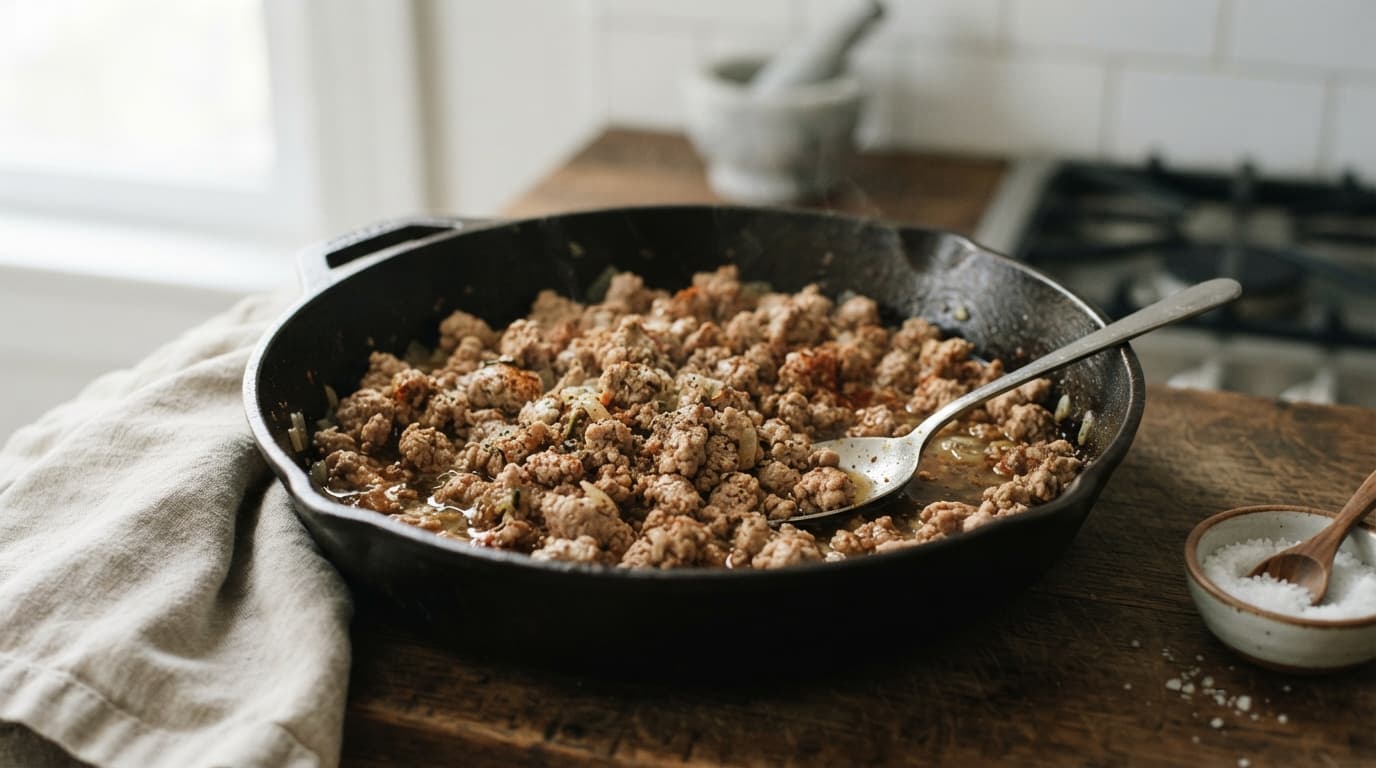
Ground turkey needs about 7 to 10 minutes over medium heat, but time is only a guide. The real requirement is 165°F all the way through, confirmed with a thermometer.
9 min readTables release two weeks out on Resy, Shukette's own booking platform.
Book Now →