Can You Boil Frozen Chicken?
Editorial desk · 10 min read · Updated 2026-08-22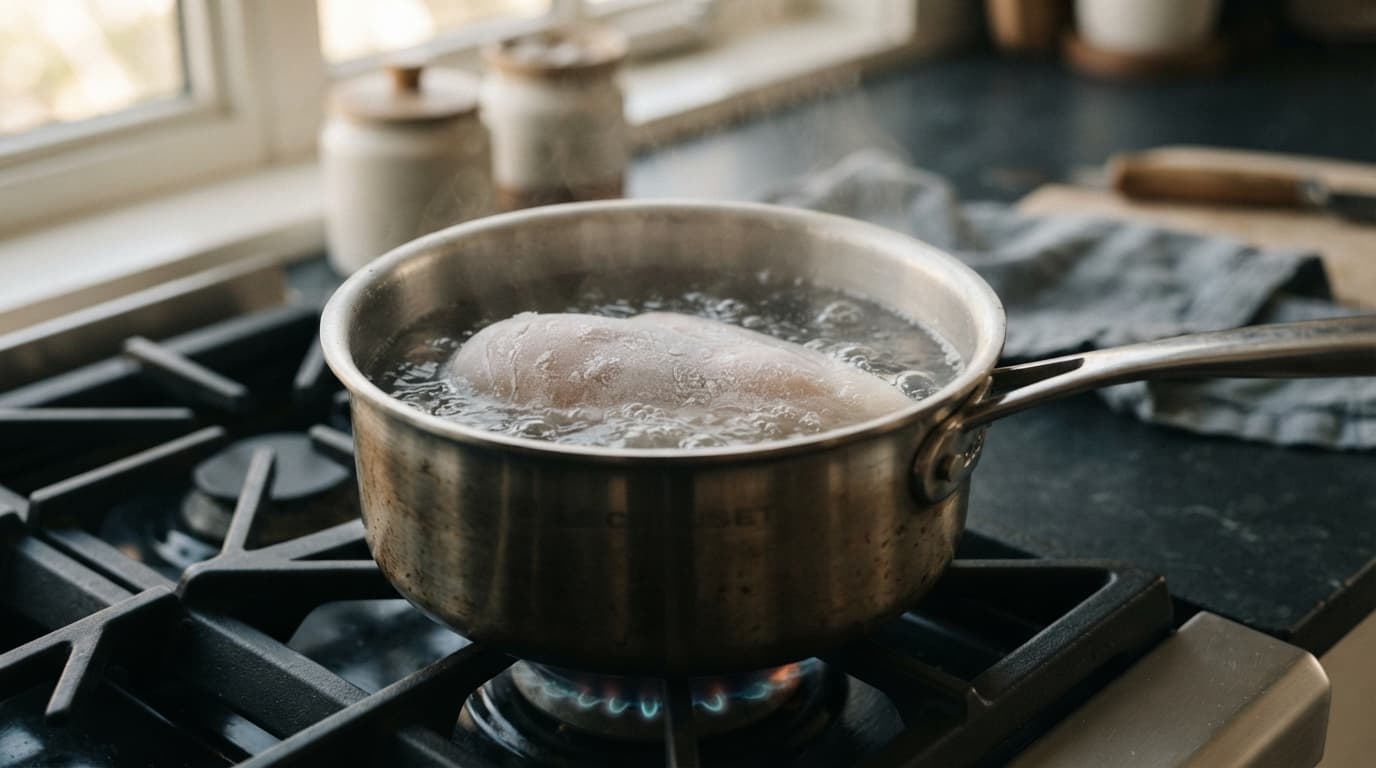
Yes, boiling frozen chicken is safe, and it's one of the few cooking methods USDA guidance specifically approves for cooking chicken straight from frozen without thawing first. The stovetop, boiling included, joins the oven as an accepted frozen-start method; the slow cooker and microwave do not make that same list. Expect the process to take roughly 50% longer than it would starting from fully thawed chicken, and the same 165°F safety check applies regardless of whether you started frozen or thawed.
This is a more useful answer than a flat yes or no, since the real value here is knowing why boiling works from frozen when some other common methods specifically don't.
Why boiling works from frozen when a slow cooker doesn't
The difference comes down to how quickly each method gets food out of the temperature danger zone, the range between 40°F and 140°F where bacteria multiply fastest. Boiling water starts well above that danger zone and stays there, which means frozen chicken dropped into already-boiling water begins moving through the risky temperature range relatively quickly as it thaws and cooks simultaneously.
A slow cooker works differently by design: it heats gradually, which is exactly the appeal for a low-and-slow braise or stew starting from thawed ingredients. That same gradual heating becomes a liability with frozen meat, since it can leave a frozen piece sitting in the danger zone for an extended stretch before the slow cooker's heat actually catches up to it. This is specifically why FSIS guidance calls for thawing meat and poultry before it goes into a slow cooker, while boiling and oven cooking from frozen remain approved options.
The microwave has a related but distinct problem. Rather than heating too slowly, it heats unevenly, using energy waves that can penetrate and warm some parts of a piece of food faster than others, especially uneven or irregularly shaped pieces like bone-in chicken. Starting from frozen amplifies that unevenness, since parts of the chicken can begin actively cooking while other parts remain solid ice, which makes it harder to reach a uniformly safe temperature throughout the piece using a microwave alone.
What actually changes when you start from frozen
Cooking frozen chicken on the stovetop, whether boiling, simmering, or another liquid-based method, takes meaningfully longer than the same process with thawed chicken, roughly 50% more time according to general USDA guidance. That's a planning estimate rather than an exact formula, since real cooking time depends on factors like how large the frozen pieces are, how much water surrounds them, and how vigorously the pot is actually boiling rather than just simmering.
Frozen pieces also tend to cook less evenly than thawed ones, at least initially, since the outer layer starts absorbing heat and thawing before the center does. This unevenness generally resolves itself over the extended cooking time boiling requires, but it's part of why checking multiple pieces with a thermometer matters more here than it would with a batch of chicken that all started at the same thawed temperature.
The thermometer check matters even more starting from frozen
Because frozen chicken pieces can vary somewhat in size and thickness, and because ice can mask how much cooking has actually happened inside a piece, a food thermometer reading of 165°F in the thickest part of each piece is the only reliable way to confirm doneness. Visual cues that work reasonably well for thawed chicken, color, firmness, become less reliable starting from frozen, since the outside of a piece can look fully cooked while the center, which started as solid ice, is still catching up.
If you're boiling several pieces of frozen chicken in the same pot, check more than one rather than assuming uniform doneness across the batch. Pieces that started slightly smaller or thinner will generally finish before larger ones in the same pot, the same unevenness that shows up whenever a batch of similarly-shaped but not identically-sized pieces cooks together.
Whole frozen poultry, rather than individual pieces, carries one more specific detail worth knowing: any giblet pack tucked inside the cavity needs to be removed as soon as it can be loosened, then cooked separately rather than left inside. This matters because the giblet pack itself needs its own safe cooking process, and leaving it stuck inside a boiling or roasting bird longer than necessary doesn't guarantee it's being handled safely alongside the rest of the meat.
When boiling from frozen actually makes sense
Boiling frozen chicken is a genuinely useful option when you've forgotten to thaw chicken ahead of time and need to get dinner started without the wait that refrigerator or even cold-water thawing requires. It's particularly practical for dishes where the chicken will be shredded, diced, or otherwise broken down after cooking anyway, soups, chicken salad, tacos, since the exact texture of a boiled piece matters less in those applications than it would for a dish meant to showcase a single, intact cut.
It's a less ideal choice for a dish where you want a specific texture or browning that boiling simply doesn't produce, a grilled or seared preparation, for instance, where the cooking method itself is part of what makes the dish work. For those situations, planning ahead with refrigerator thawing, or accepting the faster cold-water thawing method with its requirement to cook immediately afterward, fits the dish better than starting from frozen and boiling.
There's also a practical texture tradeoff worth knowing about even within boiling itself. Chicken boiled from frozen tends to release more liquid into the pot as it thaws and cooks simultaneously, which can leave the meat slightly less tender than the same chicken boiled from a fully thawed state, where less internal moisture gets pushed out during cooking. This is a minor quality difference rather than anything approaching a safety concern, and it's usually not noticeable at all in a dish where the chicken gets shredded and mixed with other ingredients afterward, but it's worth knowing if you're comparing results side by side.
If you're boiling chicken specifically to make broth or stock, starting from frozen changes the process slightly compared to a recipe written around thawed chicken. The extended cooking time needed for frozen chicken to reach a safe temperature happens to align reasonably well with how long a good broth typically needs to simmer anyway, which means starting from frozen isn't necessarily a disadvantage for this particular use case the way it might be for a quick weeknight dish.
What does change is the initial cloudiness of the liquid. Chicken starting from frozen tends to release more proteins and impurities into the water during the first stretch of cooking, which can make an early broth look cloudier than one started from thawed chicken. Skimming the surface periodically during the first portion of the cook, a standard broth-making step regardless of starting temperature, addresses this the same way it would with thawed chicken; it just may take a bit more attention in the early stages when starting from frozen.
Comparing boiling to other cooking methods, safety-wise
Boiling and oven-baking share the same fundamental safety logic when starting from frozen: both deliver consistent, direct heat from the start, which keeps the food moving through the danger zone at a predictable pace even without prior thawing. Baking chicken breast from frozen follows the same general 50%-longer guidance as boiling does, for the same underlying reason.
The slow cooker and microwave sit on the other side of this divide for different reasons: the slow cooker heats too gradually, and the microwave heats too unevenly, cooking some areas of the food while leaving others still frozen. Boiling avoids both problems, since submerging chicken in already-boiling water applies consistent, sufficiently high heat to the entire surface of every piece from the moment it goes into the pot.
Bone-in, skin-on pieces, thighs and drumsticks especially, behave differently from frozen boneless breast in the same pot. Bone conducts heat more slowly than muscle tissue, which means a frozen bone-in piece needs longer for the area right against the bone to catch up to the rest of the meat, on top of the general 50%-longer estimate that already applies to boiling from frozen. This is the same reason a thawed bone-in thigh can read a few degrees cooler near the bone than at its surface; starting from frozen just stretches that gap out over a longer stretch of cooking time. Skin adds a texture note worth knowing too: frozen skin-on pieces tend to release more rendered fat into the water as they cook, which can leave a thin greasy layer on the surface that a boneless, skinless piece wouldn't produce, worth skimming off if you're making broth and want a cleaner-tasting result. None of this changes the temperature check itself: a bone-in piece still needs a thermometer reading of 165°F taken away from the bone, checked in more than one piece per batch, exactly like frozen boneless cuts.
What this means for planning a meal
If you're building a meal around boiled chicken and started from frozen, budget real extra time beyond what a recipe calls for with thawed chicken, and plan to check for doneness rather than trusting a strict clock. This is one more version of a principle that holds across nearly every chicken-cooking question: a stated time is a planning estimate, and a thermometer reading is the actual confirmation, regardless of whether you started from thawed or frozen chicken.
It's also worth thinking about pot size and water volume when boiling from frozen specifically. A pot that's too small for the amount of frozen chicken you're adding cools the boiling water down more dramatically than the same amount of thawed chicken would, since frozen pieces absorb more heat just to reach the water's temperature before any actual cooking progress begins. Using a larger pot with more water relative to the amount of chicken helps the water recover to a full boil faster after the frozen chicken goes in, which keeps the whole process closer to the standard 50%-longer estimate rather than stretching meaningfully beyond it.
A few situations where boiling from frozen isn't the right call
Despite being a generally safe and useful method, boiling frozen chicken isn't the best choice in every situation. If you're working with a very large piece, a whole frozen chicken rather than individual pieces or parts, the extended cooking time required to safely bring the center up to temperature can run long enough that it's often more practical to plan ahead with proper thawing instead. The 50% guidance holds reasonably well for smaller, more uniform pieces; a whole bird introduces more size and shape variation that makes the extended cooking time harder to predict precisely.
It's also not the right choice if you're specifically trying to preserve a delicate texture or a particular appearance in the finished dish. Boiling, whether starting from frozen or thawed, produces a fundamentally different result than grilling, roasting, or pan-searing, and starting from frozen doesn't change that underlying difference. If the recipe or dish depends on browning, a crisp exterior, or a specific char, boiling was never going to be the right method regardless of starting temperature, and that's a cooking-method decision separate from the frozen-versus-thawed question entirely.
The real value in knowing that boiling from frozen is safe is having a reliable fallback for the nights when thawing simply didn't happen, not a reason to make it your default approach to chicken. Used deliberately, for soups, shredded dishes, or genuine time crunches, it's a legitimate tool. Used as a habit to avoid planning ahead entirely, it trades away some texture and flexibility that thawing in advance would have preserved, even though neither choice compromises safety on its own.
If skipping the thawing question entirely sounds better than managing it, ordering chicken prepared by a kitchen that's already stocked and staffed for same-day cooking removes this particular planning problem altogether. For home cooking, though, boiling frozen chicken is a legitimate, USDA-approved shortcut when you're working against the clock, not a corner cut on safety.
Keep the distinction between the two fast methods in mind the next time you're in a rush: boiling and the oven get a green light from frozen because they deliver steady, sufficient heat from the first minute, while the slow cooker and microwave don't, for their own separate reasons. Remembering which side of that line each appliance falls on saves you from having to relearn the rule every time you're standing in front of a freezer wondering what to do with dinner.
Frequently asked questions
Is it safe to boil chicken straight from frozen?+−
Yes. USDA guidance confirms it's safe to cook meat and poultry from the frozen state, and the stovetop, including boiling, is one of the approved methods. Expect the process to take roughly 50% longer than it would with fully thawed chicken.
Does boiling frozen chicken take exactly 50% longer than thawed chicken?+−
That figure is a general USDA estimate, not an exact multiplier for every situation. Actual time depends on the size and thickness of the frozen pieces, how much water is in the pot, and how vigorously it's boiling, so checking with a thermometer matters more than trusting the percentage precisely.
Why can't I put frozen chicken in a slow cooker, but boiling is fine?+−
A slow cooker heats gradually and can leave frozen chicken in the unsafe temperature danger zone for too long before it heats through. Boiling water is already well above that danger zone from the start, which is why the stovetop, unlike a slow cooker, is an approved method for cooking chicken from frozen.
How do I know when boiled frozen chicken is actually done?+−
The same way as any other chicken: a food thermometer reading 165°F in the thickest part of the piece. Since frozen chicken pieces can be uneven in size, check more than one piece if you're boiling several at once.
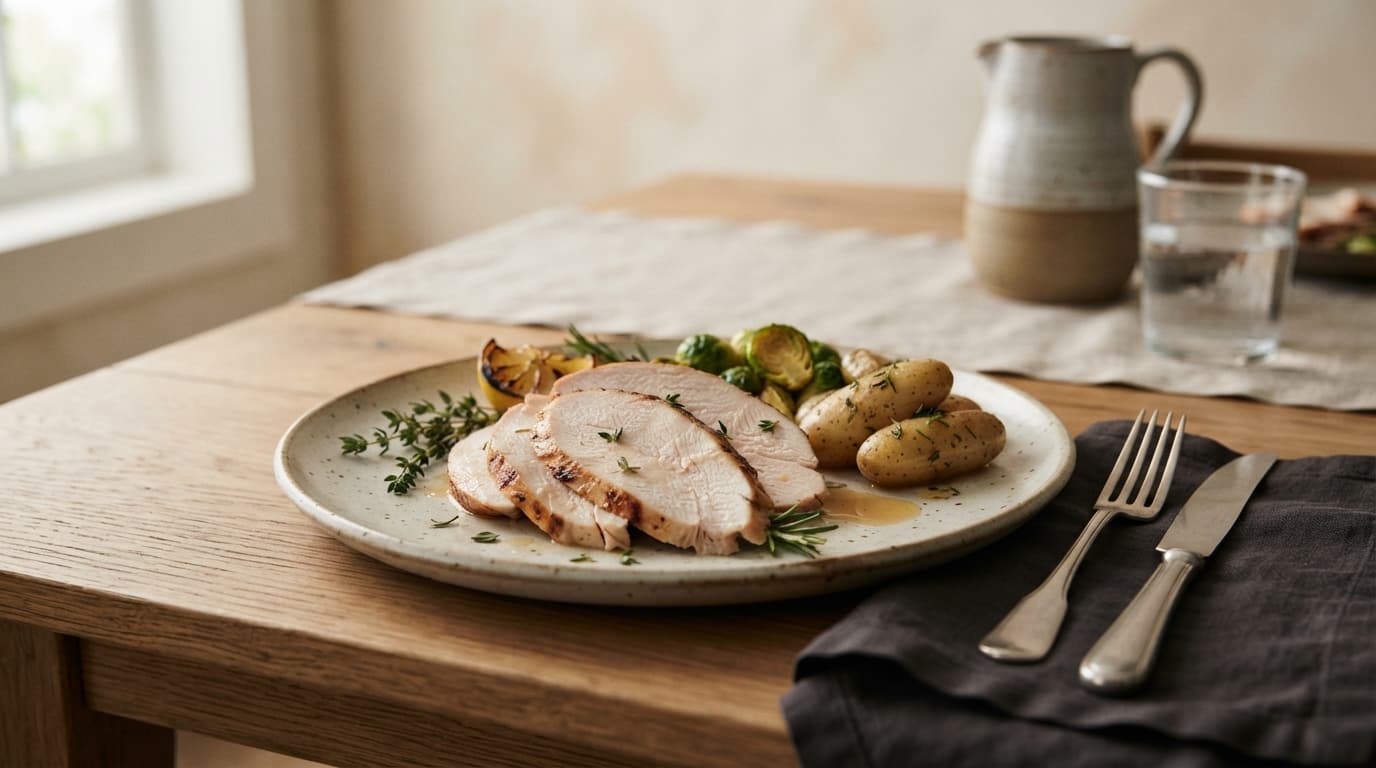
Plan on 3/4 to 1 pound of boneless turkey breast per person, less than the USDA's 1 to 1 1/4 pounds for whole turkey, since boneless meat has no bone weight.
10 min read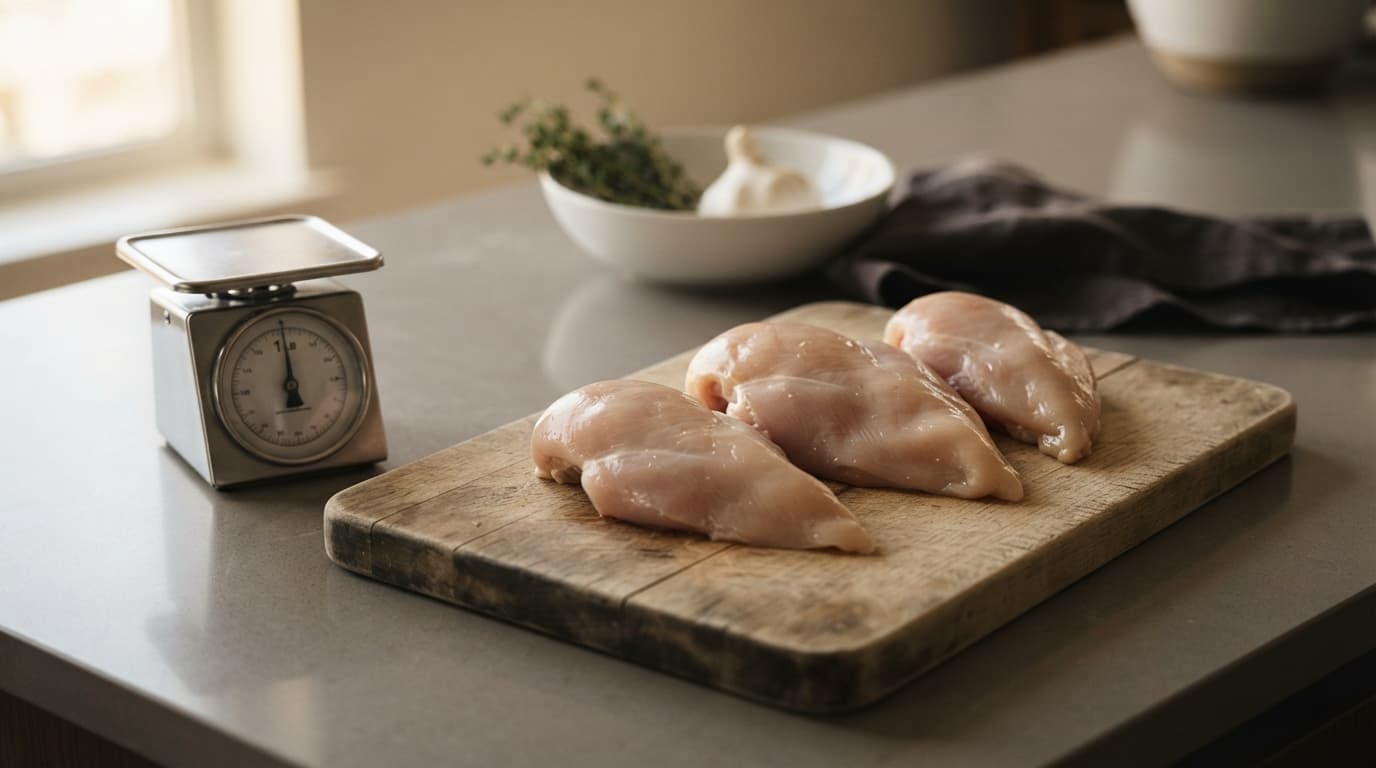
A pound of boneless chicken breast typically holds 2 to 3 pieces, since most breasts weigh 5 to 8 ounces. Size varies enough that weighing beats counting for a recipe.
10 min read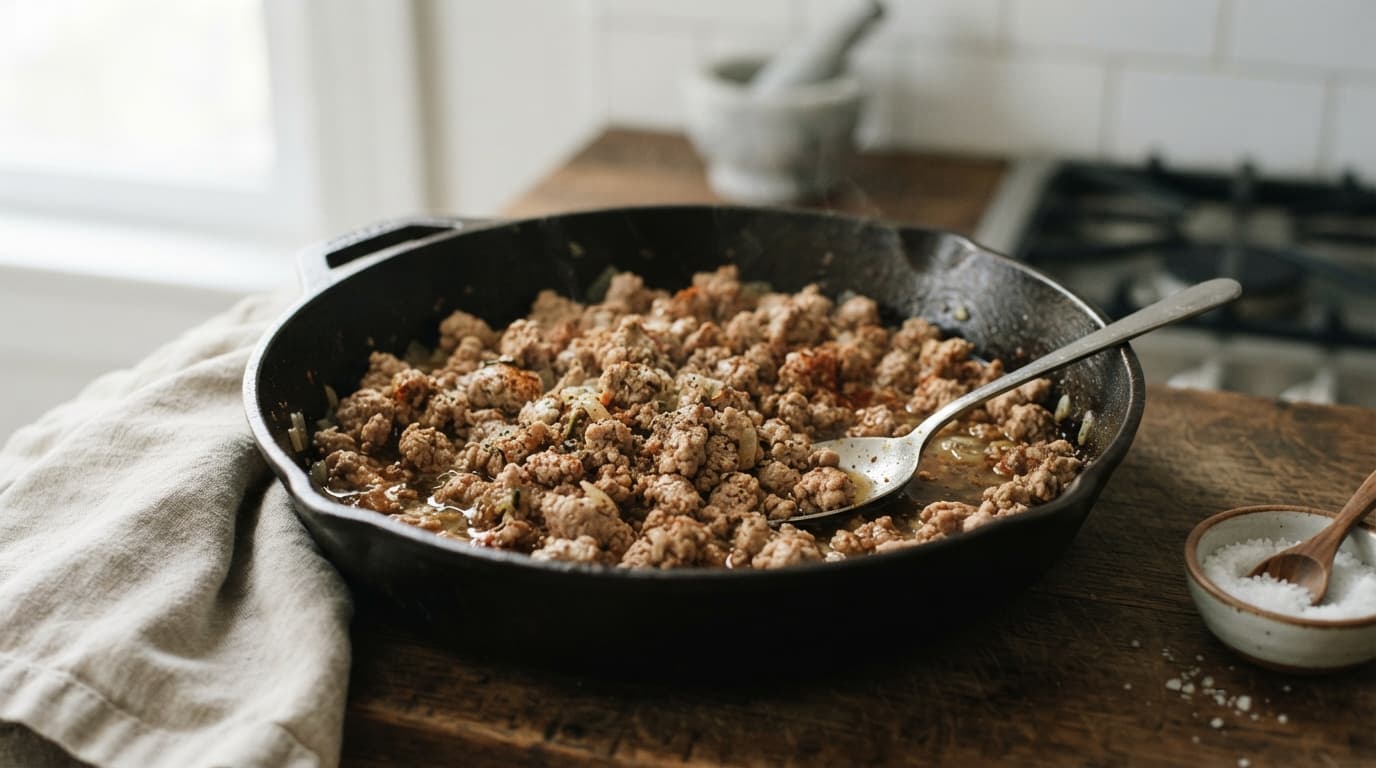
Ground turkey needs about 7 to 10 minutes over medium heat, but time is only a guide. The real requirement is 165°F all the way through, confirmed with a thermometer.
9 min readTables release two weeks out on Resy, Shukette's own booking platform.
Book Now →