Can You Eat Bacon Raw?
Editorial desk · 9 min read · Updated 2026-08-22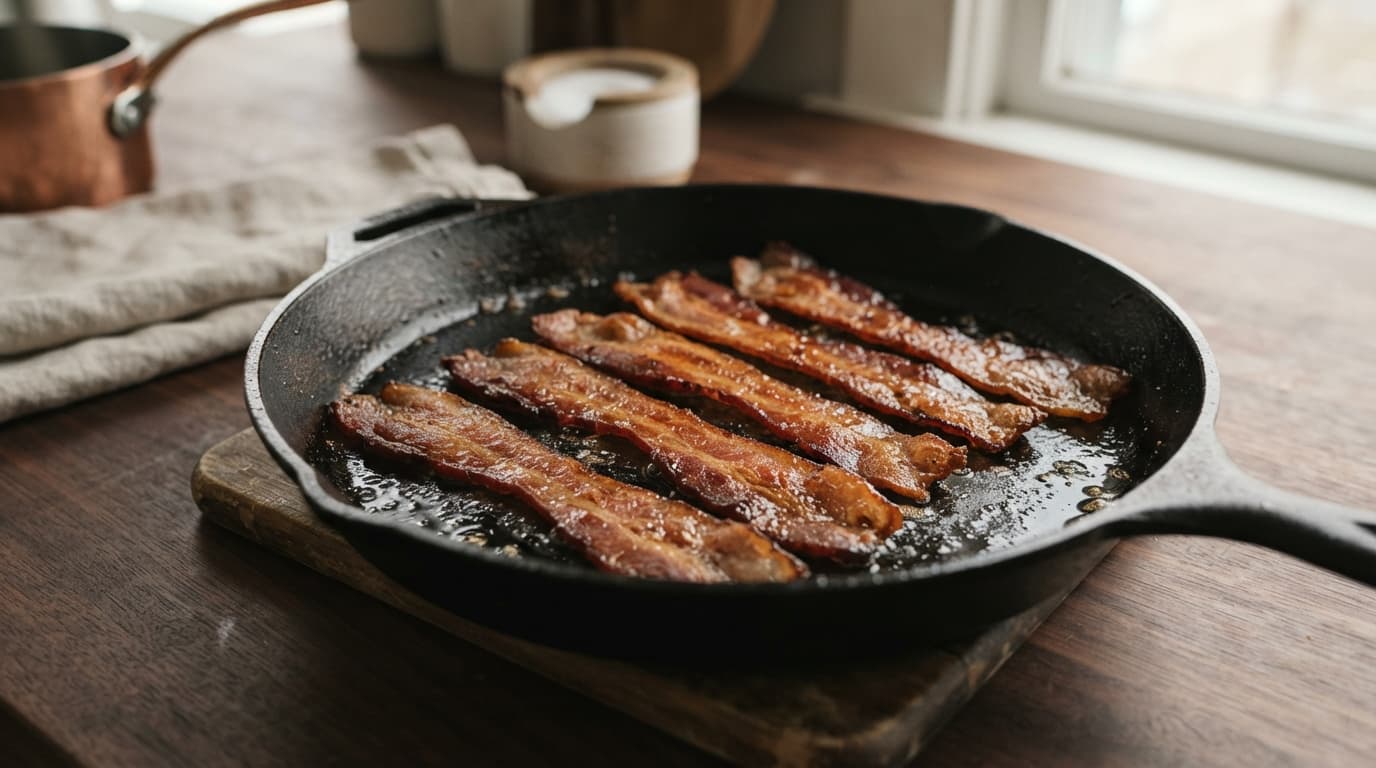
No, bacon isn't safe to eat raw. It receives some heat during smoking and curing, but USDA guidance is direct about this: that processing step isn't enough to make bacon a ready-to-eat product. It still needs to be cooked to a safe point before eating, the same as any other raw pork product, regardless of how finished it looks straight out of the package.
This surprises people because bacon looks and smells like it's already been through a real cooking process. Smoked, cured, deeply colored, it doesn't resemble a raw chicken breast or an uncooked steak. That appearance is misleading, though, and it's worth understanding exactly why the processing bacon does receive falls short of making it safe.
The heat bacon gets isn't the heat that makes it safe
Bacon production includes a heat-processing step as part of curing and smoking, and that step does real work: it affects texture, flavor, and some degree of preservation. What it doesn't do, according to USDA's own guidance, is reach a level sufficient for food safety. Bacon is explicitly categorized as not ready-to-eat, which means it needs refrigeration or freezing before cooking and full cooking before consumption, the same category as raw chicken or a fresh cut of pork.
This is a narrower, more specific claim than "bacon is basically raw meat." It's partially processed, just not processed enough to clear the safety bar that separates a raw product from a ready-to-eat one. That distinction, partial processing without a safety guarantee, is exactly the gap that leads people to assume bacon is safer uncooked than it actually is.
Curing doesn't reliably kill the parasite risk either
A related and even less obvious point: curing alone doesn't reliably destroy Trichinella, the parasite historically associated with undercooked pork. USDA research specifically found no single curing parameter, or combination of parameters, that consistently correlates with eliminating this parasite. That's why cured pork products, bacon included, still require dedicated control procedures during processing rather than relying on the curing process by itself to handle that risk.
This matters because "cured" carries an implicit assumption for a lot of people, that a curing process is itself a food-safety treatment strong enough to make a product safe without further cooking. For some cured meats, that assumption holds under specific, tightly controlled conditions. For bacon specifically, it doesn't. The curing and smoking bacon undergoes is about flavor and preservation characteristics more than it is a verified pathogen-elimination step.
What raw bacon can actually carry
Raw pork, bacon included, can carry several of the same foodborne pathogens found across other raw meats: Salmonella, Staphylococcus aureus, Campylobacter, Yersinia enterocolitica, Listeria monocytogenes, and Toxoplasma gondii, along with the Trichinella parasite discussed above. All of these are destroyed by proper cooking, which is the entire point of the safe-handling instructions required on every package of raw bacon.
None of this means raw bacon is unusually dangerous compared to other raw pork or poultry products; it carries a broadly similar risk profile. The specific issue with bacon is more about expectation than elevated danger: people are less likely to think of bacon as "raw meat" the way they would a chicken breast or thigh, which makes it easier to underestimate the same basic cooking requirement that applies to it.
This expectation gap shows up in a specific, common scenario: someone tasting raw bacon batter, cookie-dough style, while prepping a bacon-wrapped dish, or nibbling a piece straight from the package while cooking the rest. That casual taste-testing habit is exactly the kind of moment where the "it's already cured" assumption does real work convincing someone a small taste is harmless, when the same underlying pathogens present in any raw pork product are still present in that piece.
The rare exception: products actually labeled ready-to-eat
Not every bacon-adjacent product on a shelf falls under this rule. Some specialty products, certain poultry bacon items among them, are processed to a point where they're genuinely ready to eat, and those products carry explicit labeling to say so, phrases like "fully cooked" or "ready to eat" printed directly on the package. If a product doesn't carry that specific labeling, the safe assumption is that it's raw and needs full cooking, regardless of how finished it looks or smells.
This labeling requirement exists precisely because appearance alone misleads people so consistently on this specific product. A government-mandated label is a more reliable signal than personal judgment about how "done" a product looks, which is a pattern worth remembering any time you're evaluating an unfamiliar cured or processed meat product: look for the actual words on the package rather than inferring safety from color, texture, or how a product is marketed elsewhere on the shelf.
This labeling distinction is the actual, reliable way to tell the difference, rather than guessing based on color, texture, or how the product is marketed elsewhere. A deeply smoked, dark-colored strip of standard bacon can look more "done" than a paler, genuinely ready-to-eat product, which is exactly why relying on appearance instead of the label leads people astray, and it's also why color alone is such an unreliable signal once bacon is actually cooking in the pan.
Why this differs from some other cured meats
Part of the confusion around raw bacon comes from genuine exceptions elsewhere in the cured-meat world. Some dry-cured products, certain salamis and prosciutto-style items, are produced through processes specifically validated to make them safe to eat without further cooking, under controlled conditions that meet a different safety standard than bacon's production process does. Bacon isn't produced under that same validated dry-curing framework, which is why it doesn't get the same raw-eating allowance those specific products can carry.
This is a genuinely important distinction rather than a technicality: two products can both be described informally as "cured pork" while falling into completely different food-safety categories based on how each one is actually processed. Assuming bacon shares the same safety profile as an unrelated cured product, because both get lumped into "cured meats" in casual conversation, is exactly the kind of assumption that leads to a real mistake.
The dry-curing process behind a validated ready-to-eat product typically involves a much longer timeline, carefully controlled humidity and temperature, and specific salt and moisture-reduction targets that are tested and verified to reliably eliminate pathogens over that extended period. Bacon's production timeline and process are built around flavor and texture goals on a much shorter schedule, which is part of why it was never developed or validated as a raw-safe product in the same way. Neither process is better or worse in some general sense; they're simply built to achieve different outcomes, and only one of those outcomes includes a validated raw-eating safety profile.
The raw-versus-ready-to-eat distinction isn't specific to pork bacon, either. Turkey bacon and other poultry-based bacon alternatives go through a broadly similar production process, and the same rule applies: unless the package explicitly says fully cooked or ready to eat, treat it as a raw product needing full cooking before it's safe. The specific pathogens of concern shift slightly toward those more commonly associated with poultry rather than pork, but the underlying logic, partial processing during production isn't the same as a food-safety guarantee, carries over directly.
This matters because turkey bacon in particular sometimes gets marketed or perceived as a lighter, more virtuous alternative to pork bacon, and that health-forward framing can unintentionally suggest it's also somehow gentler or safer to handle casually. Nutritionally, turkey bacon may differ from pork bacon in meaningful ways; from a raw-handling and cooking-requirement standpoint, though, it follows the identical rule. A lower-fat product doesn't need any less cooking before it's safe to eat.
Cooking bacon properly
Some dishes create real confusion about this rule because they look like they're built around barely-cooked bacon. A carbonara sauce, for instance, is finished off the heat, and the bacon or pancetta in it can look softer and less browned than a strip served on its own at breakfast. The bacon itself still needs to reach full doneness in the pan before it goes into the finished dish; the sauce being assembled off-heat afterward doesn't give the meat a pass on cooking through first. A softer, less-crisped piece of bacon can absolutely still be fully cooked, since crispness and doneness are separate things, but "less crisp" isn't the same as "undercooked," and a genuinely raw or translucent piece added to a pasta dish carries the same risk it would anywhere else.
Bacon-wrapped appetizers raise a similar issue at parties and holiday gatherings, where a batch is often pulled early to keep dates, shrimp, or other quick-cooking centers from overcooking. Checking the bacon on a few pieces from the middle of the tray, not just the ones closest to the oven's heat source, catches the pieces most likely to still be underdone before the tray goes out to guests. Reused bacon grease is worth a separate mention too: fat rendered from a fully cooked batch is safe to strain and reuse for cooking, but grease pulled off a pan before the bacon in it finished cooking can carry the same raw-pork risk as the meat itself, so straining only comes after the bacon is done, not partway through.
Cooking bacon fully means bringing it to the point where it's no longer translucent or soft throughout, typically crisp or at least fully opaque and firm, whether it's pan-fried, baked, or cooked by another method. Unlike a whole cut of pork such as tenderloin, which has an official 145°F minimum with allowance for a pink center, bacon doesn't have the same widely published internal-temperature target, since it's thin enough that visual doneness, fully cooked through with no raw or translucent sections remaining, is the practical standard most home cooks and recipes rely on.
If you're cooking bacon as part of a larger dish, a wrapped preparation, a stuffed dish, or anything where bacon is baked alongside other ingredients, make sure the bacon itself reaches full doneness even if the surrounding dish's overall cooking time is calibrated around a different ingredient. Bacon tucked inside or wrapped around something else can sometimes finish more slowly than bacon cooked directly and exposed to heat, so checking it specifically, rather than assuming it's done because the rest of the dish looks finished, avoids ending up with an undercooked strip in an otherwise fully cooked dish.
This is a similar principle to how a large cut like a whole turkey needs checking in multiple spots rather than trusting one reading: any dish with more than one component that needs to reach a safe point benefits from checking each part individually instead of assuming they all finish together. Bacon wrapped around a piece of chicken or tucked into a dish with other ingredients is exactly this kind of multi-component situation, even on a much smaller scale than a holiday turkey.
The simple rule to remember
Unless a package explicitly says "fully cooked" or "ready to eat," treat bacon as raw pork that needs full cooking, the same category as any other uncooked cut. The smoking and curing it's already been through are real production steps, but they're not a substitute for actually cooking it, and neither the curing process nor the product's finished appearance reliably signals that it's safe to eat straight from the package.
This is one of the more counterintuitive food-safety facts precisely because bacon doesn't look, smell, or feel like other raw meat. Raw chicken and raw beef read as obviously uncooked to almost anyone; bacon's deep color and smoky aroma read as finished, even though neither trait reflects an actual safety standard. Trusting the label over the appearance is the one habit that resolves this gap reliably, and it's worth applying to any unfamiliar cured or smoked product you come across, not just bacon specifically. If a package doesn't explicitly claim to be ready to eat, the safest assumption is that it isn't, regardless of how thoroughly processed it looks.
Frequently asked questions
Is it safe to eat bacon straight from the package?+−
No. Standard bacon is not a ready-to-eat product, even though it looks and smells like it's already been processed. USDA guidance is explicit that bacon must be cooked before eating, regardless of how it's cured or smoked.
Doesn't smoking or curing bacon already cook it?+−
Not enough to make it safe. Bacon does receive a heat-processing step during production, but USDA is specific that this step doesn't reach the level needed for food safety. It reduces some risk without eliminating it.
Can curing alone kill the parasite that causes trichinosis?+−
No reliable evidence supports that. USDA research found no combination of curing parameters that consistently destroys Trichinella, which is why cured pork products still require additional control measures rather than relying on curing by itself.
How do I know if a bacon product is actually safe to eat without cooking?+−
Check the label specifically. Products that are genuinely ready to eat say so directly, with wording like "fully cooked" or "ready to eat." If a bacon package doesn't say that, treat it as raw and cook it fully before eating.
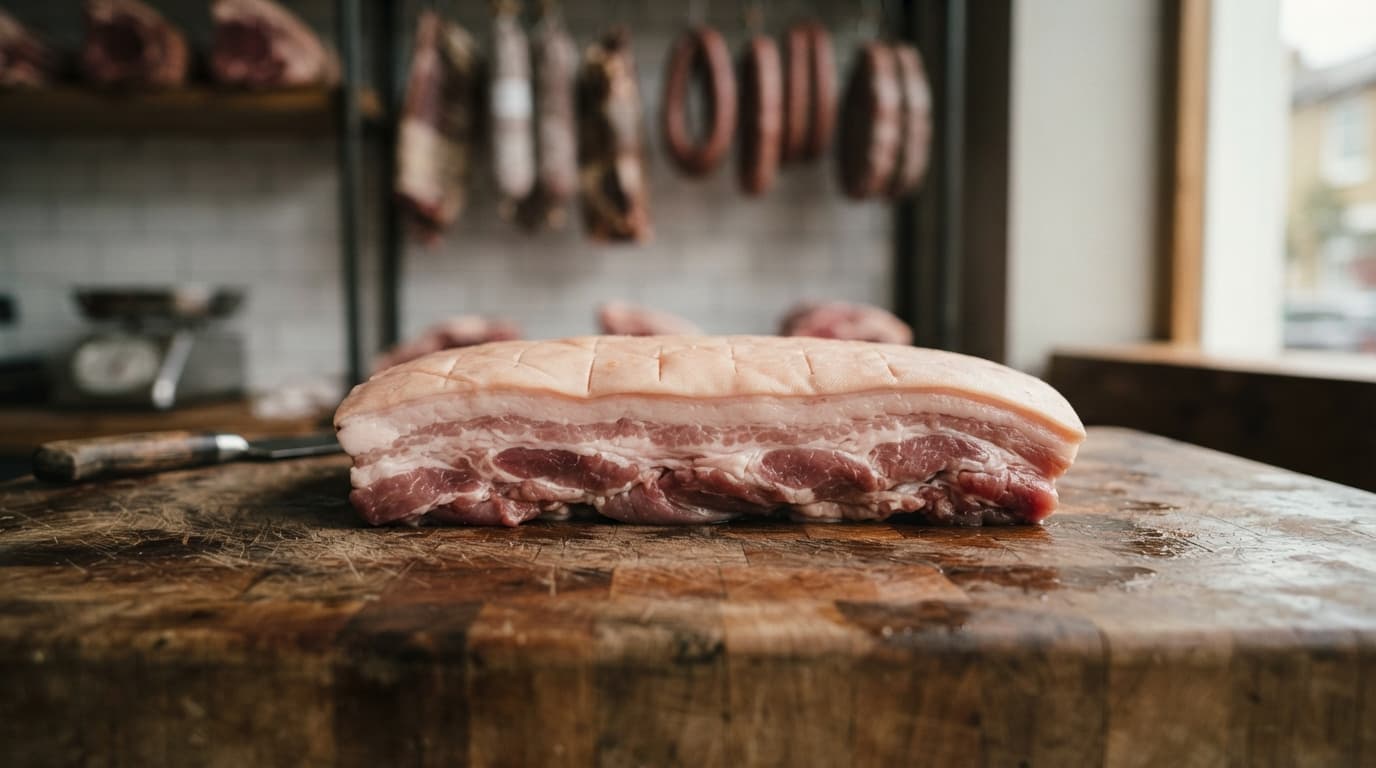
Pork belly shows up at large supermarkets, warehouse clubs, Asian grocery stores, and butcher counters, though selection and cut style vary a lot by store type.
9 min read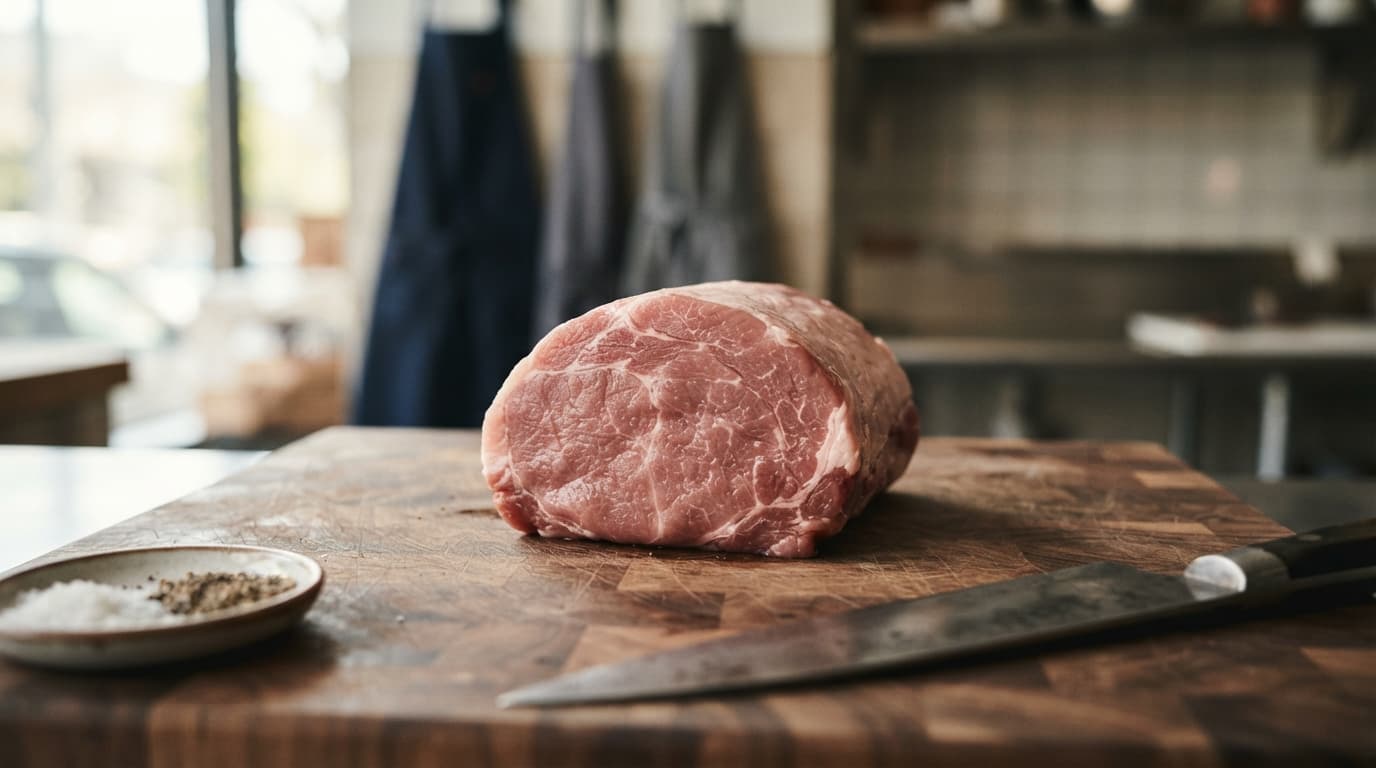
Pork cushion meat is a boneless cut from the picnic shoulder, officially known as IMPS 405B. It's lean, well-worked, and best cooked low and slow, like pork butt.
9 min read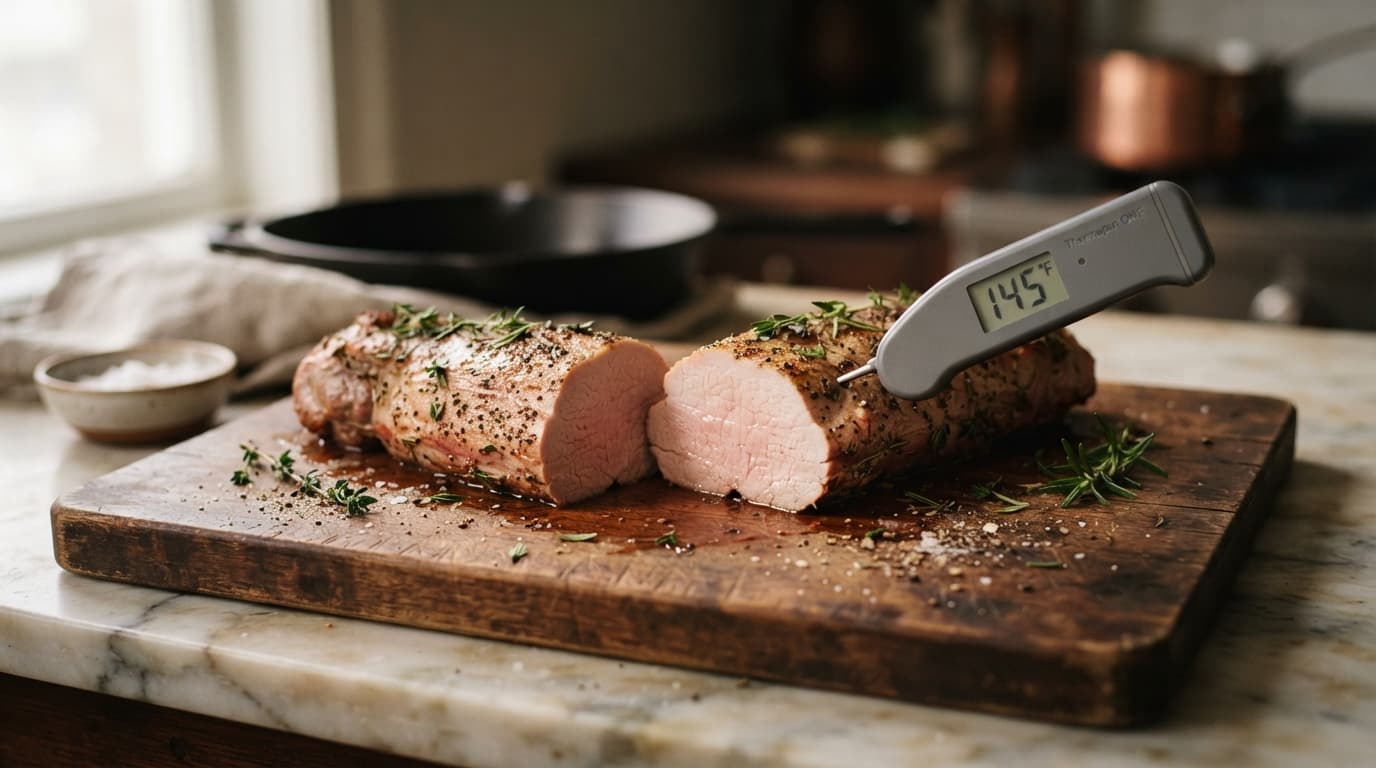
Pork tenderloin is done at 145°F, checked in the thickest part with a thermometer, then rested 3 minutes. Same number whether you grill, roast, or pan-sear it.
9 min readTables release two weeks out on Resy, Shukette's own booking platform.
Book Now →