How to Tell When Bacon Is Done
Editorial desk · 9 min read · Updated 2026-08-22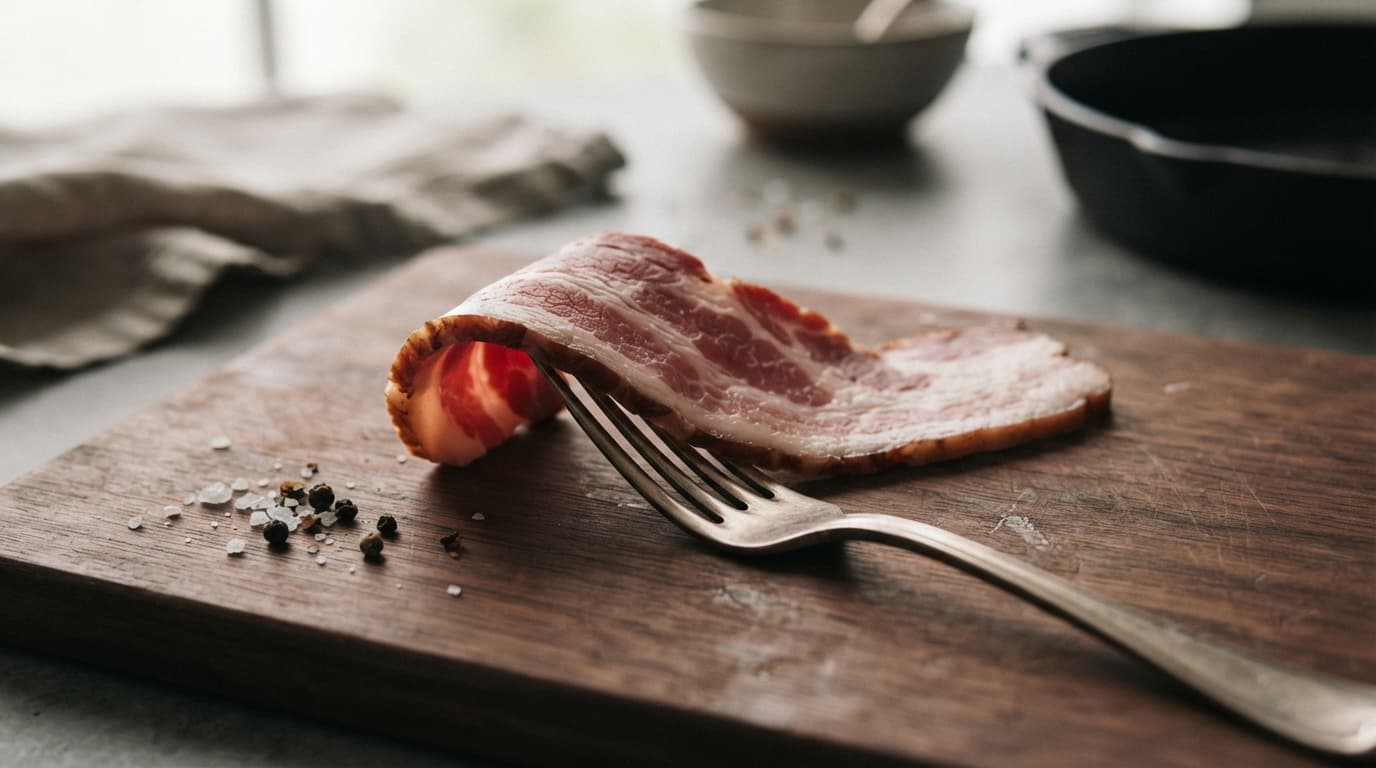
Bacon is done once it's fully opaque throughout, with no raw, translucent, or pink-gray sections remaining, typically firm to the touch and browned rather than soft and pale. That's a practical, appearance-based standard, and it's worth being upfront about why: USDA doesn't publish a specific numeric internal temperature for bacon the way it does for a whole cut like pork tenderloin, largely because bacon's thin, quick-cooking shape makes a thermometer reading impractical for most home cooks.
This puts bacon in a slightly different position than most other meat and poultry questions this kind of guide answers. USDA's general food-safety stance is clear that color and appearance aren't reliable safety indicators for meat generally, and that a thermometer is the only way to confirm doneness with certainty. For bacon specifically, though, there's no widely published official number to check against, which means the practical, appearance-based approach most people already use is the standard actually available, even if it isn't the gold-standard thermometer check USDA prefers in principle.
Why bacon doesn't get the same thermometer treatment as other cuts
A pork tenderloin, a chicken breast, a steak: all of these are thick enough that a thermometer probe can be inserted into the center and get a meaningful reading. A strip of bacon is a fraction of that thickness, which makes inserting a thermometer probe into the center both physically awkward and less informative, since there's so little material between the surface and the "center" that a reading doesn't tell you much beyond what visual inspection already would.
This is a practical limitation rather than a safety loophole. USDA's broader position, that appearance isn't a reliable indicator across meat generally, still technically applies to bacon. In practice, though, the combination of bacon's thinness and the fact that it's almost always cooked until visibly, obviously done, fully browned or crisped, rather than pulled at some intermediate, ambiguous point, means the visual standard ends up being a reasonably reliable proxy for bacon specifically, even without a formal numeric backing the way other cuts have.
What "done" actually looks like
The clearest visual sign bacon has finished cooking is the disappearance of any raw, translucent, grayish-pink coloring. Raw or undercooked bacon has a wet-looking, semi-translucent quality where you can still see some of the fat and meat structure through the surface. Fully cooked bacon loses that translucency entirely, turning opaque and typically shifting toward brown or deep red-brown depending on how far you cook it.
Firmness is the second reliable signal. Raw bacon is soft and pliable throughout; cooked bacon firms up, and the degree of firmness scales with how far past minimally-done you cook it; a chewier finish is less firm than a fully crisp one, but both should feel notably different from the limp, soft texture of raw bacon straight from the package.
Color shift is the third signal worth tracking, though it's the least precise of the three on its own. Raw bacon carries a pale, reddish-pink color throughout the meat portions, with white or slightly translucent fat. As it cooks, the meat darkens toward brown or deep reddish-brown, and the fat turns from translucent to a more opaque, golden-to-amber color as it renders. Neither the meat's nor the fat's specific shade is a precise safety marker on its own, but a strip of bacon still showing its raw, pale-pink coloring, rather than having shifted meaningfully toward brown, is a reliable sign it needs more time regardless of how firm it might already feel.
Crispy versus chewy is about preference, not safety
A common point of confusion is whether bacon needs to be crispy to be safe. It doesn't. Crispiness is purely a texture preference that comes from cooking bacon further past the point where it's fully done, driving out more moisture and rendering more fat. A chewier, less-crisp strip of bacon can be just as fully cooked and safe as a shatteringly crisp one, as long as it's reached that fully opaque, no-longer-translucent state described above.
This matters if you or someone at your table prefers bacon on the chewier end of the spectrum. There's no safety reason to push every strip to maximum crispness; that's purely about how you like it to eat. The actual safety threshold is reached well before most people's preferred crispness level, which means erring toward "clearly cooked through" rather than "as crispy as possible" is a reasonable, safe choice for anyone who prefers a softer bite.
This is a useful distinction to keep in mind more broadly whenever a recipe or a cooking guide talks about a specific texture target, crispy, well-done, medium, and so on. Those descriptions are almost always about preference and eating experience, layered on top of a safety threshold that's usually reached well before the described texture goal. Confusing "this is how I like it" with "this is the point where it becomes safe" leads to two different mistakes: undercooking food because a preferred texture hasn't been reached yet, or assuming a specific texture is required for safety when it's really just one option among several safe outcomes.
The same standard applies across cooking methods
Whether you're pan-frying bacon in a skillet, baking it on a sheet pan in the oven, or microwaving it between paper towels, the same visual standard holds: no raw, translucent sections remaining, and a shift toward opaque, browned, firmer meat throughout. What changes between methods is mainly how evenly the bacon cooks and how much attention it needs.
Oven-baked bacon tends to cook more evenly across a full sheet than pan-fried bacon does, since every strip gets similar, consistent heat from all sides rather than direct contact with a hot pan surface that can create hot spots. Microwaved bacon cooks fastest but least evenly, and it's worth checking multiple strips individually if you're microwaving a full batch, since some pieces can finish well before others even on the same plate.
Pan-frying gives you the most direct control and the most immediate visual feedback, since you're watching the bacon cook in real time rather than checking through an oven door or a microwave window. That direct visibility is part of why pan-frying is often the easiest method for a beginner to judge doneness by, even though it demands more active attention than the other two methods, which largely cook unattended once started.
Checking a full batch, not just one piece
If you're cooking several strips of bacon at once, whether in a pan or in the oven, it's worth spot-checking more than just the piece closest to you. Thickness varies somewhat strip to strip even within the same package, and thinner pieces cook faster than thicker ones given identical heat and time. A batch that looks uniformly done from a glance can still have one or two thicker pieces that need another minute, particularly toward the center of a crowded pan or sheet where heat exposure is often slightly less direct than at the edges.
This is the same general principle behind checking multiple pieces on a large tray of chicken drumsticks rather than trusting that one piece's doneness applies to the whole batch: any time you're cooking multiple pieces of the same food together, size and position variation mean a single check doesn't guarantee every piece is equally done.
Pan position matters here too, beyond just strip thickness. Bacon cooked in a skillet near the center of a burner's heat typically browns faster than bacon pushed toward the edges of the same pan, where heat is often less concentrated. If you're pan-frying more bacon than fits in a single layer without some overlap, rotating pieces from the edges toward the center partway through, and vice versa, helps even out the batch rather than leaving edge pieces consistently underdone compared to the ones that spent the whole cook near the hottest part of the pan.
What undercooked bacon actually risks
The reason bacon needs to be fully cooked, beyond simple food safety caution, ties back to the same risks present in any raw pork product: Salmonella, Trichinella, and other pathogens that bacon's partial curing and smoking process doesn't reliably eliminate on its own. Cooking bacon until it's visibly, fully done addresses that risk the same way cooking any raw pork product to completion does, even without a specific numeric target to confirm it against.
If you're ever genuinely unsure whether a thicker-cut bacon or a slab-style bacon product has cooked through, especially unusually thick cuts sold at some butcher counters, a thermometer becomes more practical and more useful than it is for standard sliced bacon. At that point, the same 145°F standard used for other whole cuts of pork is a reasonable target to check against, since a thick slab of bacon behaves more like a small pork roast than like standard thin-sliced bacon.
If bacon is part of a larger dish rather than cooked and served on its own, a wrapped or stuffed preparation, for instance, check the bacon specifically rather than assuming it's finished because the rest of the dish looks done. A thin strip of bacon wrapped around something else can sometimes cook more slowly than bacon cooked directly, exposed to heat on its own.
Not all bacon behaves identically in the pan, and it's worth knowing where the standard visual cues hold up less reliably. Thick-cut bacon, often twice the width of standard sliced bacon, can brown on the outside before the center has fully lost its raw, translucent look, so judging doneness from color alone on a thick-cut strip risks pulling it while the middle still needs more time; cutting into a piece from the thickest part of the batch to check the interior directly, rather than relying on surface color, is a reasonable extra step specifically for thick-cut product. Turkey bacon and other poultry-based bacon alternatives cook a bit differently too, since they typically contain less fat and don't render or brown the same way. The same underlying standard still applies, fully opaque with no raw or translucent sections, but turkey bacon often looks done, firm and set, slightly before it reaches the same level of browning a pork strip would show at the same point, so leaning more on firmness and opacity than on deep color is the more reliable read for turkey bacon specifically. Regardless of which type is in the pan, the same general pathogen concerns apply to poultry-based bacon too, just from a slightly different set of organisms more commonly associated with poultry than pork, which is exactly why it still needs full cooking rather than any shortcut based on its lighter color or lower fat content.
Trusting the visual standard, with one caveat
For standard sliced bacon, cooking until it's fully opaque, firm, and free of any raw or translucent sections is a reliable, practical way to confirm doneness, even though it's a visual standard rather than a thermometer-verified one. The caveat worth remembering is that this approach works specifically because bacon is thin and almost always cooked well past the minimum point in practice; it isn't a general endorsement of judging any meat by appearance alone. For a thick cut of pork, a chicken breast, or anything substantial enough for a thermometer to give a meaningful reading, that's still the more reliable check, and bacon's visual standard is the practical exception rather than the rule.
Keep that distinction in mind the next time a recipe or a cooking question tempts you to judge a thicker cut by eye the way you would a strip of bacon. The exception exists because of bacon's specific shape and how it's typically cooked, not because appearance is generally a trustworthy safety signal across meat and poultry.
Frequently asked questions
How do you know when bacon is fully cooked?+−
Look for fully opaque meat with no raw, translucent, or pink-gray sections remaining, typically firm and browned rather than soft and pale. This is a practical visual standard, since bacon's thinness makes a thermometer harder to use than it is on a thicker cut.
Is there an official safe temperature for bacon like there is for other pork?+−
Not a specific one that USDA publishes the way it does for whole cuts like pork tenderloin. USDA's general food-safety position is that color and appearance aren't reliable safety indicators for any meat, bacon included, even though a numeric bacon-specific target isn't commonly published.
Can bacon be safe even if it's not fully crispy?+−
Yes. Crispiness is a texture preference, not a safety marker. Bacon cooked to a chewier, less-crisp finish can be just as safe as crispy bacon, as long as it's fully cooked through with no raw sections remaining.
Does the cooking method change how you tell if bacon is done?+−
Not fundamentally. Whether you're pan-frying, baking, or using a microwave, the same visual standard applies: no raw, translucent meat left, consistent color and firmness throughout the strip.
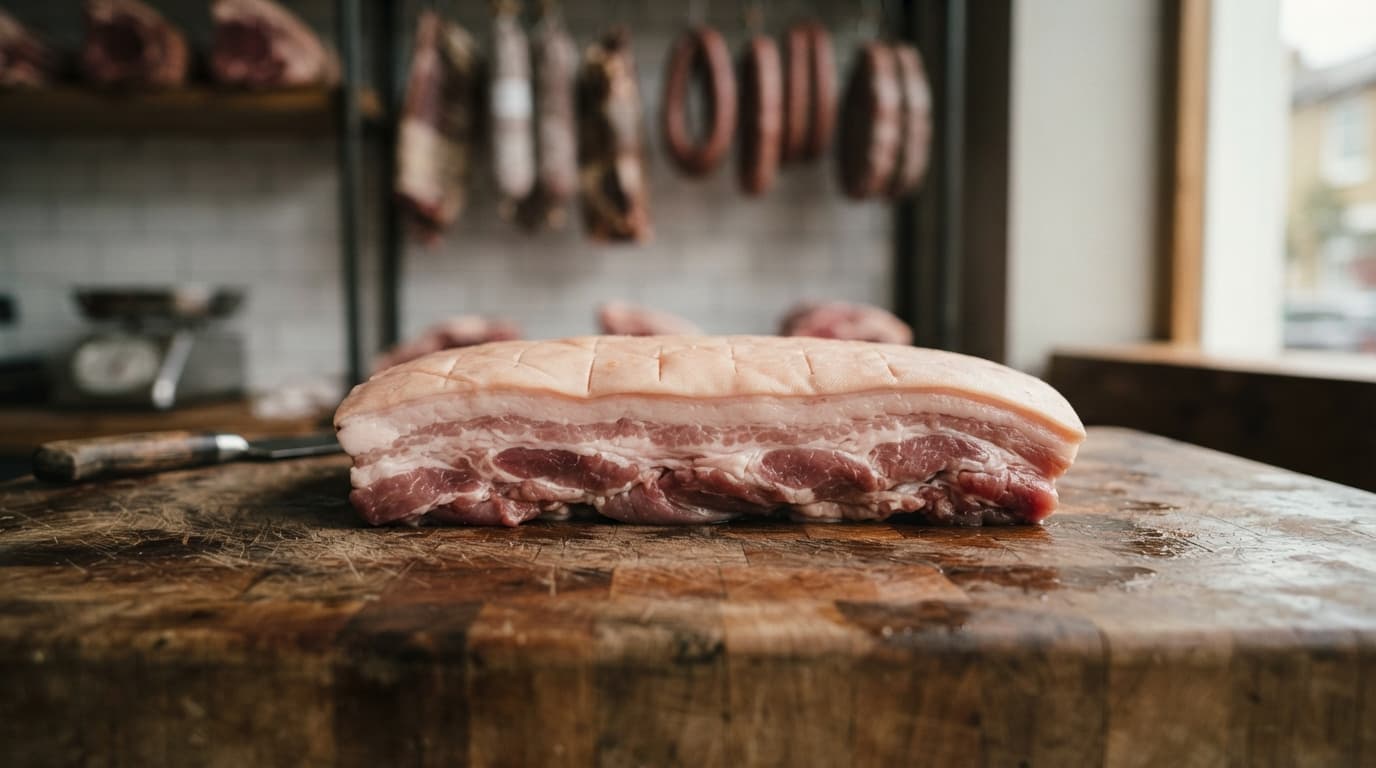
Pork belly shows up at large supermarkets, warehouse clubs, Asian grocery stores, and butcher counters, though selection and cut style vary a lot by store type.
9 min read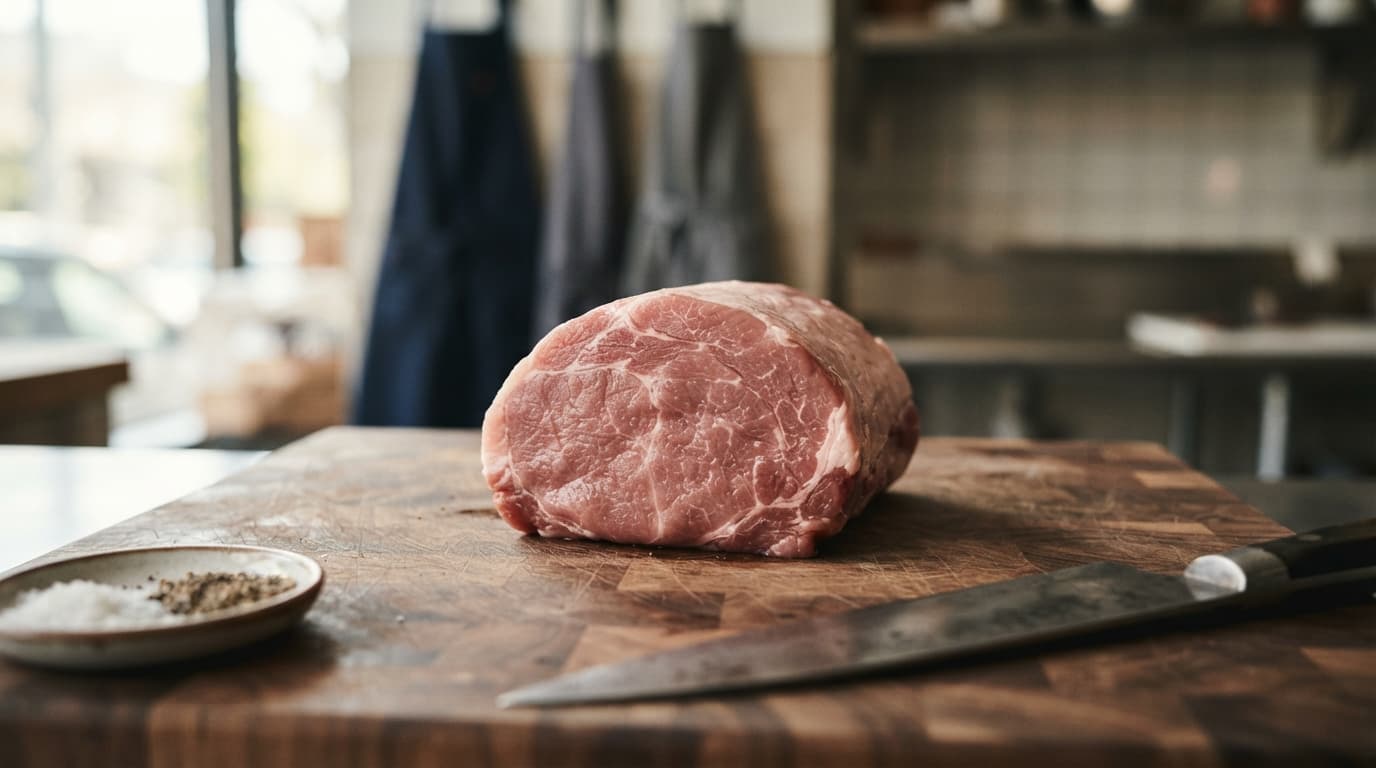
Pork cushion meat is a boneless cut from the picnic shoulder, officially known as IMPS 405B. It's lean, well-worked, and best cooked low and slow, like pork butt.
9 min read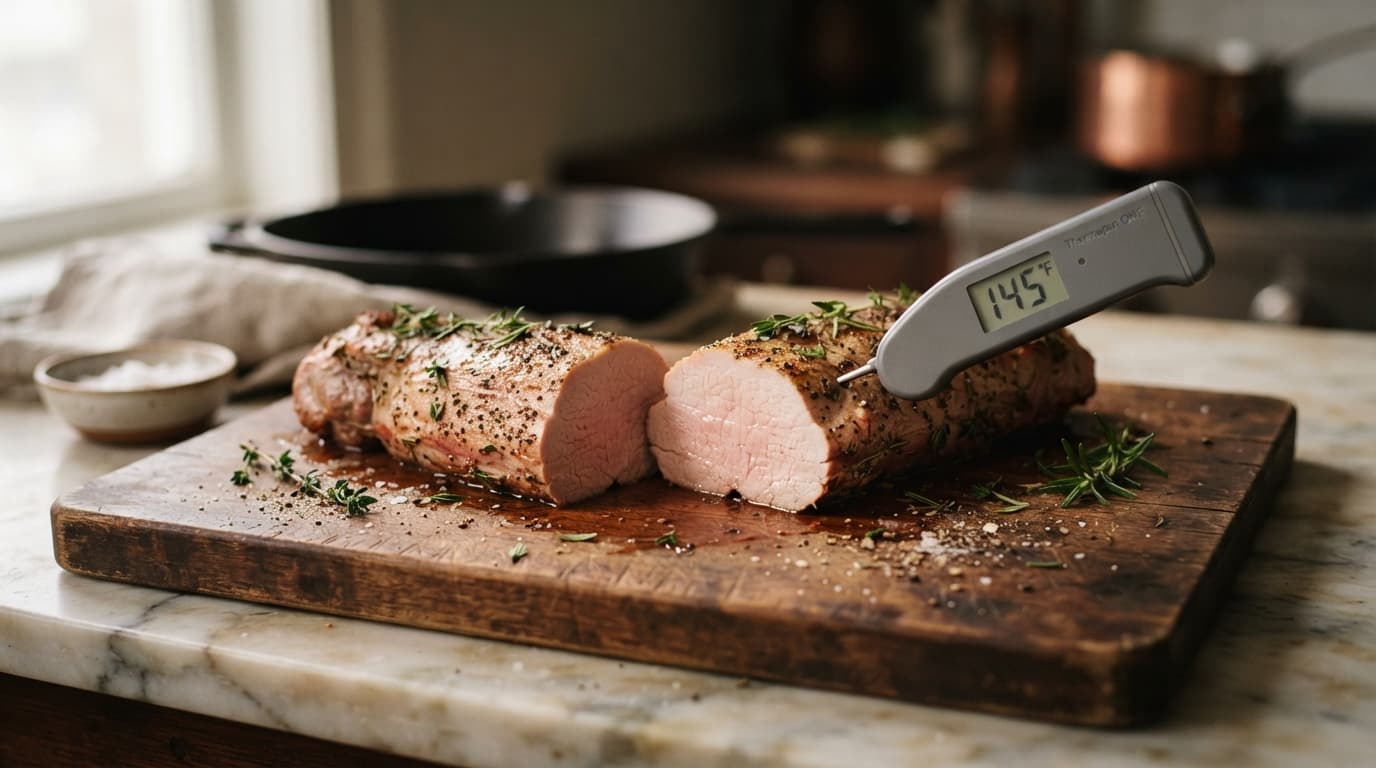
Pork tenderloin is done at 145°F, checked in the thickest part with a thermometer, then rested 3 minutes. Same number whether you grill, roast, or pan-sear it.
9 min readTables release two weeks out on Resy, Shukette's own booking platform.
Book Now →