Bread Flour vs. All-Purpose Flour for Pizza Dough
Editorial desk · 9 min read · Updated 2026-08-23
Bread flour runs roughly 12 to 14 percent protein, sometimes cited a bit lower around 10 to 11 percent depending on the source, while all-purpose flour sits lower, roughly 10 to 12 percent. That gap in protein content is what actually separates the two for pizza dough: more protein builds more gluten, and more gluten means a chewier crust with more structure. All-purpose flour isn't a lesser substitute, though. It makes a genuinely different, softer, more tender crust rather than a failed version of a bread-flour pizza.
If you've ever wondered whether it's worth a special trip to buy bread flour before making dough at home, the short answer is that it depends entirely on which texture you're actually after, not on one flour being objectively correct.
What protein content actually does inside pizza dough
Flour's protein content matters because two of its proteins, glutenin and gliadin, combine with water and kneading to form gluten, the stretchy network that gives bread and pizza dough their structure. More protein in the flour means more raw material available to build that network, which translates directly into a stronger, more elastic dough capable of holding a chewier final texture once baked.
This is baking-industry consensus, drawn from flour manufacturers and baking-science sources, rather than a government-regulated figure the way food-safety temperatures are. It's still a reliable, well-established relationship: protein percentage on a flour bag is a genuinely useful predictor of how that flour will behave once it's turned into dough, not just a nutrition-label number you can ignore.
Kneading is what actually activates this potential. Flour sitting in a bag has all its protein present but undeveloped; only mixing and kneading, which physically aligns and links those glutenin and gliadin molecules into long, elastic strands, turns raw protein content into an actual gluten network you can feel in the dough. This is why two bakers using the identical bag of flour can end up with noticeably different doughs: one who kneads thoroughly develops far more of that flour's gluten potential than one who mixes briefly and stops. Protein content sets a ceiling on how much structure a dough can develop, but technique determines how much of that ceiling actually gets reached.
Higher-protein bread flour develops a stronger gluten network, giving the finished crust more chew, more structure, and often a slightly better rise, since a stronger gluten network traps gas bubbles from yeast fermentation more effectively. Lower-protein all-purpose flour develops a comparatively weaker network, producing a softer, more tender crumb with less resistance when you bite into it. Neither result is a mistake. They're simply two different textures, and which one you want depends on the style of pizza you're actually going for.
00 flour is a genuinely separate system, not just another protein tier
It's easy to assume "00 flour," "bread flour," and "all-purpose flour" are just three points on the same protein scale, but 00 flour actually belongs to a different classification system entirely. "00" describes how finely an Italian flour is milled, a scale that runs from coarser 2 and 1 grades down to the finest 00 grade, not its protein percentage. Protein content in a given 00 flour varies by brand and intended use, but the classification itself is about milling fineness.
Traditional Neapolitan pizza uses 00 flour at roughly 12.5 percent protein, per the standard set by the Neapolitan pizza association that certifies authentic Neapolitan-style pizzerias. That fine milling produces an especially smooth, extensible dough that's well suited to the very high heat and short bake times, often under two minutes, that true Neapolitan pizza ovens use. American bread flour and all-purpose flour are milled to a coarser standard than 00, even when their protein percentages happen to land in a similar range.
Practically speaking, this means substituting bread flour for 00 flour won't perfectly recreate a Neapolitan crust's specific texture, even if the protein numbers look close on paper, since the milling fineness itself, not just the protein content, affects how the dough handles and how the crust bakes. It's a reasonable substitute for a home cook without access to true 00 flour, just not an identical one.
The oven a Neapolitan pizza is meant for matters just as much as the flour, which is worth knowing before assuming a bag of 00 flour alone will get you there. Traditional Neapolitan ovens run extremely hot, often 800°F or more, and cook a pie in roughly 60 to 90 seconds. A home oven, even set to its highest setting, rarely clears 550°F, which means a 00-flour dough baked at home will still behave differently than the same dough baked in a proper wood-fired oven, regardless of how faithfully the flour itself matches the traditional standard. This isn't a reason to skip 00 flour at home; it just tempers how close a full match to an authentic Neapolitan result actually is without the right oven behind it too.
Why New York-style pizza leans on bread flour or high-gluten flour
New York-style pizza is defined partly by its texture: a wide, thin, foldable slice with real chew and enough structural strength to hold toppings without going limp when you pick it up. That specific texture is exactly what higher-protein flour is built to deliver, which is why bread flour, roughly 12 to 14 percent protein, or even high-gluten flour, roughly 13 to 14.5 percent, shows up so often in New York-style dough recipes and professional pizzerias alike.
The stronger gluten network from that higher protein content gives the dough enough elasticity to stretch thin without tearing, a requirement for the large, wide slices New York-style pizza is known for, while still holding enough structure to stay foldable and slightly chewy once baked rather than going soft and floppy. That's a genuinely different set of requirements than a puffier, softer Neapolitan-style crust calls for, which is part of why the two styles reach for different flour categories in the first place.
Fermentation time interacts with flour choice here too. A longer, slower cold fermentation, letting dough rest in the refrigerator for a day or more rather than rising quickly at room temperature, gives gluten strands more time to relax and develop flavor through slow enzymatic activity, regardless of which flour started the process. A higher-protein bread flour dough given a long cold ferment develops both the structural chew the flour is capable of and the more complex flavor a slow rise builds, which is part of why a lot of serious home pizza recipes call for both a specific flour and a multi-day fermentation schedule rather than treating either variable alone as the whole answer to a better crust.
Here's a quick comparison of the main flour options and what each one tends to produce:
| Flour type | Approx. protein | Milling system | Typical crust result |
|---|---|---|---|
| 00 flour | ~12.5% (Neapolitan standard) | Italian fineness grade | Smooth, extensible, classic Neapolitan puff and char |
| Bread flour | ~12-14% (sometimes 10-11%) | American protein grade | Chewy, structured, holds a fold well |
| High-gluten flour | ~13-14.5% | American protein grade | Extra chew, common in NY-style pizzerias |
| All-purpose flour | ~10-12% | American protein grade | Softer, more tender, less chew |
Is all-purpose flour actually a legitimate substitute
Yes, without qualification. All-purpose flour can be substituted for bread flour in a home pizza dough and will produce a legitimate, edible, enjoyable pizza, just a different one than a higher-protein flour would give you. The lower protein content means less gluten development, which shows up as a softer, more tender crust with noticeably less chew than a bread-flour version.
This matters because a lot of home cooks skip making pizza dough from scratch specifically because they don't have "the right flour" sitting in the pantry, when in reality the flour they already have will work fine. The difference between all-purpose and bread flour is a difference in outcome, not a difference between success and failure. If you're the kind of cook who checks an instant-read thermometer's accuracy before trusting it rather than assuming a specific tool is required for a good result, the same practical mindset applies here: test what you have before assuming you need to buy something new.
Some home bakers split the difference by blending all-purpose flour with a small amount of vital wheat gluten, a concentrated gluten product sold separately, to artificially boost the effective protein content of an all-purpose-based dough closer to bread flour's range. It's a workable trick if you want a chewier result without buying a separate bag of bread flour outright, though it adds a step and an extra ingredient most home pizza nights don't strictly need.
Choosing between what's in your pantry and buying for a style
The practical decision usually comes down to one question: are you making pizza tonight with what's already in the kitchen, or are you specifically chasing one style's characteristic texture and willing to shop for it? If it's the former, use whatever flour you have. All-purpose will give you a solid, softer pizza; bread flour, if that's what's on hand instead, will give you something chewier. Neither is the wrong choice for a casual, spur-of-the-moment pizza night.
If you're specifically chasing New York-style chew, buying bread flour or high-gluten flour is worth the extra step, since that protein range is genuinely doing structural work the recipe depends on. If you're chasing an authentic Neapolitan result, 00 flour is the more accurate choice, and it's increasingly easy to find at well-stocked grocery stores or online, though a bread-flour substitute will still produce a perfectly good, if slightly different, homemade pizza in the meantime. Once the dough itself is sorted, the sauce simmering on the back burner deserves the same attention: holding it at a steady, gentle simmer rather than a hard boil keeps it from breaking or splattering while it reduces.
It's also worth remembering that flour is only one variable among several that shape a finished crust. Hydration level, fermentation time, oven temperature, and how thin the dough gets stretched all affect the final texture at least as much as flour choice does. A skilled home baker working with all-purpose flour and a long, slow fermentation can produce a more impressive crust than a rushed dough made with premium bread flour and no real proofing time. Flour sets a ceiling and a general direction, not the entire outcome, in much the same way that a menu built around wood-fire grilling depends on technique and timing as much as on which specific ingredient started the dish.
The flour matters, but it's not the whole story
Bread flour's higher protein content, roughly 12 to 14 percent against all-purpose's 10 to 12 percent, genuinely does build a chewier, more structured crust by developing more gluten, and that's worth knowing when you're deciding which bag to reach for. 00 flour sits in a separate milling classification altogether, worth understanding on its own terms if Neapolitan-style pizza is specifically what you're after rather than treating it as just another protein number on the same scale as everything else.
None of that means a specific flour is required to make a good pizza at home. Start with what's already in your pantry, understand what texture it's likely to produce, and treat a special trip for bread flour, high-gluten flour, or true 00 flour as something worth doing when you're chasing a specific style's texture, not as a prerequisite for making pizza worth eating. And once the crust is out of the oven, portioning and serving it is its own small decision. If you're feeding a group, the same instinct that goes into choosing dishes built for sharing at a table applies just as well to a fresh pizza cut into slices for everyone to grab from, and how big you cut those slices affects more than just how far the pie stretches across the table.
Frequently asked questions
Can I use all-purpose flour instead of bread flour for pizza dough?+−
Yes, and it works fine. It produces a softer, more tender crust with less chew than bread flour gives you, which isn't a failure, just a different, legitimate style of homemade pizza.
What's the actual protein difference between bread flour and all-purpose flour?+−
Bread flour runs roughly 12 to 14 percent protein, though a few sources cite figures as low as 10 to 11 percent, so treat that as an approximate range. All-purpose flour runs roughly 10 to 12 percent. That gap changes how much gluten the dough develops.
Is 00 flour the same thing as bread flour?+−
No, they're different classification systems entirely. "00" refers to how finely an Italian flour is milled, not its protein content, and it's traditionally used for Neapolitan pizza at around 12.5 percent protein per the Neapolitan pizza association's standard. Bread flour is an American classification based on protein percentage.
Why does New York-style pizza use bread flour or high-gluten flour?+−
Because that style is defined partly by a chewy, foldable crust, and higher protein content, roughly 13 to 14.5 percent for high-gluten flour, develops more gluten structure, which is exactly what produces that characteristic chew.
Will my homemade pizza fail if I don't buy a specific flour?+−
No. Whatever flour is already in your pantry will make a legitimate pizza. The specific flour mainly determines which style you land closer to, chewier and more structured versus softer and more tender, not whether the dough works at all.
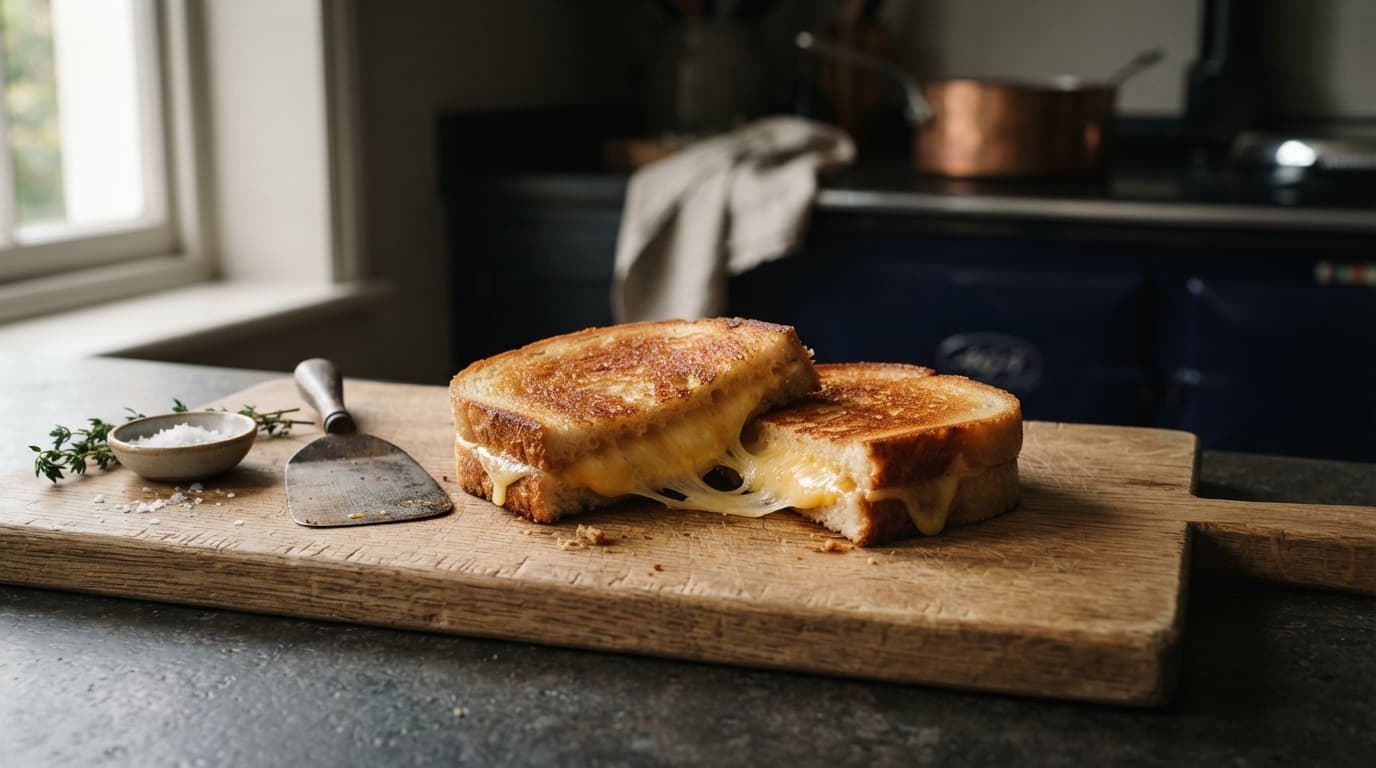
No single person did. Melted cheese on bread is centuries old, but the sandwich took shape in the 1920s and '30s once sliced bread and cheap cheese arrived.
9 min read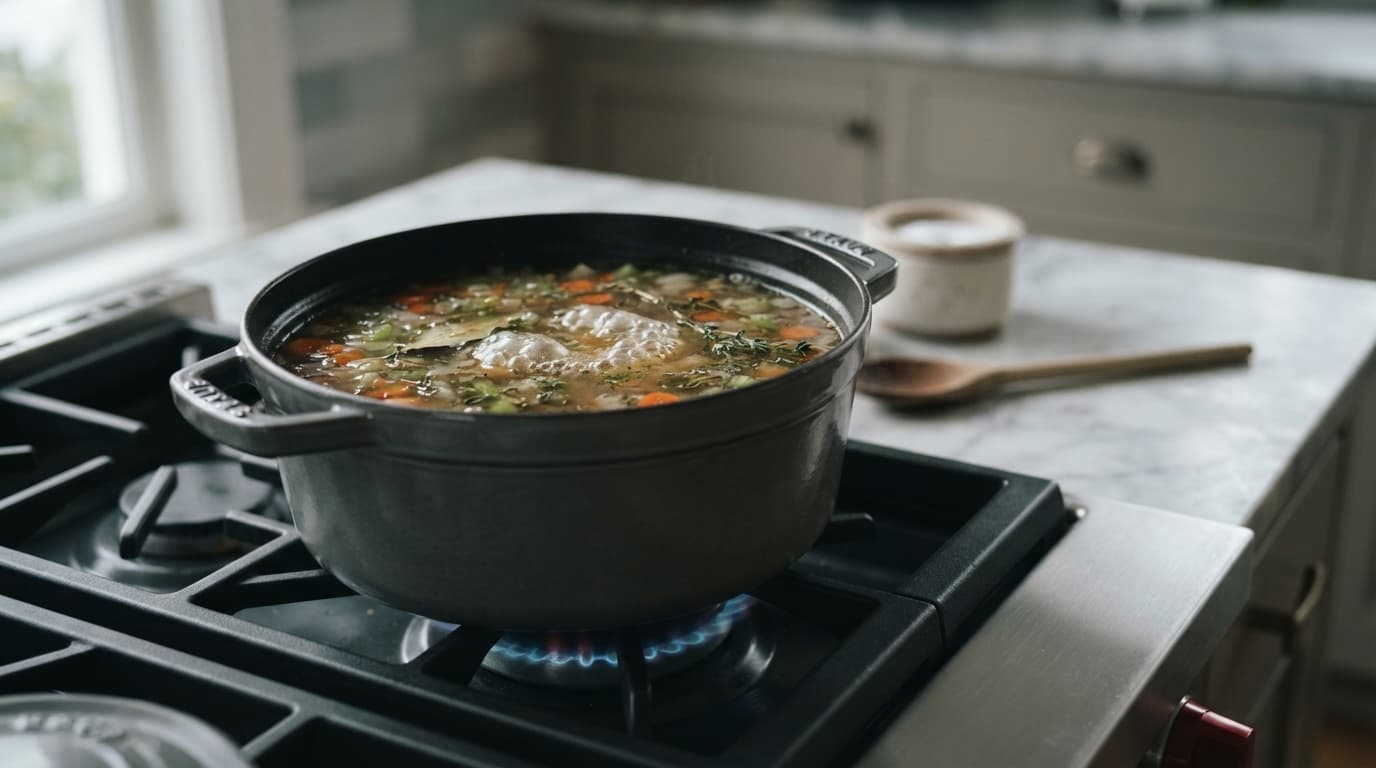
Roughly 185 to 205°F, well below a full boil at 212°F. Here's how to spot it by bubble pattern alone, since most stovetop cooking never touches a thermometer.
9 min read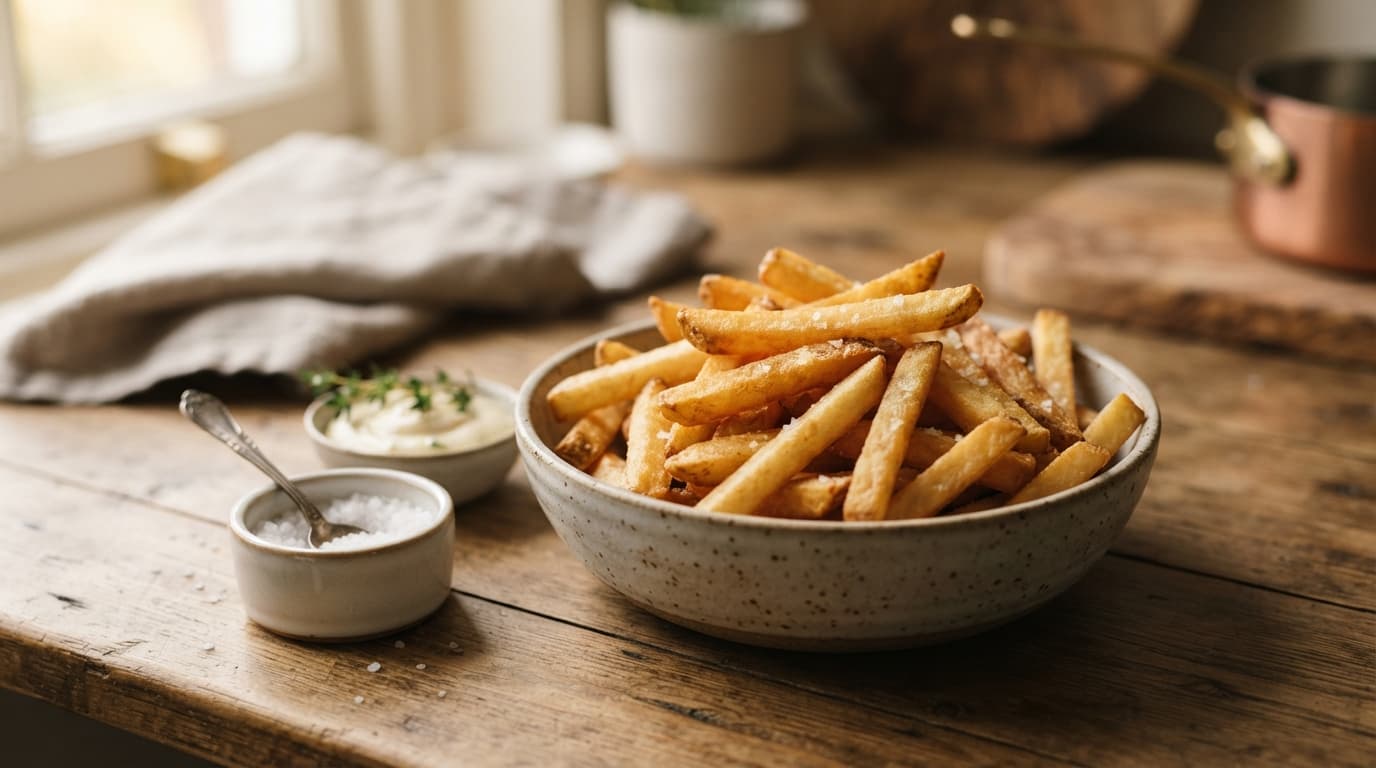
An air fryer at 350-400°F for 3-5 minutes gets fries crisp again. The oven at 375-400°F works nearly as well spread thin, while a microwave leaves them soggy every time.
9 min readTables release two weeks out on Resy, Shukette's own booking platform.
Book Now →