Pork Tenderloin in the Oven at 400°F
Editorial desk · 8 min read · Updated 2026-08-22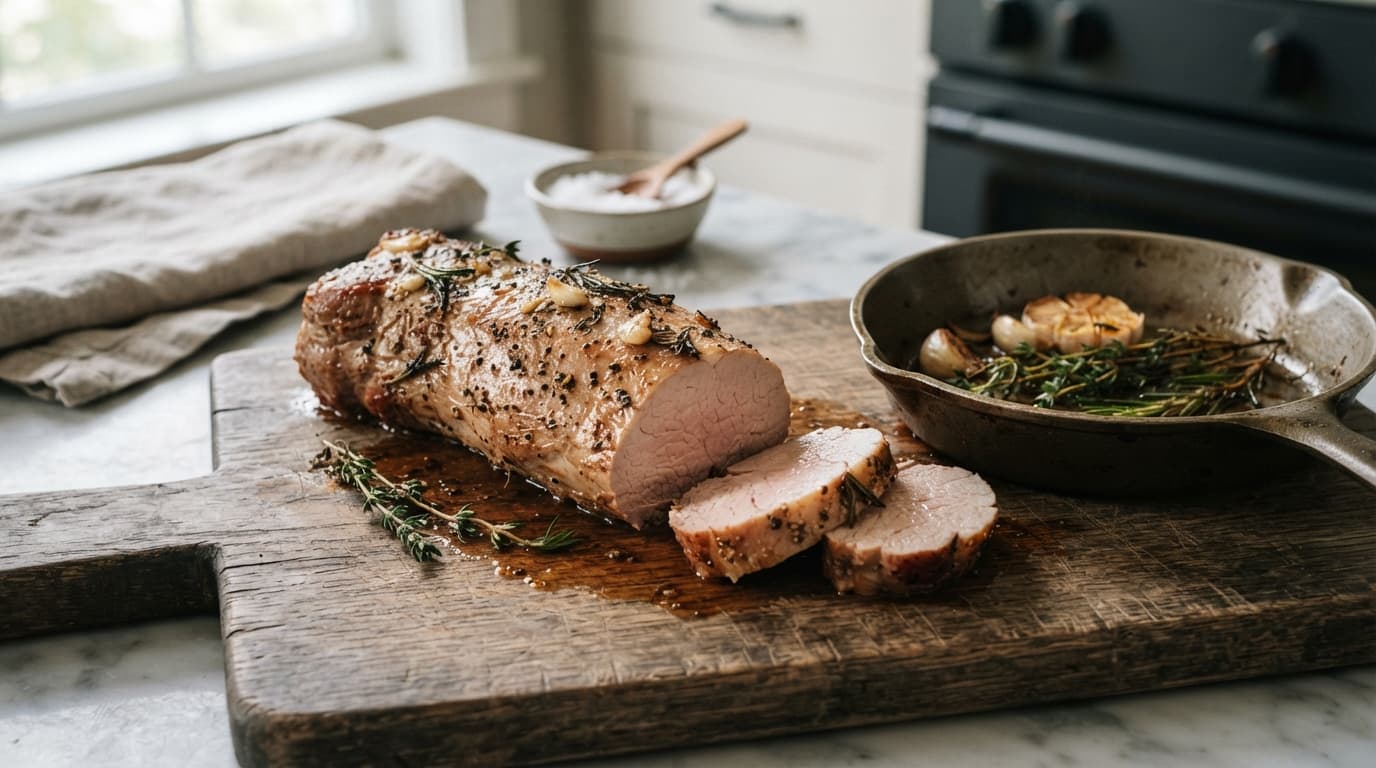
FoodSafety.gov's official roasting chart for pork tenderloin is built around 425 to 450°F, not 400°F, giving 20 to 27 minutes total for a 0.5-to-1.5-pound piece. At 400°F specifically, a slightly lower temperature than the chart's reference point, expect the same tenderloin to take a bit longer, reasonably estimated at 25 to 35 minutes, though this isn't an officially published figure the way the 425-to-450°F range is. Either way, the actual confirmation of doneness is a food thermometer reading 145°F in the thickest part of the meat, not the clock.
This is worth being upfront about, since it's a genuine gap between what's commonly searched, "pork tenderloin at 400," and what the government's own chart actually documents. The chart's real reference temperature is higher, and understanding why helps explain what to expect at 400°F specifically.
Why the official chart skips 400°F
FoodSafety.gov's roasting chart lists 425°F to 450°F as the recommended range for pork tenderloin specifically, a notably hotter oven than the 350°F to 375°F common for larger roasts. This makes sense given the cut: pork tenderloin is small, narrow, and very lean, with little fat to protect it from drying out during a long, slow cook. A hot oven gets it through to a safe temperature quickly, before the exterior has time to overcook while waiting for the center to catch up, which suits tenderloin's shape better than a lower, longer approach would.
400°F sits just below that recommended range, close enough that it isn't a dramatically different approach, but far enough that the chart's specific minute counts don't transfer over exactly. A cooler oven than the chart's reference point means somewhat more total time is needed to reach the same internal temperature, even though the difference between 400°F and the chart's 425-to-450°F range isn't large enough to represent a fundamentally different cooking approach.
It's worth asking why so many recipes and home cooks land on 400°F specifically rather than following the chart's higher recommendation exactly. Part of the answer is simple familiarity: 400°F is a common, round oven setting used across a huge range of recipes for entirely different dishes, which makes it an easy default to reach for without checking a cut-specific chart first. Part of it is also a reasonable, if unstated, preference for a slightly gentler cook, trading a few extra minutes in the oven for a marginally lower risk of the exterior overcooking before the interior catches up, even though pork tenderloin's shape makes that risk fairly small at any temperature in this general range.
What to actually expect at 400°F
Since there's no official chart entry for 400°F specifically, the practical figure to work from is a reasoned estimate built from the chart's actual numbers: somewhere around 25 to 35 minutes for a 0.5-to-1.5-pound tenderloin, a few minutes longer than the 20-to-27-minute range published for the hotter oven setting. Larger tenderloins within that weight range will run toward the higher end of the estimate; smaller ones toward the lower end.
Treat this range as a planning estimate to check against, not a countdown to trust blindly. Start checking with a thermometer at the earlier end of the estimate, particularly the first time you're cooking a specific tenderloin in a specific oven, since actual ovens vary enough in real calibration that even an official chart figure is itself just a strong estimate rather than a guarantee.
Tenderloin thickness matters more than total weight for predicting actual cook time, since two tenderloins of similar weight can have noticeably different shapes: one longer and thinner, one shorter and thicker. The thicker piece takes longer to cook through even at an identical weight, because the distance heat has to travel to reach the center is greater. If your tenderloin looks unusually thick relative to its length, lean toward the higher end of the time estimate and check earlier rather than assuming weight alone predicts the outcome.
The 145°F target doesn't move
Regardless of whether you cook at 400°F, 425°F, or the full 450°F, the actual safety target stays fixed: 145°F in the thickest part of the tenderloin, confirmed with a food thermometer, followed by a 3-minute rest. Where you insert the thermometer and how you handle checking multiple pieces matters more to getting an accurate result than which specific oven temperature you chose within this reasonable range.
This consistency is worth remembering any time you're adapting a recipe written for one oven temperature to a setting you'd rather use instead. The destination doesn't change based on the path; only the timing does, and only modestly across a range as narrow as 400°F versus 425-450°F.
A useful way to think about this: any oven-temperature substitution within a reasonable range, swapping 400°F for the chart's 425-to-450°F recommendation, or vice versa, mainly trades time for temperature rather than changing anything about the final result. A slightly cooler oven run a bit longer produces essentially the same finished tenderloin as a slightly hotter oven run a bit shorter, as long as both reach the same 145°F internal target. This holds true for pork tenderloin specifically because it's small and lean enough that neither approach risks the kind of exterior overcooking that a much larger, denser cut might experience with the same temperature swap.
Searing first, then finishing in the oven
A common approach for pork tenderloin combines a quick stovetop sear with an oven finish: browning the outside in a hot pan for a few minutes per side, then transferring the whole pan to a 400°F oven to finish cooking through. This develops better color and flavor on the exterior than the oven alone typically achieves in the relatively short total cooking time tenderloin requires, since a pan sear delivers much more intense, direct heat to the surface than convected oven heat does.
Searing first doesn't meaningfully shorten the total oven time needed, since the interior still needs to come up to 145°F at roughly the same rate regardless of how the exterior was treated beforehand. What it does change is where you should expect most of the remaining cook time to happen: budget close to the full 25-to-35-minute estimate for the oven portion even after a thorough sear, rather than assuming the sear did meaningful work toward the internal temperature.
A marinade or dry rub applied before searing adds flavor without meaningfully changing this timeline either. Where a marinade can shift things slightly is in browning: a wetter marinade left clinging to the surface can slow down how quickly a good sear develops, since some of the pan's early heat goes toward evaporating that surface moisture before real browning starts. Patting the tenderloin dry with a paper towel right before it hits the pan, even after marinating, helps the sear develop more quickly and evenly than searing a still-wet surface would.
The pan itself matters for this technique too. A heavy skillet, cast iron or a similarly thick-bottomed pan, holds and releases heat more evenly than a thin, lightweight one, which produces more consistent browning across the whole surface of the tenderloin rather than uneven spots where the pan's heat retention varies. If the same pan is going straight into the oven for the finishing stage, confirming it's actually oven-safe, checking the handle material specifically, matters before committing to this two-stage approach, since a handle rated for stovetop use only can be damaged or become unsafe to grab once it's spent time at 400°F.
Letting the pan preheat thoroughly before the tenderloin ever touches it is worth the extra minute or two it takes. A pan that isn't fully hot yet doesn't sear so much as gently cook the surface, which produces a paler, less flavorful crust than a properly preheated pan delivers in the same amount of contact time. Testing readiness with a small drop of water, which should skitter and evaporate quickly on a properly hot pan, is a simple way to confirm you're not rushing this step before the tenderloin goes in.
Sheet pan considerations for a full dinner
Pork tenderloin is a common candidate for a one-pan dinner, roasted alongside vegetables on the same sheet pan. This works well, but it's worth checking that vegetables and tenderloin actually finish around the same time at 400°F, since some vegetables cook faster or slower than a 25-to-35-minute tenderloin does. Vegetables cut into smaller, thinner pieces generally cook faster than the tenderloin will, which means adding them partway through, rather than at the very start, often produces better results than trying to time both from the same starting point.
If you're cooking more food than fits comfortably on one pan without crowding, spacing matters here the same way it does for any other roasted dish: crowded ingredients trap steam and cook less evenly than the same items given room to breathe, which can throw off your timing estimate in either direction depending on how tightly packed the pan actually is.
Multiple tenderloins on the same pan
Since pork tenderloins are frequently sold in pairs, cooking two at once on the same pan or in the same oven is common. Treat this the same way as any batch cooking: check each piece individually rather than assuming both finish together, since size differences between the two pieces in a package are common enough to matter. A thicker tenderloin needs more time than a thinner one even at the identical oven temperature and starting time.
Spacing the two tenderloins apart on the pan, rather than letting them touch or overlap, helps them cook more evenly relative to each other, the same logic that applies to spacing out any batch of food roasting together. Two tenderloins pressed against each other along their length effectively insulate part of each piece from direct oven heat, which can slow down cooking exactly where the two pieces touch.
The reasonable approach at 400°F
400°F isn't the official chart's reference temperature for pork tenderloin, but it's close enough to work well in practice: expect roughly 25 to 35 minutes for a typical 0.5-to-1.5-pound piece, check earlier rather than later on your first attempt with a given tenderloin and oven, and let a thermometer reading of 145°F, not the timer, make the final call. That approach holds regardless of whether you're using the chart's recommended higher range or the slightly gentler 400°F setting many recipes and home cooks reach for instead.
The process described here scales cleanly to whatever specific oven and tenderloin you're actually working with, which is really the whole point of checking with a thermometer instead of memorizing one fixed number tied to one specific setting.
Every individual oven runs slightly differently even at the identical dial setting, sometimes by a noticeable margin, which is part of why a written time range, whether it's the official government chart's or the estimate built from it here, works best as a starting point rather than a fixed, guaranteed answer. The same practice of confirming with a thermometer rather than trusting a clock applies just as well the next time you're adapting any recipe to an oven temperature it wasn't originally written for, pork tenderloin or otherwise.
Frequently asked questions
How long does pork tenderloin take in the oven at 400°F?+−
Likely a bit longer than the 20 to 27 minutes FoodSafety.gov's official chart lists, since that chart is built around 425 to 450°F, not 400°F. A reasonable estimate at 400°F is closer to 25 to 35 minutes for a 0.5 to 1.5-pound tenderloin, but a thermometer reading of 145°F is what actually confirms it.
Why does FoodSafety.gov's chart use a higher temperature than 400°F for pork tenderloin?+−
Because tenderloin is a small, lean cut, a hotter oven cooks it through quickly before it has time to dry out, which suits its shape better than a longer cook at a lower temperature would. That's a reasonable choice on the chart's part, not an error, but it does mean 400°F specifically isn't the figure the official guidance is built around.
Does a lower oven temperature like 400°F risk drying out pork tenderloin?+−
Not meaningfully, as long as you don't overcook it past 145°F. A slightly lower temperature and slightly longer time doesn't inherently dry out the meat; overshooting the target temperature does, regardless of what oven setting got you there.
Should I sear pork tenderloin before putting it in a 400°F oven?+−
It's optional but common. A quick sear in a hot pan before oven-finishing develops browning faster than the oven alone would at 400°F, though it doesn't change the internal target temperature or meaningfully shorten the total oven time needed.
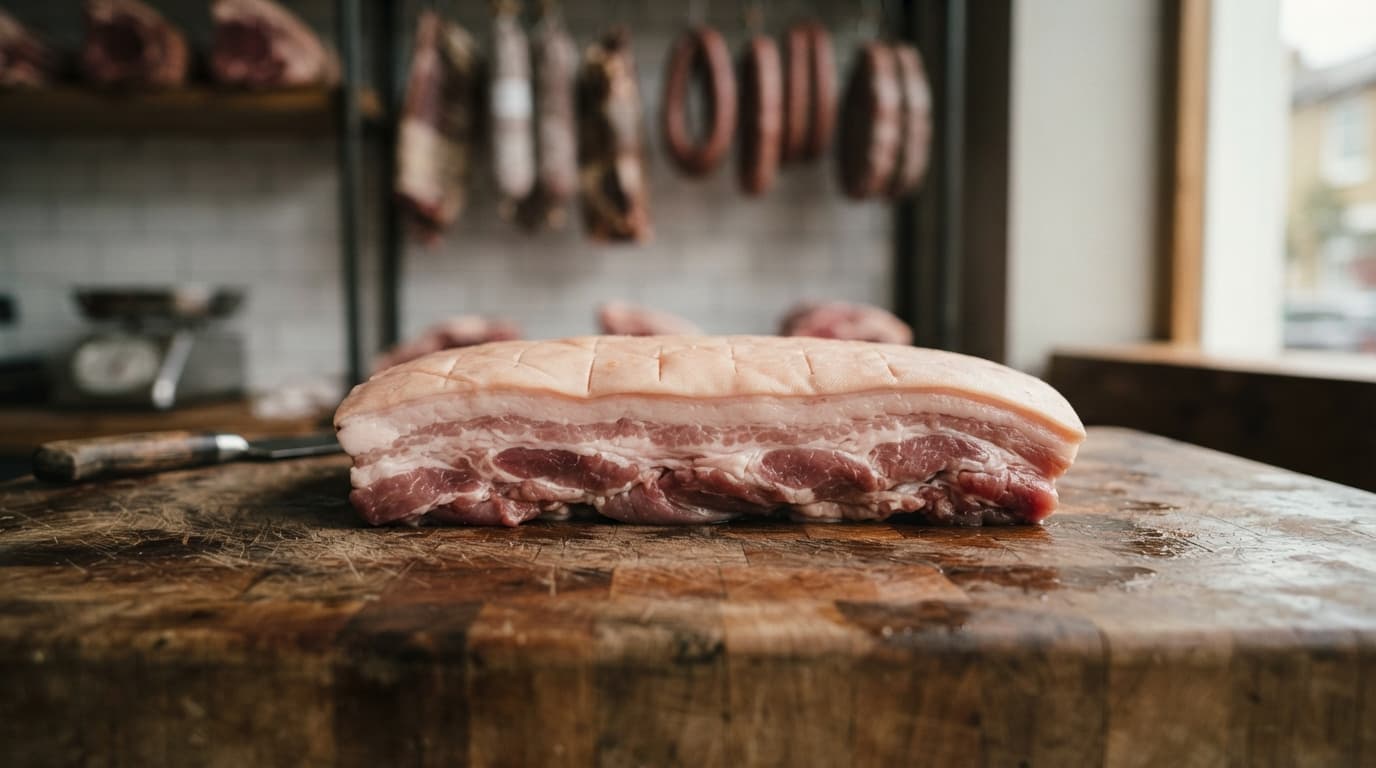
Pork belly shows up at large supermarkets, warehouse clubs, Asian grocery stores, and butcher counters, though selection and cut style vary a lot by store type.
9 min read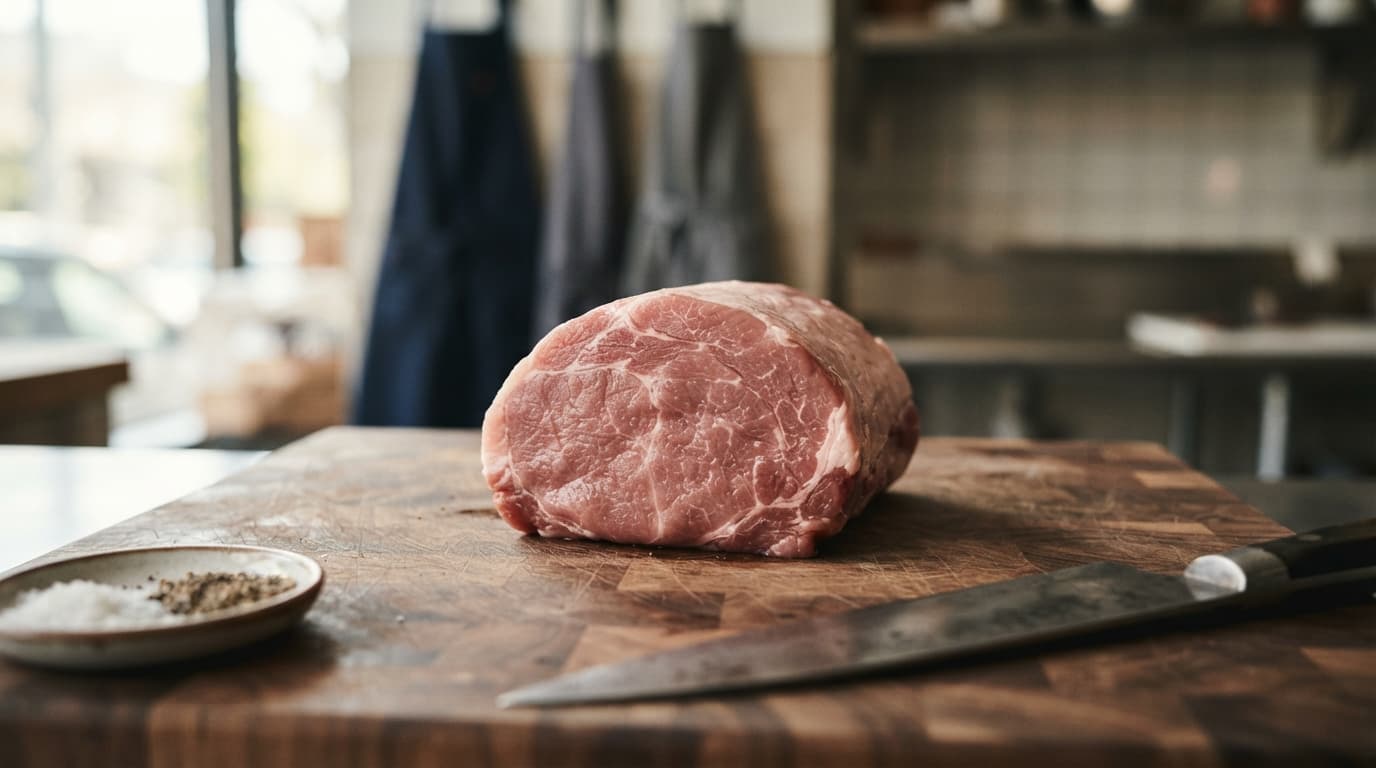
Pork cushion meat is a boneless cut from the picnic shoulder, officially known as IMPS 405B. It's lean, well-worked, and best cooked low and slow, like pork butt.
9 min read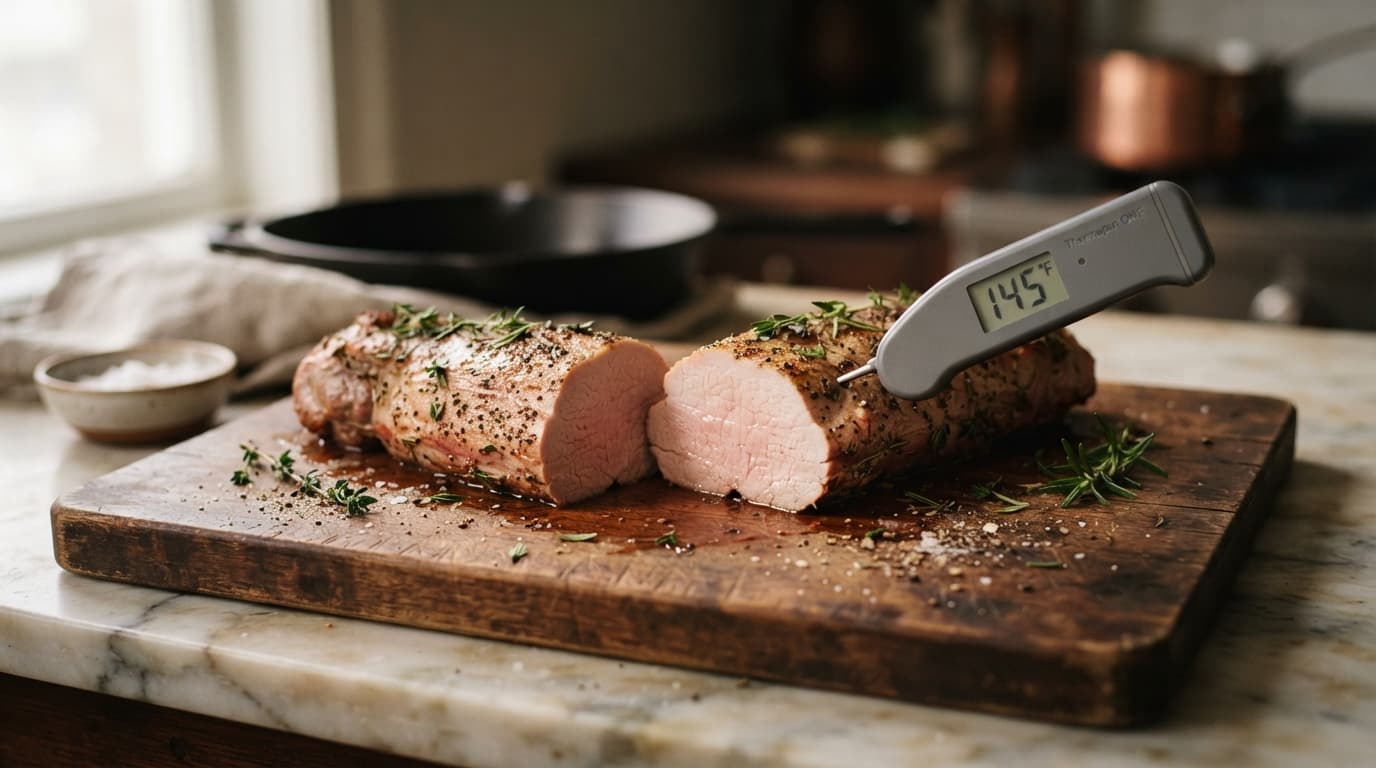
Pork tenderloin is done at 145°F, checked in the thickest part with a thermometer, then rested 3 minutes. Same number whether you grill, roast, or pan-sear it.
9 min readTables release two weeks out on Resy, Shukette's own booking platform.
Book Now →