How Long Does Fried Chicken Last in the Fridge?
Editorial desk · 9 min read · Updated 2026-08-22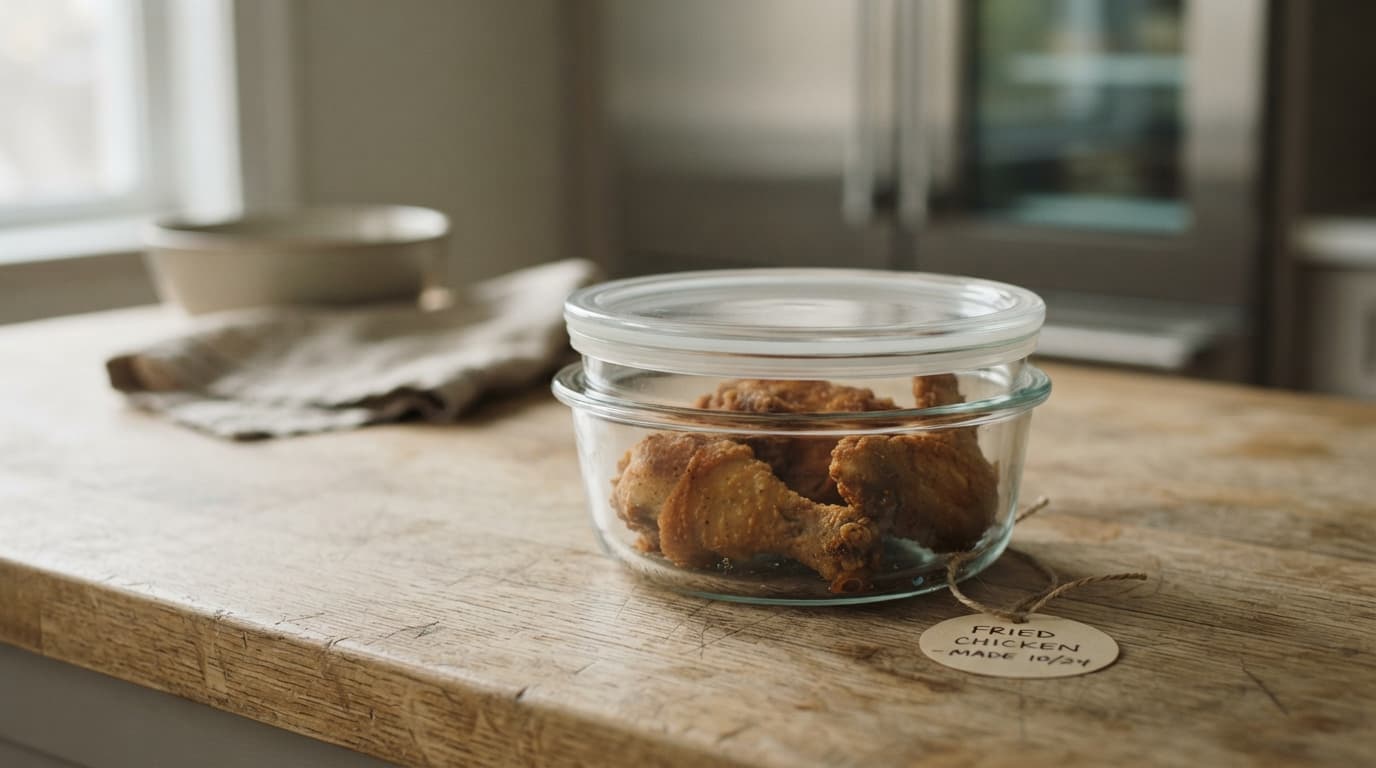
Fried chicken keeps for three to four days in the refrigerator, the same window the USDA sets for any cooked chicken leftovers, breaded or not. That number only holds if the chicken went into the fridge within two hours of coming off the heat and has stayed at 40°F or below the entire time since. Miss either of those conditions and the three-to-four-day estimate no longer applies.
Fried chicken raises a few questions plain cooked chicken doesn't, mainly around the breading and the oil, but the core food-safety rule underneath it is identical to any other cooked poultry. The breading changes how it eats after a few days in the fridge; it doesn't change when it becomes unsafe.
The three-to-four-day window, and what has to happen first
USDA guidance treats fried chicken the same as other cooked poultry leftovers: safe to keep refrigerated for three to four days at 40°F or below. That clock starts once the chicken is actually in the fridge, not from when you finished eating dinner, which is why the two-hour rule matters just as much here as it does for any other cooked food. Fried chicken left out on a counter, a serving platter at a party, a to-go box forgotten in a car, needs to go into the refrigerator within two hours of cooking, or the three-to-four-day window doesn't get to start on solid footing.
A batch of fried chicken can also take longer to cool than a thinner cut would, simply because there's more mass involved in a full piece with bone and breading intact. Splitting a large batch across a couple of shallower containers rather than one deep one helps it cool faster and more evenly, which matters for getting it safely into the fridge within that two-hour window rather than leaving a large, still-warm batch to cool slowly in one container.
There's also a practical wrinkle specific to a big platter of fried chicken meant for a party or a family dinner: it often sits out longer than a single portion would, simply because people are still serving themselves from it. If a platter has been out for a while during a gathering, it's worth tracking roughly when it was first set out rather than assuming the two-hour clock starts whenever the meal officially ends. A platter that came out at six and is still being picked at by eight has already used up its safe window, even if some pieces are still sitting there untouched.
Breading doesn't extend or shorten the safety window
It's reasonable to wonder whether a fried coating changes the math, either by sealing in moisture that spoils faster or by acting as a protective barrier that keeps chicken good longer. Neither is really true from a food-safety standpoint. The three-to-four-day guidance applies to the chicken itself; the breading is along for the ride rather than changing the underlying rule.
What the breading does affect is quality, and it drops off faster than the meat's actual safety window. A crust that was genuinely crisp the day it was fried is reliably softer by day two in the fridge, since the coating absorbs moisture from the chicken and the container as it sits. By day three or four, when the chicken itself is still within the safe window, the texture has usually moved pretty far from fried-chicken-at-its-best. That's a real reason to eat fried chicken leftovers sooner rather than later, but it's a taste and texture consideration, not a safety one; day four fried chicken that's been stored properly is still safe, even if the crust isn't what it was.
Freezing fried chicken for longer storage
If three to four days doesn't fit your plans, fried chicken freezes safely, and it stays safe to eat indefinitely once frozen. Quality is the real limiting factor here too: USDA guidance recommends using frozen cooked chicken within three to four months for the best flavor and texture. Beyond that window, it remains safe but tends to dry out and lose flavor, especially with a fried coating that wasn't designed to hold up well through a freeze-thaw cycle.
Wrapping fried chicken tightly before freezing, ideally in a way that limits air exposure, helps slow the quality loss that comes with extended freezer time. Freezer burn, dry, discolored patches caused by air reaching the food's surface, is a quality issue rather than a safety one, but it's also avoidable with reasonably careful wrapping, which makes the three-to-four-month window more achievable in practice.
Thawing frozen fried chicken follows the same rules as any other frozen poultry: refrigerator thawing is the safest, most flexible option, while cold water or microwave thawing both call for eating it right away rather than storing it again afterward. Given that fried chicken's texture already takes a hit from freezing, refrigerator thawing overnight, followed by an oven reheat, tends to produce the best result of the available options, since it avoids adding a second source of moisture or uneven heating on top of what freezing already did to the coating.
Reheating fried chicken without losing everything that made it good
Fried chicken presents a specific reheating challenge plain roasted or grilled chicken doesn't: how do you bring it back to a safe temperature without turning the crust soggy in the process. It's a real tension, since the two goals, food safety and texture, pull in different directions if you're not deliberate about method. The oven handles this better than the microwave for a simple reason. USDA guidance for reheating fried chicken specifically calls for an oven set no lower than 325°F, and cooking it uncovered in the oven lets moisture escape rather than trapping steam against the coating the way a microwave or a covered container would.
A microwave gets fried chicken to a safe temperature just as effectively, but the moist heat it generates works against the crust every time, which is why oven reheating is worth the extra few minutes if texture matters to you. Whichever method you use, the safety check is the same regardless of appliance: the internal temperature needs to reach 165°F, confirmed with a food thermometer in the thickest part of the piece, before it's safe to eat. A crust that looks re-crisped isn't proof the inside has actually reached a safe temperature, especially with bone-in pieces where the meat near the bone heats more slowly than the surface.
An air fryer is a reasonable middle option if you have one, since it circulates hot air similarly to how an oven does but in a smaller, faster-heating space. It won't fully restore fried-that-day crispness, since some moisture loss in the coating is unavoidable once chicken has been refrigerated, but it generally outperforms a microwave and can match or beat a full oven for a smaller quantity of leftover pieces. Whatever appliance you use, covering the chicken traps steam and works against the crust, while leaving it uncovered lets the surface actually dry out and re-crisp as it reheats.
Timing also matters more than people expect. Reheating cold fried chicken straight from the refrigerator takes longer to reach a safe internal temperature than reheating something that's been sitting at room temperature briefly first, though leaving it out to warm up isn't worth the tradeoff against the two-hour rule. The safer approach is simply to plan for a slightly longer reheat time from cold rather than rushing it and ending up with a piece that looks hot on the outside but hasn't actually reached 165°F all the way through.
Comparing fried chicken to other ways of cooking chicken at home
The three-to-four-day rule holds regardless of how chicken was originally cooked, which means fried chicken doesn't behave differently in the fridge than a grilled preparation or a roasted one would. What differs between methods is really just how well each one holds up to reheating and how quickly the texture degrades, not the underlying safety timeline.
If you're weighing whether to fry chicken at home versus ordering it prepared elsewhere, a restaurant kitchen sidesteps the whole reheating-texture problem simply by serving it fresh rather than as a stored leftover. That's less relevant to a straightforward fried chicken dinner than it is to something more involved, like a marinated, grilled dish built around a specific technique, but the underlying tradeoff is the same: fresh-cooked chicken, in any style, avoids every question this article is about.
That tradeoff matters more the bigger the batch gets. A group meal built around a lot of chicken at once multiplies both the cooling challenge and the leftover-storage question compared to cooking a couple of pieces for one or two people, which is one more reason a big fried chicken dinner for a crowd benefits from the shallow-container cooling approach mentioned earlier rather than treating it the same way as a smaller weeknight batch.
What to actually do with day-old fried chicken
If your fried chicken is within the three-to-four-day window and has been properly refrigerated the whole time, it's safe to eat cold, reheated, or repurposed into something else entirely, chopped into a salad, shredded for a sandwich, or diced into a quick fried rice. Recognize that the crust won't be what it was on day one, and plan the dish accordingly rather than expecting restaurant-fresh texture from chicken that's been sitting in the fridge.
If it's been longer than four days, or if you're not confident it made it into the fridge within two hours of cooking in the first place, the safer call is to throw it out rather than guess. As with most chicken storage questions, the deciding factor is time and temperature history, not how the chicken looks or smells when you open the container.
The same appearance caveat that applies to raw chicken applies here too. Fried chicken that's been in the fridge too long won't necessarily look or smell different from fried chicken that's still within its safe window; the breading and frying process don't change the fact that you can't reliably detect harmful bacteria by inspection. A container that still looks perfectly appetizing on day five is a case where following the date, not your impression of the food, is what actually protects you.
Labeling containers when you first refrigerate fried chicken removes the guesswork later. A piece of tape with the date, or a note on a reusable container, takes a few seconds and eliminates the "was this Tuesday's or last weekend's" uncertainty that leads people to either eat something too old or throw away something still perfectly good. This habit matters more for fried chicken than for some other leftovers, since a good batch tends to disappear into odd-shaped pieces in a container that doesn't always make its age obvious at a glance.
If you regularly cook more fried chicken than your household eats within three or four days, planning to freeze part of the batch immediately, rather than refrigerating all of it and hoping to get through it in time, is the more reliable way to avoid the choice between eating older chicken or throwing perfectly good food away. Splitting a large cook into a refrigerator portion and a freezer portion right after cooling is a small extra step that removes the pressure of racing the four-day clock on the whole batch at once.
Frequently asked questions
How long does fried chicken stay good in the fridge?+−
Three to four days, according to USDA guidance for cooked poultry leftovers, as long as it went into the refrigerator within two hours of cooking and stayed at 40°F or below the whole time.
Can you freeze fried chicken?+−
Yes. Frozen fried chicken stays safe indefinitely, but USDA guidance recommends using it within three to four months for the best flavor and texture, since longer storage tends to dry out the coating and meat.
How do you reheat fried chicken without making it soggy?+−
An oven set no lower than 325°F, uncovered, does more to preserve crispiness than a microwave, which tends to steam the coating instead of re-crisping it. Either way, check that the internal temperature reaches 165°F before eating.
Does the breading on fried chicken affect how long it lasts?+−
Not for food safety specifically; the same three-to-four-day window applies whether the chicken is breaded or not, since the rule is based on the poultry itself, not the coating. The coating does affect quality faster, since it loses crispness well before the chicken becomes unsafe to eat.
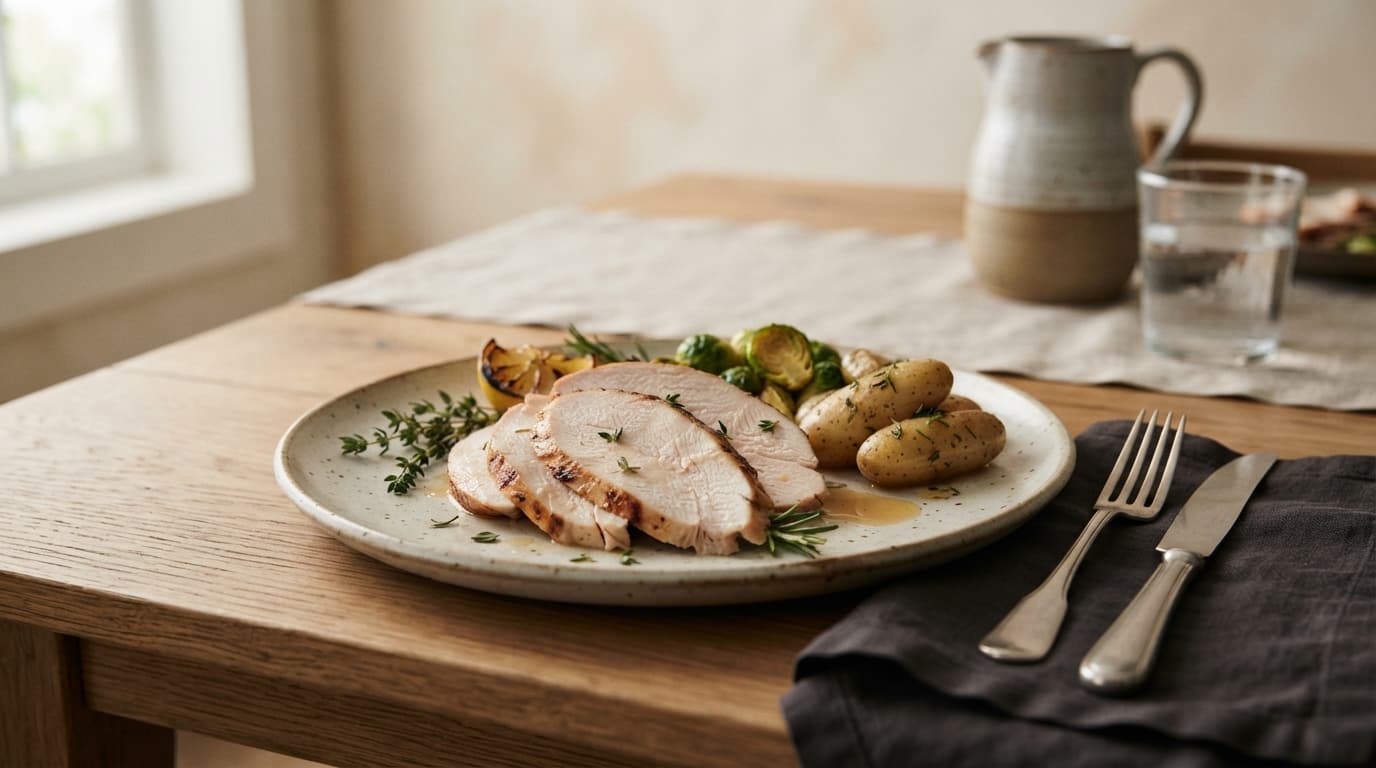
Plan on 3/4 to 1 pound of boneless turkey breast per person, less than the USDA's 1 to 1 1/4 pounds for whole turkey, since boneless meat has no bone weight.
10 min read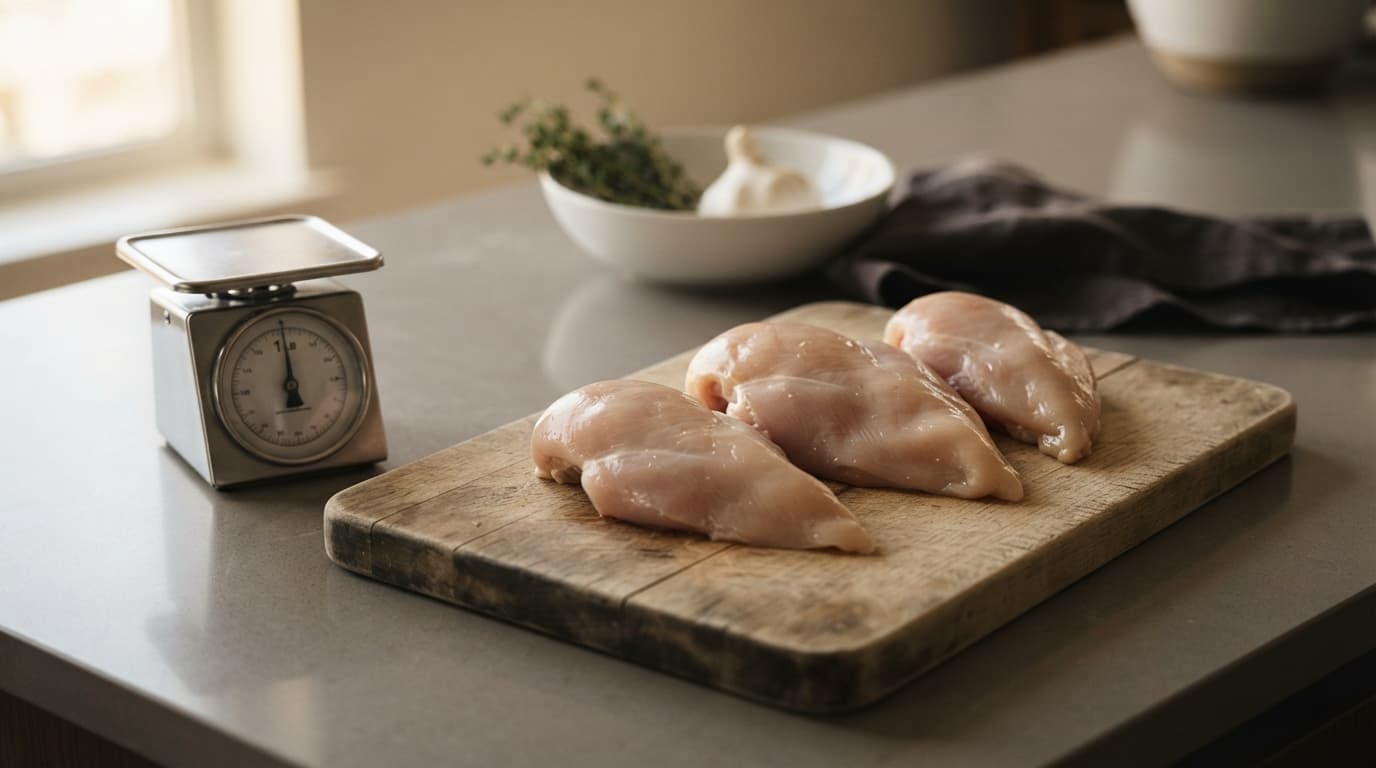
A pound of boneless chicken breast typically holds 2 to 3 pieces, since most breasts weigh 5 to 8 ounces. Size varies enough that weighing beats counting for a recipe.
10 min read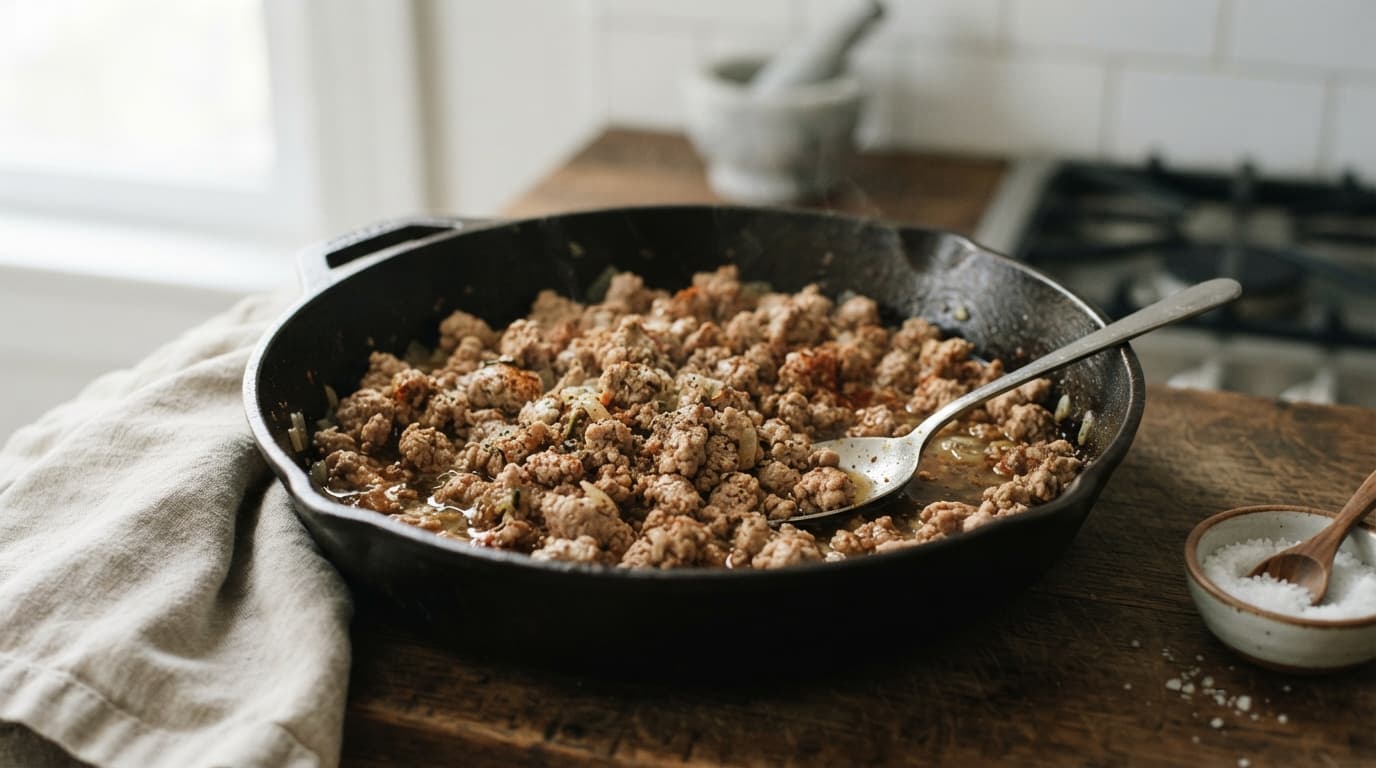
Ground turkey needs about 7 to 10 minutes over medium heat, but time is only a guide. The real requirement is 165°F all the way through, confirmed with a thermometer.
9 min readTables release two weeks out on Resy, Shukette's own booking platform.
Book Now →