Chicken Tenderloin vs Chicken Breast: What's the Difference?
Editorial desk · 9 min read · Updated 2026-08-22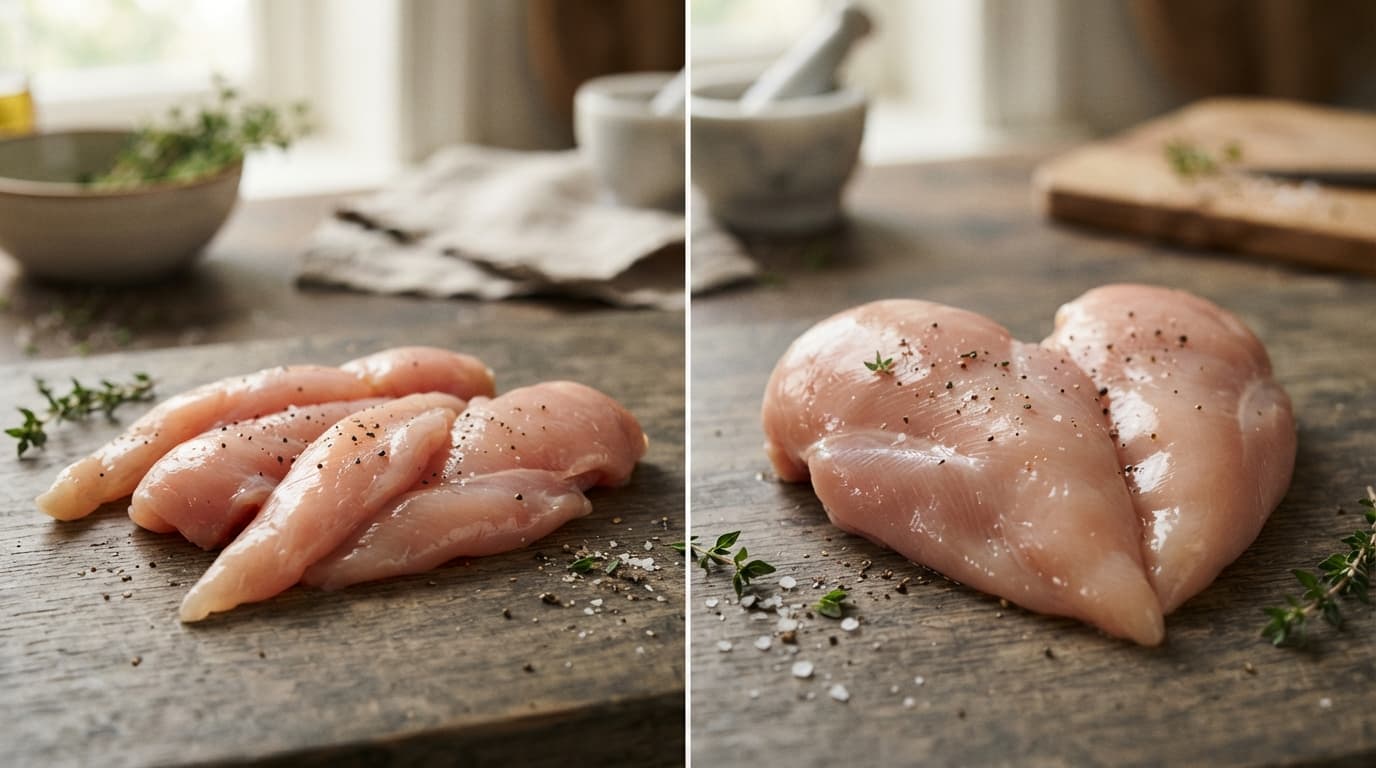
Chicken tenderloins are not a smaller cut of chicken breast; they're a separate muscle, the pectoralis minor, that sits underneath the breast against the chicken's breastbone. The breast itself is the pectoralis major, the larger muscle on top. They come from the same general area of the bird, which is why people assume one is just a piece of the other, but they're two distinct muscles with different sizes, textures, and cooking times.
Both cuts fall under the same food-safety rule: the USDA sets one minimum internal temperature, 165°F, for all poultry regardless of cut. What differs is how quickly each one gets there and how forgiving each one is once it does.
| Source muscle | Typical shape | Relative cook time | Best use | Price note | |
|---|---|---|---|---|---|
| Tenderloin | Pectoralis minor (under the breast, against the breastbone) | Thin, long, narrow strip | Faster | Kebabs, stir-fries, quick pan-searing, bite-sized pieces | Sometimes higher per pound (extra labor to remove, less meat per bird) |
| Breast | Pectoralis major (larger muscle on top) | Thick, oval or teardrop-shaped | Slower | Slicing for salads, sandwiches, plated dinners; bulk meal prep | Typically the standard per-pound price point |
Where each cut actually comes from
The chicken breast is the larger, more familiar cut: a thick, boneless piece taken from the pectoralis major, the muscle that makes up the bulk of a chicken's front. It's sold whole, halved, or cut into cutlets, and it's the cut most people picture by default when they hear "chicken breast."
The tenderloin sits underneath that, attached to the breastbone by a thin strip of connective tissue. It's the pectoralis minor, a smaller, narrower muscle that chickens use for a slightly different range of motion than the main breast muscle. Because it's loosely attached rather than fused to the breast, it's easy to remove in one piece, which is why tenderloins are commonly sold on their own, either fresh or frozen, rather than left attached to a whole breast.
Anatomically, this is the same relationship as the "hanger" or "chain" muscles found on cuts of beef: a smaller, separate muscle sitting near a larger one, distinct enough to be pulled and sold on its own rather than treated as scrap from breaking down the primary cut.
Some tenderloins still come attached when you buy a whole bone-in, skin-on chicken breast, visible as a thin strip running along the underside. If you're breaking down a whole chicken yourself rather than buying pre-cut pieces, you can remove that strip and cook it separately, since it behaves more like a standalone tenderloin than part of the larger breast once it's off the bone.
Size and shape change how each one cooks
A whole chicken breast is thick, often over an inch at its center, and roughly oval or teardrop-shaped. A tenderloin is thin, long, and narrow, closer in shape to a strip than a solid piece. That difference in mass and thickness is the main reason tenderloins cook faster: less material means less time for heat to reach the center.
This matters directly for recipes. A recipe written and timed for a whole chicken breast, baked, grilled, or pan-seared, will overcook a tenderloin if you follow the same timing without checking. Tenderloins are done sooner, and pulling them at the same time as a thicker breast risks drying them out past the point where they're still tender. If you're substituting tenderloins into a breast recipe, start checking for doneness earlier than the recipe calls for rather than trusting the original time.
This size difference also explains why tenderloins and breasts don't cook evenly together in the same pan or on the same grill grate if you're working with both at once. If a recipe or a group meal calls for a mix of both cuts, cooking them separately, or at least checking each cut's temperature independently rather than assuming they'll finish together, avoids ending up with an overcooked tenderloin sitting next to an undercooked breast. A single thermometer check per piece, rather than per batch, is the only way to know both have actually reached a safe temperature at the same time.
Both need to reach the same safe temperature
Regardless of size or shape, the USDA's food-safety minimum doesn't change: 165°F internal temperature, checked with a food thermometer in the thickest part of the meat, applies to chicken breast and tenderloin alike. There's no separate, lower safe temperature for tenderloins because they're smaller; the 165°F standard is about pathogen destruction, not about how much meat you're cooking.
What does change is how you check it. A tenderloin's thickest part is much thinner than a breast's, so an instant-read thermometer needs to be inserted carefully to get an accurate reading without poking through the other side, which can give a falsely low number if the tip picks up ambient air or contact with a hot pan rather than the meat itself. Checking a tenderloin at a slight angle, aiming for the center of its thickest section, gives a more reliable reading than a straight-down poke through a thin piece of meat.
This same principle applies to a whole chicken breast, just with more margin for error given its thickness. Insert the thermometer into the center of the thickest part, usually the middle of the breast rather than the tapered end, and avoid touching bone if the breast is bone-in, since bone conducts heat differently than muscle and can give a misleading reading if the probe brushes against it. For either cut, a single reading in the wrong spot can show a false "done" temperature well before the rest of the piece has actually caught up, which is part of why USDA guidance consistently points to checking the thickest part specifically rather than wherever's most convenient to reach.
Texture and how forgiving each one is
Because tenderloins are a different, smaller muscle rather than a scaled-down breast, they also have a somewhat different texture; many cooks describe tenderloins as slightly more tender, which is part of where the name comes from, though the difference is subtle rather than dramatic. Both cuts are lean, white meat with relatively little fat, which means both dry out if overcooked, unlike a fattier cut like chicken thighs that stay juicy well past the safety minimum.
That shared leanness is the real practical takeaway: neither breast nor tenderloin benefits from being cooked significantly past 165°F the way dark meat does. Where thighs can climb toward 180°F and improve in texture as connective tissue breaks down, both breast and tenderloin are at their best pulled closer to the safety minimum, since there's little fat or collagen left to render out at higher temperatures. Overcooking either one doesn't make it more tender; it just makes it drier.
This is worth remembering if you've ever cooked white and dark meat together and wondered why one turned out better than the other. A whole chicken, or a mixed platter of thighs and breast, doesn't cook evenly by design: the dark meat can handle, and often benefits from, more time and heat than the white meat sitting next to it. Treating breast and tenderloin the way you'd treat a thigh, pushing well past the minimum in search of better texture, works against the grain of what these particular cuts actually need.
A marinade helps close some of that gap. Because breast and tenderloin have little internal fat to keep them moist, a marinade with some acid or fat content, yogurt, buttermilk, or an oil-based mixture, can add a layer of protection against dryness that thighs get for free from their own fat content. This is part of why yogurt-based marinades show up so often in dishes built around lean white meat specifically: they're compensating for a texture disadvantage that dark meat doesn't have to begin with.
Price and what you're actually paying for
Tenderloins sometimes cost more per pound than whole chicken breast, which can seem backwards for a smaller cut. The reason comes down to labor and yield: removing the tenderloin cleanly from the breast is an extra processing step, and there's simply less tenderloin meat on a given chicken than breast meat, since it's a smaller muscle to begin with. That combination, more work per pound and less total product per bird, is enough to push the price higher even though the individual pieces are small. Knowing roughly how many whole breasts a pound actually holds makes it easier to compare that per-pound price fairly against a package of tenderloins sitting next to it in the same case.
This is similar to how other "sub-primal" cuts across different meats sometimes command a premium despite being smaller than the primary cut they're pulled from: the labor of separating them cleanly is priced into the product, not just the raw amount of meat.
Pricing also fluctuates with demand in a way that isn't always intuitive. Tenderloins have become popular for quick, portion-controlled cooking, air fryer recipes, meal-prep bowls, kid-friendly dinners, which has pushed demand up independent of how much extra labor is actually involved in producing them. A cut that used to be a minor byproduct of breaking down whole breasts has, in some markets, become popular enough on its own that pricing reflects consumer demand as much as processing cost.
Choosing between them for a specific dish
Neither cut is objectively better; they suit different situations. A whole chicken breast is the better choice when you want to slice it after cooking, for a salad, a sandwich, or a plated dinner where presentation matters, since its size gives you clean, even slices. It's also more efficient for meal prep in bulk, since fewer, larger pieces are quicker to portion out than a pile of individual tenderloins.
Tenderloins work well anywhere you want individual, ready-to-eat pieces without additional cutting: kebabs, stir-fries, quick pan-searing for a weeknight dinner, or any dish built around bite-sized or strip-shaped pieces of chicken. Their faster cook time also makes them a better option when you're short on time, since a tenderloin can go from raw to safely cooked well before a comparable breast would.
If a recipe or a menu calls specifically for one over the other, it's usually because of this shape-and-timing difference rather than a meaningful gap in flavor. A dish built around quick, high-heat cooking tends to favor smaller, faster-cooking pieces like tenderloins or cut breast, while a dish meant to showcase one clean, substantial piece of chicken favors the whole breast. A saffron-marinated half chicken cooked whole over a wood-fired grill is a good example of the opposite approach entirely: neither breast nor tenderloin alone, but the whole bird cooked as one piece, which relies on the same 165°F check applied at the thickest part of the thigh rather than the breast.
If you're planning a group order built around chicken rather than cooking at home, this whole breast-versus-tenderloin distinction becomes moot: a restaurant kitchen has already made that decision for you based on the dish, and the only thing left to decide is how much to order. Booking ahead rather than figuring out cook times yourself is the more direct route to eating a well-executed version of either cut.
The short list of what actually matters
Tenderloin and breast are different muscles, not different sizes of the same cut. They cook at different speeds because of their different shapes and thicknesses, not because of any difference in the safety temperature they need to reach; that number, 165°F, stays fixed no matter which one you're cooking. Beyond that, the choice between them comes down to what the dish actually needs: clean slices and bulk efficiency favor the breast, and quick cooking and bite-sized pieces favor the tenderloin.
The next time a recipe or a butcher counter has you choosing between the two, that's really the entire decision tree: how big a piece do you want, how much time do you have, and does the dish call for slicing afterward or eating the piece whole. Everything else, price, texture, marinade choice, follows from those three answers rather than from any deeper difference between the cuts.
Frequently asked questions
Is a chicken tenderloin just a small piece of chicken breast?+−
No. The tenderloin is a separate muscle, the pectoralis minor, located underneath the breast against the breastbone. It's often removed and sold on its own rather than cut from a whole breast.
Do chicken tenderloins cook faster than chicken breasts?+−
Yes. Tenderloins are thinner and smaller than a whole breast, so they reach a safe internal temperature faster. Both still need to hit 165°F, the USDA's minimum for all poultry, but tenderloins get there in less time.
Can I substitute chicken tenderloins for chicken breast in a recipe?+−
Usually, with an adjustment to cooking time. Because tenderloins are thinner, they'll finish cooking sooner than a recipe written for whole breasts, so check for doneness earlier rather than following the breast timing exactly.
Why are chicken tenderloins more expensive per pound than chicken breast sometimes?+−
Tenderloins require extra labor to remove from the breast before packaging, and there's less tenderloin meat on a chicken than breast meat, both of which can push the price per pound higher despite tenderloins being a smaller cut.
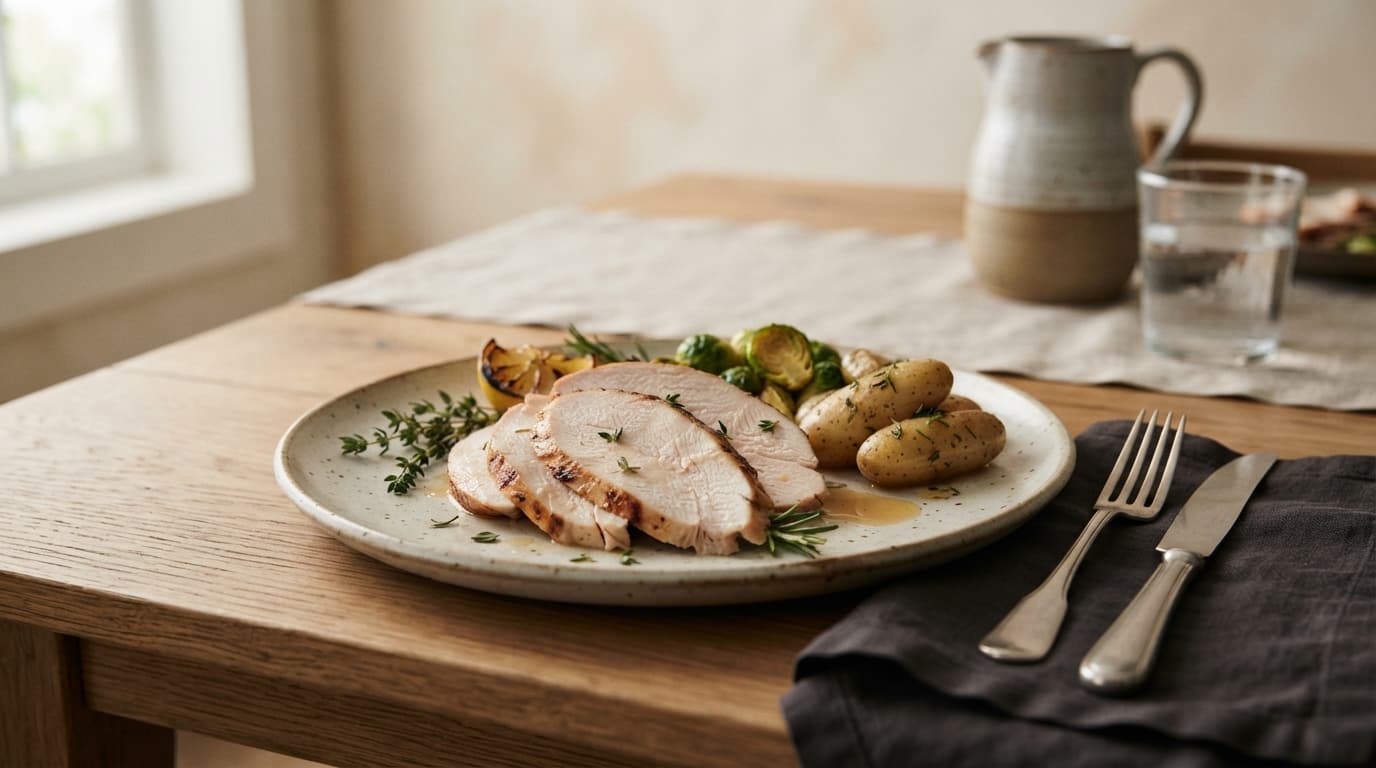
Plan on 3/4 to 1 pound of boneless turkey breast per person, less than the USDA's 1 to 1 1/4 pounds for whole turkey, since boneless meat has no bone weight.
10 min read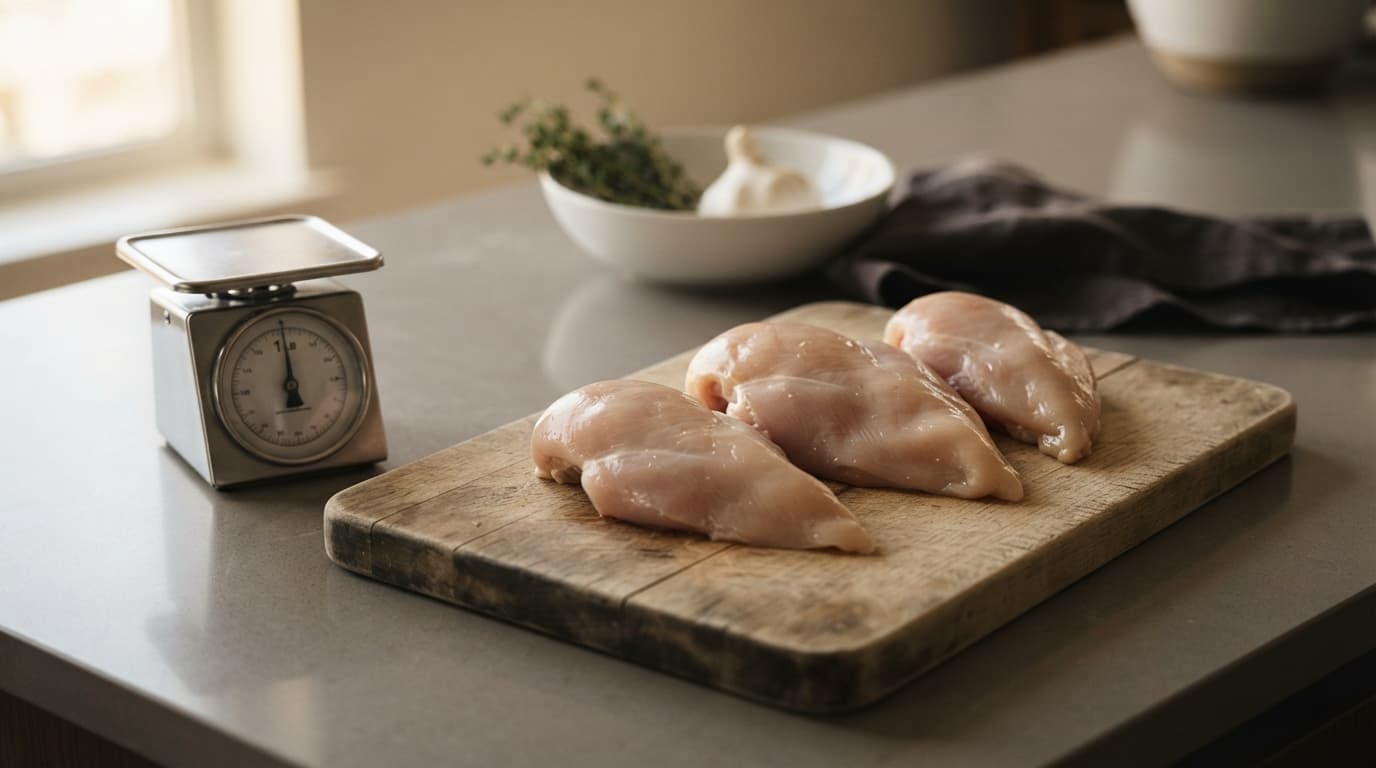
A pound of boneless chicken breast typically holds 2 to 3 pieces, since most breasts weigh 5 to 8 ounces. Size varies enough that weighing beats counting for a recipe.
10 min read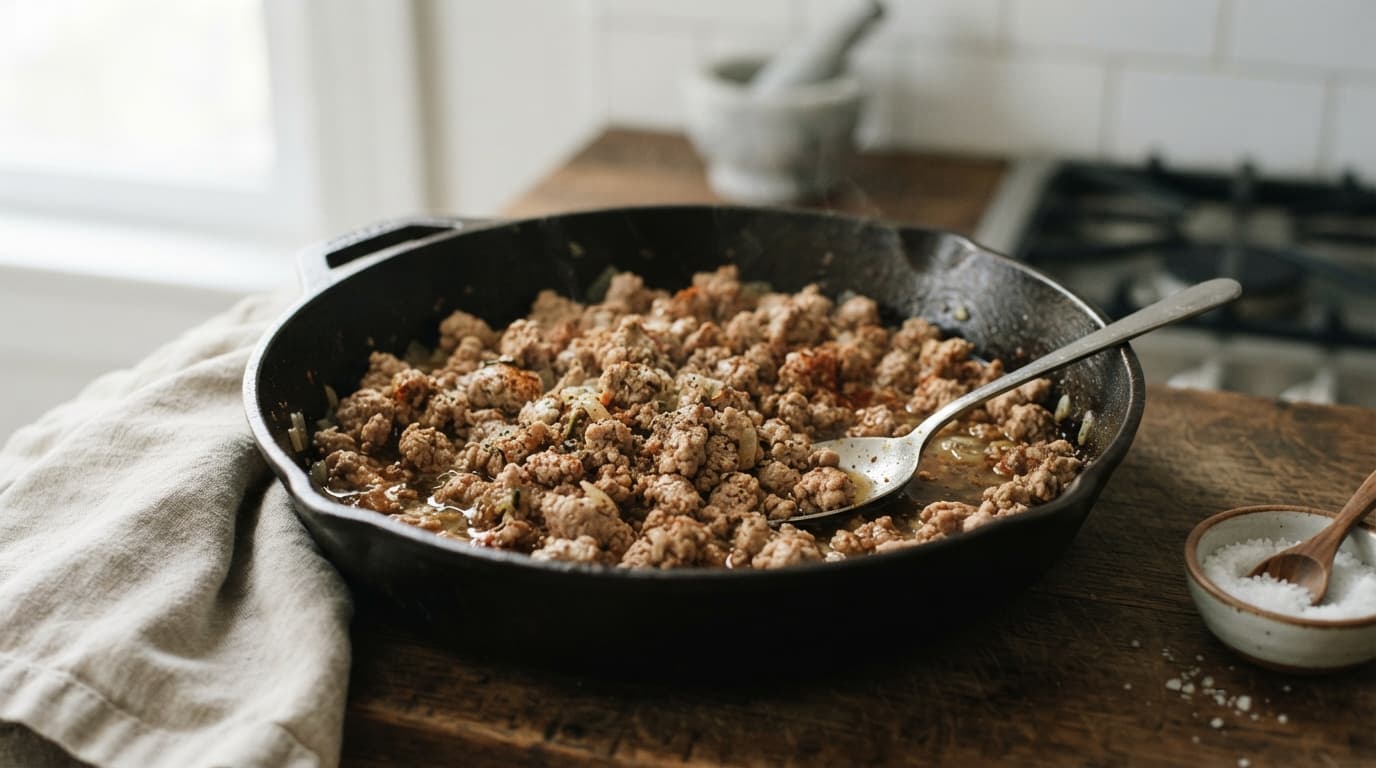
Ground turkey needs about 7 to 10 minutes over medium heat, but time is only a guide. The real requirement is 165°F all the way through, confirmed with a thermometer.
9 min readTables release two weeks out on Resy, Shukette's own booking platform.
Book Now →